Užice Castle: A Medieval Fortress in Serbia
Visitor Information
Google Rating: 4.7
Popularity: Low
Country: Serbia
Civilization: Medieval European
Site type: Military
Remains: Citadel
History
Užice Castle, in the municipality of Užice in Serbia, was erected in the late fourteenth century by members of the Serbian medieval nobility, the Vojinović family.
Construction and early rule took place during the career of the noble Nikola Altomanović, who used the fortress as a seat of power and to command the caravan route linking the Morava Valley with Bosnia, Hum, the Adriatic and the port of Dubrovnik. The stronghold’s position made it a regional center of administration and defense throughout the remainder of the medieval period.
In November 1373 a coalition led by Prince Lazar of Serbia, King Tvrtko I of Bosnia, and Hungarian forces under Nicholas I Garai laid siege to the fortress. They captured Nikola Altomanović; contemporary records note he was blinded after his defeat, and his lands were divided between Lazar and Tvrtko following the campaign.
The castle remained under Serbian authorities until 1459, when Ottoman troops took the site. The Ottomans rebuilt and enlarged the works, and the fortress continued to play a military role under Ottoman rule. The seventeenth-century Ottoman traveler Evliya Çelebi described the place in 1664, giving a detailed account that emphasized its rectangular plan, numerous towers and bastions, very tall walls, and a triple gate to the north; he also recorded a riverside tower fitted with a winch system for taking water without showing activity to enemies.
Across the seventeenth and eighteenth centuries Užice changed hands during Austro-Turkish conflicts, alternating between Ottoman, Austrian and Serbian control at different moments, and was repeatedly altered during those campaigns. In 1862 the Kanlıca Conference protocols required Ottoman withdrawal from the site, and the castle was deliberately mined and demolished in January 1863. After serving as a ruin for many decades, a multi-phase conservation and reconstruction program began in 2017; the first phase, restoring the highest stronghold, was completed and reopened to the public in late 2023, while work continues on lower sectors and a six-storey water tower with plans for further rehabilitation.
Remains
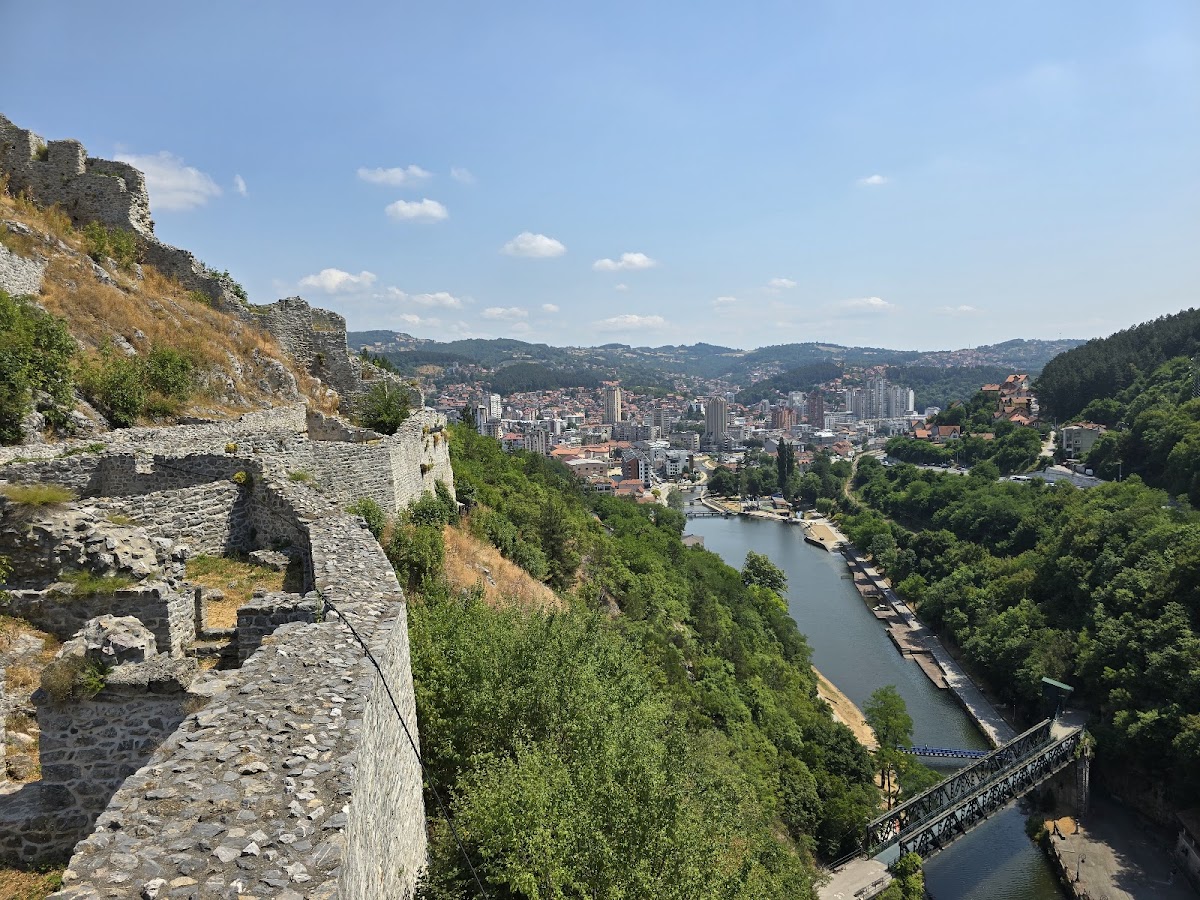
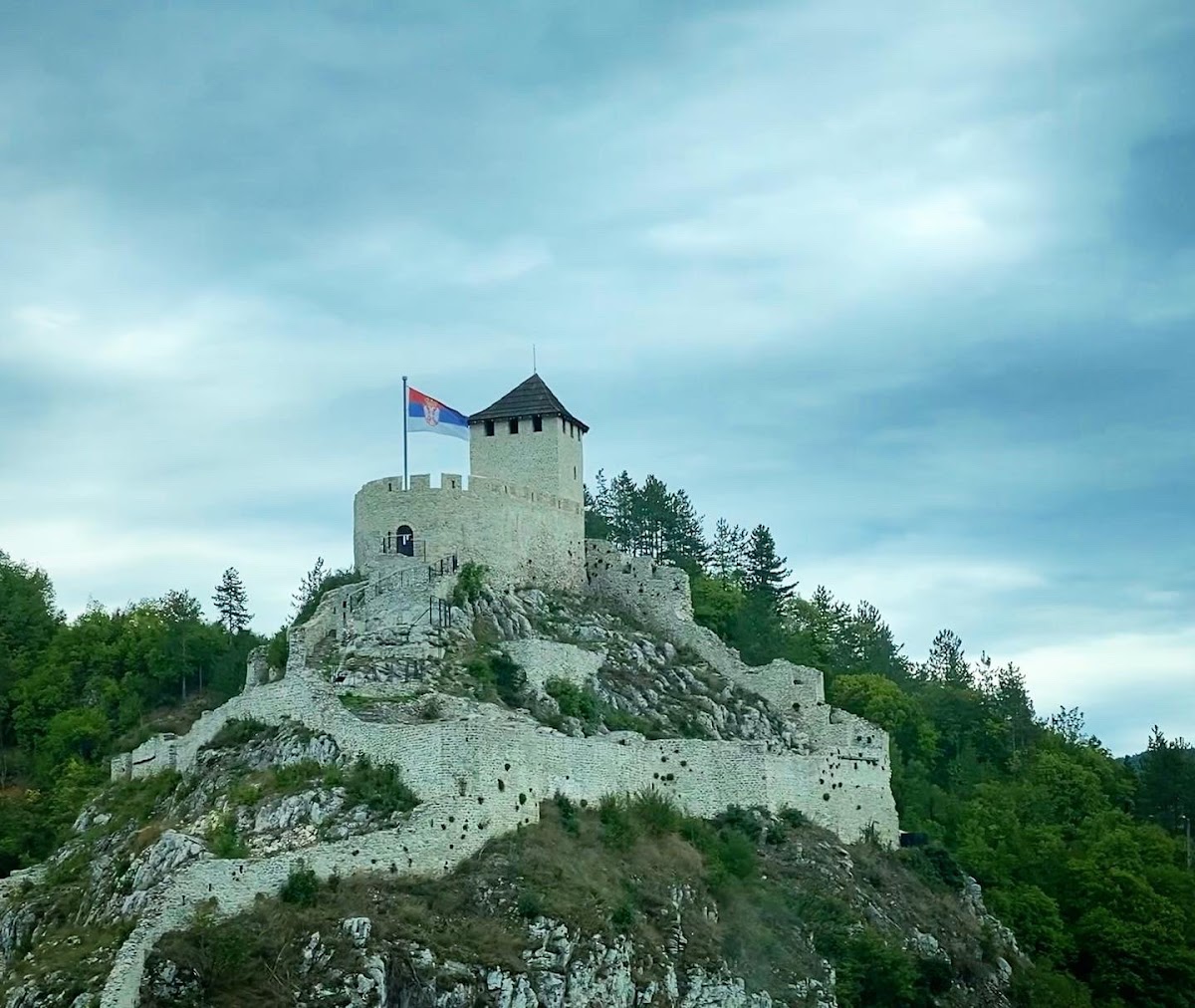
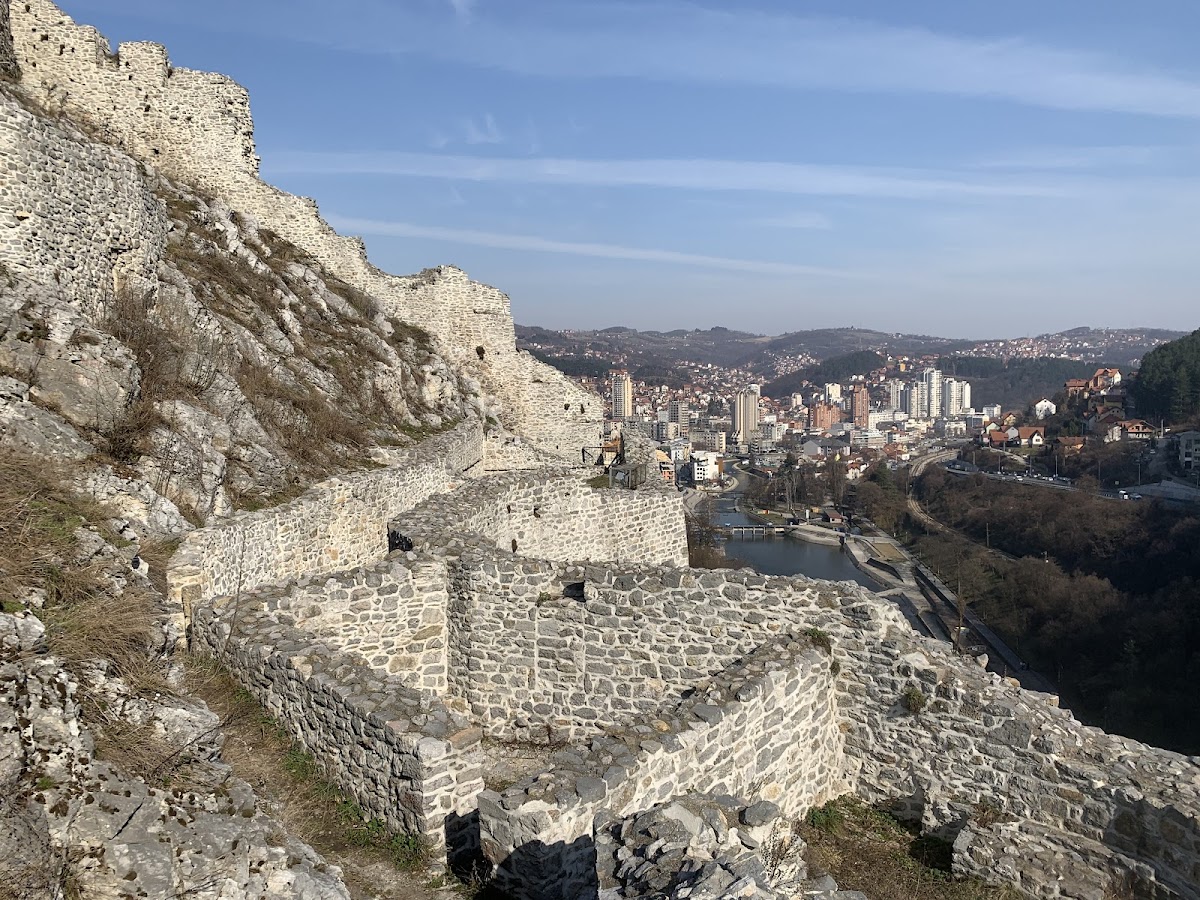
The fortress occupies a steep cliff above the left bank of the Đetinja river, its footprint elongated and irregular as it follows the ridge. Archaeological evidence and historic descriptions show the complex was organized in three linked parts: an Upper Town at the highest point, a Middle Town along the ridge, and a Water Town beside the river. The whole ensemble was enclosed by ramparts and towers that descend the slope toward the water, forming a linear defensive sequence adapted to the terrain.
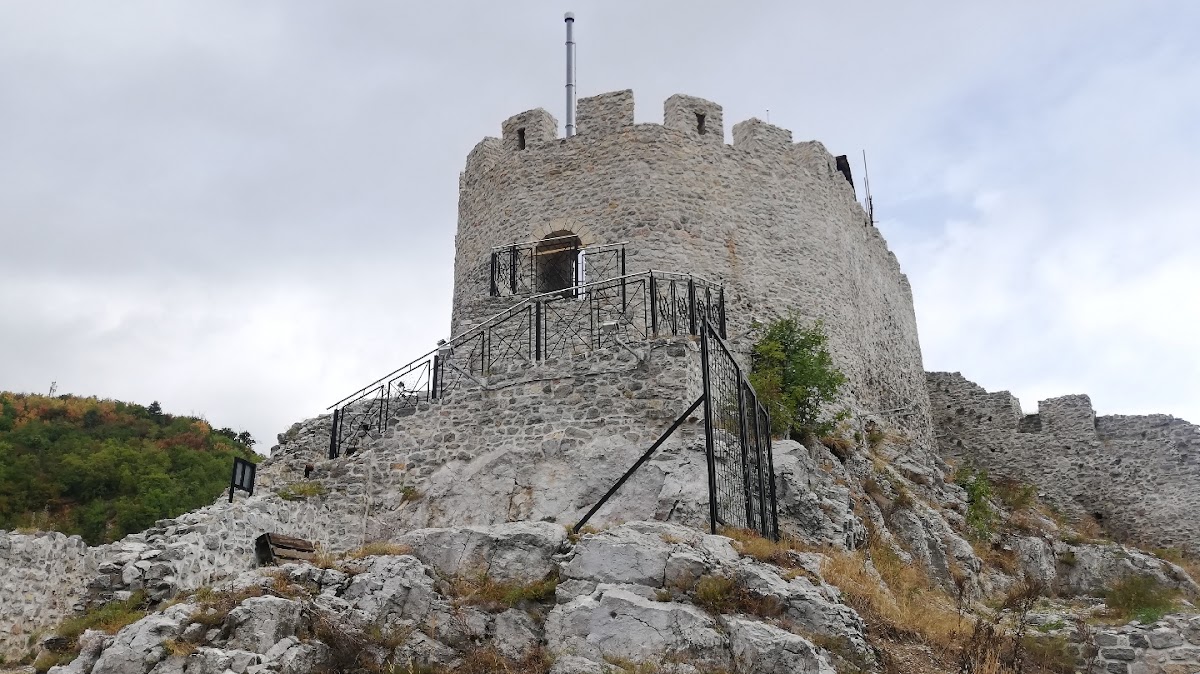
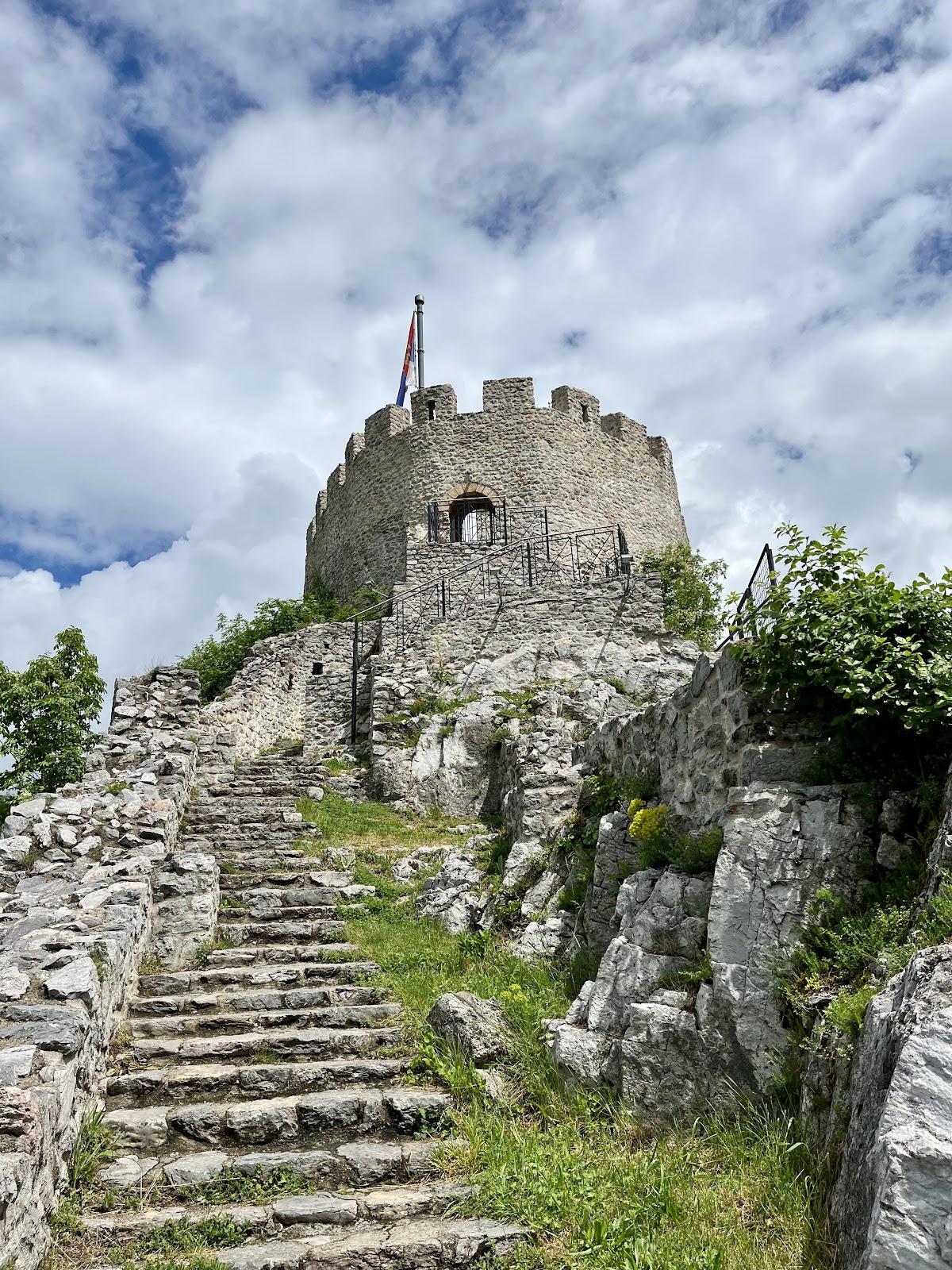
The Upper Town, which served as the citadel, sits on the site’s highest rock outcrop and functioned as the last refuge and administrative core. Medieval accounts and modern rebuilding attest to a heavily fortified summit with a main keep, referred to historically as a donjon (the principal tower or stronghold of a castle). During recent conservation the principal tower and an adjoining casemate (an enclosed, vaulted chamber within a fortification used for housing guns or storing supplies) were reconstructed and fitted for cultural uses, so that the citadel stands today as a rebuilt and interpreted element of the complex.
Fortifications descend from the citadel along the ridge to the riverbank, forming successive defensive belts. The main entrance lies on the northwest side and leads into an outer bailey (the enclosed courtyard between the main gate and inner defenses). South of that gate, two rock-hewn underground chambers, termed lagums (underground vaults or storage rooms carved in the bedrock), are documented; these spaces were used as shelters and for weapons storage and remain visible in situ, their carved nature noted in archaeological surveys.
At the river edge a large water tower anchored the lower town and serviced access to the Đetinja. Contemporary travel descriptions record a substantial tower by the water fitted with a winch and ropes that allowed defenders to draw water without exposing themselves to attack, an arrangement that linked the fortification directly to the river. Evliya Çelebi’s 1664 account additionally provides measures and counts for the walls and towers, reporting a roughly rectangular perimeter measured at some 3,100 paces, 41 towers and an extraordinary figure of 4,000 bastions (a bastion is a projecting part of a fortification designed to allow defensive fire along adjacent walls), and walls described as reaching the height recorded in his epoch.
The site’s vertical relationship to the river is stark: ramparts rise as much as 80 meters above the Đetinja, and a documented stone stairway of 168 steps historically linked the citadel with the riverfront, providing controlled access along the steep slope. Archaeological work and conservation have also used eighteenth-century Austrian plans from 1737 as a basis for partial rebuilding, and subsequent interventions have transformed some elements from fragmentary remains into conserved or reconstructed structures. Present-day condition varies by area: the citadel and certain defensive chambers have been rebuilt and consolidated, while other sectors remain under active restoration, with plans that include a new pedestrian crossing across the river to improve access between parts of the complex.

