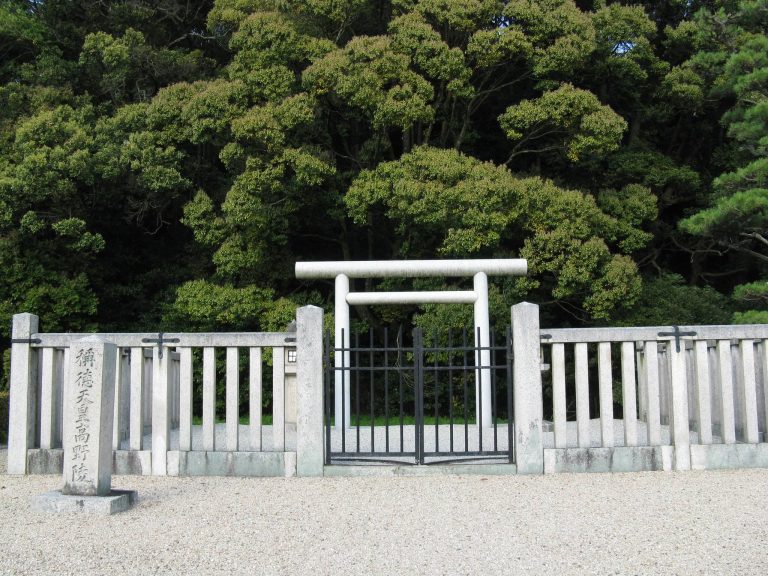
Uwanabe Kofun: A Fifth-Century Keyhole-Shaped Burial Mound in Nara


Site at a Glance
- Rating
- 4.2
- Popularity
- Very Low
- Country
- Japan
- Primary era
- Classical
- External website
- Open
- Eras represented
- Classical
- Civilizations
- Yamato
- Site type
- Burial
- Remains
- Burial Mound
On this page4 sections
History
Uwanabe Kofun is a keyhole-shaped burial mound in Nara, Japan, built in the middle of the fifth century as part of ancient Japan’s kofun tradition. It stands at the eastern end of the Saki Tatenami Kofun Group and is the group’s largest mound. A kofun was a large burial mound constructed for members of Japan’s ruling or elite classes.
Burial mound and traditional identification
The Imperial Household Agency treats Uwanabe as the Uwanabe Mausoleum Reference Site, an administrative designation for a mound that may correspond to an imperial or imperial-family tomb without establishing that identification archaeologically. Tradition associates the mound with Hata no Himemiko, described as a daughter of Emperor Ojin and the empress of Emperor Nintoku. The association remains uncertain.
Uwanabe forms part of a group extending for approximately 12 chō from east to west. The principal features are arranged in sequence from Uwanabe Kofun through Konabe Kofun, Mizukami Pond, and Ichiniwa Kofun, while Hishiage Kofun and its reconstructed outer-embankment row of haniwa lie to the north. Except for Ichiniwa Kofun, the mounds are surrounded by moats and appear as islands within areas designed to retain floodwater.
Revised archaeological measurements
An investigation involving the Imperial Household Agency, the Nara Prefectural Archaeological Institute of Kashihara, and the Nara City Board of Education was announced on 20 November 2020. The work located foundation stones beyond the limits previously recognized around the rear section. As a result, the mound’s estimated total length was revised from approximately 255 metres to approximately 270–280 metres.
The revised measurement places Uwanabe among Japan’s largest kofun, at approximately twelfth in the national ranking. Under the earlier estimate, it had been placed twelfth or thirteenth. The mound is managed by the Imperial Household Agency, while its surrounding moat is managed by a local farmers’ association.
Remains
Uwanabe has the characteristic keyhole plan of a kofun, combining a rectangular front section with a circular rear section. The mound rises approximately 19.8 metres and was built in three levels. Its slopes were faced with stone, and cylindrical haniwa were placed around the first level. Haniwa are clay objects, often cylindrical or figurative, arranged around burial mounds as part of their construction and funerary display.
The surrounding moat encircles the mound and contributes to the water-filled landscape of the Saki Tatenami Kofun Group. Foundation stones identified beyond the rear section’s moat, particularly on the northeastern and eastern sides, account for the revised overall length of approximately 270–280 metres. Vegetation now covers the upper part of the mound.