Usha: An Ancient Jewish Rabbinic Center in Galilee
Site at a Glance
- Popularity
- Medium
- Country
- Israel
- Primary era
- Classical
- Eras represented
- Iron Age, Classical, Modern
- Civilizations
- Assyrian, Ottoman, Roman
- Site type
- City
On this page12 sections
History
Usha was an ancient Jewish town near present-day Kiryat Ata in Israel’s western Galilee. It became especially influential between the first and fourth centuries CE, during the period of the Mishnah, an early compilation of Jewish oral law, and the emergence of the Talmud, which brings the Mishnah together with later rabbinic discussion known as the Gemara. Its prominence rested above all on the Sanhedrin, the leading Jewish rabbinic court and governing body in antiquity, which held sessions there after the second-century revolt against Roman rule.
Early settlement
The name Usha appears in the inscription on the prism of Sennacherib, an Assyrian king. A Hebrew seal inscribed with two personal names, found at the site, points to settlement in the biblical period; archaeological evidence indicates habitation from the Persian period through the Roman period. Attempts to identify Usha with the biblical town of Hosah remain inconclusive. Researchers generally place Hosah at one of two sites in present-day Lebanon, south or southeast of Tyre. Older proposals also disagreed over whether Usha itself lay in Lower or Upper Galilee.
The Sanhedrin and rabbinic scholarship
Following the Bar Kokhba revolt, a Jewish uprising against Roman rule, and persecutions under Emperor Hadrian, the Sanhedrin moved from Yavne, an ancient Judean center of Jewish learning, to Usha. It returned to Yavne and then came back to Usha. Under Simeon ben Gamaliel II, the court sat in Usha during two separate periods around 140–150 CE. It also met there during the reign of Antoninus Pius, who succeeded Hadrian, before moving through Shefa-Amr, Bet She’arim, Sepphoris, and Tiberias. The shift to Galilee reflected the region’s growing religious importance as Judea’s population declined after the revolt.
Usha became a center for rebuilding Jewish scholarship after the persecutions. A gathering there included Rabbi Judah, Rabbi Nehemiah, Rabbi Meir, Rabbi Jose, Shimon bar Yochai, Eliezer son of Jose the Galilean, and Eliezer ben Jacob. Several pupils of Rabbi Akiva were associated with the town, among them Shimon bar Yochai, Judah bar Ilai, Jose ben Halafta, and Rabbi Meir. Judah bar Ilai and Rabbi Judah the Prince, son of Simeon ben Gamaliel II, lived there. A later teacher, Rabbi Yashia of Usha, was remembered for legal teachings passed on by his pupil Rabbah bar bar Hana.
Rulings and community life
The Sanhedrin’s legal enactments at Usha became known as the Takkanot of Usha. They addressed family obligations, marriage, economic conduct, and ritual purity. Fathers were required to support minor children until they could provide for themselves. If the head of the court transgressed, the community was to ask him to resign before resorting to excommunication. A husband received the first opportunity to acquire property belonging privately to his wife if she sought to transfer it. Other rulings limited charitable giving to one-fifth of a person’s property and set rules for tithes and the required removal, or bi’ur, of citrons according to their picking date. These rules also determined whether citrons had the special status of produce from the Jewish Sabbatical year, the seventh year of the agricultural cycle.
The rulings also extended rules about impurity associated with foreign lands to the air above those lands. This could disqualify terumah, a portion of produce set aside for priests; produce that had touched soil from those lands had to be burned. Judah bar Ilai later recalled reading the Scroll of Esther aloud in Usha as a child without being reprimanded. That precedent was subsequently used to permit children to read the scroll publicly at Purim. The town is also associated with the death of Judah ben Bava, a sage who defied Roman restrictions on ordination by appointing five elders between Usha and Shefa-Amr. The ordainer, those ordained, and the town where the ceremony took place all risked punishment.
Agriculture supported much of the town’s livelihood. Residents grew olives and grapes on the surrounding gentle hills, and wine and olive oil were important products. Glassmaking was another local industry, while ironworking is evidenced in the Byzantine period. Rabbinic writings also mention the making of practical mats from natural fibers. Rabbi Isaac Nappaha may have been connected with glassblowing, though his byname could also refer to metalworking.
Later settlement and Hawsha
Usha remained inhabited during the Byzantine period, the era of the eastern Roman Empire, when its population was no longer Jewish. Settlement continued into the early centuries of Muslim rule, when the town was captured and partly burned. An earthquake preceded the end of settlement, which had ceased by the eighth century.
In the Ottoman period, a village called Hawsha occupied the area and preserved the ancient name. In the mid-nineteenth century, Algerian refugees who had fled after Abd al-Qadir al-Jazairi’s revolt against French rule were resettled there under Ottoman auspices and established a village. Hawsha remained until the 1948 Arab-Israeli War, the conflict that brought the village’s history to a close. The modern kibbutz, or collective community, of Usha was founded several kilometres to the west in 1937 and commemorates the ancient town’s name.
Identification and archaeological study
Victor Guérin identified the ruins in the late nineteenth century, when they lay beneath Hawsha. Later researchers and the Israel Antiquities Authority also identified the site as Usha. A survey took place in 2004, followed by educational excavations from 2005. The Israel Antiquities Authority carried out surveys and excavations between 2008 and 2012, with another excavation along the southwestern edge in 2014 and further work through 2019.
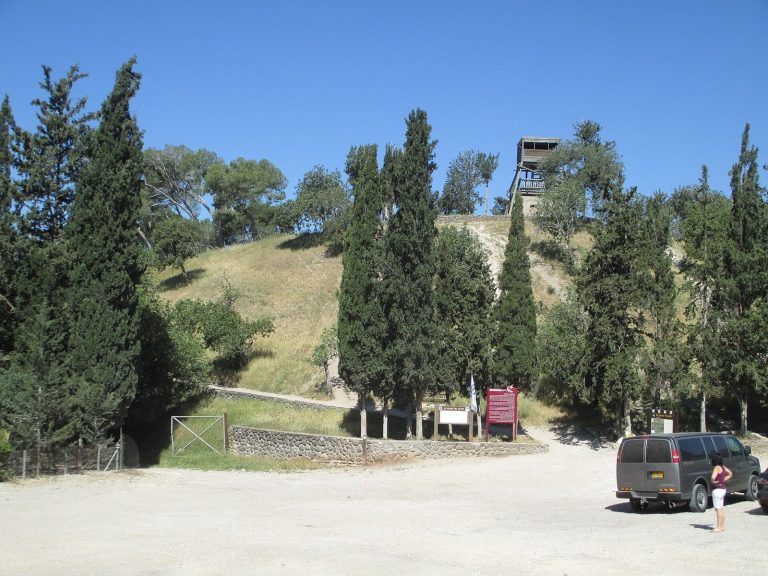
Since 2009, the ruins have formed part of the National Park of Ancient Usha, which covers 263 dunams, about 65 acres. Excavations are also linked to the Antiquities Authority’s Sanhedrin Trail project, which follows the court’s Galilean stations from Bet She’arim to Tiberias. Stones along the trail carry quotations from the Mishnah and Gemara.
Remains
Settlement buildings and setting
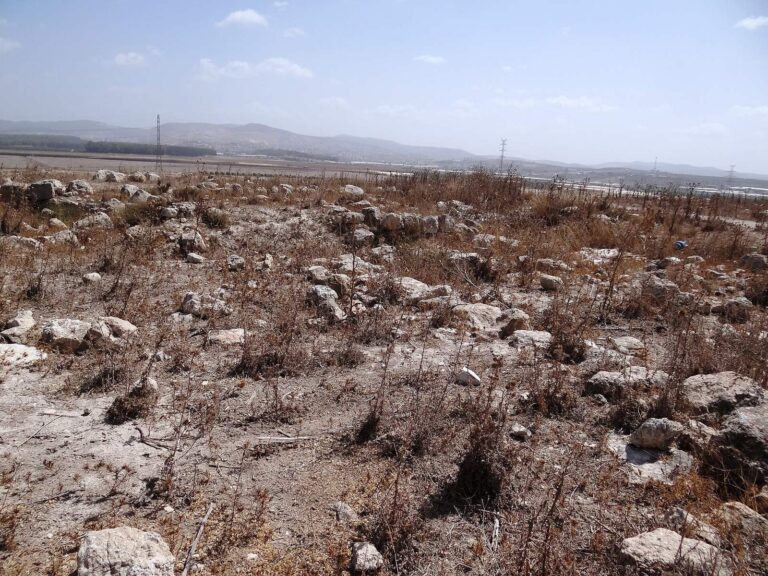
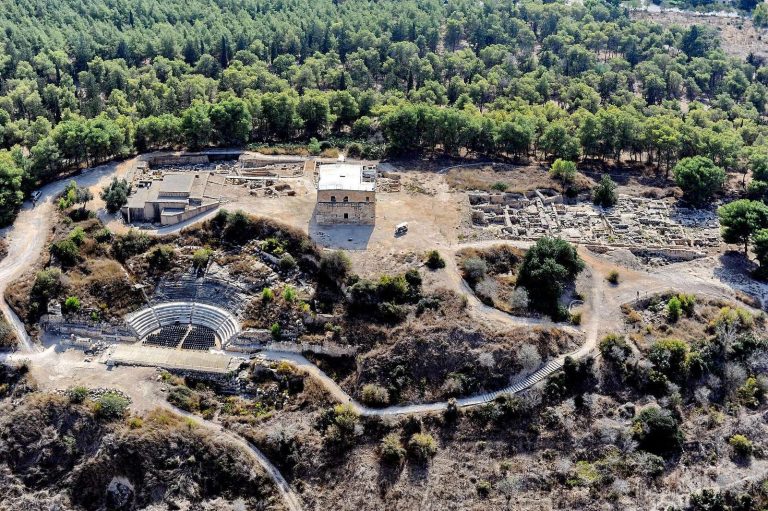
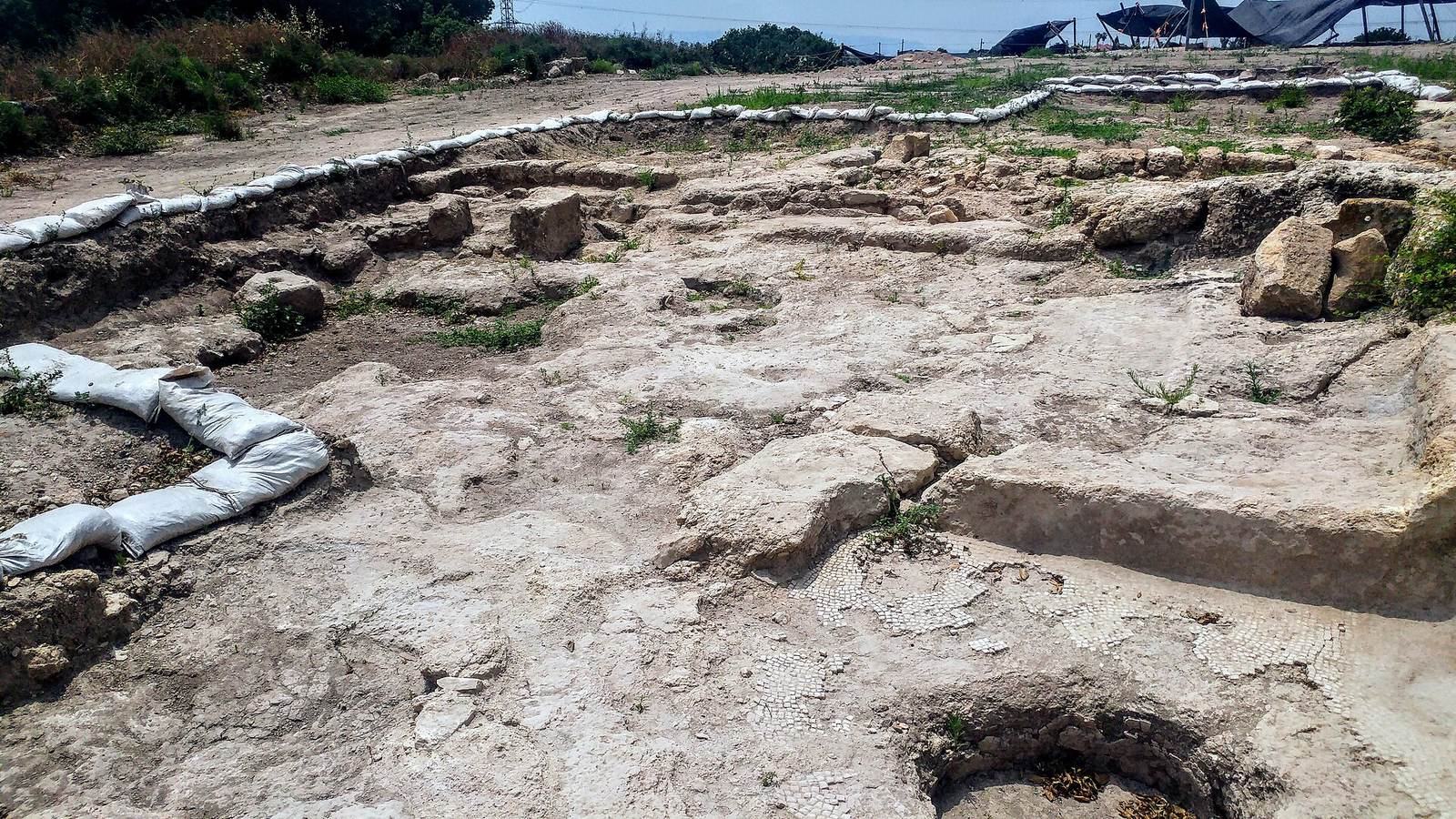
The remains of ancient Usha and the later village of Hawsha lie within Kiryat Ata forest, between Kiryat Ata and Shefa-Amr. The surrounding gentle hills supported the cultivation of olives and grapes. Excavations have revealed public buildings, including structures that may have belonged to a synagogue, as well as numerous private buildings. Wine and olive processing installations, water cisterns, and ritual baths form part of the settlement’s surviving archaeological remains.
Ritual baths and processing installations
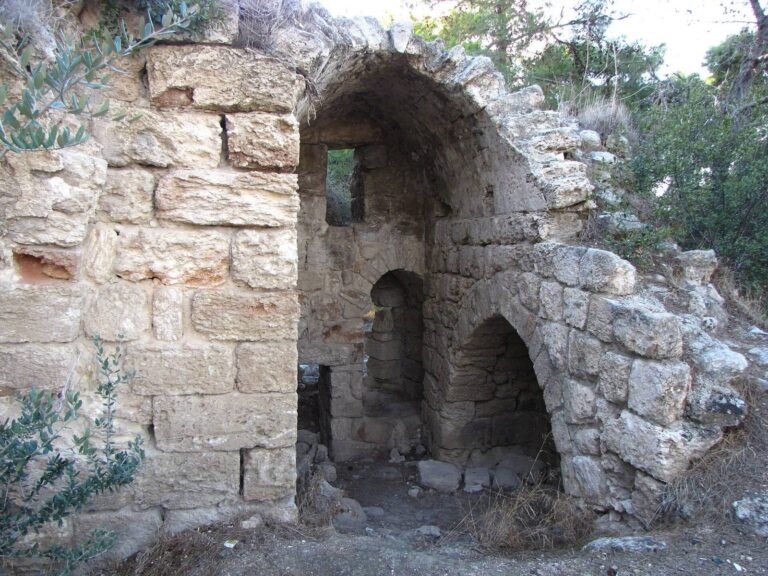
Two second-century mikva’ot, or Jewish ritual baths, were cut into bedrock. They have plastered walls and steps and stand near wine- and olive-oil-making installations, including a double winepress and an olive press. The baths remained in use until the sixth century, when they were filled as the Jewish community left the village. Their position beside the production area has been interpreted as evidence that workers immersed themselves before preparing wine and oil intended to meet Jewish ritual requirements. Water cisterns also survive at the site.
Hiding complex
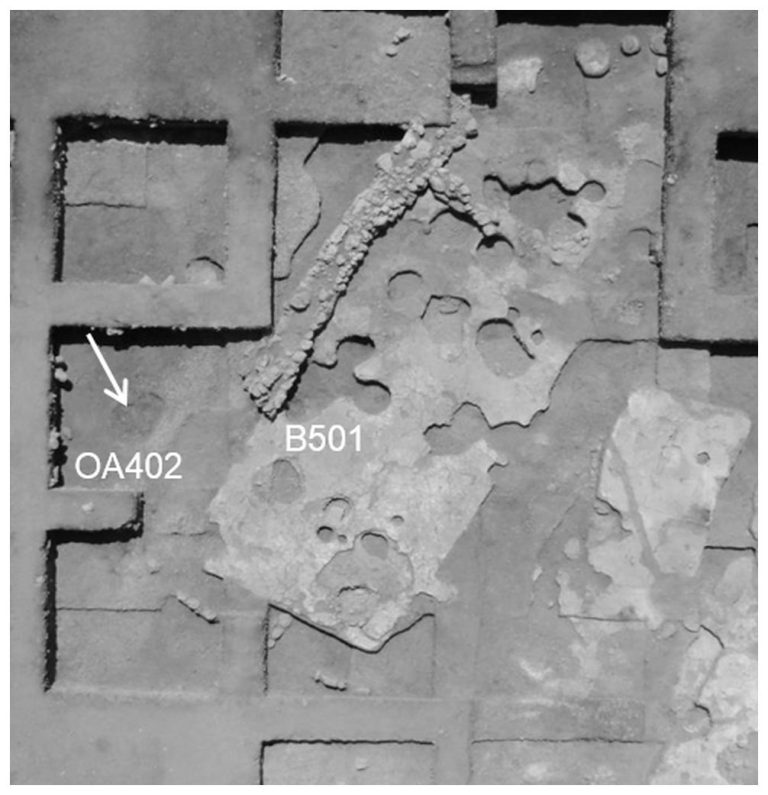
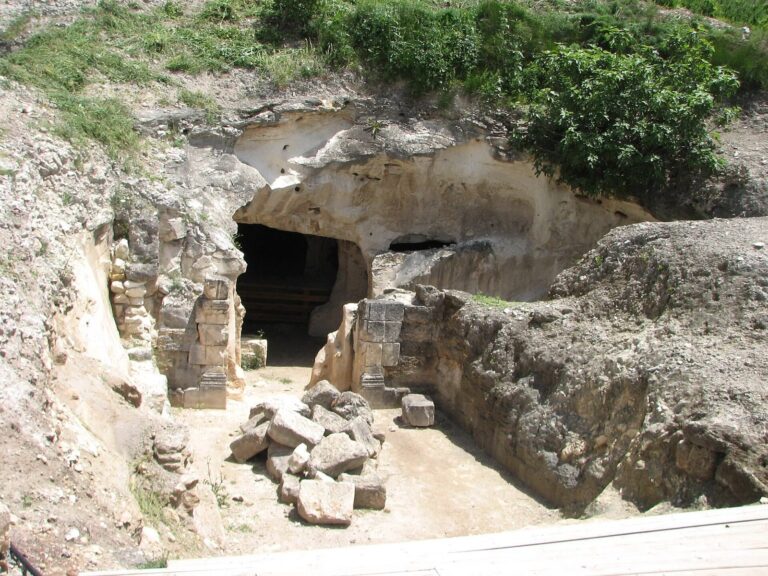
A hiding complex discovered in 2012 cuts through an earlier ritual bath and made it unusable. The complex was probably carved no later than the Bar Kokhba revolt.
Glass, metal, and other finds
Finds connected with glassmaking include lumps of raw glass and finely finished fragments from delicate wine glasses and lamps, in pale blue and green. An iron hammerhead, nails, and iron slag were found together and date to about 1,400 years ago, in the Byzantine period. The hammerhead is a rare find from that era. A candlestick described as two thousand years old was discovered at the site in 2020.
Burials and remains of Hawsha
A cemetery lies east of the ancient settlement, while a stone marking a boundary relevant to Sabbath travel restrictions was found to its north. A tomb attributed to Judah ben Bava lies slightly east of Usha, near the southern entrance to Shefa-Amr. The area also contains ruined buildings from Hawsha and a shrine dedicated to a local religious figure.