Uråsa Church: A Medieval Parish Church in Sweden
Site at a Glance
- Country
- Sweden
- Primary era
- Modern
- Eras represented
- Medieval, Early Modern, Modern
- Civilizations
- Swedish
- Site type
- Religious
- Remains
- Church
On this page10 sections
History
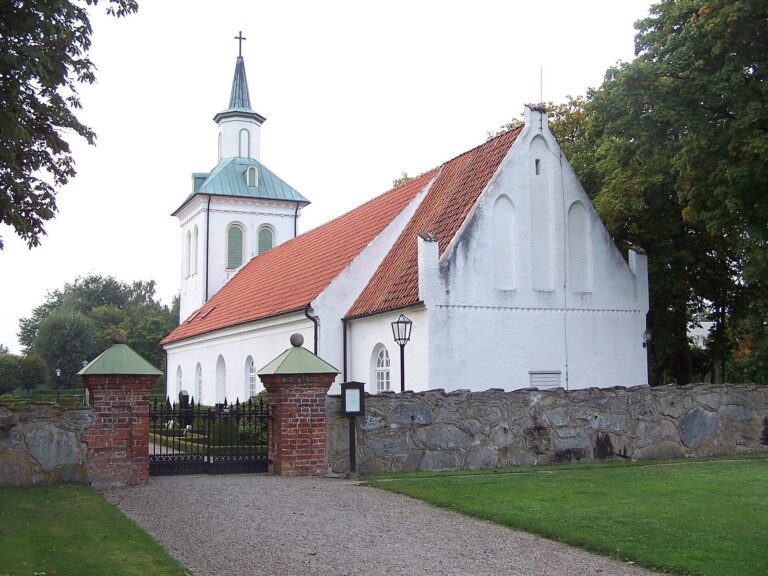
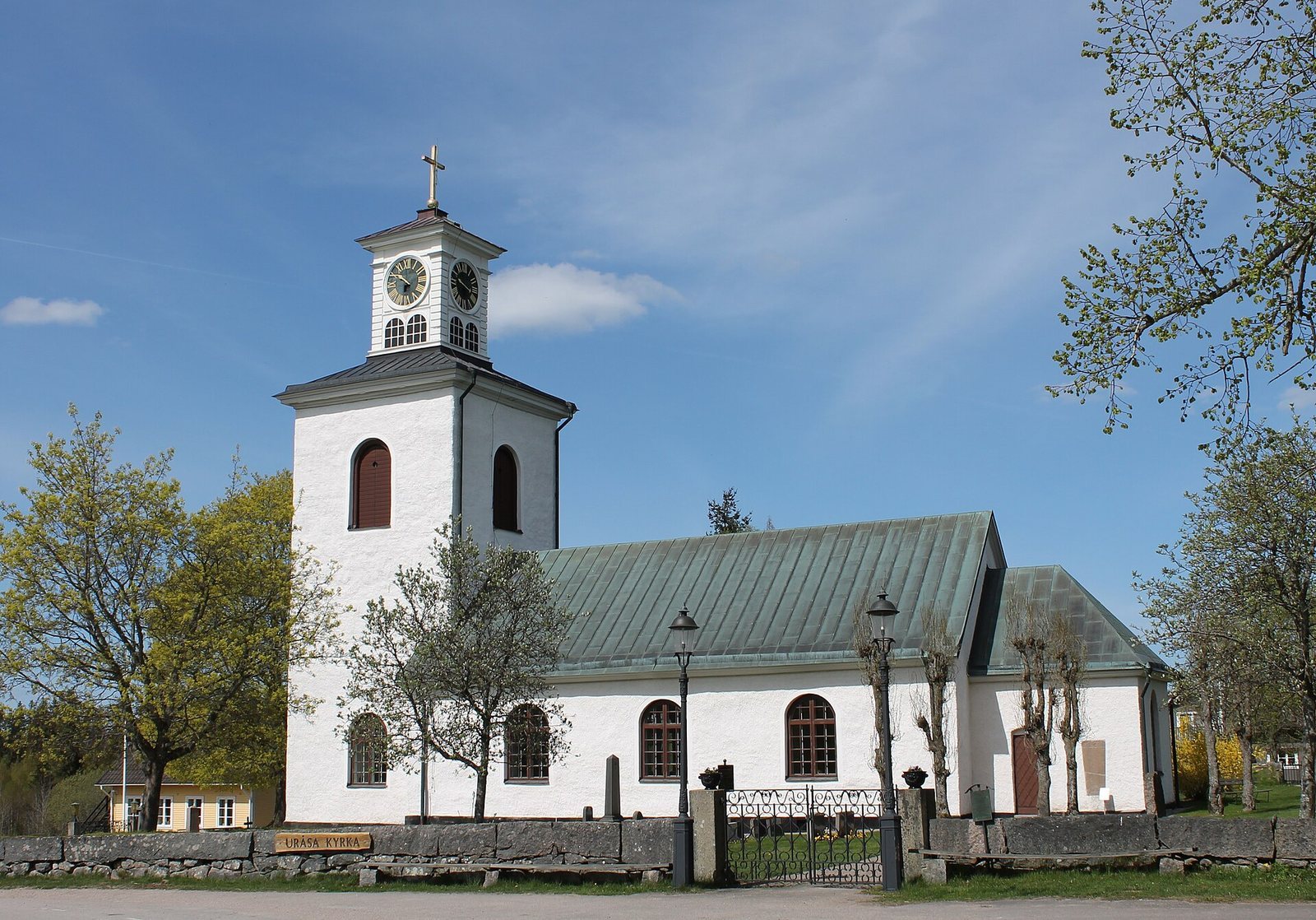
Uråsa Church is a medieval parish church in Uråsa, Sweden, overlooking the Skyeån valley. Its consecration is dated to the 12th century, while its architectural origins are placed in the 12th or 13th century. The exterior has a Neoclassical character, drawing on ancient Greek and Roman forms. Affiliated with the Church of Sweden, the church serves Ingelstad Parish in Växjö Diocese.
Medieval origins and early modern conflict
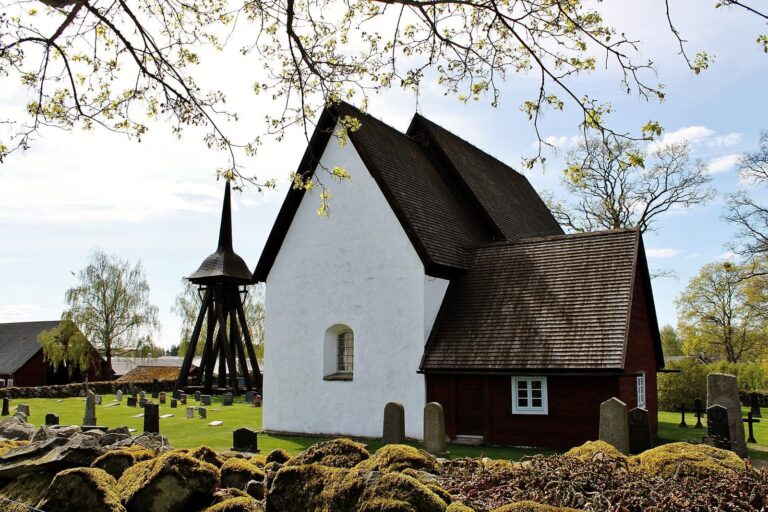
The early church consisted of a nave, the main area used by the congregation, and a straight-ended chancel around the altar. It had no tower, and its bells were kept in a separate structure in the western corner of the churchyard.
In 1541, Sweden’s King Gustav Vasa confiscated almost all of the church’s silver. Danish troops plundered and burned the building during the 16th and 17th centuries, but it was restored rather than left in ruins. The final Danish devastation took place in 1658.
Nineteenth-century transformation
In 1835, the sacristy, a room for preparing services and storing liturgical items, was moved from the north side of the nave to a larger addition at the east end of the chancel. The church also received large, round-arched windows and a pulpit above the altar, reached from the sacristy. A tower was added in 1841, and the bells were transferred to it from the separate bell tower.
In 1842, Carl Strömberg painted perspective scenes on the chancel wall using grisaille, a technique that creates a monochrome effect with shades of gray. Organ changes followed: in 1857, an instrument built by Hans Henrich Cahman in 1690, with eight stops that control sets of organ pipes, was brought from Virestad Church. A 16-stop organ by Carl August Johansson replaced it in 1873. The Cahman instrument went to Smålands Museum in Växjö in 1894, when Carl Elfström’s 7.5-stop organ was installed. That instrument was sold to Skogslyckan Church in Växjö in 1955.
In 1899–1900, decorative painter Edvard Berg decorated the barrel-vaulted ceiling. The church’s present organ was built by Frederiksborg Orgelbyggeri in 1955.
Twentieth-century changes
In 1941, the pulpit above the altar was removed and a new pulpit was placed on the north side of the interior. Benches beside the altar were also taken out, while other 17th-century bench furnishings remained. In 1989, the large medieval bell cracked and was replaced.
Remains
The church stands above the Skyeån valley. Its medieval plan of nave and straight-ended chancel remains legible within a building whose exterior has a Neoclassical appearance. The tower rises above the church with a lantern, an open or windowed structure at the top, carrying a clock and cross. The larger sacristy is attached to the east end of the chancel.
Interior and furnishings
Chancel and altar
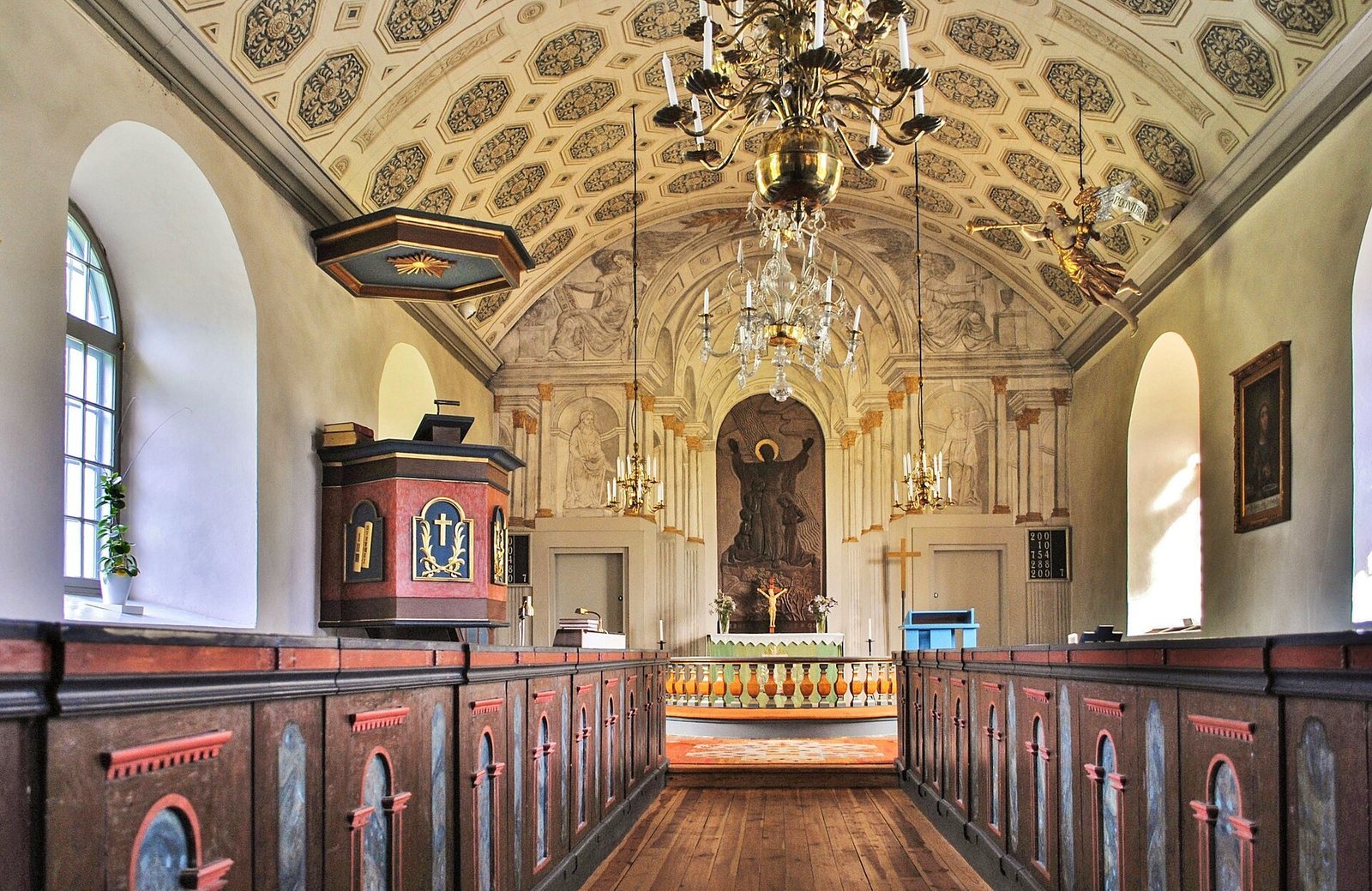
Strömberg’s chancel-wall paintings use perspective to frame figures of Faith and Hope in niches, with Law and Gospel in the gable fields. A marble relief altarpiece by glass artist Simon Gate sits within the painted composition. The altar has a Gusta marble slab, and its semicircular rail is formed with balusters, small upright supports.
Ceiling and painted decoration
The continuous arched ceiling is painted with coffers, recessed panels inspired by classical designs. A gilded angel playing a trumpet appears on the south side of the chancel vault. Images of apostles and evangelists painted by Carl Strömberg decorate the organ loft.
Benches, painting, and chandeliers
Some of the church’s 17th-century bench furnishings survive. A painting by Hans Brachwagen, dated 1717, depicts the Institution of the Eucharist. Tradition holds that the glass chandelier was taken as war booty in Germany during the Thirty Years’ War, the European conflict fought from 1618 to 1648, principally across the Holy Roman Empire. A large brass chandelier was cast in Karlshamn in 1778.
Organ and bells
The current organ is mechanical. A large 13th-century bell is kept in the church porch and is among the oldest church bells in Småland. The smaller bell was recast in 1816.