University of Oñati: A Renaissance University and Historic Building
Site at a Glance
- Popularity
- High
- Country
- Spain
- Primary era
- Early Modern
- Eras represented
- Early Modern
- Civilizations
- Crown of Castile, Spanish
- Site type
- Civic
- Remains
- University
On this page10 sections
History
Foundation and teaching
The University of Oñati, formally the University of the Holy Spirit, named for the third person of the Christian Trinity, is a former university in Oñati, Gipuzkoa, Spain. Rodrigo Mercado de Zuazola, a bishop and humanist, founded it in 1540 under a decree from Pope Paul III. It began in Hernani and moved to Oñati in 1548, when teaching started. Until the University of Deusto was founded in Bilbao in 1886, it was the first and only university in the Spanish Basque Country.
The university taught theology, law, canon law, the rules governing the Catholic Church, arts, and medicine. At its founding, Oñati was an independent seigneurial county, a territory governed by a lord, under the House of Guevara, a Spanish noble family. It was not then part of Gipuzkoa; Oñati joined the province in 1845.
Nineteenth-century changes
María Antonia de Cortázar enrolled in 1806 and 1807 and is considered a possible first Spanish woman to enroll at a university. The institution admitted Catholics only until 1869. Following the 1868 Revolution, it opened to people beyond the Catholic community and hosted a free university.
Financial difficulties and political tensions between Carlists and liberals shaped the university’s later course. Carlists supported a rival Spanish royal line and a traditionalist political cause. The university closed in 1842, then reopened during the Third Carlist War as the Royal and Pontifical University of the Basque-Navarrese Country. The term “Pontifical” indicates formal recognition or status within the Catholic Church. During the Carlist period, the institution passed into Carlist hands.
Closure and later use
The university operated again from 1895, also serving late in the century as a Catholic free university, but lack of funds brought its final closure in 1901. The building was declared a National Historic-Artistic Monument in 1931 and is recognized as an Asset of Cultural Interest and part of Basque built heritage. Since 1989, it has housed the International Institute for the Sociology of Law and the Basque Institute of Public Administration.
Remains
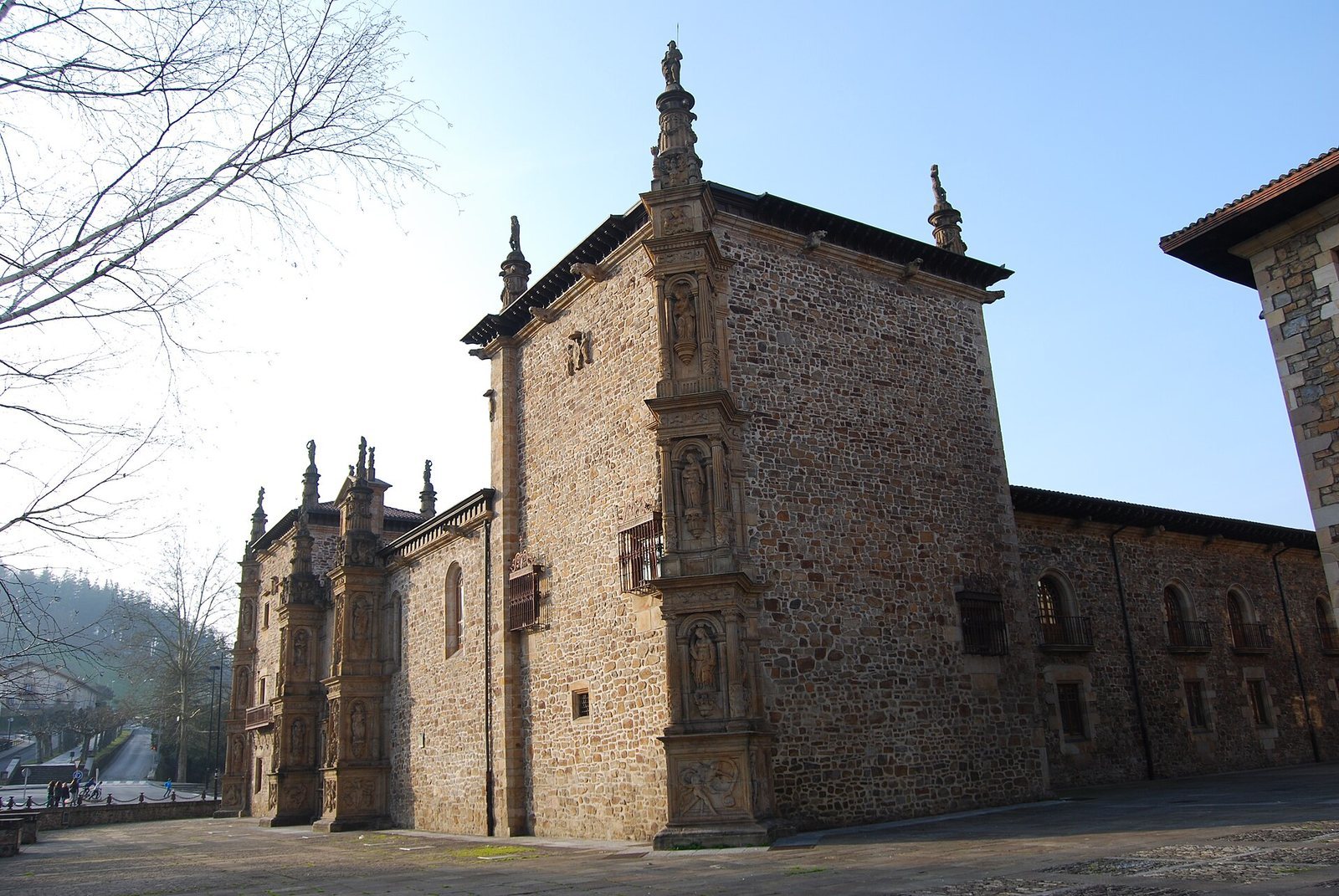
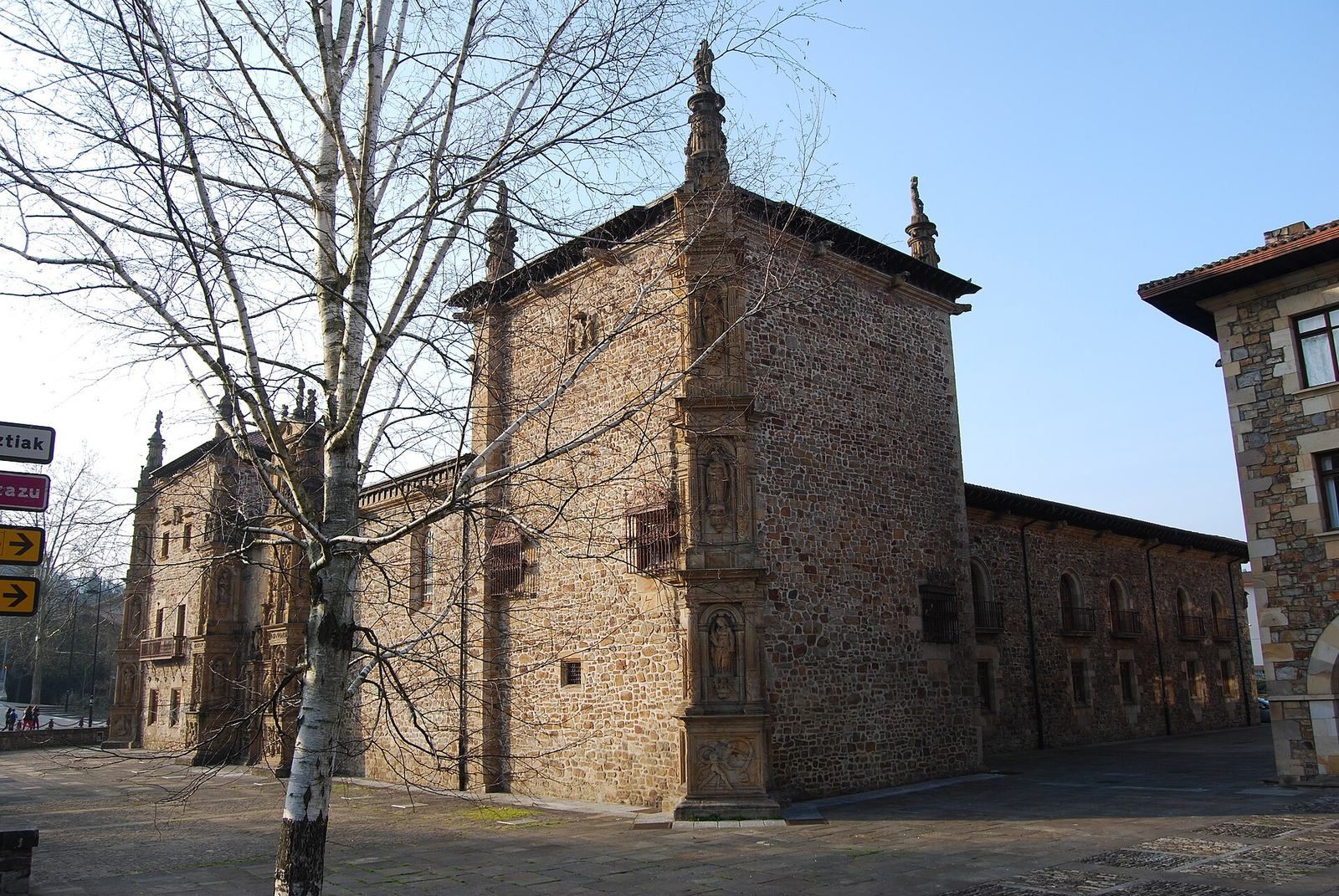
The square-plan building is organized around a central courtyard. Its Renaissance design marks a transition from Plateresque, an ornate Spanish Renaissance style, to purist Mannerism, a late Renaissance style. Construction began in 1543 under the patronage of Emperor Charles I, also known as Charles V. Master stonemason Domingo de la Carrera and sculptor Pierre Picart were involved.
Courtyard and interior
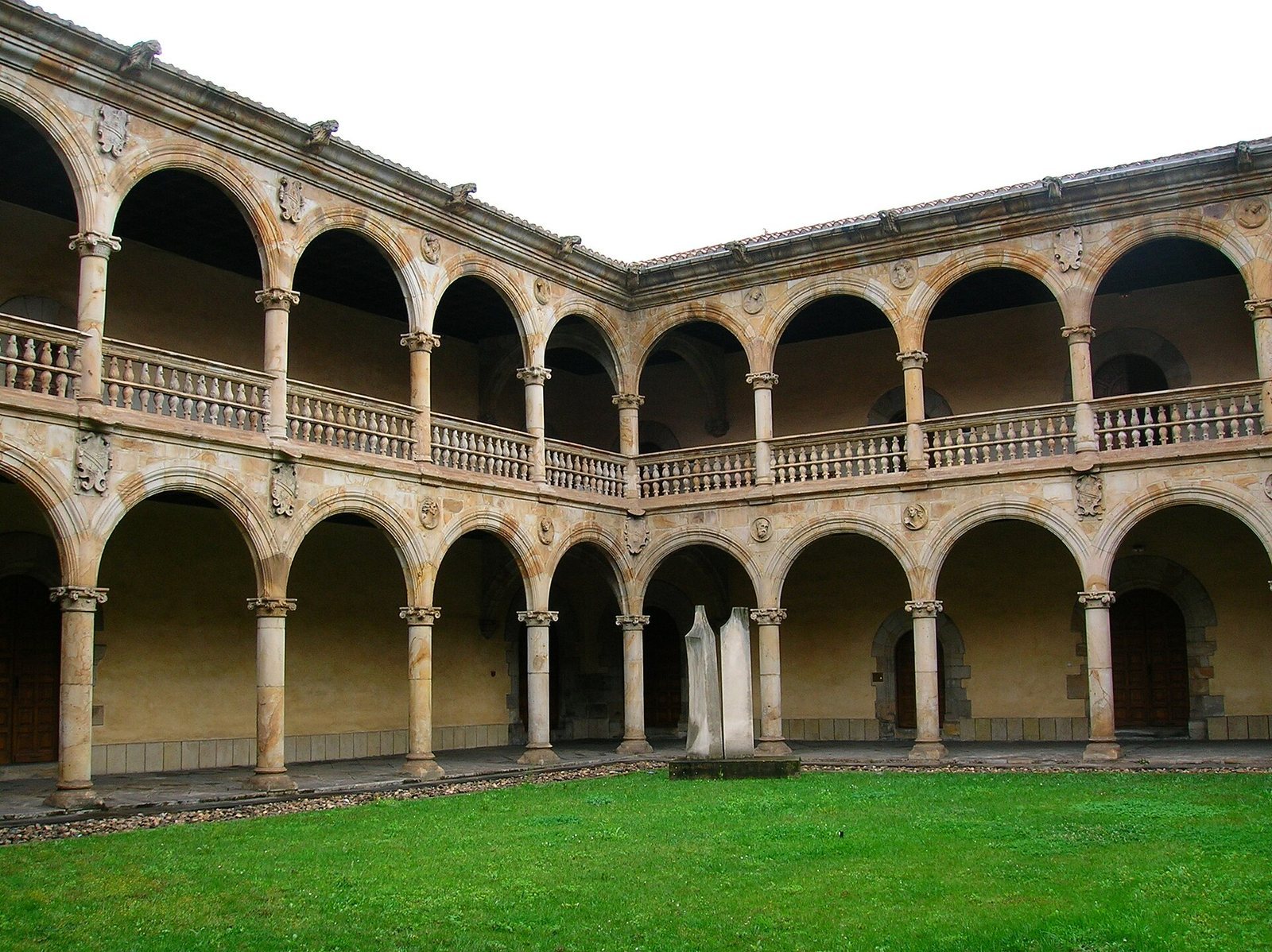
Central courtyard
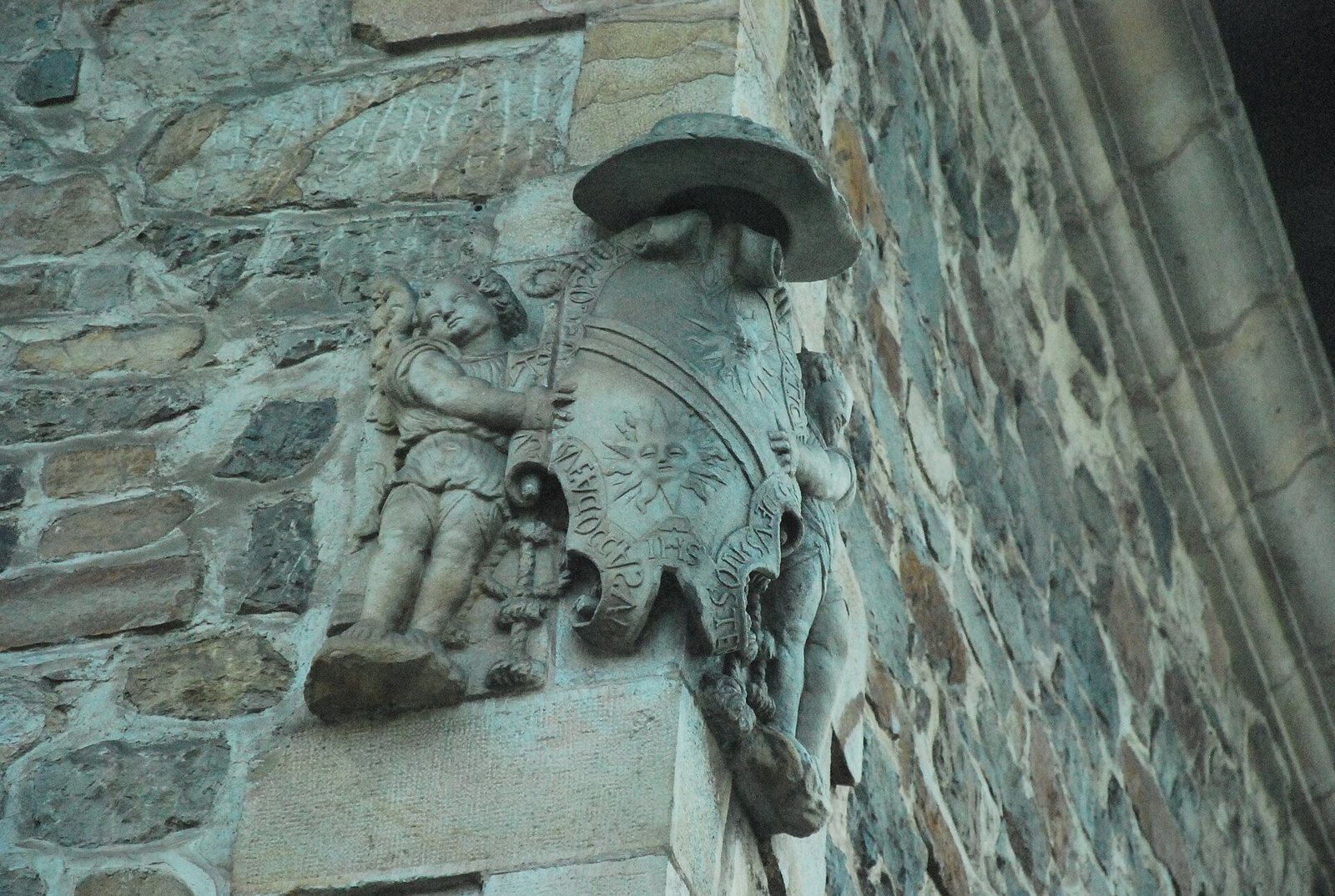
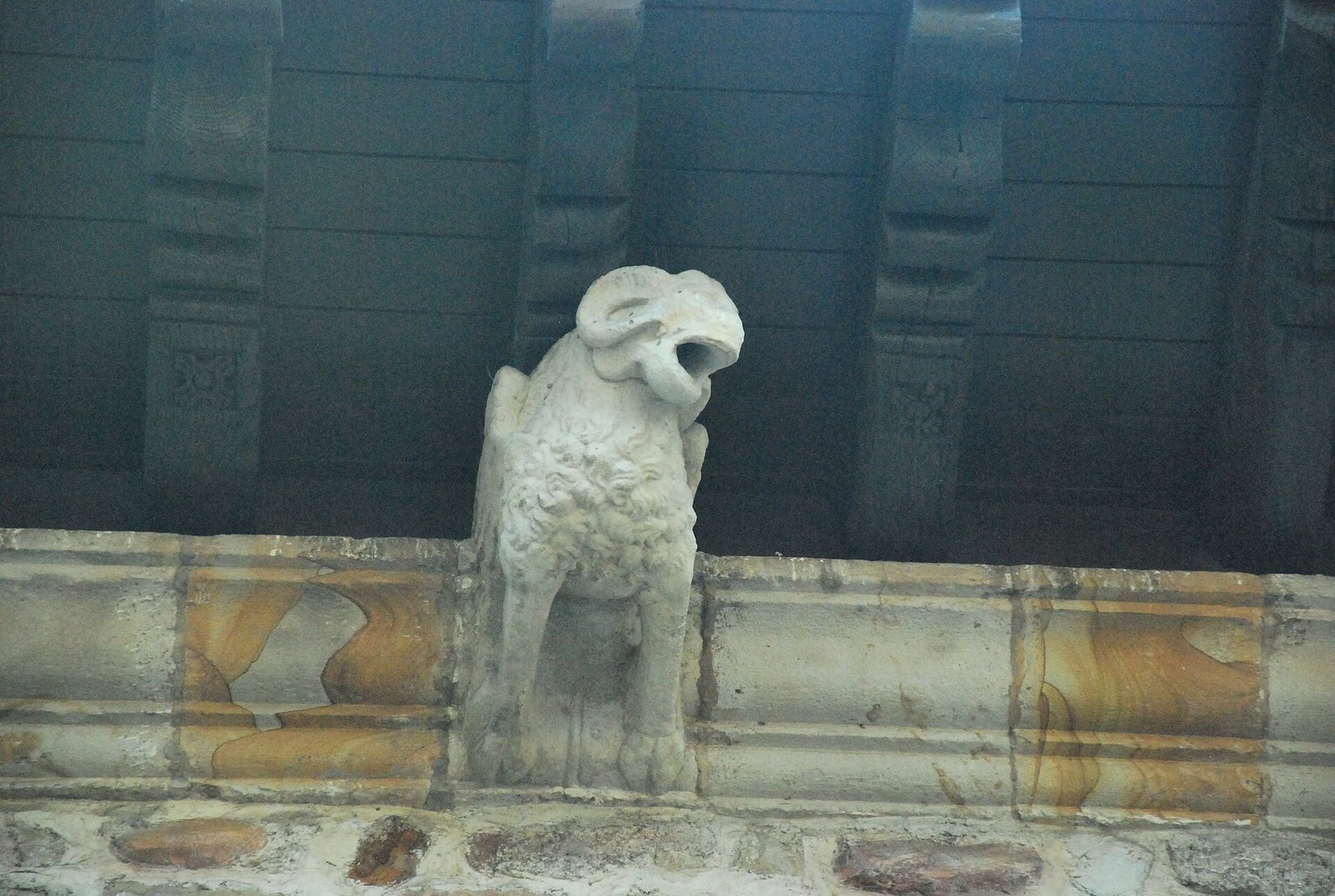
The courtyard has two tiers of semicircular arches and an upper gallery with a balustrade. Gargoyles of Gothic tradition line the eaves. The spaces between the arches and their surrounding frames carry coats of arms and medallions showing paired historical and mythological figures, including Charles I and his wife, Isabella of Portugal. A sculpture by Basque artist Jorge Oteiza, titled The Earth and the Moon, stands on the central lawn.
Rooms and ceilings
The ground floor was arranged for a chapel, classrooms, kitchen, and communal dining hall; the upper floor held dormitories and the great hall. The building also has carved wooden ceilings inspired by Mudéjar, artistic traditions in Spain combining Islamic and Christian forms. A notable panelled ceiling is above the staircase leading to the upper floor. The ceilings were carved by Gibaja, a woodcarver from Ávila.
Façade
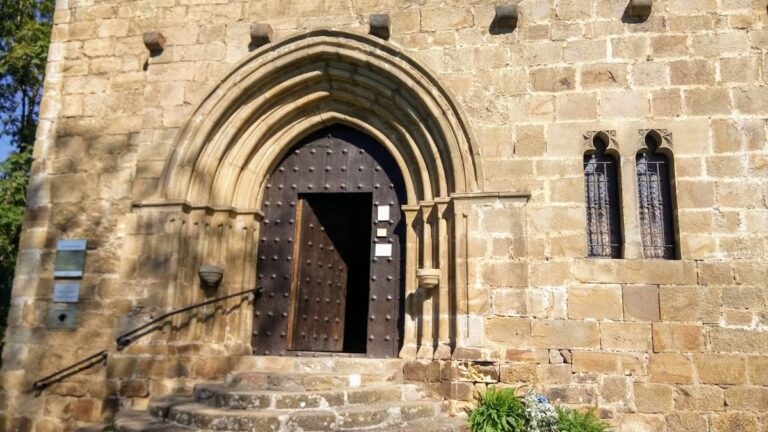
Pierre Picart built the façade around 1546, beginning with its central portal, which resembles the entrance to the Convent of Las Dueñas in Salamanca. Sculpted pilasters beside the portal carry figures carved in the round, reliefs, and small columns, then rise into turrets in a design inspired by the College of Santa Cruz in Valladolid. Similar pilasters mark the corners of the lateral towers, which extend one storey above the main building. Warrior figures crown the four turrets and six additional roof peaks on the side blocks. The sculptures were intended to present students with virtues drawn from pagan and Christian traditions: Hercules, the Greek mythological hero, appears at the bases, while upper sections include martyrs, virtues, and saints, some associated with learning. Saint Augustine and Saint Jerome, influential early Christian theologians, flank the entrance; above it are a praying image of Zuazola and the imperial coat of arms.
Chapel and altarpiece
The chapel contains a Plateresque altarpiece, an ornamental structure behind an altar, beneath a four-lobed ribbed vault, a vaulted ceiling whose ribs form four lobes. Its carving was commissioned in Valladolid in 1534 from woodcarver Gaspar de Tordesillas by the bishop of Ávila. The figures are attributed to Picart. Gilding and a decorative finish painted over gilding, often with scratched details, were probably entrusted the following year to Ávila painters Jerónimo Rodríguez and Cristóbal de Bustamante. The altarpiece has four tiers above a lower section called a predella, with seven vertical divisions separated by shaped uprights known as balusters. Its stepped arrangement uses freestanding figures rather than narrative reliefs. Central subjects include the Assumption of the Virgin Mary, patron saints of the university and town, the Holy Spirit, and Saint Michael the Archangel.