La Roche-Millay Castle: A Medieval Fortress and Eighteenth-Century Residence
Site at a Glance
- Popularity
- Low
- Country
- France
- Primary era
- Early Modern
- External website
- Open
- Eras represented
- Medieval, Early Modern
- Civilizations
- French
- Site type
- Domestic
- Remains
- Castle
On this page6 sections
History
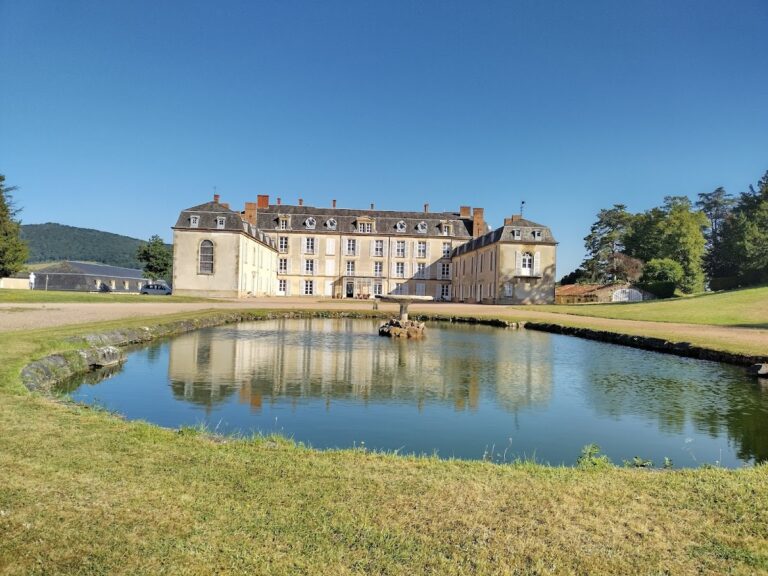
La Roche-Millay Castle is an eighteenth-century residence at Larochemillay in Nièvre, France. Its present building was begun in 1720 in the classical style, on the site of an earlier fortress. The medieval stronghold became the seat of one of the Nivernais’s earliest baronies and, by the twelfth century, the region’s most important feudal power.
Early fortress and medieval lordship
A castle existed here by the eighth century. It may have been destroyed in 762 during fighting between Waïfre, Duke of Aquitaine, and Pepin the Short, King of the Franks. A settlement grew below the fortress on elevated ground, under its protection.
Henri, lord of La Roche-Millay, Millay, and Chiddes, is the earliest known lord of Larochemillay. Around 1180, Henri’s great-granddaughter, of the house of Glenne, married Jean, lord of Châtillon-en-Bazois. In 1253, Jean II de la Roche-Millay led an armed raid on Autun to free Guy de la Perrière and other allied lords held in the chapter’s prison under church justice. He was ordered to return the prisoners and, with five accomplices, to make a penitential procession through churches in Lyon, Autun, Langres, Mâcon, and Chalon, wearing only a shirt.
In 1381, Guillaume de Mello held the lordship and castle through his marriage to an heiress of the Châtillon family. The old medieval castle burned in 1412.
Barons, counts, and the new castle
In 1642, René de Rousselé held the title Baron of La Roche-Millay. In the late seventeenth century, Louis XIV granted the title of count to his descendant Joseph-René de Rousselé, a colonel and aide-de-camp in the king’s armies. Construction of the present castle began in 1720 under Marshal Villars, who had bought the lordship from a son of the Constable of Montmorency, a senior French military officer.
On 15 April 1736, Count François de La Ferté-Meun purchased the lordship for 130,000 livres and had the building work completed by architect Michel-Ange Caristie. In 1760, Jacques-Louis de La Ferté-Meun held the title of count of La Roche-Millay and was lord of Solières and Cuzy.
The lordship before and after the Revolution
At the end of the pre-revolutionary French order, the lordship belonged to the Duchy of Nivernais, a feudal territory centered on the Nivernais region. It comprised four estates, thirteen forests, including Châtillon, La Grande-Gabrielle, La Gravelle, and Touleurs, and nineteen ponds with a capacity of 11,000 fish. Annual rents averaged 1,010 livres, matched by income from dues on certain land transfers. The territory under the keep’s authority included thirty-three lordships subject to all three levels of a lord’s judicial authority, and more than fifty subject to the middle and lower levels. Most of the lordship’s title documents were burned in 1792 during the French Revolution, which ended the pre-revolutionary political and social order.
The Noailles family acquired the castle through marriage in 1851, and the Montesquiou-Fezensac family later became its owners. It was listed as a historic monument in 2002.
Remains
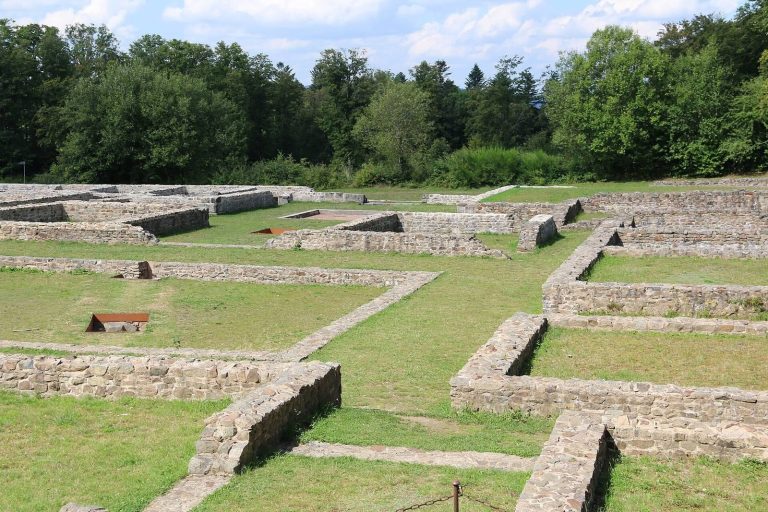
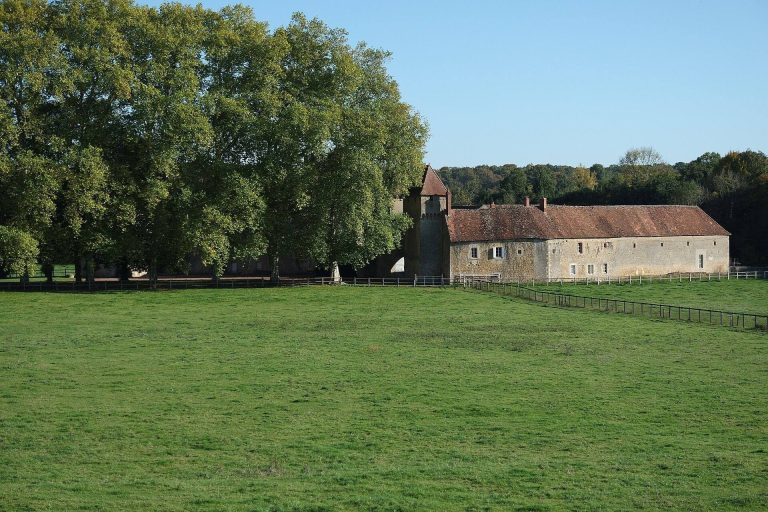
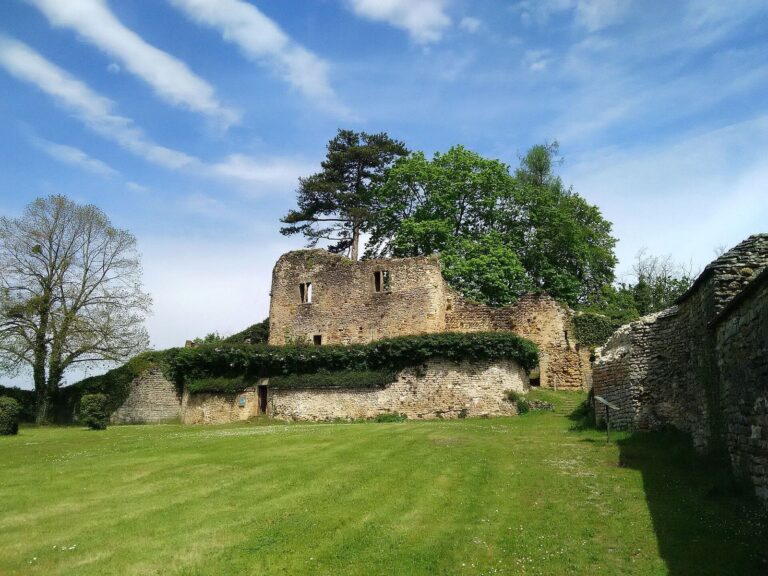
The castle occupies rocky, elevated ground on a peninsula where the La Roche River, also called the Séglise, meets a stream flowing from the Étang des Marauds. The site lies on the location of a former Roman fortified settlement. Two circular towers and sections of rampart wall survive from the medieval castle, alongside the foundation courses of its collapsed principal tower.
The classical residence
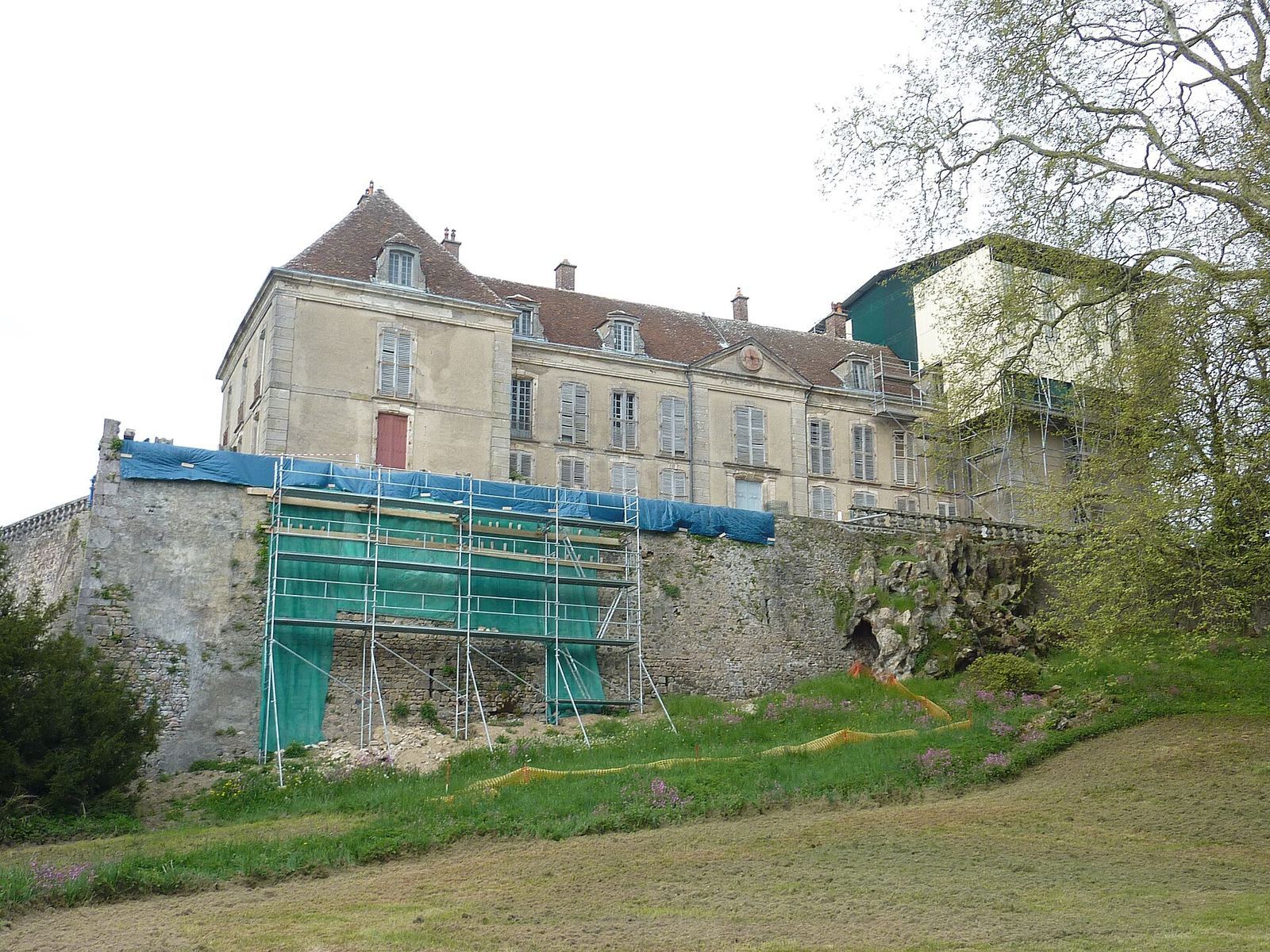
The present castle has a large residential block with mansard roofs, whose lower slopes are steep and upper slopes shallower, flanked by two rectangular pavilions. Its classical architecture is austere, and its design accommodated the foundation courses of the former tower. Interior decoration dates to the eighteenth century and was altered in the nineteenth. A fire on 18 December 2008 partly destroyed the eastern portion, and part of the enclosure wall collapsed in January 2017. Restoration was under way after the collapse.