Ullerup Church: A Medieval Parish Church in Denmark
Site at a Glance
- Popularity
- Very Low
- Country
- Denmark
- Primary era
- Medieval
- Eras represented
- Medieval, Early Modern, Modern
- Civilizations
- Danish, German, Kingdom of Prussia
- Site type
- Religious
- Remains
- Fortified Church
On this page14 sections
History
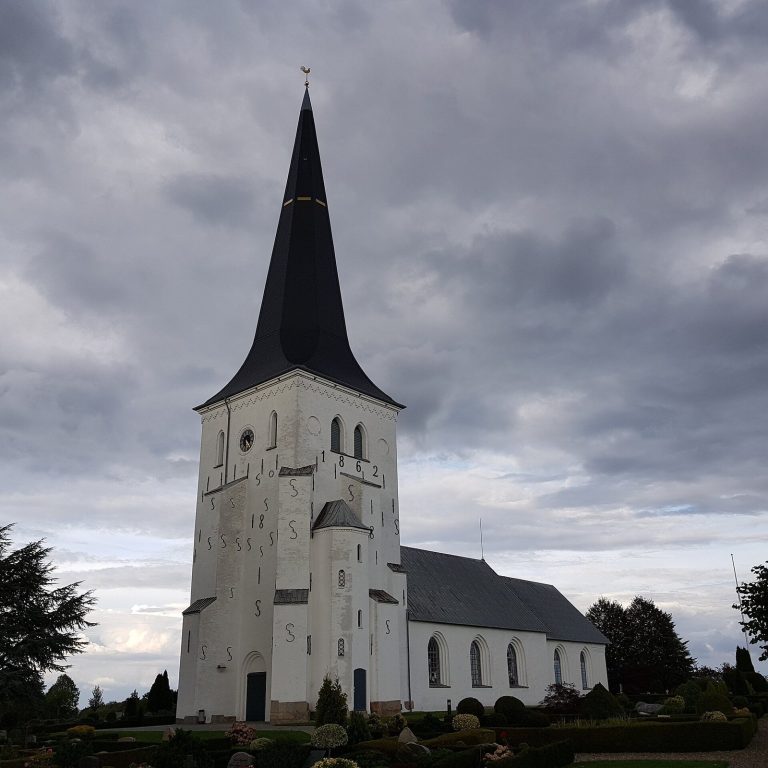
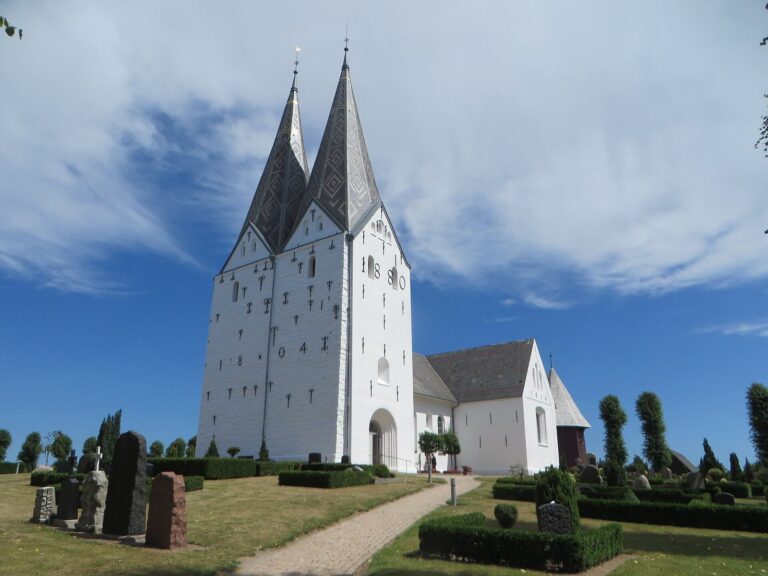
Ullerup Church is a medieval parish church in Ullerup, Denmark, built around 1200 and dedicated to Saint Lawrence, an early Christian martyr who was widely venerated. It belongs to Ullerup Parish and Pastorate, within Sønderborg Deanery and the Diocese of Haderslev.
Medieval foundation and additions
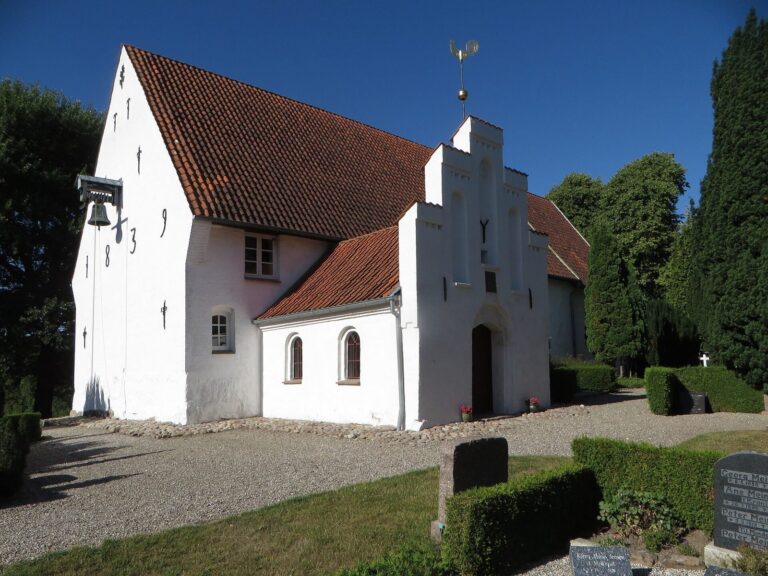
The church’s original building phase dates to the late twelfth century. Its nave, the main worship space, and chancel, the altar end, formed part of that early church. Separate doors in the north and south walls served men and women, who sat apart during services.
A south chapel was added around 1500 as a burial place for the owners of Blansgaard manor. It is also called the Blansinger Chapel.
The bell and later changes
The church bell was first cast around 1500 and recast in 1632. It was then installed at Lidt Church on Nordstrand. When that church was destroyed by the flood of 11 October 1634, the bell was recovered. Ullerup Church bought it in 1640, with Duke Philip’s permission, for 800 marks. Four men and eight horses brought it to Ullerup.
A porch was built in 1613 and demolished in 1858. The church remained under German rule until the 1920 reunification, when parts of Schleswig, including North Schleswig, returned to Denmark after a plebiscite.
War and remembrance
During the Second Schleswig War of 1864, fought between Denmark and Prussia and Austria, Danish soldiers used the church in the fighting. They cut narrow firing openings in its walls and built low protective barriers in the windows.
Remains
Exterior and churchyard
Church fabric and layout
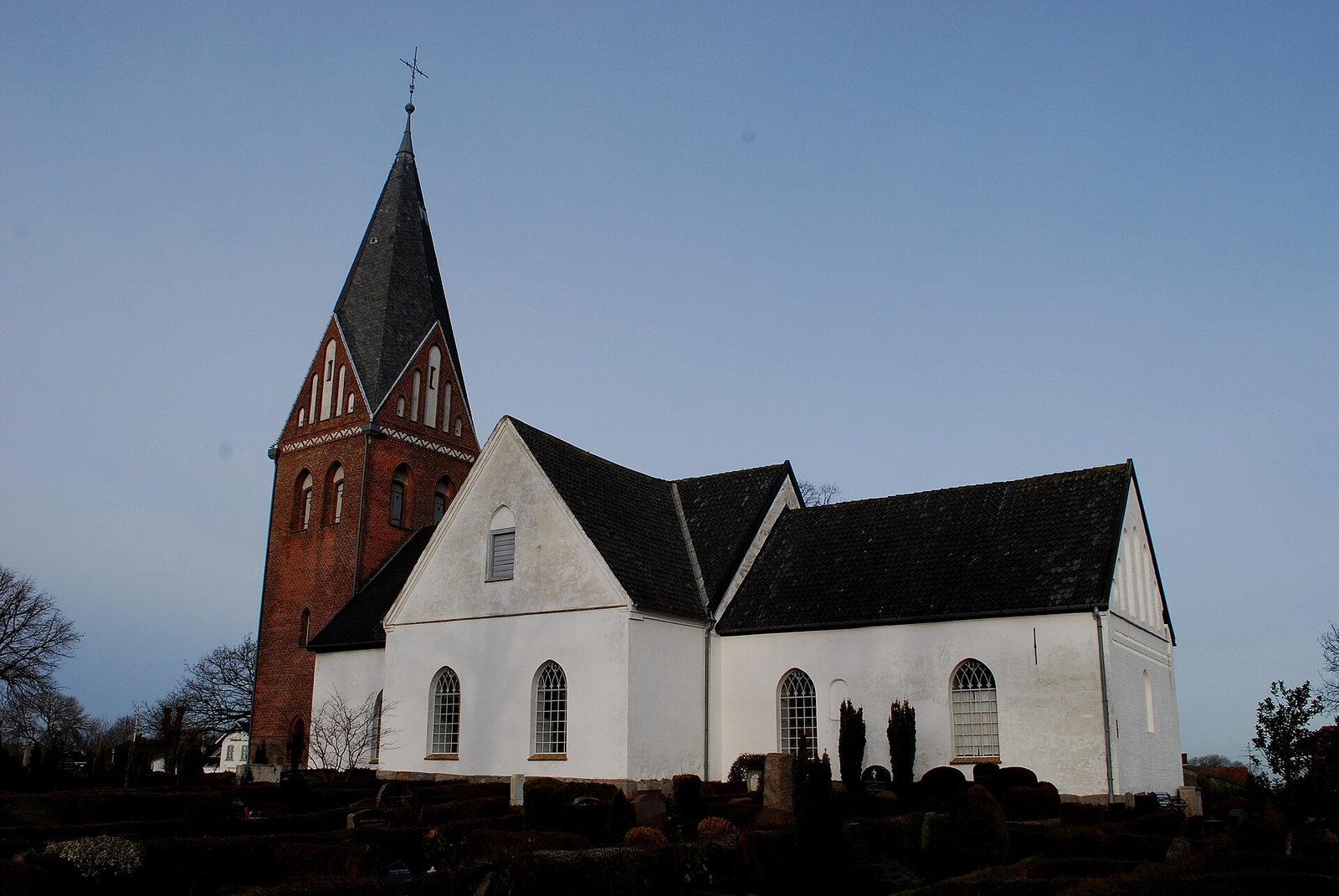
The church stands in the centre of Ullerup, amid a village setting that includes older thatched houses. Its walls rise about six metres, with dressed stone blocks on the exterior and fieldstone inside. The roof, originally tiled, was later covered with lead and is now tiled again. The nave has changed little, while the chancel has been altered; its foundations preserve traces of an earlier rounded apse. Pointed stone vaults cover the chancel and south chapel. Two Romanesque, or early medieval, windows survive on the chancel’s north side. They were reopened and fitted with stained glass in 1969 by Lisbeth Munch-Petersen and Poul Høm of Gudhjem.
Tower and carved doorway panel
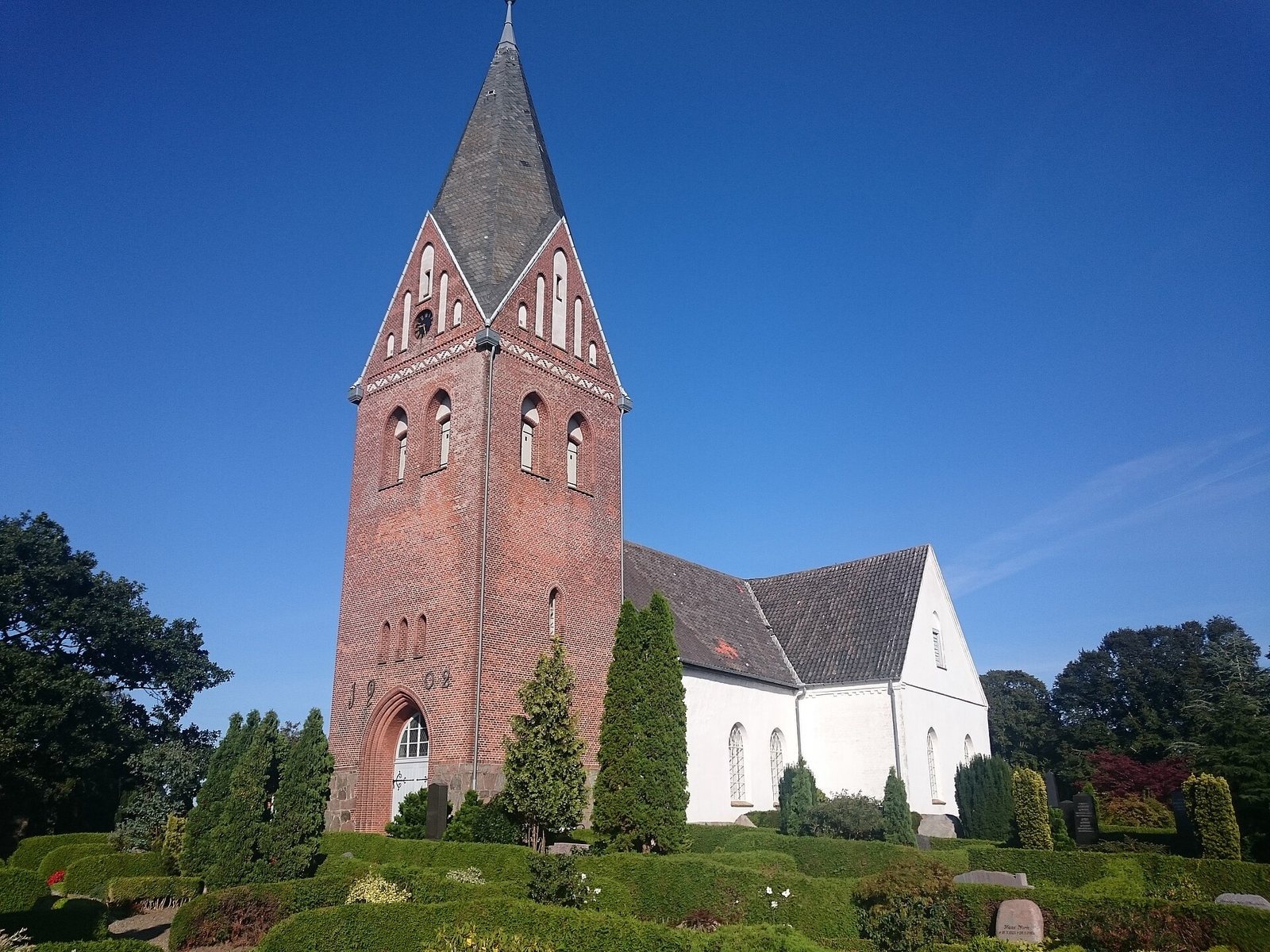
The tower, built in 1902, has a slate-covered spire. Three panels listing pastors are displayed in its room. The two oldest include small roses in their corners and were painted by Henrik Vilhelm Eckersberg, a carpenter and painter from Blans and the father of Christoffer Wilhelm Eckersberg, a leading Danish Golden Age painter. A carved granite doorway lintel, also described as a tympanum (a decorated panel associated with a doorway), depicts two lions with a cross between them. After parts of the carving became separated from the church during rebuilding, one was used as a doorstone at a property in Blans and the other was found in the churchyard wall. Both were taken to Sønderborg Castle’s museum before the lintel was returned. It now hangs on the south chapel’s west wall.
Churchyard wall and memorials
A stone wall encloses the churchyard, with sections dating from the 1860s. During work then, the original boulder wall was relaid and its stones split. The wall had kept loose livestock out. The grounds hold two monuments to Danish and German dead from the Three Years’ War, the 1848–51 conflict over Schleswig. A granite obelisk commemorates 40 people killed in 1864, alongside three gravestones for Danish dead from that year and one for a German soldier. A separate memorial stone honours 73 Danish-minded people from the parish who died in the First World War.
Interior and furnishings
Ceiling, pews, and gallery
The interior is whitewashed, with a flat, beamed ceiling and subdued colors that include blue-black marbling. The pews and gallery date from a restoration around 1860. Gallery panels show clouds and partly nude female figures. One depicts God holding a globe above an inscription translated as “God’s providence and human folly rule the world.”
Altar and carved furnishings
The brick altar table has a decorative fabric covering for its front, designed by John Becker and woven by his wife, Kirsten Becker. The Baroque altarpiece, in a later ornate European style, was carved in 1707 by Anthon Günther Frese, a sculptor from Als. It shows Christ on the cross between Mary and John, with Mary Magdalene below. Its upper panels depict the Resurrection and Ascension, while the base shows the Last Supper. The paintings are original, though the painter is unknown; Skjold Lund carved replacement side wings in 1858. Two matching enclosed pews stand beside the altar. They were probably used as a parish clerk’s seat and a confessional.
Baptismal fonts and vessels
The Gothic baptismal font, in a later medieval European style, is carved from Gotland limestone and was probably made on Gotland around 1400. It was not made for this church. Discarded around 1830–40, it was used as a garden planter in Blans. A wooden replacement, used from 1839, was modeled on the font at Ulkebøl Church and painted in shades of brown. The limestone font returned in 1926 and was restored in 1967 with a new base and upper rim. The baptismal dish, dated 1927, bears the words “Let the little children come to me”; the jug dates from 1960.
Pulpit and crucifix
The oak Renaissance pulpit, from a European artistic style that followed the medieval period, dates from 1578. Its panels combine half-rosettes beneath arches with armored male busts framed by leaf-like scrollwork; the figures wear different hats and helmets. Latin inscriptions address the importance of preaching, including the words “The word of the Lord endures forever.” Its five-sided sounding board was made in the 1790s. The pulpit’s place of manufacture is unknown, though it closely resembles several examples from the Tønder region. A small crucifix on the north side of the chancel dates from the late fifteenth century and probably came from a larger carved medieval altarpiece.