Tvrz Svojšice: A Medieval Stronghold in Czechia
Site at a Glance
- Rating
- 4.5
- Popularity
- Low
- Country
- Czechia
- Primary era
- Medieval
- External website
- Open
- Eras represented
- Medieval
- Civilizations
- Holy Roman Empire, Kingdom of Bohemia
- Site type
- Military
- Remains
- Castle
On this page10 sections
History
Tvrz Svojšice is a medieval stronghold in Czechia, in the village of Svojšice, probably founded before 1365 as the centre of a noble estate. It served a minor noble family using the byname “of Svojšice” and combined residential, administrative, and defensive functions. By 1365, the settlement may have been the residence of Mikeš of Svojšice.
The Svojšice family and estate
At the turn of the fourteenth and fifteenth centuries, the stronghold belonged to Kateřina, also known as Anna, of Svojšice. She was the daughter of an earlier unidentified owner and the widow of Heřman of Mrdice. In 1405, she married Václav Ruthart of Malešov and secured a dower of 400 kop of groschen against the stronghold, the manorial farm, and the villages of Svojšice, Stojice, Holotín, and Rašov. A kop was a Central European accounting unit equal to sixty groschen.
Kateřina was widowed again before 1407 and probably managed the estate herself. In 1413, she registered a debt of 1,300 kop of groschen for the children of her late husband, Petr, Mikuláš, Markéta, and Benigna of Malešov. After her death around 1415, Petr and Mikuláš paid their sisters’ claims and adopted the byname “of Svojšice.” The brothers held the estate jointly in 1450, when they acquired a pledge on Svojšice worth 400 kop of groschen from the Komárovský brothers and Přibík of Skorotín. Petr was still alive in 1463.
Inheritance and expansion
In the second half of the fifteenth century, Svojšice belonged to Jan of Svojšice, who died in 1497. His son Petr inherited the estate and died around 1523. The property then passed to his sister Kateřina of Svojšice, who was successively married to Beneda of Nečtiny and Jiří of Gerštorf, the under-chamberlain.
Kateřina had the estate entered in the renewed land registers. It comprised Svojšice, its farm and stronghold, the villages of Stojice, Holotín, and Rašov, a mill below Svojšice, and the right to appoint the priest at the Church of All Saints in Stojice. In her will of 1545, she left the property to Jiří of Gerštorf for his lifetime after her death in 1546. It was then to pass to her sons from her first marriage, Albrecht and Beneš Beneda of Nečtiny. Her daughters, Žofie of Nečtiny and Johana of Gerštorf, were to receive dowries of 250 kop of groschen. The children later renounced their inheritance and transferred it to Jiří of Gerštorf in return for 2,000 kop of groschen.
After Jiří’s death, his son Bernard retained Choltice, while Svojšice and its associated property passed to Jiří’s brothers, Jiří and Jindřich of Gerštorf. The estate had by then grown to include Svojšice, Stojice, Holotín, Rašov, Turkovice, Bukovina, Ledce, Luhy, Podhořany, Březinka, Hošťalovice, and Horní Vícemilice. It also included the site of a former stronghold at Stoupec, along with numerous fields and economic installations.
Because the younger Jindřich was still underage, the brothers held the property jointly for nine years. On 6 August 1568, they divided it. Jindřich received Podhořany, while Jiří retained Svojšice, Stojice, Holotín, Ledce, and Vícemilice.
The Gerštorf owners
Jiří of Gerštorf, later distinguished as “the Elder,” was involved in property disputes and attacked the burgher Jakub Voříšek in his house at Heřmanův Městec in 1559. He married Kateřina of Rokyc, placing a dowry of 2,000 Bohemian groschen on the Svojšice estate, and died around 1597.
Their daughter, Kateřina of Gerštorf, kept her mother’s dowry intact, settled a debt of 2,000 Meissen groschen owed to Jan the Younger of Dobřenice at Barchov, and sold Svojšice on 3 June 1599. The purchaser was Johana Gerštorfová of Rokyc at Choltice, the wife of Jiří the Younger of Gerštorf.
Jiří the Younger died in 1613. Johana survived him by seven years and administered the Choltice estate for their underage son Jindřich. In her will of 1615, she assigned Bernard Mikuláš a share worth 5,000 kop on Choltice, left the Svojšice stronghold and its appurtenances to her second son Štěpán, and granted her daughter Anna a dowry of 6,000 kop from Svojšice.
War, ruin, and conservation
Štěpán administered the Svojšice and Choltice estates as guardian. His participation in the Bohemian Estates Revolt of 1618–1620, the opening Bohemian phase of the Thirty Years’ War in which supporters of the estates opposed the Habsburg monarchy, led to the confiscation of both properties. He was reportedly killed with his brother by peasants while fleeing Svojšice.
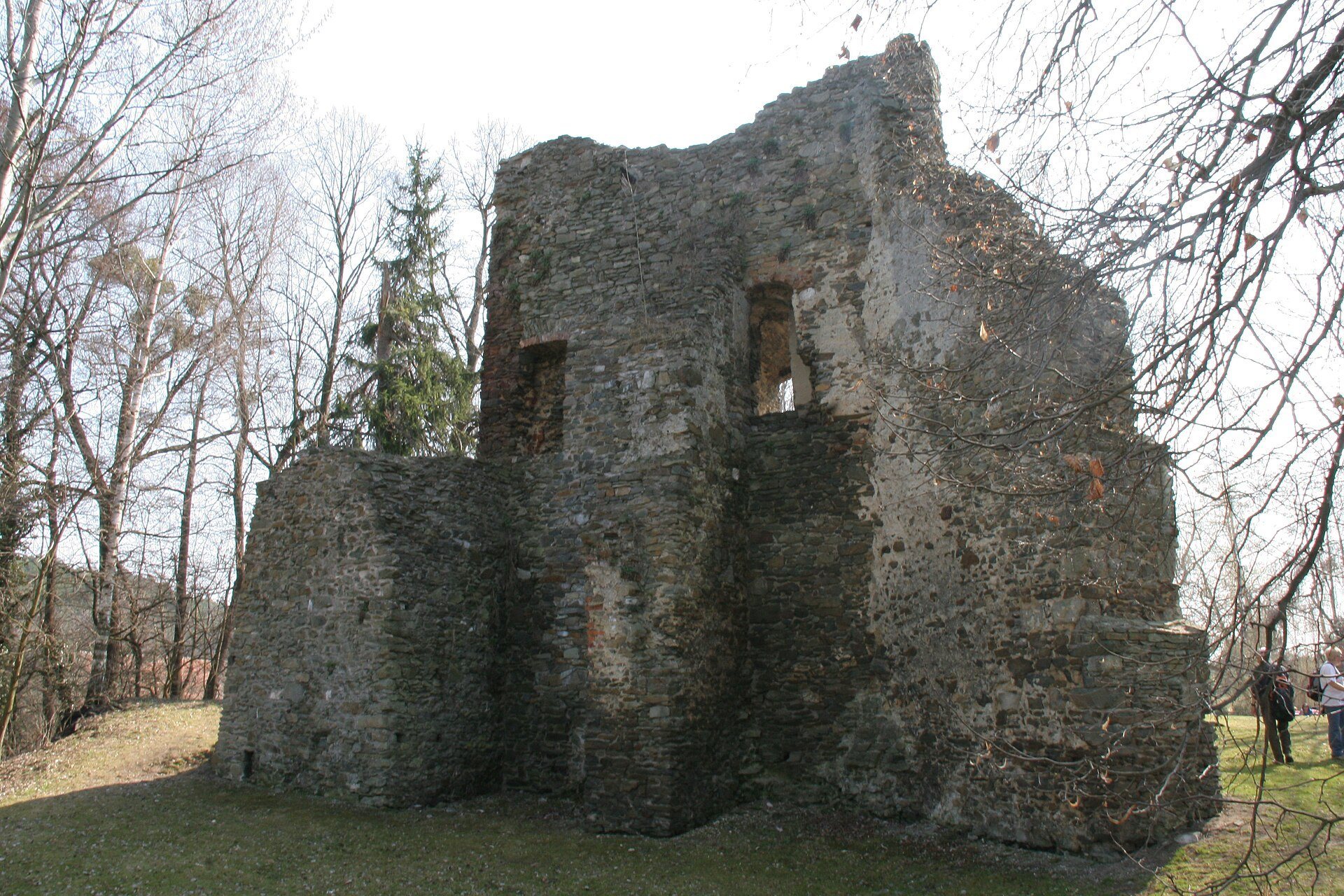
Kryštof Šimon Thun purchased the confiscated estate. During the Thirty Years’ War, the Imperial army burned the Svojšice stronghold. After the fire, it gradually became a ruin. In the nineteenth century, one room within the ruin was converted into a forester’s dwelling. The Club of Czech Tourists and the Free Association of Friends of the Svojšice Stronghold undertook emergency conservation in 1940 and 1941, removing rubble and consolidating the surviving vault. The ruin is protected as a cultural monument.
Remains
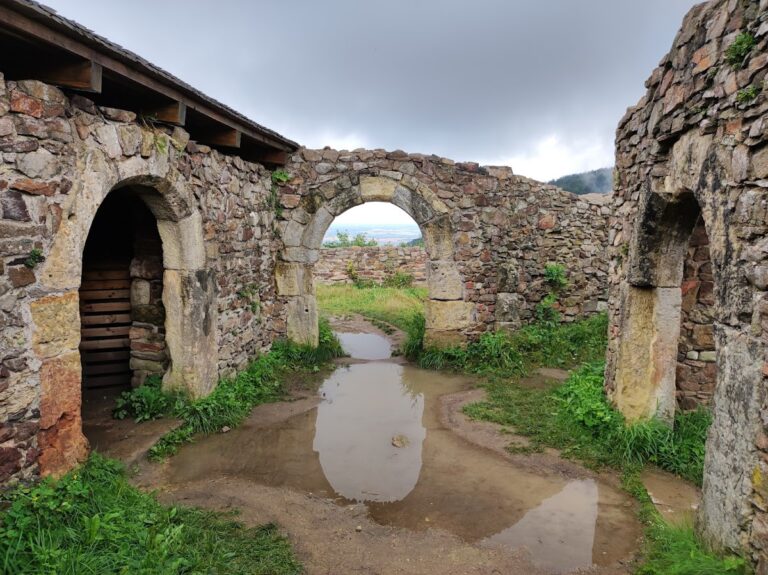
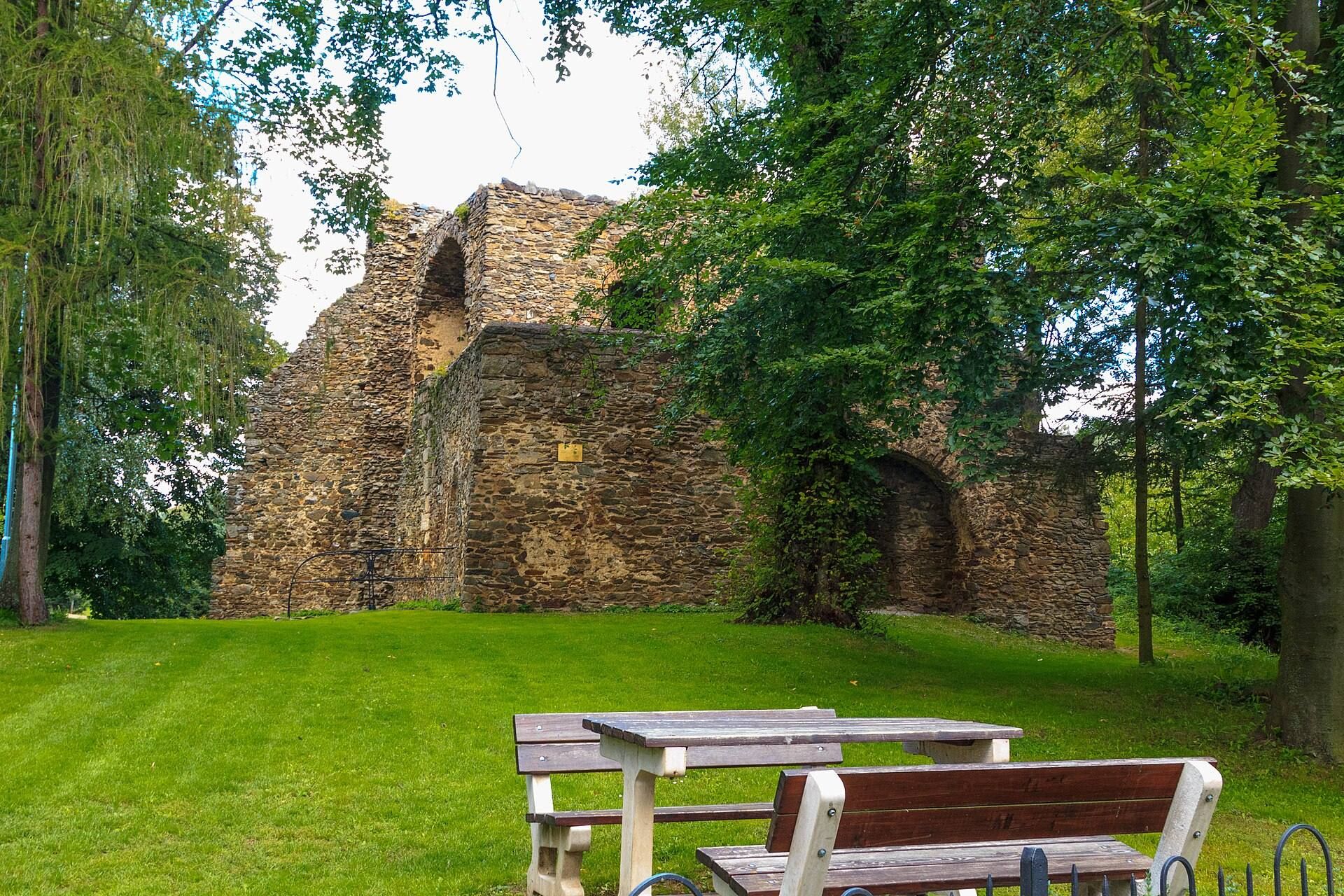
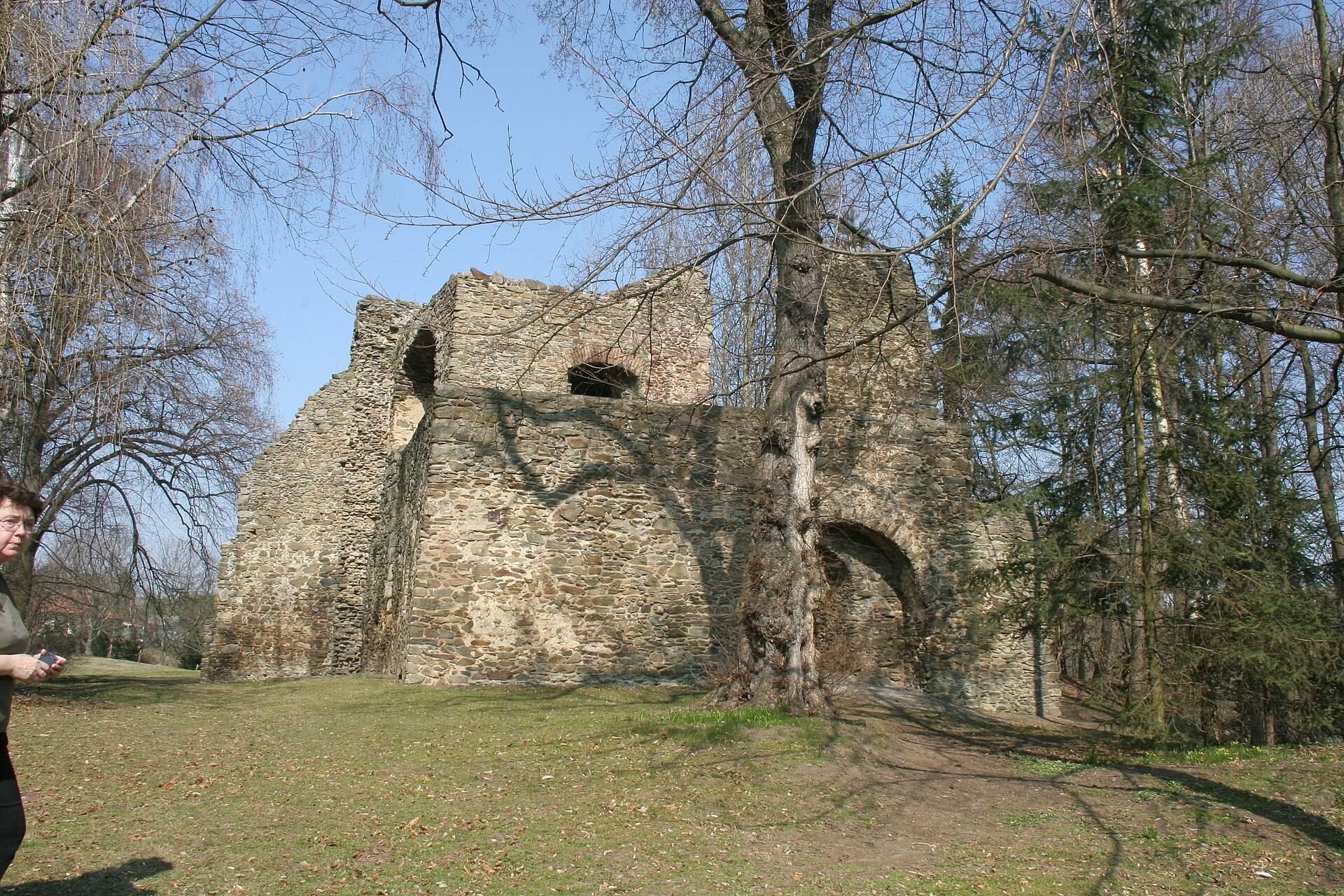
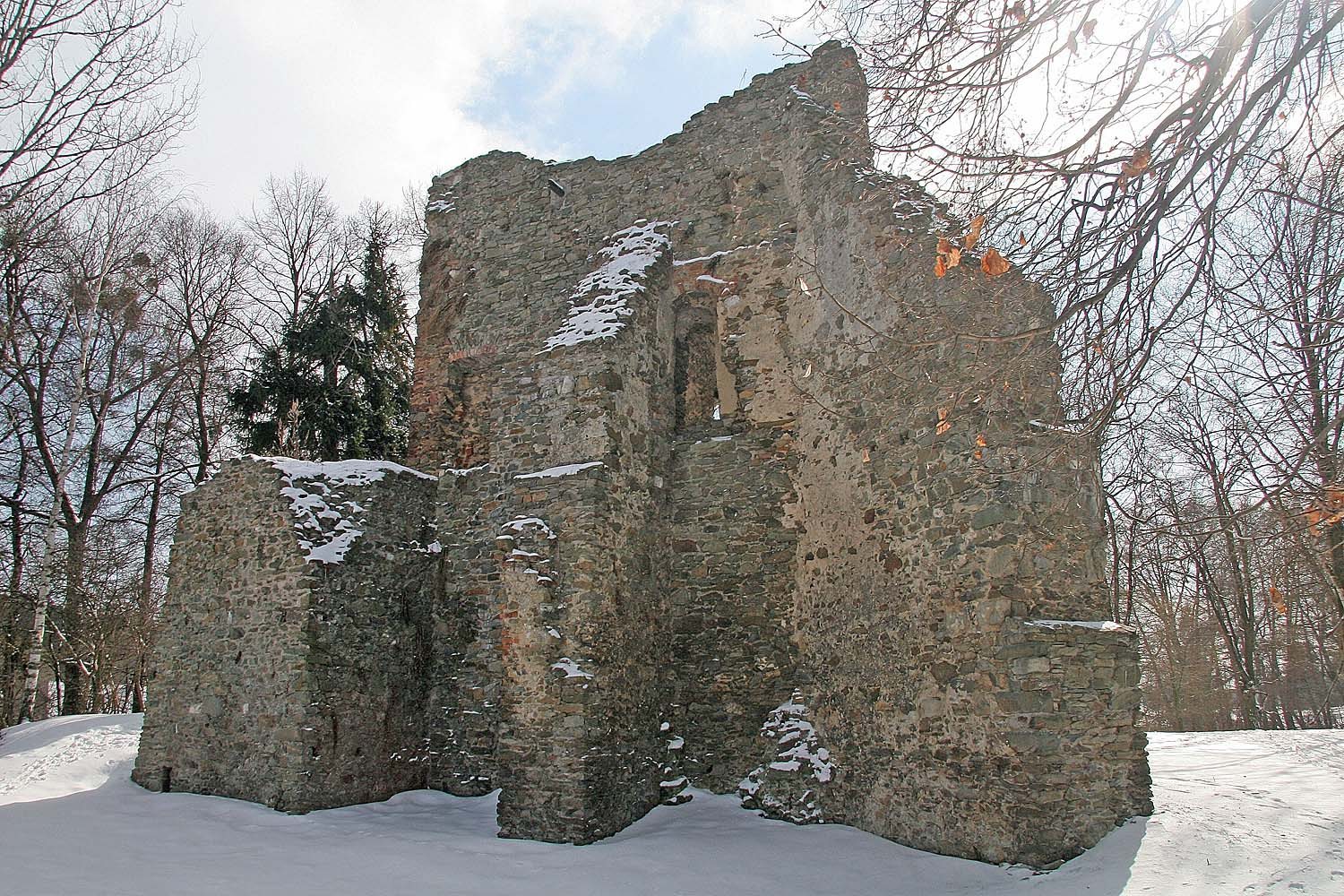
The stronghold occupies the eastern part of Svojšice village. Its irregular plan developed as an originally tower-based stronghold was enlarged in successive stages. Masonry survives approximately to first-floor level, although part of the perimeter wall is missing on the west facade. Fragments of the original plaster remain visible in several places, preserving evidence of the building’s earlier finishes.
Vaulted interior
Ground-floor rooms
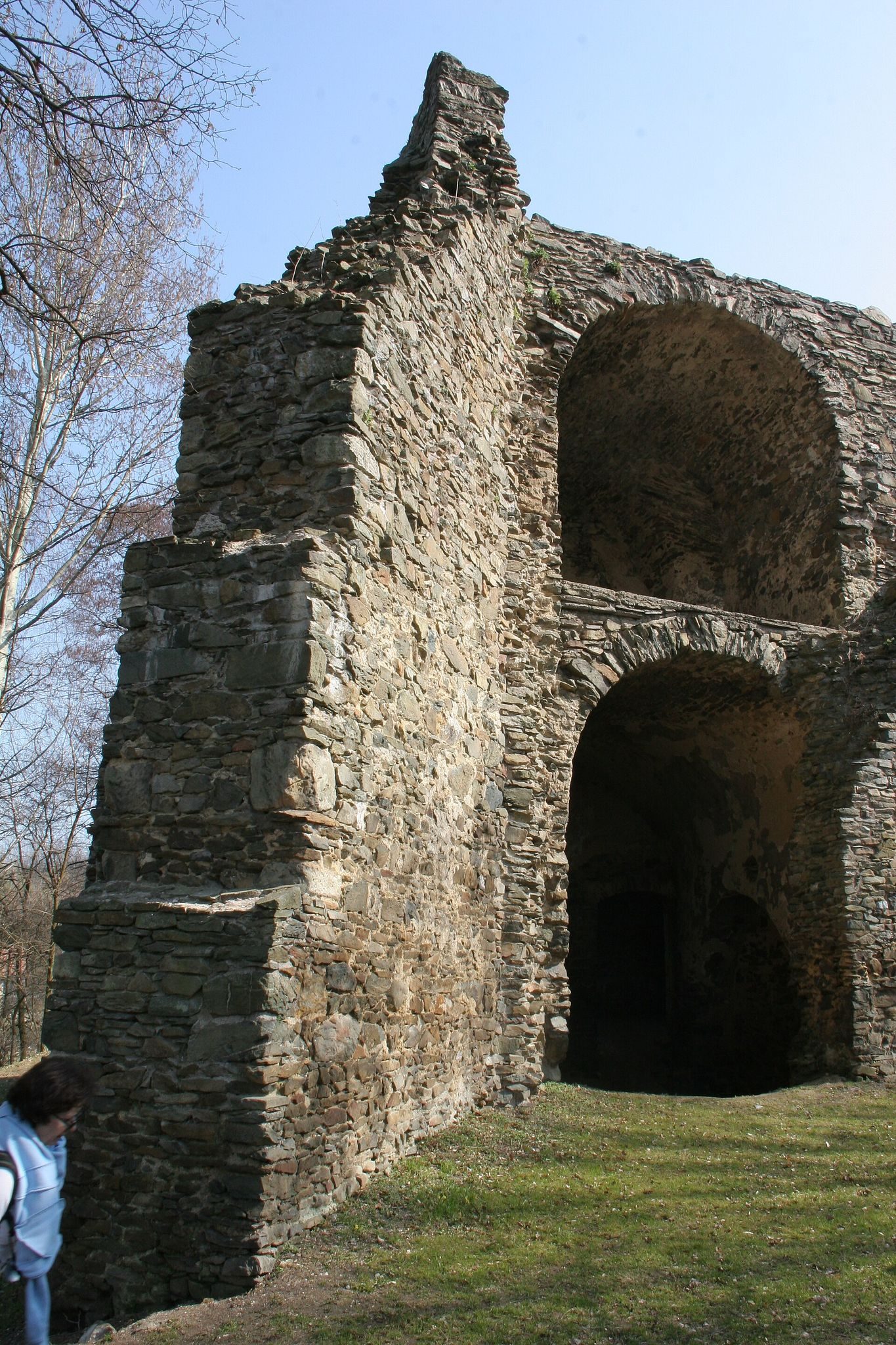
The ground floor contains two rooms covered by barrel vaults and a barrel-vaulted corridor. A barrel vault is a continuous semicircular or segmental vault extending along the length of a room. Several niches survive within these spaces, adding detail to the remaining interior structure.
First-floor remains
Barrel-vaulted spaces also survive on the first floor. A modern concrete terrace occupies part of this level, alongside the masonry and vaulted remains of the earlier stronghold.
Cellars
The cellars contain two rooms with barrel vaults. A third cellar room survives with its ceiling collapsed, forming part of the fragmentary lower structure beneath the stronghold.