Turóbriga: A Roman Agricultural City in Spain
Site at a Glance
- Rating
- 4.5
- Popularity
- Medium
- Country
- Spain
- Primary era
- Classical
- Eras represented
- Iron Age, Classical, Medieval, Early Modern
- Civilizations
- Celtic, Crown of Castile, Roman, Spanish
- Site type
- Settlement
- Remains
- City
On this page12 sections
History
Foundation and Roman life
Turóbriga, also called Arucci Turóbriga, was a Roman city founded between 15 and 10 BC under Augustus at present-day Aroche in Huelva, Spain. It stood in Celtic Baeturia, an ancient region of southwestern Hispania, on the site of an earlier Celtic settlement. The city’s foundation brought Roman efforts to control the area to a culmination after agricultural colonization had intensified from the second century BC.
Its inhabitants included people from at least two pre-Roman centers. Arucci may have lain beneath modern Aroche, while Turóbriga was associated with one of the hillforts abandoned after the Roman city was founded. Latin settlers also joined the population, and inscriptions name some of them. Turóbriga was chiefly an agricultural center and helped oversee nearby mining settlements. It existed at the same time as nearby Arucci Vetus, identified with present-day Aroche.
Pliny the Elder, a first-century Roman author and naturalist, gives the earliest surviving written mention of Turóbriga and places it in Baeturia. The unusual order of names in his list led to proposals that the city may once have been called Eurobriga, Iurobriga, or Ataecina. Inscriptions sometimes invoke Ataecina Turibrigensis alongside Proserpina. Ataecina was an ancient Iberian goddess associated with Proserpina, a Roman goddess linked to the underworld and the seasonal cycle of vegetation. Turóbriga may have been the principal Roman-period center of Ataecina’s worship.
Expansion and abandonment
The city grew considerably under the Flavian dynasty, which ruled Rome from AD 69 to 96, and was enlarged under Hadrian in the mid-second century AD. Hadrian reigned from AD 117 to 138. Occupation continued into the early third century, when abandonment began under the Severan dynasty, which ruled from AD 193 to 235.
Reuse and archaeological work
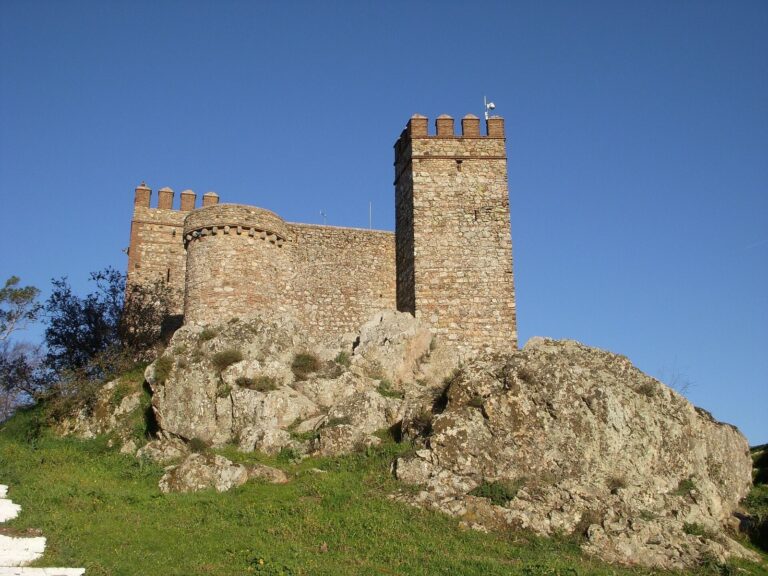
After abandonment, much of the city’s building material was taken for nearby villas and buildings in Aroche, especially Aroche Castle and the Hermitage of San Mamés. Excavation began in 1996 alongside work to rehabilitate the hermitage. The University of Huelva’s archaeological team, led by Juan Manuel Campos Carrasco, has investigated and interpreted the site. In 2008, Turóbriga was designated an Asset of Cultural Interest as an archaeological zone; the Hermitage of San Mamés received monument designation.
San Mamés, Aroche’s patron saint, may have been introduced to the area by Castilian-Leonese settlers after the Christian conquest, or through the Mesta, a powerful Castilian association of sheep owners that organized seasonal herding. A pilgrimage in his honor is held at Los Llanos de la Belleza.
Remains
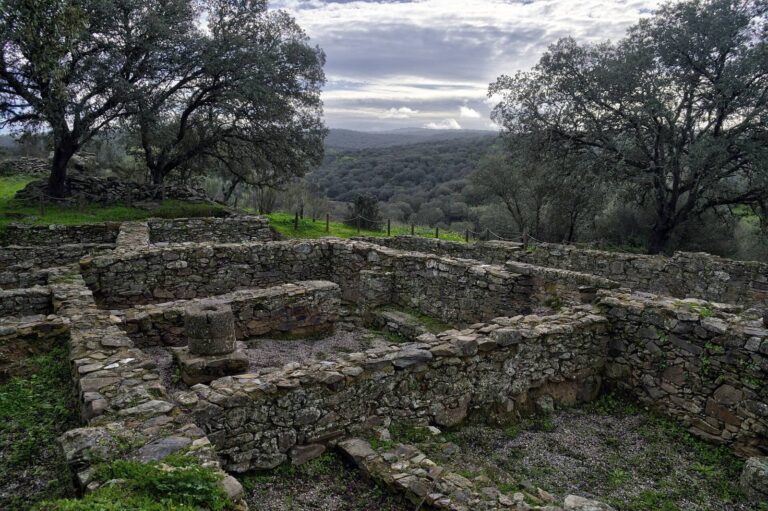
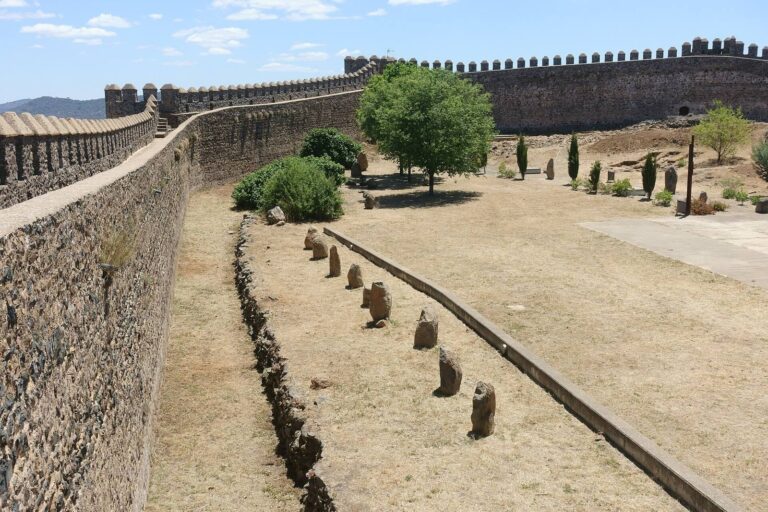
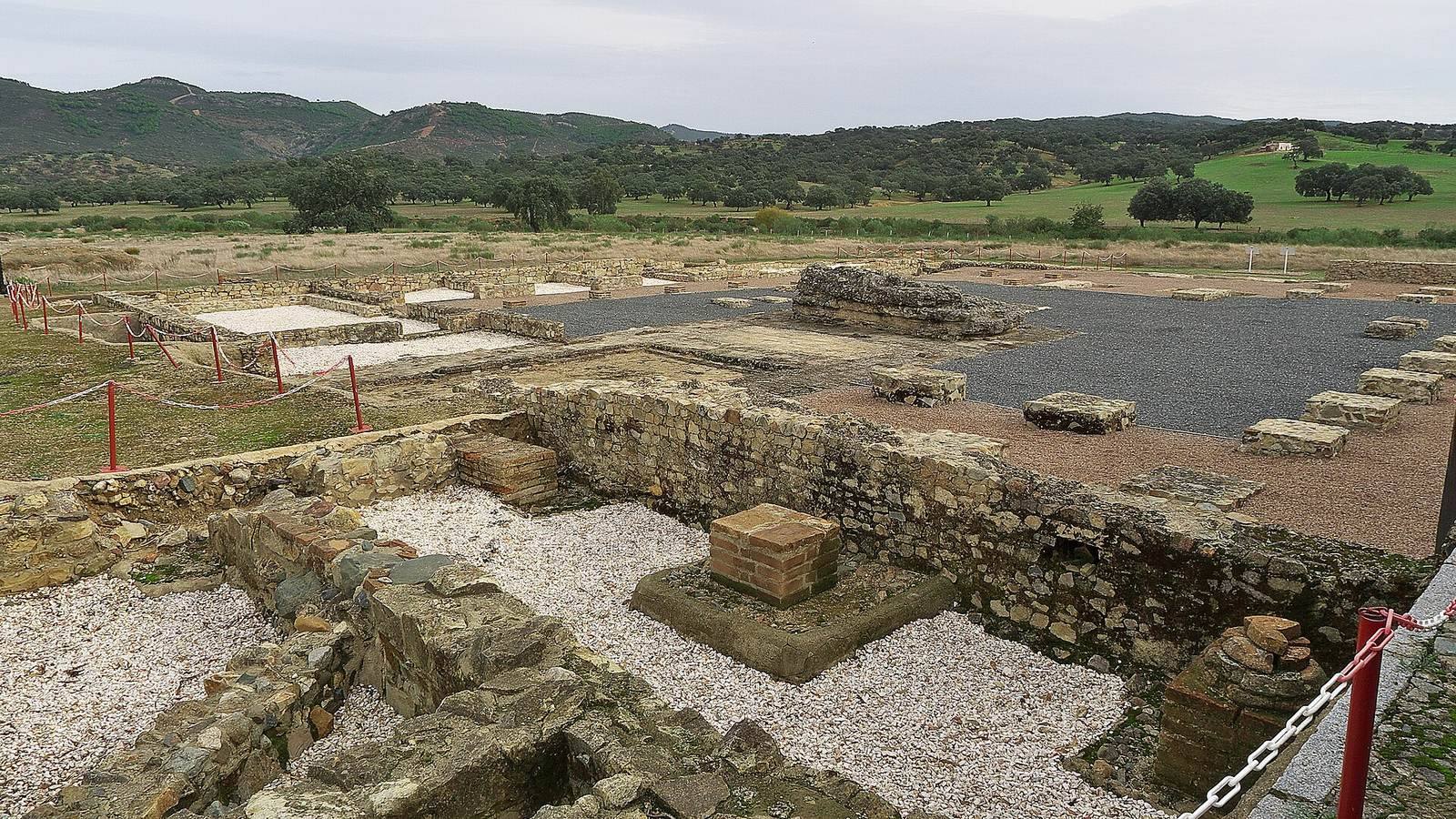
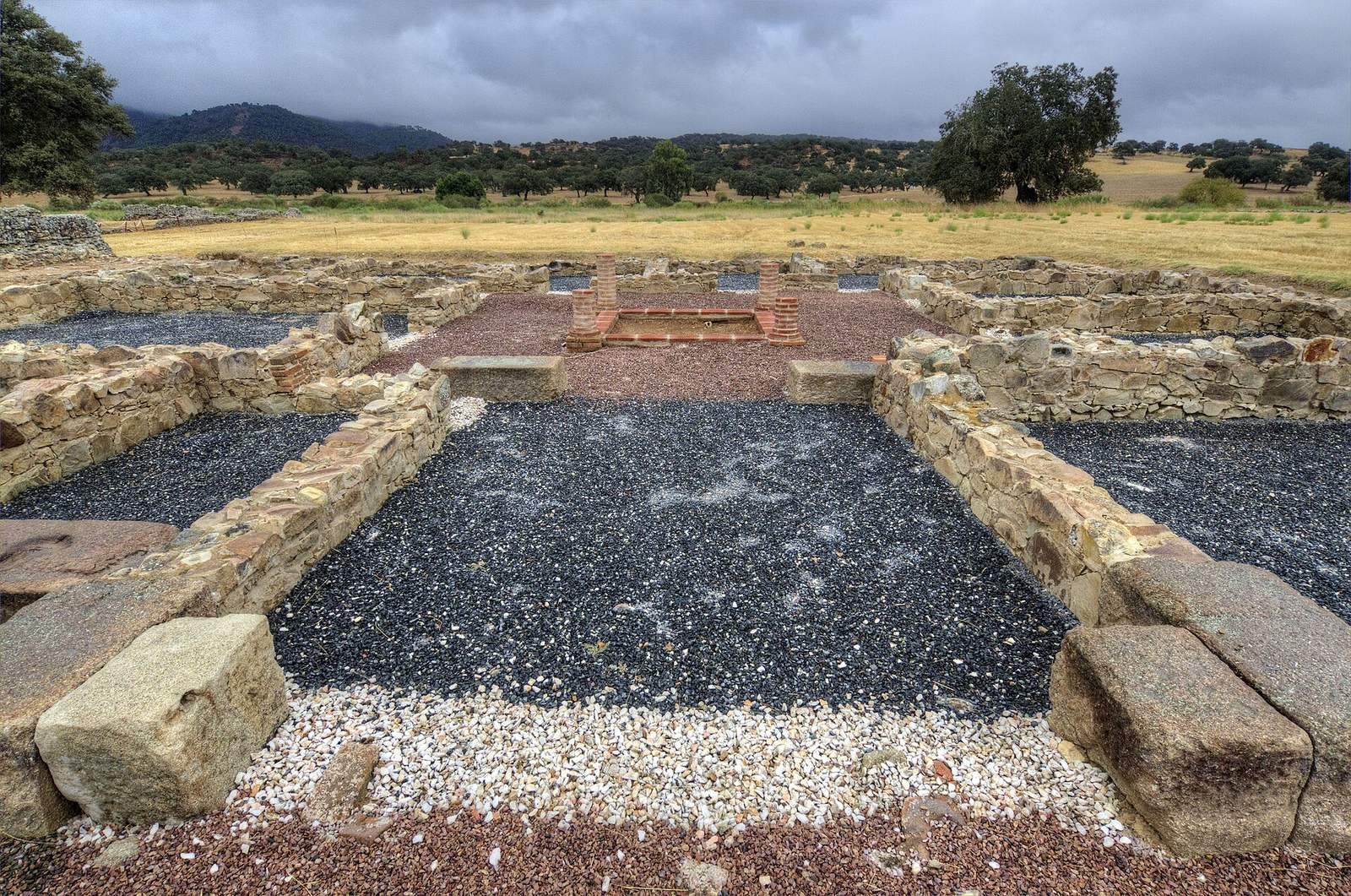
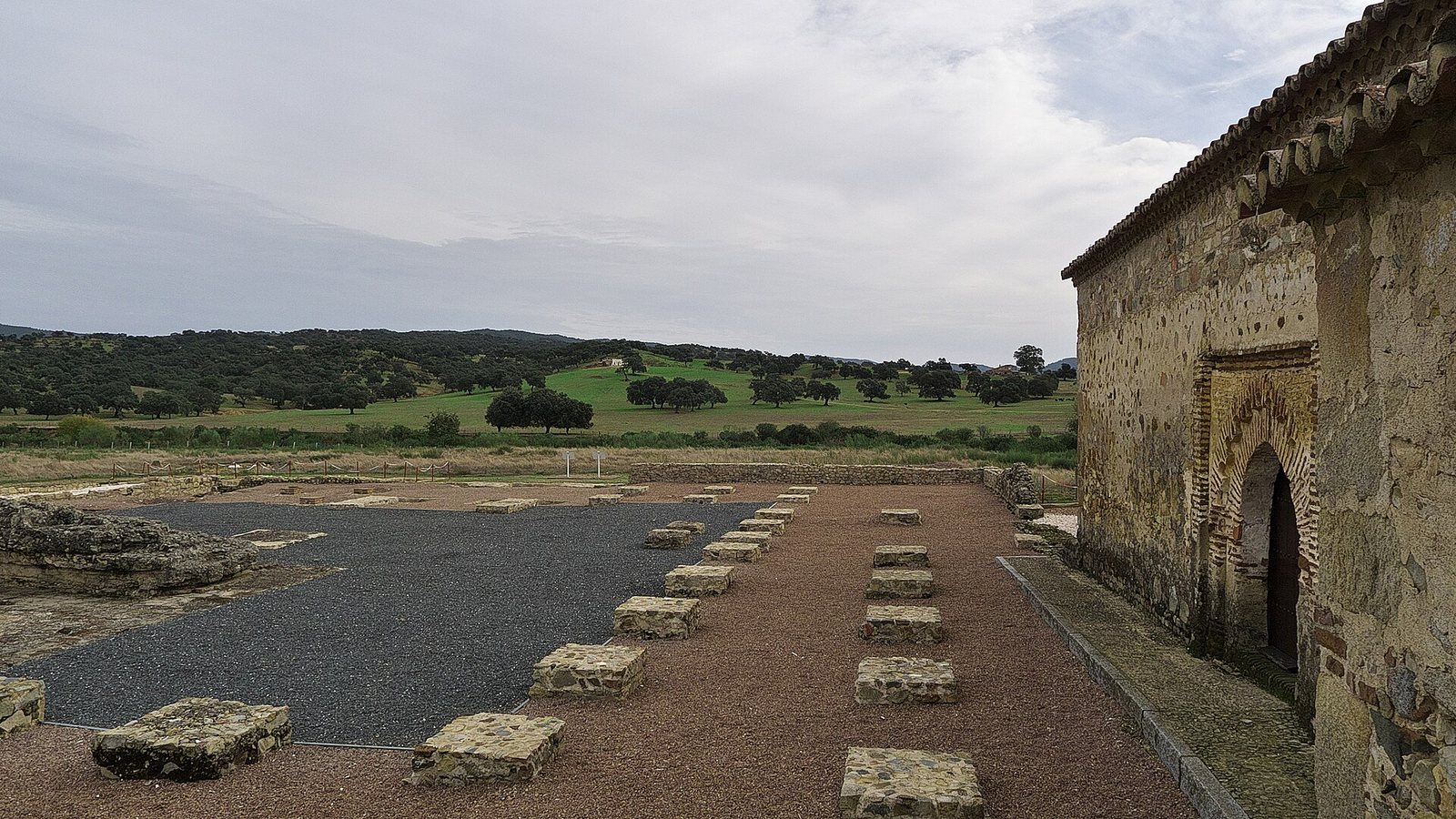
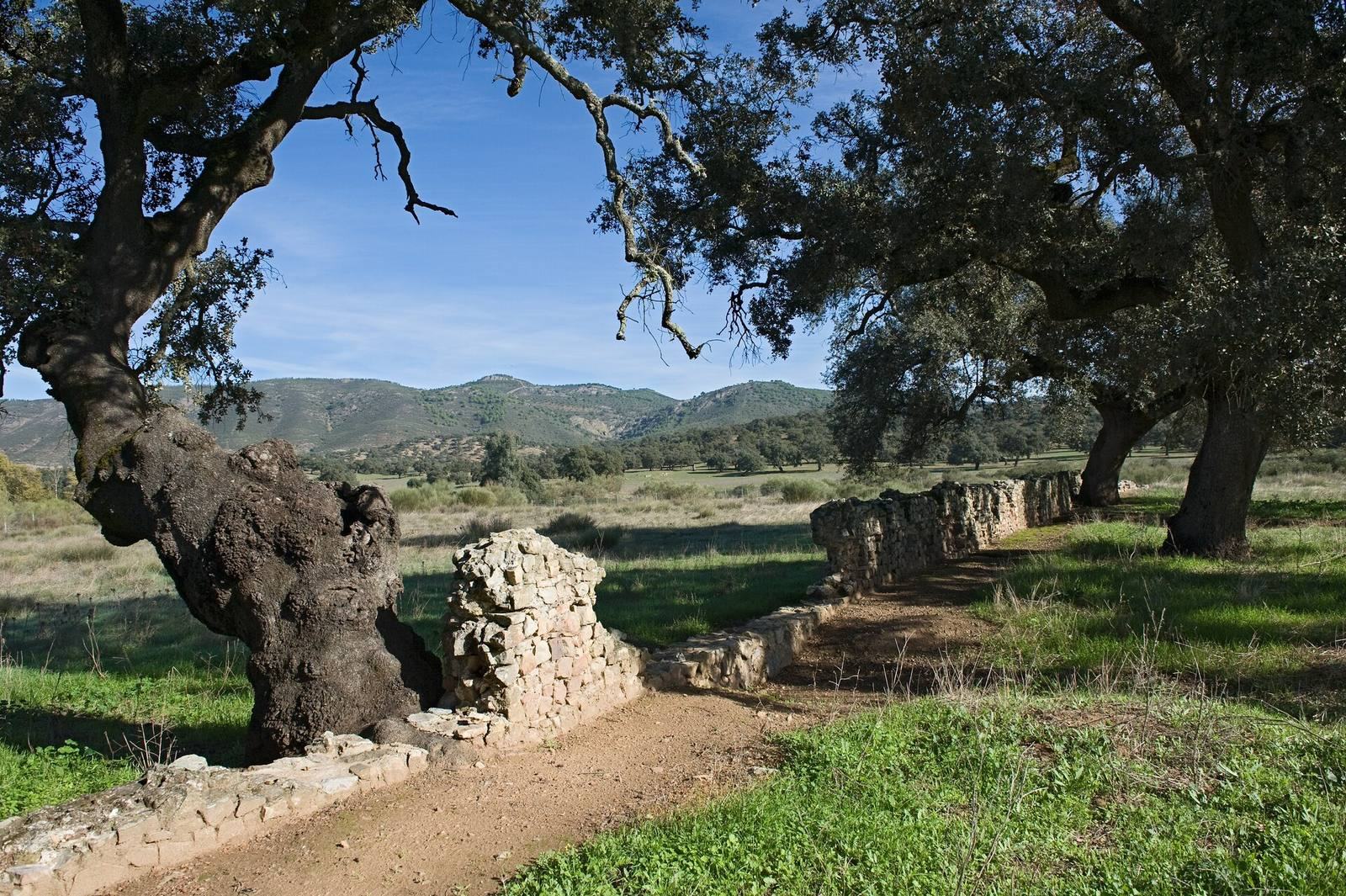
The archaeological area covers twelve hectares, and the city’s overall plan remains substantially intact. Excavated remains include civic and commercial buildings, residential areas, training grounds, sections of the city wall, and part of the northern cemetery.
Roman city remains
Public and training areas
The forum, the city’s public civic center, lies beneath the Hermitage of San Mamés. Other excavated public features include baths and a market. The site also contains the Field of Mars, a military training area, and a campus, an open space used for exercise and training.
Residential district
Excavated homes include the Column House, the Peristyle House, and the North House. A peristyle is a courtyard surrounded by columns.
City wall and cemetery
Excavation has exposed part of the city wall and a portion of the northern necropolis, or cemetery.
Hermitage of San Mamés
Building and earlier remains
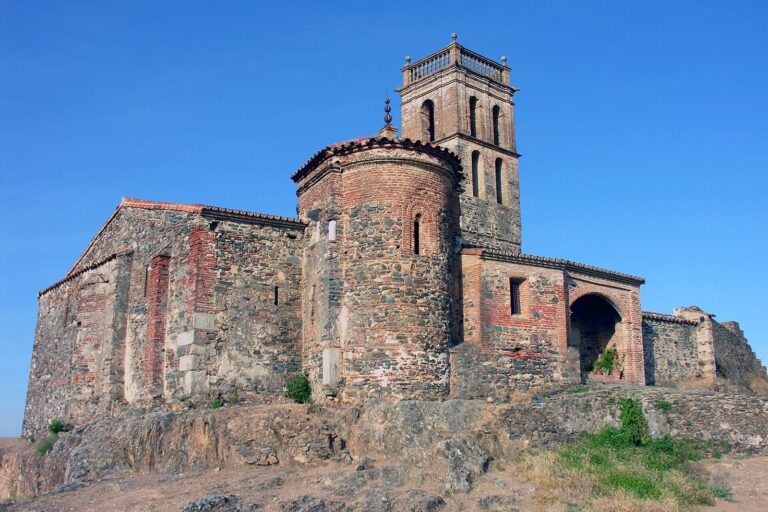
The Hermitage of San Mamés, first known as the Hermitage of San Pedro de la Zarza, was built in the thirteenth century over the remains of a Roman basilica, a large civic hall. It is a Mudéjar building, reflecting Christian Iberian architecture that incorporated forms and techniques associated with Islamic art. The structure has three aisles and an apse, a semicircular sanctuary end. Porches, a bell tower, and a caretaker’s dwelling were added later.
Wall paintings
Interior paintings date from the fourteenth to the seventeenth centuries. Their subjects include the Last Supper, Saint Christopher, scenes of the Annunciation, and an allegorical image of the Apostle James connected with the Christian conquest of Aroche. Geometric decoration covers the pilasters.