Tumulus von Evessen: A Prehistoric Burial Mound in Germany
Site at a Glance
- Popularity
- Medium
- Country
- Germany
- Primary era
- Bronze Age
- Eras represented
- Stone Age, Bronze Age
- Civilizations
- Unclassified
- Site type
- Burial
- Remains
- Burial Mound
On this page4 sections
History
Prehistoric origins and dating
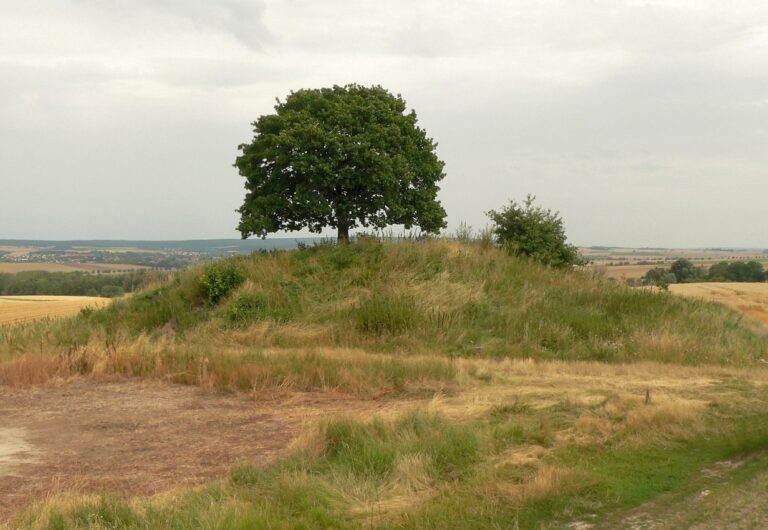
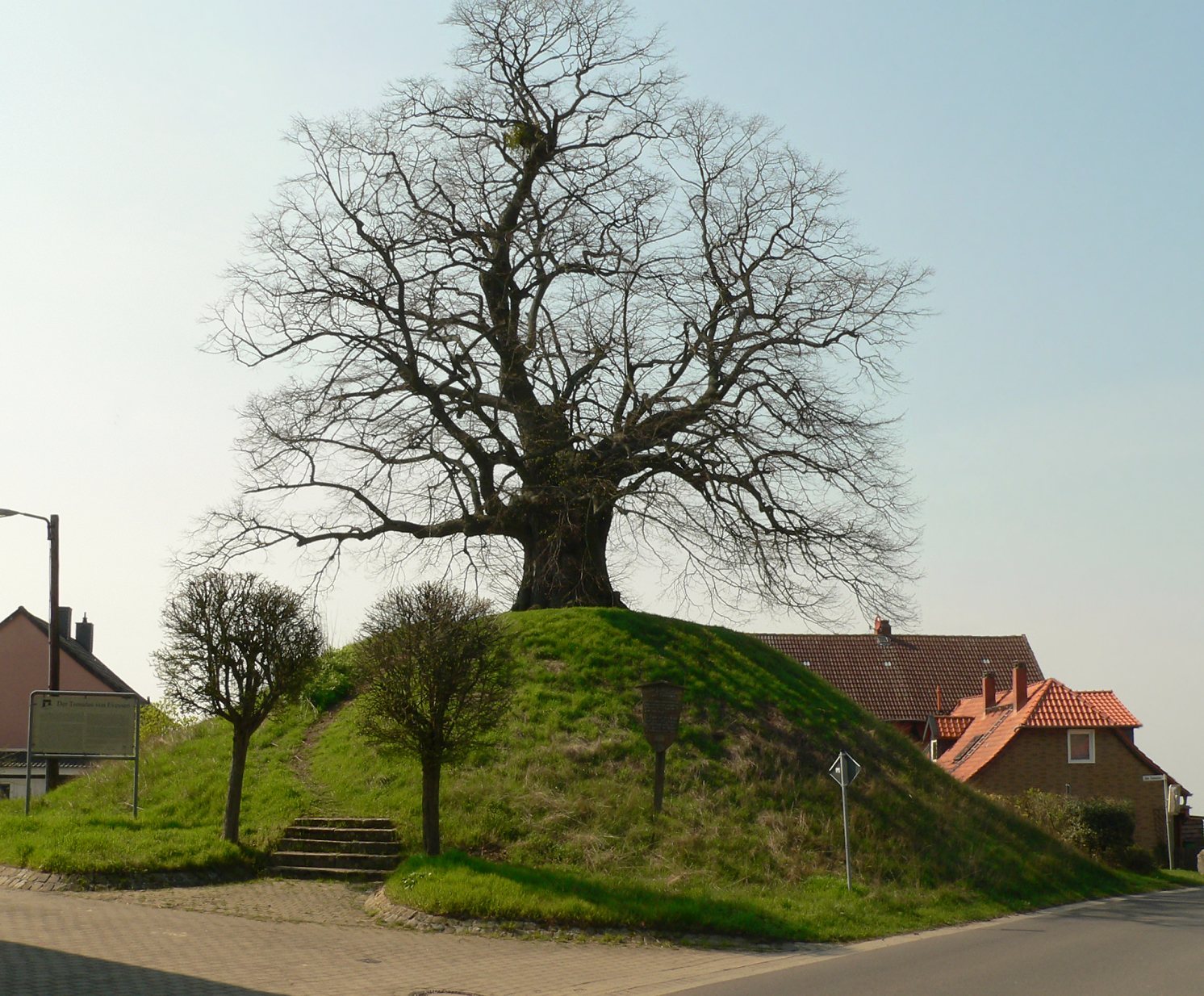
The Tumulus von Evessen is a burial mound at the western edge of Evessen, Germany. It belongs to a group of mounds between the Elm and Asse that have been regarded as princely graves. The group also includes the Galgenberg north of Klein Vahlberg, the Meescheberg to its south, and the partly destroyed Muspott near Eilum. Two other Evessen mounds, Kleine Hoch and Thies-Hoch, were excavated and removed in the 18th century.
In 1745, Pastor Johann Friedrich Faicke identified the mound as a prehistoric grave. An essay published that year considered it a princely burial and proposed either a Neolithic date, 4000–2000 BCE, or an early Bronze Age date, 1800–1600 BCE. The Neolithic was the later Stone Age, associated with farming; the Bronze Age was when bronze became widely used. These are alternative proposed periods, not a single continuous date range. The mound may have received burials repeatedly over an extended time, while long-term processes may have shaped its present form. An urn found in 1745 came from the separate Kleine Hoch mound and was probably a later burial there.
Court, tradition and protection
A local court associated with a bailiff, an official with administrative or judicial duties, held hearings beneath the linden on the mound. Proceedings at Evessen appear in records from 1347 kept by the Brunswick Cathedral chapter, a clergy body involved in cathedral administration. The court continued until its abolition in 1808 and dealt with neighborhood and family disputes, including wood theft and physical altercations.
Traditional sales were completed through a gesture: the seller placed a hand on the judge’s hat, and the buyer grasped it to take possession. Anyone who failed to appear could be fined ten groschen, a coin denomination whose value varied by place and period. The court was expected to spend the fine on drink.
Local legend tells of a giant who came from the Elm, a wooded ridge in Lower Saxony, with clods of earth stuck to his boots. He uprooted a tree to clean them, then planted a linden in one of the clods, which became the mound. The linden was declared a natural monument in 1944, and the mound received natural-monument protection in March 1945. In October 2022, the tree was designated a National Heritage Tree, a recognition for notable trees.
Remains
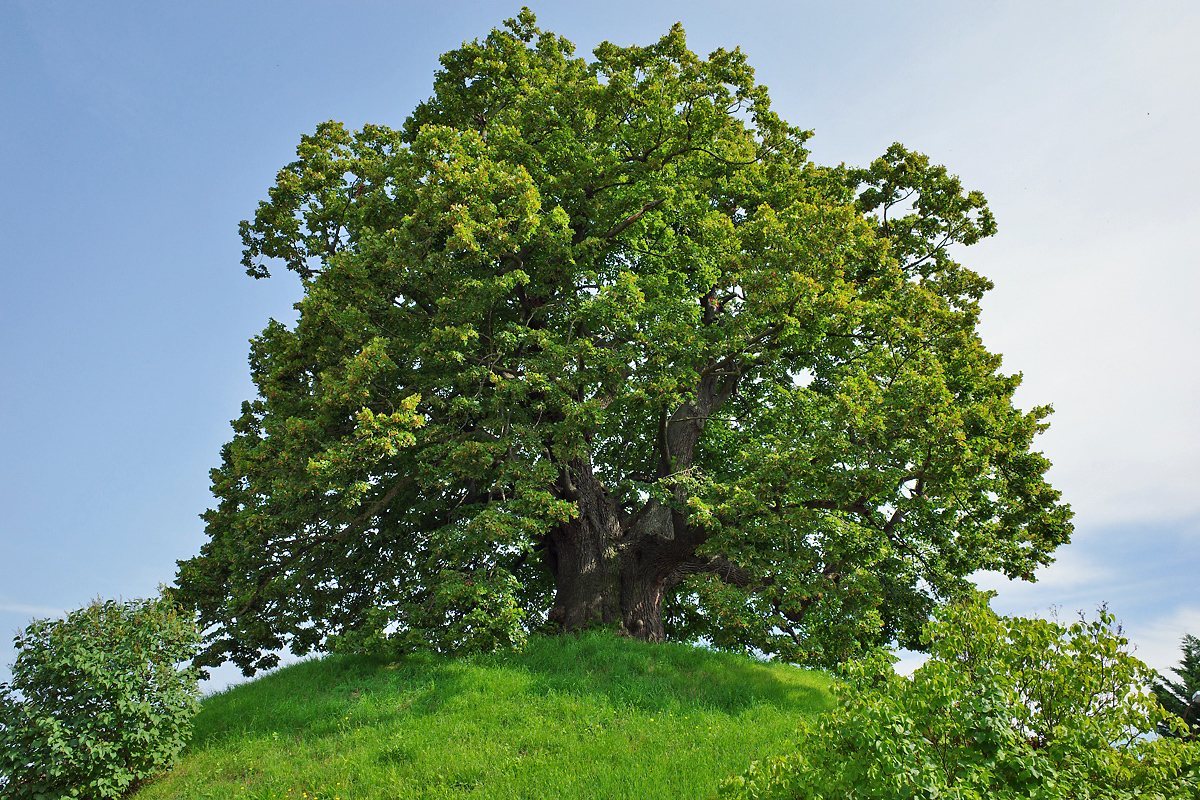
The circular burial mound measures 34 metres across and rises 6 metres. A linden stands at its summit. The tree is estimated to be as much as 800 years old; its bark bears numerous marks, and its trunk is hollow and partly decayed.
The hollow interior has been treated with preservative but was left without a cement filling to protect roots that have grown down through the trunk. Anchors support the crown. Small openings are sealed with plugs, while larger ones are covered with wire mesh that also prevents entry into the tree.