Tsurugamine Hachiman Shrine: A Historic Guardian Shrine in Koga, Japan


Site at a Glance
- Rating
- 4.2
- Popularity
- Low
- Country
- Japan
- Primary era
- Unclassified
- External website
- Open
- Eras represented
- Unclassified
- Civilizations
- Unclassified
- Site type
- Religious
- Remains
- Sanctuary
On this page10 sections
History
Tsurugamine Hachiman Shrine is a historic Shinto shrine in Koga, Japan, founded in the late Heian period and formerly known as Tsurugamine Hachimangu. Its traditions connect the shrine with Minamoto no Yoritomo, founder of Japan’s Kamakura shogunate, and with the military and transport history of the Koga region. It was once classified as a village shrine and was renamed after the Second World War.
Origins and medieval traditions
The shrine’s foundation is associated with Yoritomo’s campaign in 1180. Troops gathered locally for the Shimokobe uprising and prayed for victory at an Inari sanctuary on a small hill beside the river. After winning the Battle of Fujikawa, Yoritomo was said to have credited the victory to the deity’s protection. In August 1181, he invited the deity of Tsurugaoka Hachimangu in Kamakura to the site. An Inari deity was invited as well, and the shrine received the name Tsurugamine Hachimangu.
In 1234, the deity of Katori Shrine, the highest-ranking shrine of Shimosa Province, was invited to Tsurugamine. Katori Shrine was associated with Futsunushi, a deity of martial power. In 1688, this deity was enshrined together with the shrine’s existing deities. During the Genko era, the fourteenth-century warrior Nitta Yoshisada is said to have stayed at the shrine and prayed for military success.
The Koga Kubō and castle lords
The shrine’s military associations continued when the Kamakura Kubō, a military deputy of the shogun, moved his political base to Koga and became known as the Koga Kubō. Ashikaga Shigeuji entered Kurihashi Castle at Motokurihashi, identified with the former Koga Castle, and visited Tsurugamine, then regarded as the castle’s protective shrine, to pray.
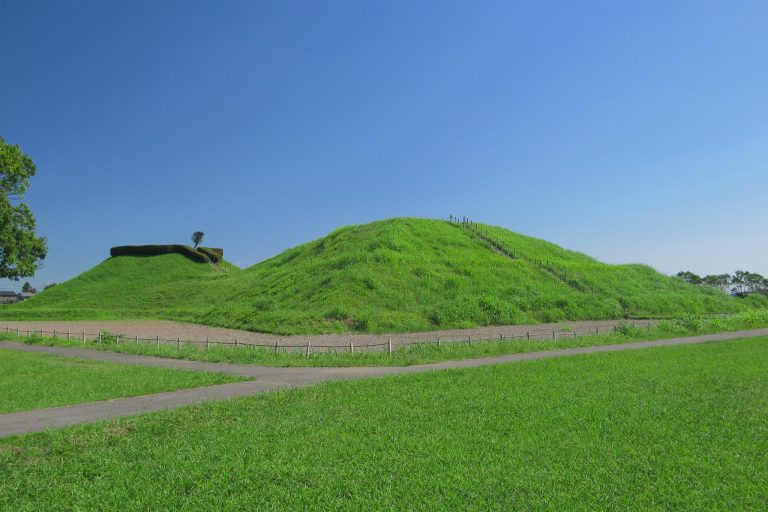
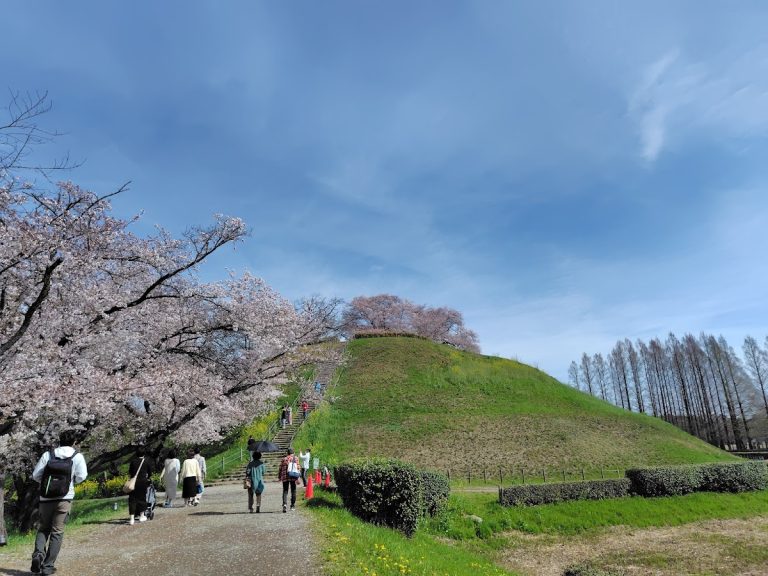
The successive lords of Koga Castle continued to revere the shrine into the early modern period. They were said to have presented lanterns, armor, and other offerings. The shrine was also repeatedly affected by flooding after its transfer from Kamakura. One tradition places an early Edo-period move from an unidentified location near the Kamakura Highway to Nakatayama Kofun beside the Tone River. The successive hills associated with its locations were consequently called Hachimanyama.
River works, kagura, and the Nikko Highway
Under Tokugawa Ieyasu, river-engineering works began and the Tone River was opened as a major watercourse. During this period, a tradition of grand kagura, ritual music and dance performed for Shinto deities, was brought to the shrine from the area around Katori Shrine. The tradition traveled along the Kinugawa and Tone rivers, after which priests from nearby shrines performed it.
After the Kurihashi and Nakata post stations were established on the Nikko Highway, Tsurugamine became their guardian shrine. Their development was associated with the work of Ikeda Kamosuke and others. The stations were known for the Fusakawa ferry crossing and licensed quarters for high-status visitors, and important travelers were said to have arrived from Edo, Yuki, and Oyama. During the Tokugawa shoguns’ pilgrimages to Nikko, prayers for safe travel were offered at the shrine to five deities associated with protection on the road.
By the end of the Edo period, Tsurugamine served as guardian shrine to thirty-four surrounding villages. Its holdings were described as 3,000 koku of territory, 500 koku of shrine land, and 5 koku of black-seal land. A koku was a historical measure of land productivity based conventionally on the rice needed to support one person for a year, while black-seal land was granted under a ruler’s seal.
Disruption and modern preservation
A peasant uprising at the Kurihashi and Nakata post stations around 1868 brought disorder, theft, and fire. The worship hall was destroyed, and many treasures were stolen, causing major losses to the shrine. Its administrative position and landholdings were further disrupted in the early Meiji period. Around 1871, the area temporarily belonged to Saitama and Chiba prefectures. During the shrine-ranking system introduced in 1872, Tsurugamine was left without an affiliation, while government improvements to the Tone River led to the sale and movement of shrine land. For a time, it was classified as an unranked shrine.
The shrine’s traditional performing arts survived through local action. Concern about aging performers and a shortage of successors led to the formation of a preservation association in 1929. Since 2014, the tradition has continued under the name Koga Kagura. It received Koga City’s first cultural-property designation and in 2023 became the first national recipient in the traditional-performing-arts category of the Yomiuri Newspaper-sponsored National Awo ni Yoshi Award. It was also designated an intangible folk cultural property of Ibaraki Prefecture.
Tsurugamine venerates thirty-four deities, including the Hachiman deity Hōmuda-wake no Mikoto, Empress Jingū, Futsunushi no Mikoto of Katori Shrine, and Ukanomitama no Mikoto, a deity associated with grain and identified with Inari worship. The spring festival is held on April 15, when Koga Eitai Daidai Kagura is performed in prayers for abundant harvests, household safety, and peace throughout the land.
Remains
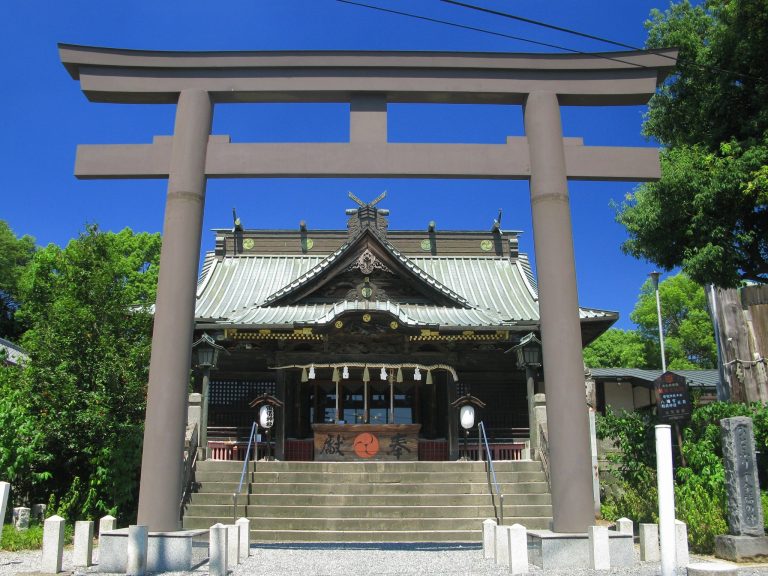
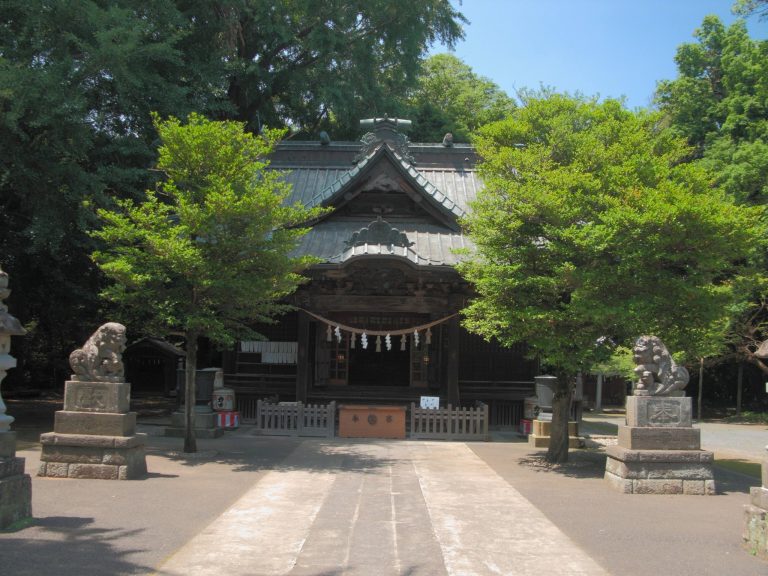
The shrine precinct contains a main sanctuary, a worship hall, a kagura hall, subsidiary shrines, sacred trees, torii, and monuments connected with its history. Its principal buildings use a flowing-front shrine style known as nagare-zukuri and have tiled roofs. The precinct’s features also preserve links with former locations beside the Tone River and with the road network that once connected the Koga area to Nikko.
Main shrine buildings
The main sanctuary measures four tsubo, a traditional Japanese unit of floor area, and is built in the nagare-zukuri style with a tiled roof. The worship hall measures twelve tsubo. The kagura hall is a six-tsubo building in the same flowing-front style, also covered by a tiled roof. Three sacred trees stand as guardians of the main sanctuary and are said to have been planted when the shrine was relocated.
Subsidiary shrines and sacred associations
Several subsidiary shrines occupy the precinct. Maruyama Inari Shrine is dedicated to Ukanomitama no Mikoto, while Yasaka Shrine venerates Susanoo no Mikoto. Sengen Shrine is dedicated to Konohanasakuya-hime no Mikoto, Kora Shrine to Takenouchi no Sukune, and Shirahata Shrine to Minamoto no Yoritomo. Raiden Shrine venerates Wakeikazuchi no Kami, Dōsojin-Kotohira Shrine is dedicated to Sarutahiko no Mikoto, and Suijin Shrine to Mitsuhanome no Mikoto. Together with the principal enshrinements, these precinct shrines form a complex associated with thirty-four deities.
Kagura hall and ritual tradition
Koga Eitai Daidai Kagura consists of twelve dances and is also called Twelve-Dance Kagura. It belongs to the Izumo-style tradition as transmitted in the Kanto region and derives from the Iwato Kagura tradition, associated with dances performed before the Heavenly Rock-Cave by Ame-no-Uzume and Ame-no-Tajikarao. The kagura hall provides the setting for this ritual tradition, which is performed during the spring festival.
Roadside monuments and former locations
A statue of House of Peers legislator Kokubo Jonan stands along the former Nikko Highway. It commemorates his assistance to Tanaka Shozo during the Ashio Copper-Mine Pollution Incident, a major environmental and social crisis caused by pollution from the Ashio copper mine, and his involvement in constructing Tone River flood-control embankments. A monument at the second torii commemorates the shrine’s Meiji-period relocation. Nakatayama Kofun beside the Tone River is associated with the tradition concerning one of the shrine’s former locations.