Prieuré Saint-Louis de Poissy: A Dominican Nuns’ Priory in France
Site at a Glance
- Popularity
- Medium
- Country
- France
- Primary era
- Medieval
- Eras represented
- Medieval
- Civilizations
- French
- Site type
- Religious
- Remains
- Monastery
On this page17 sections
History
The Prieuré Saint-Louis de Poissy was a Dominican priory for nuns in Poissy, France, founded by Philip IV in 1304 in memory of his grandfather, Louis IX. Philip ordered its creation after Louis’s canonization on 11 August 1297. Poissy was Louis’s birthplace and baptismal town, and the priory occupied the site of his birth. Building it required the demolition of the Château-Neuf, near the collegiate church of Notre-Dame.
Foundation and royal patronage
The community began operating under foundation letters issued in July 1304. It belonged to the Diocese of Chartres, an ecclesiastical district, and the Dominican Province of Sens, the order’s regional division, from 1304 to 1622. The Dominican Order, formally the Order of Preachers, is a Catholic religious order whose members include friars and nuns. The house soon became one of France’s wealthiest religious communities.
Its first prioress, Mathée de La Roche, also served as guardian to the young Marie de Bourbon-Clermont until her death in 1334. Marie succeeded her, later resigned after becoming blind, and died in Paris in 1372. Pernelle Pelletot held the office from 1344 to 1351. The community initially had 120 nuns and eventually grew to 200. Candidates were expected to be literate, able to sing, well behaved, and of noble birth. During Philip IV’s lifetime, entry required his consent; later, women of common birth needed royal authorization. Five Dominican fathers guided the nuns’ religious life and led services. Lay brothers and a substantial staff also supported the priory, including medical, administrative, gardening, transport, baking, and household workers.
The priory’s resources included land revenues and properties, including a portion of the Louvre’s lands that yielded 700 livres. Families paid substantial rents when their daughters entered the convent. The priory was exempt from tolls, seal duties, the salt tax, compulsory corvée labor, and transit dues. In 1382, a granary connected with the salt tax was established for its benefit. In 1391, the nuns gained the right to use a public seal for judgments and edicts in the provostship of Châtel-en-Brie, a local administrative district whose revenues belonged to them.
War, royal visitors, and the community
The priory became involved in the conflicts that affected the region. Edward III, king of England, used it as his headquarters from 12 to 16 August 1346 before crossing the Seine on his way to Flanders. During the wars in Île-de-France, prioress Catherine Guignard and the nuns took refuge in Paris. Guignard died there, and her body was returned to Poissy for burial in the church in 1380.
Marie de Bourbon, daughter of Peter I, entered the priory at four years old, took the habit and professed as a nun in 1351, and became prioress in 1380. Her brother, the Duke of Bourbon, granted her an annual income of 500 livres that year, along with the lordship of Carrières-sous-Poissy, the Hôtel de Bourbon in Paris, and the estate of Villevrard. She remained prioress until her death on 10 January 1401. Marie de Valois, daughter of Charles VI and Isabeau of Bavaria, entered the community at age four in 1397 and died of plague in Paris in 1438.
Members of the royal family continued to visit. In 1405, Charles VI came to propose that his daughter Marie de France marry the Duke of Bar. She declined and remained at the priory; the king returned in 1408 when she took the veil. Christine de Pizan also visited, an episode associated with her literary work, the Dict de Poissy. In 1441, Charles VII stayed in the priory’s royal lodgings but escaped at night after English forces surrounded Poissy.
Religious conflict and reform
In 1560, Francis II and his wife Mary Stuart visited for the admission of nobles to the Order of Saint Michael, a French royal order of chivalry. From 9 to 26 September 1561, the priory’s refectory hosted the Colloquy of Poissy, a conference intended to address divisions between Catholics and Protestants. Those present included Charles IX, his mother Catherine de’ Medici, the Huguenot nobleman Gaspard de Coligny, royal official Michel de l’Hôpital, and Protestant theologian Theodore Beza.
Henry III appointed Jeanne de Gondi prioress in 1583. She held the office until 1623, followed by her niece Louise de Gondi, who remained prioress until 1661. Henry IV had requested Louise’s election during his lifetime. In 1602, he visited to present his goddaughter Louise de Gondi and courted the nun Louise de Maupeou. The memoirist Gédéon Tallemant des Réaux later alleged that other nuns had sexual relationships. The nuns were sent into exile. In 1608, the Dauphin, the future Louis XIII, attended Mademoiselle de Frontenac’s entry into the priory.
Discipline remained a concern. Pope Urban VIII sent the Dominican Séraphin Siccus de Faute, a theology professor and head of the Dominican Order, to address misconduct. On 11 May 1625, Father Prouteau, provincial of the French Dominican province, read an order requiring the nuns to observe poverty, chastity, and obedience, remain within the cloister, and hold no personal property. Discipline was restored for a time. A papal bull provided for three-year terms for prioresses, but in 1669 Caroline d’Albert de Chaulnes was appointed for life, a status confirmed by another papal bull in 1675.
Revolution and destruction
The priory was evacuated and pillaged in 1792. Two years earlier, the municipality had sought permission to make its church the parish church, but the request was refused. Unable to maintain both religious buildings, the town kept the collegiate church of Notre-Dame as its parish church and abandoned the priory church. The priory buildings served as a military hospital for six months in 1794. The convent and church were sold to Jean-Baptiste Thonnesse on 12 September 1797. He sold their materials to local contractors, and the church was demolished in the early nineteenth century.
Remains
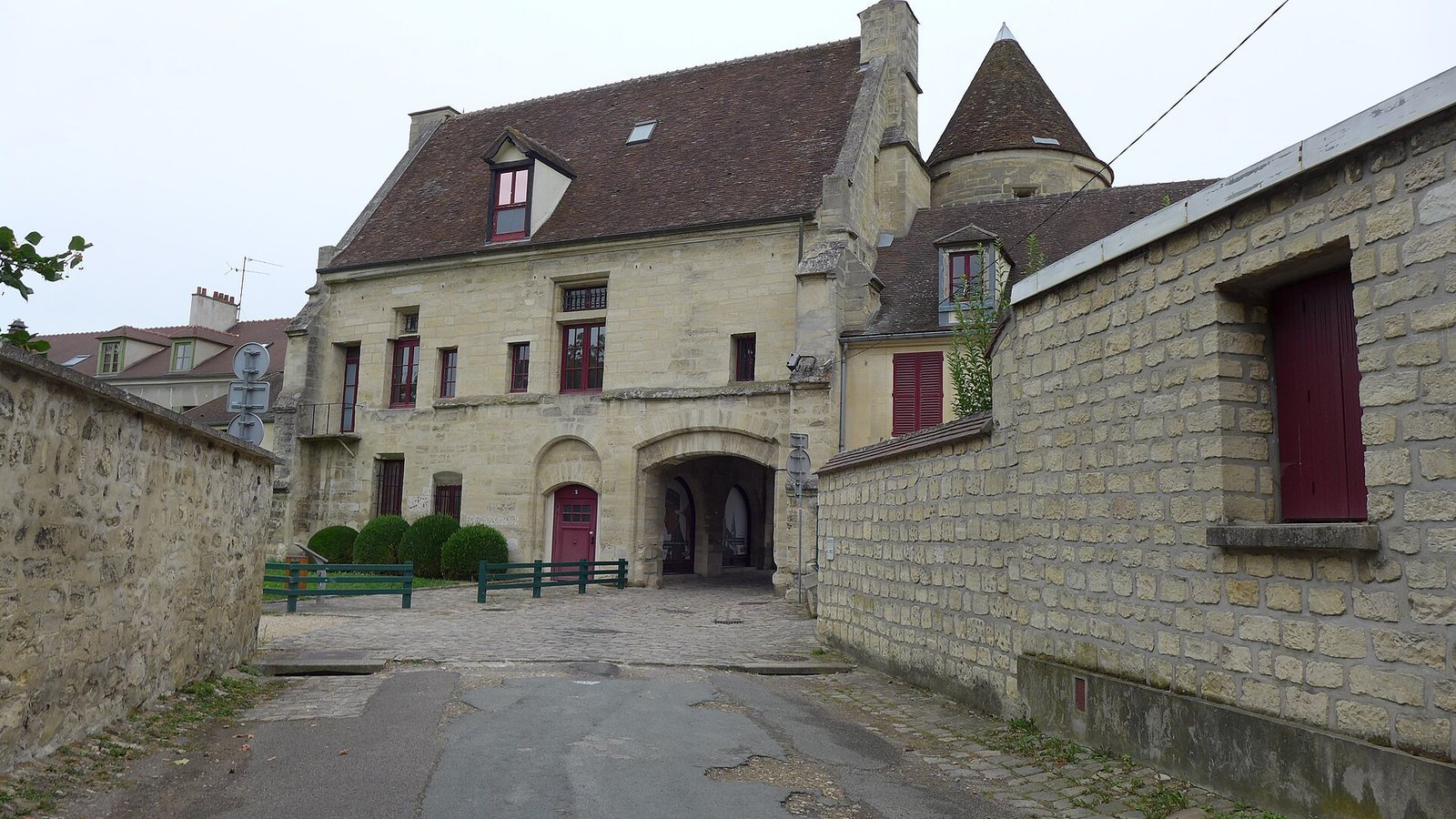
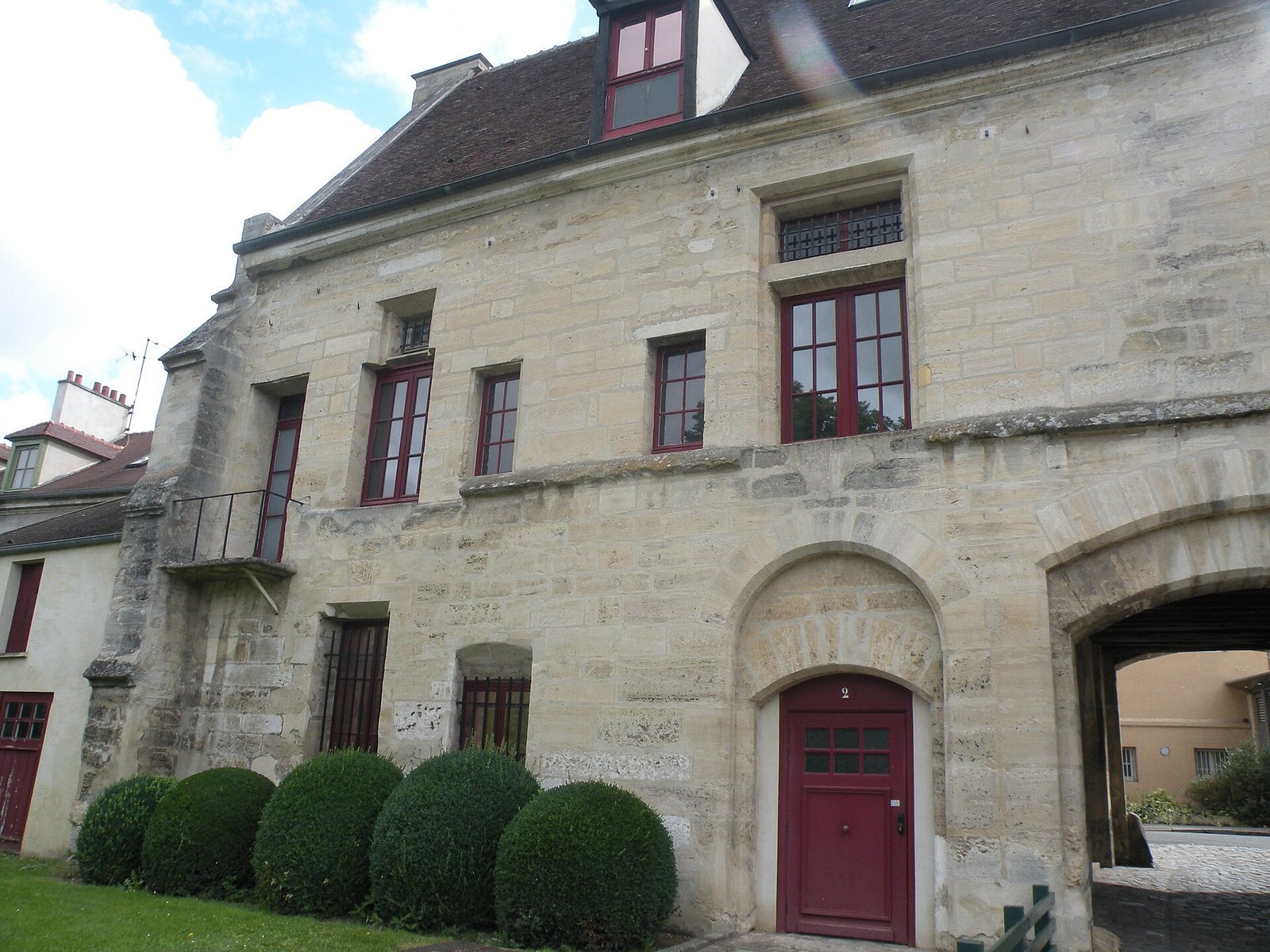
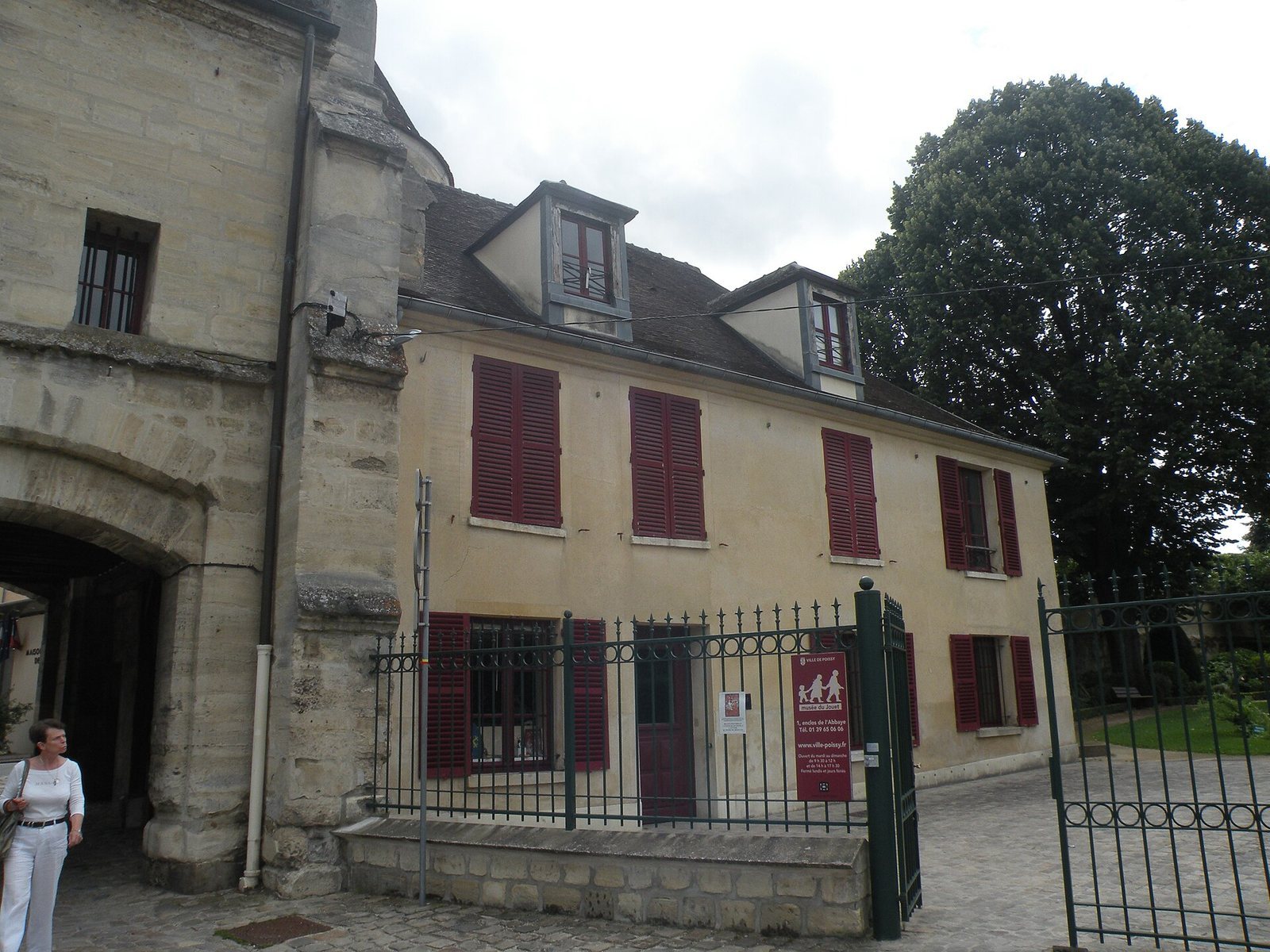
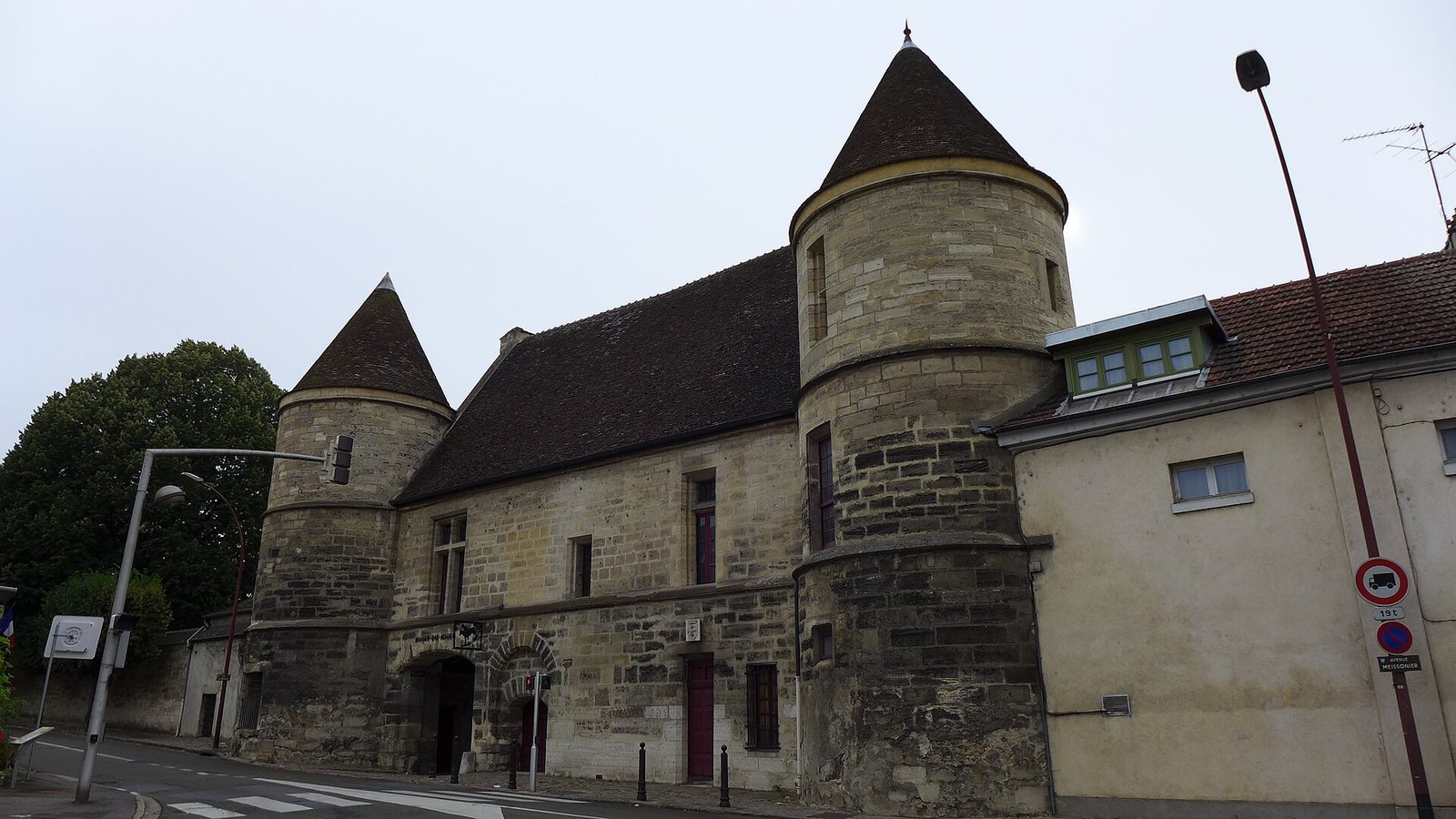
The priory estate combined a central royal residence with separate buildings for the nuns and a residence for the prioress beside the church. Princesses of royal blood were also housed apart from the other nuns. The grounds covered more than 48 hectares, including 14 hectares of buildings, and contained a large park, lawns where animals roamed freely, two fishponds, and water brought from Migneaux. An enclosing wall 12.3 kilometres long replaced an earlier hedge and was completed around 1465 under Louis XI.
Church architecture
Plan and exterior
Dedicated in 1331, the church stood on the site of the former royal apartments. A local tradition placed its altar in the room where Queen Blanche gave birth to Louis IX. The building measured 95 by 45 metres, with vaults rising 30 metres. Its plan was not conventionally oriented and took the form of a Latin cross, with a central nave and two side aisles. The bell tower rose higher than the tower of Poissy’s collegiate church of Notre-Dame.
Nave and crossing
The nave measured 55 by 15 metres. Large pointed windows illuminated its side aisles, with trefoil-shaped ornament and stone dividers. At the crossing, four substantial piers, each formed from clustered slender columns, supported a polygonal spire. Its steeply pitched roofs included gables and valleys; carved wooden details, including finials and pinnacles, were covered with hammered lead, and an ornate iron cross crowned the structure. The church also had long-pitched roofs and gables.
Transept and entrances
The cross-arms of the church, known as the transept, had large rose windows above entrance doors. One window stood at the foot of the nave, and another faced the town from the transept. Two smaller doors opened from the great cloister, one into the refectory and the other into a short passage leading to the dormitory. Steps along the church wall connected the latter entrance with the cloister’s covered walkway.
Choir and chapels
Behind the transept, the choir contained an altar with an ornamental structure behind it, called a retable, given by Jean, Duke of Berry. The triptych, now in the Louvre, depicted episodes from the lives of Christ, John the Baptist, and John the Evangelist beneath gables and pinnacles. Twelve niches in its base held bone figures of the apostles, while Jean and his second wife, Jeanne of Boulogne, appeared at its ends. The wooden work was inlaid with different woods and colors, horn, and ivory, and came from the Venetian workshop of Baldassare degli Embriachi.
White-marble statues of Saint Dominic and Saint Louis stood in the choir. A silver-covered tabernacle weighing 400 marks, or 98 kilograms, was used on feast days. A passage around the sanctuary, called an ambulatory, was encircled by nine chapels dedicated to various saints. The chapels had painted walls and notable stained glass; one choir window showed Saint Louis at his coronation.
Sculpture, tombs, and paintings
Royal and religious sculpture
Statues in the transept represented Louis IX, his wife Marguerite of Provence, and their six children. The original position of a group of angels bearing the Arma Christi, objects associated with Christ’s Passion, is uncertain. Three of the angels survive at the Cluny Museum in Paris, with traces of their original coloring. A statue of Isabelle of France was placed in the collegiate church of Notre-Dame at Poissy, while a statue of Peter I of Alençon is at the Cluny Museum. That museum also holds three figures and an angel’s head from the priory. The figures have elongated proportions, flowing drapery, fine features, and graceful poses.
Tombs and painted images
The chapels and side aisles held numerous statues and tombs. Marie de Bourbon’s tomb survives as a statue in white and black marble; its base was destroyed during the Revolution. The statue is now in the Louvre, while Marie was buried in the choir near the altar. Philip IV’s heart was placed in an urn found in a vault during building work in 1687, and his tomb was topped by a reclining effigy. Other burials included Robert of France, Philip IV’s youngest son, who died in 1308; Jean of France, who died in 1333; and Marie de Bourbon-Clermont, buried in the inner nave to the right of the choir entrance.
A glass painting showed Henry IV entering Poissy. Around 1706, Michu and Sempy made it from a drawing by Dutch painter Mathieu Elyas, also known as Elye; the reformer Dom Jean de la Barrière appeared beside the king. A portrait of Saint Louis in royal dress stood above the rood screen, the partition between the nave and choir. It is now in the sacristy of Notre-Dame at Poissy.
Treasury and books
Relics and precious objects
The church treasury included a crystal cross depicting Our Lady of Pity with Saint Veronica, as well as two gold sunbursts set with diamonds, rubies, pearls, and emeralds. They weighed 6 marks, or 1.470 kilograms, and 21 marks, or 5.145 kilograms. A cross-shaped reliquary containing a fragment of the True Cross was made of gold and had a silver foot covered with gold and set with pearls and sapphires. Philip IV gave it to the priory.
A silver-gilt bust-shaped reliquary held the upper part of Saint Louis’s skull. It weighed 300 marks, or 73.5 kilograms, and had a gold clasp set with precious stones and pearls, as well as a Latin inscription. The treasury also held a silver image of the Virgin Mary, gilded with fine gold and crowned with precious stones and pearls. Philip II, Duke of Burgundy, gave it in 1387. Another object, a translucent reddish-brown sardonyx showing the apotheosis of Augustus, was given by Philip IV, stolen during the Wars of Religion, and later sold to Rudolf II. The treasury also included six illustrated mirrors left by Philip IV.
Books and other furnishings
The Belleville Breviary, a two-volume book of prayers and readings for daily church services, was made between 1323 and 1326 by Jean Pucelle. Its decoration was illuminated, and its gold clasp bore the arms of France. Another such book, the Breviary of Saint Louis of Poissy, comprised 600 leaves of fine parchment. Richard de Verdun made it between 1310 and 1315 at Philip IV’s request to promote devotion to Louis IX. Philip gave it to Marie de Clermont-Bourbon.
The priory’s other holdings included tapestries, hangings woven with gold thread, religious vestments, vessels for consecrated bread, chalices, display containers for sacred objects, tableware of gold and silver-gilt set with precious stones, paintings, sculptures, and tombs. Kings, princes, nobles, clergy, merchants, and people of more modest means gave these objects in honor of Saint Louis.