Château de la Petite Malmaison: An Empire-Style Reception Pavilion in France

Site at a Glance
- Rating
- 4.4
- Popularity
- Low
- Country
- France
- Primary era
- Modern
- External website
- Open
- Eras represented
- Modern
- Civilizations
- French
- Site type
- Domestic
- Remains
- Elite Residence
On this page8 sections
History
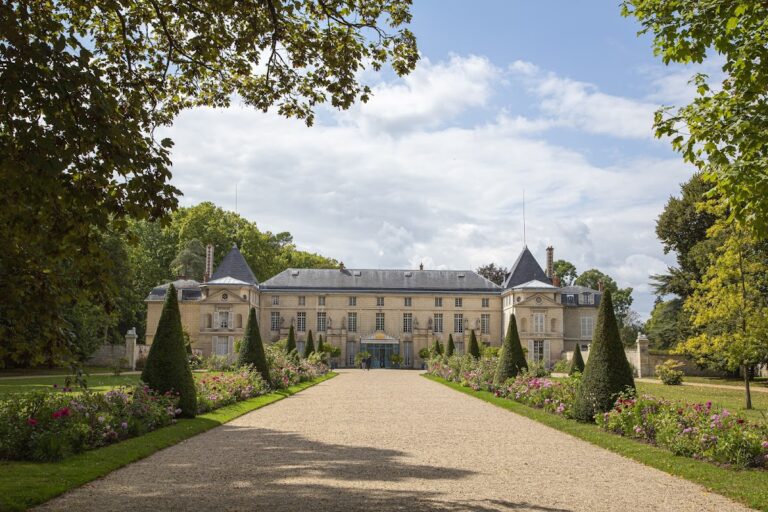
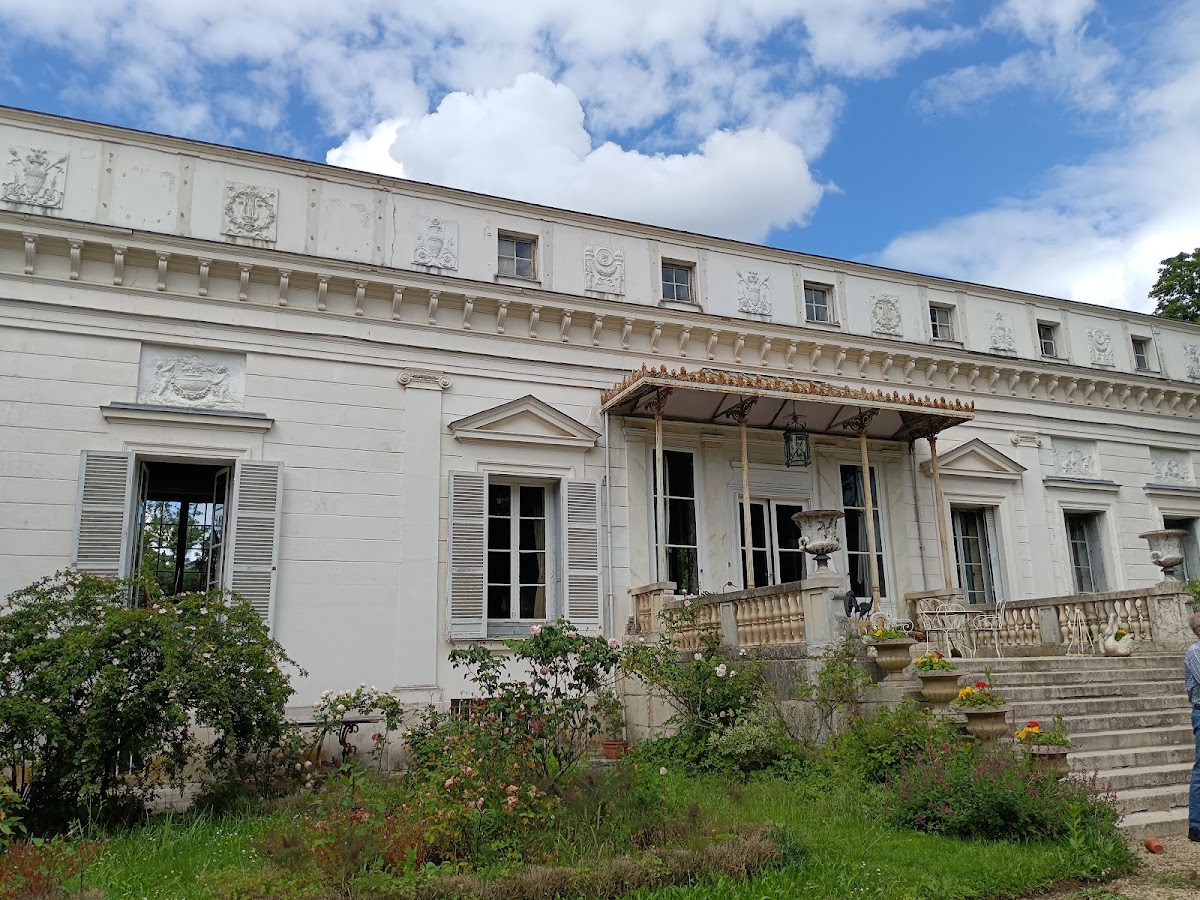
Château de la Petite Malmaison is a nineteenth-century French château in Rueil-Malmaison, France, built between 1803 and 1805 for Joséphine de Beauharnais, Napoleon Bonaparte’s wife and the future Empress of the French. Designed in the Empire style, the monumental French style associated with Napoleon’s regime, it served as a reception pavilion beside a large greenhouse belonging to the neighboring Château de Malmaison.
Joséphine’s greenhouse estate
The greenhouse was begun in 1804 for Joséphine by the landscape architect Jean-Marie Morel and completed toward the end of 1805 according to plans by Jean-Thomas Thibault and Barthélemy Vignon. Its extensive use of glass was unprecedented in France and anticipated the large glass-and-metal buildings that became characteristic of nineteenth-century architecture. The greenhouse allowed Joséphine to cultivate jasmine, roses, hydrangeas, and Parma violets, as well as trees reaching about five metres in height.
Louis-Martin Berthault, Joséphine’s appointed landscape designer, decorated the greenhouse complex’s central rotunda salon in 1807. A rotunda is a circular room or building arranged around a central axis. Berthault also laid out the surrounding park in the English landscape style, creating the setting for the pavilion and greenhouse. Visitors could rest in the central salon and view rare plants through the adjoining spaces.
Changes of ownership and function
The greenhouse was dismantled in 1827 because its upkeep had become too expensive. The estate passed in 1828 to the Swedish banker Jonas-Philip Hagerman, who partly redecorated the rooms. After Joséphine’s death, successive owners changed the former reception pavilion substantially. The basement, which had housed the greenhouse furnaces, was converted into kitchens and servants’ accommodation, while the rooms and wings were repeatedly reorganized to serve as a residence.
The estate was sold in lots in 1878, separating Petite Malmaison from Château de Malmaison. In 1887, it was acquired by Pascal de Bourbon-Siciles, Count of Bari, son of Ferdinand II of the Two Sicilies. After the Bourbon dynasty of Naples went into exile following the unification of Italy, Pascal was raised in Rome under the protection of Pope Pius IX. He and his wife, Blanche de Marconnay, used Petite Malmaison as a retreat, and Pascal died there in 1904.
The property later belonged to Marcel de Chabrières de Charmes, a company administrator and partner in Chabrières et Cie. A medallion of his son, Paul de Chabrières de Charmes, preserves the memory of this period. In 1949, the Polish aristocratic Czarnecki family acquired the château after fleeing Communist Poland and losing its possessions. Count Stefan Czarnecki and his wife, Marie-Louise Cuenin Czarnecki, known professionally as Marie-Claire Olivia, became its owners. They later passed it to their son, Count Stefan Casimir Czarnecki, who remains the owner, and the château continues to serve as a residence.
Protection as a historic monument
Château de la Petite Malmaison was entered in the supplementary inventory of historic monuments in February 1968 and classified as a historic monument on 26 April 1995. The protected area includes the park, preserving the relationship between the château, its grounds, and the former Malmaison estate.
Remains
Petite Malmaison survives as an Empire-style pavilion whose original arrangement was closely tied to the greenhouse. The former greenhouse complex was approximately 50 metres long and 19 metres wide. It comprised a plant-growing section heated by twelve large stoves and an adjoining building with three salons, including the central salon with its circular rotunda. The greenhouse itself was later dismantled, while the pavilion retains parts of the luxurious decoration and furnishings created for Joséphine.
The central pavilion and altered wings
The interiors were furnished and decorated by craftsmen including the marble mason Gilet and the cabinetmaker Jacob Desmalter. Their work remains partly visible beneath later redecorations. The central salon was divided by partitions placed on both sides of the rotunda. Two windows and a fireplace were added, and the Jacob-Desmalter parquet floor was partly cut down to accommodate the altered room volumes.
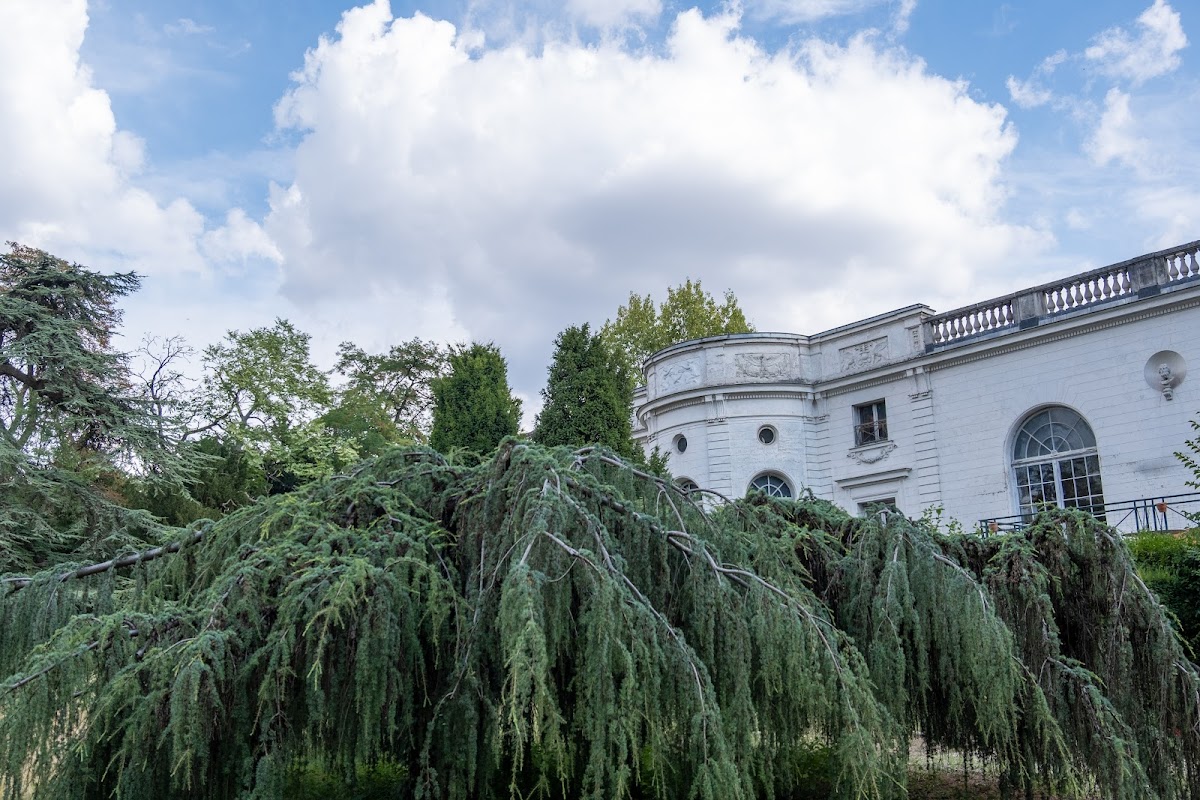
The east wing was divided into small apartments. A service corridor was added on the ground floor, and new windows were opened toward the pond. Its two original upper floors were removed, leaving one higher-ceilinged floor and reducing the wing’s overall height. At roof level on the pond-facing façade, a balustrade, or railing formed from a series of supports, replaced the former top floor.
The west wing originally held a small reception salon for Joséphine and two upper floors. It was extensively remodeled as a large music room, with three broad windows opening onto a newly added terrace. Small windows on the upper floors were blocked and replaced by skylights set directly into the roof. A smaller additional wing contains a summer dining room decorated with frescoes inspired by Pompeian wall painting, including one based on a depiction of Flora found at the Villa Arianna in Stabiae and preserved in the National Archaeological Museum of Naples.
Park and exterior sculpture
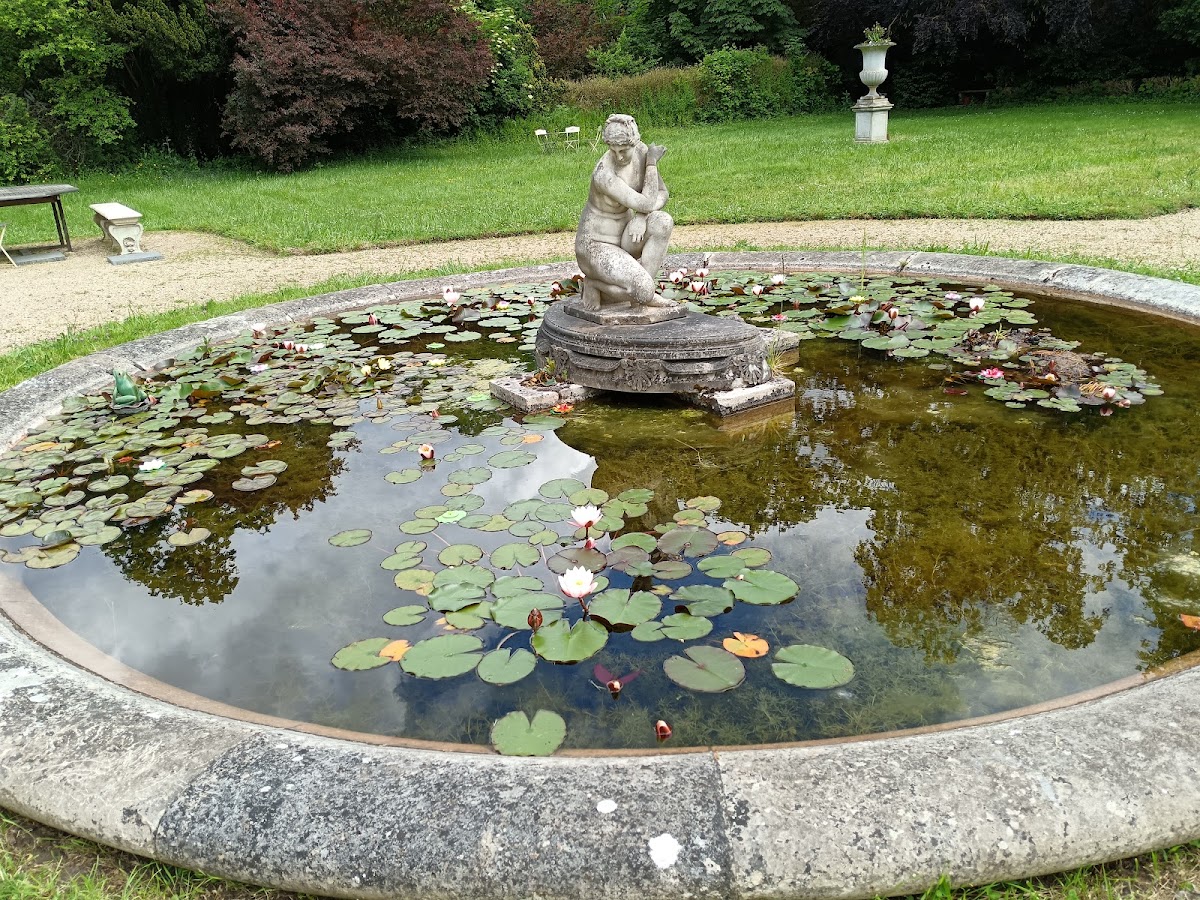
The park contains chestnut trees, cedars, bald cypresses, yews, and boxwood. Its design follows the English landscape style, while traces of a formal French garden remain visible beside the rear façade. The grounds also include a pond. At the centre of the garden fountain stands a crouching Venus based on an ancient original preserved in the Vatican Museums.
The façade is decorated with statues and busts copied from ancient works. They include a bust of Marcus Vipsanius Agrippa, a Roman statesman and military commander associated with the emperor Augustus; a statue of Marcellus as Hermes Logios, representing Augustus’s nephew and designated heir; a copy of the Capitoline Antinous, identified with the companion of the emperor Hadrian; and busts of the Athenian statesman Demosthenes, the poet Homer, and Brutus, Julius Caesar’s adopted son and assassin. The originals are held in the Louvre, the Capitoline Museums, or the Vatican Museums. The façade also has bas-reliefs copied from works attributed to Simon-Louis Boquet, a sculptor active in the late eighteenth century. The same casts appear on the façade of the Hôtel de Salm in Paris.
Parthenon casts and surviving furnishings
Above each window in the music room are seven casts of reliefs from the west frieze of the Parthenon, the principal temple of the ancient Athenian Acropolis dedicated to Athena. The scenes show horsemen preparing to join the Panathenaic procession, part of a major Athenian religious festival honoring the goddess. The original marbles are divided between the British Museum in London and the Acropolis Museum in Athens.
The casts were made directly on the monument in Athens during the 1780s, while the original marbles were still in place, by the diplomat and archaeologist Louis-François-Sébastien Fauvel at the request of the Count of Choiseul-Gouffier. Shipped to Marseille from 1787, they were confiscated during the French Revolution, a period of political upheaval in France, transported to Paris in 1798, and later deposited at Malmaison. Four related casts appear on the exterior of a former guard pavilion at 2 avenue de Bois-Préau in Rueil-Malmaison, built in 1801 as part of the estate and used as a stable.
Petite Malmaison also preserves a painting by the German painter Jean-Jacques Hauer showing the return from the first presentation of the insignia of the Legion of Honour, held at the Invalides church on 15 July 1804. Napoleon appears in the uniform of a Grenadier of the Guard, while the Invalides fountain and a Lion of Saint Mark brought from Venice form part of the setting. Jacob-Desmalter furniture remains in the château, including two mahogany doors and two mahogany stools decorated with lion heads and claws, together with the partly altered parquet floor.