Tribschen: A Historic Manor and Richard Wagner’s Residence
Site at a Glance
- Popularity
- Medium
- Country
- Switzerland
- Primary era
- Modern
- Eras represented
- Medieval, Early Modern, Modern
- Civilizations
- Holy Roman Empire, Swiss
- Site type
- Domestic
- Remains
- Elite Residence
On this page7 sections
History
Medieval manor and later remodelling
Tribschen is a historic manor in Lucerne, Switzerland, with origins in the late Middle Ages and a basic form established in 1623. The manor later became known as the home of composer Richard Wagner, who lived there from 1866 to 1872.
The religious institution of St. Leodegar im Hof held the headland and granted it as a fief, a landholding tied to obligations of service. Its dependent retainers may have been present there in 1128. The manor was first occupied by the Lords of Tripschen. Around 1800, the Lucerne patrician family am Rhyn acquired the property and remodelled the house into its present form.
Richard Wagner at Tribschen
After being compelled to leave Munich in March 1866, Wagner moved to Tribschen. He leased the manor from Colonel Walter am Rhyn from April 1866 to April 1872, with financial support from Ludwig II, King of Bavaria. On 22 May 1866, the 20-year-old king visited Wagner there in secret, accompanied by his cabinet secretary Franz von Pfistermeister and a few servants. Ludwig was considering abdication; Wagner, counting on the king’s continued support, persuaded him to remain.
During his stay, Wagner completed the score of Die Meistersinger von Nürnberg, composed Kaisermarsch and the third act of Siegfried, and began Götterdämmerung. He also composed Siegfried Idyll as a birthday gift for his second wife, Cosima, and in honour of their recently born son Siegfried, their first legitimate child. An ensemble of 15 players first performed the piece on the villa’s stairs on Christmas morning, 25 December 1870. Cosima had turned 33 the previous day but celebrated her birthday on Christmas Day. Among those present was Friedrich Nietzsche, then a newly appointed professor of classical philology at the University of Basel.
From private manor to museum
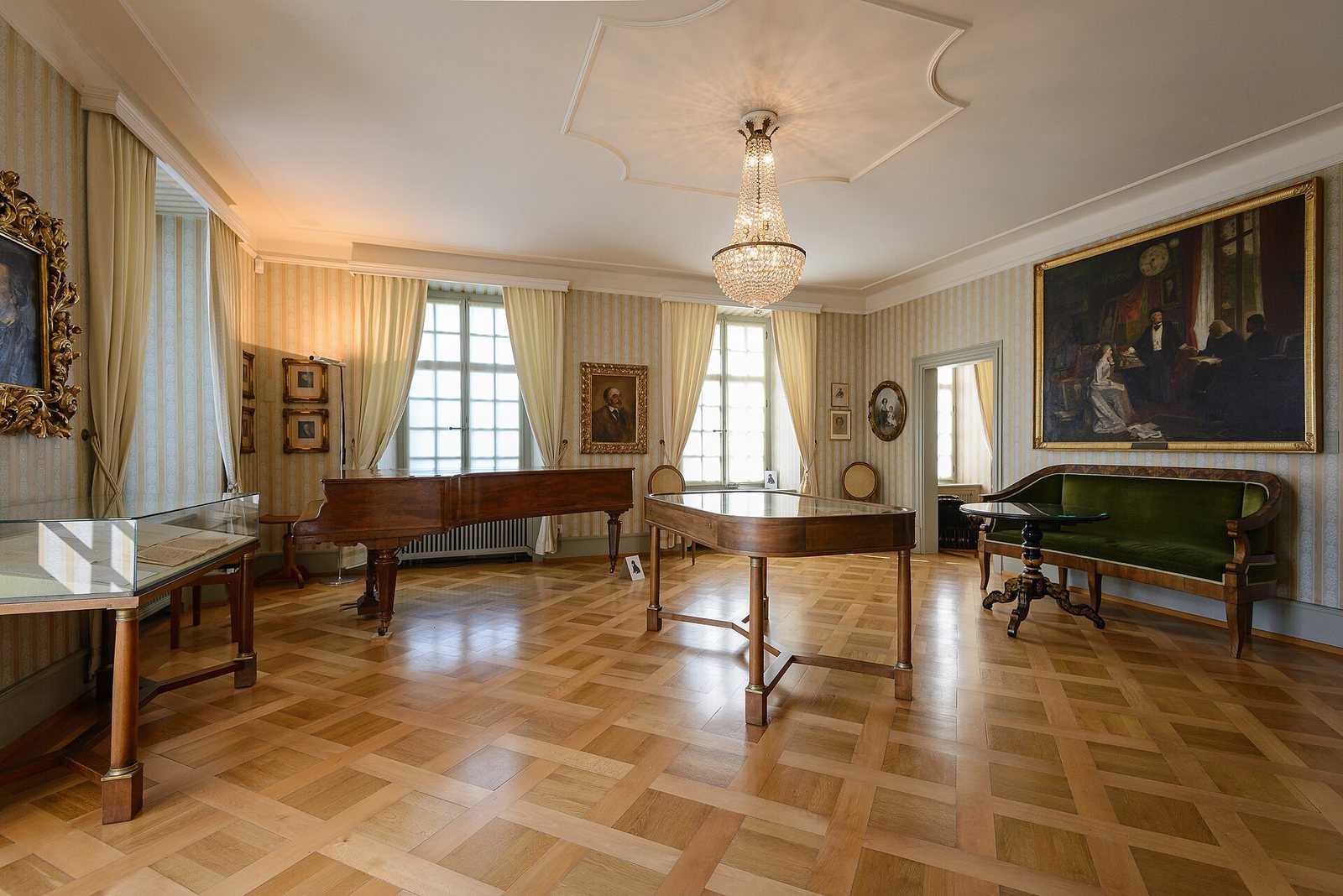
Opera singer Minnie Hauk bought the manor in 1889 and died there in 1929. The City of Lucerne acquired the manor and its 30,000-square-metre park in 1931, and the Richard Wagner Museum opened in the building in 1933. The manor and museum are recognized as Swiss cultural property of national importance. The peacock house and boathouse are also among Lucerne’s nationally important cultural properties.
Remains
Manor house and setting
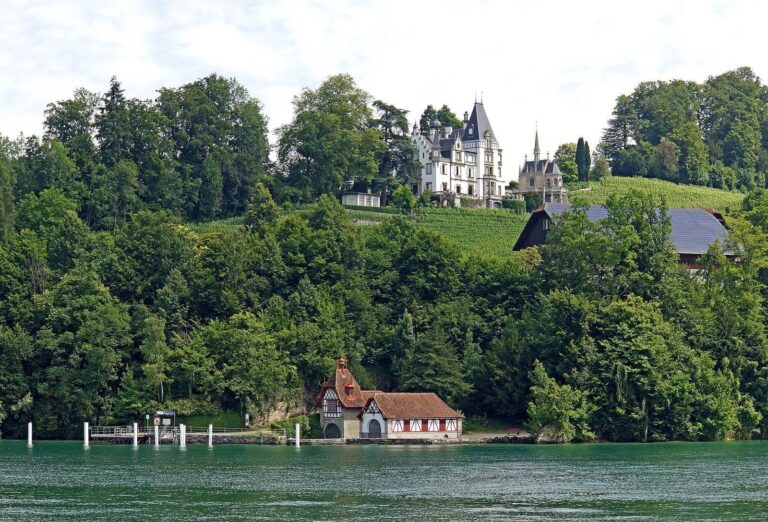
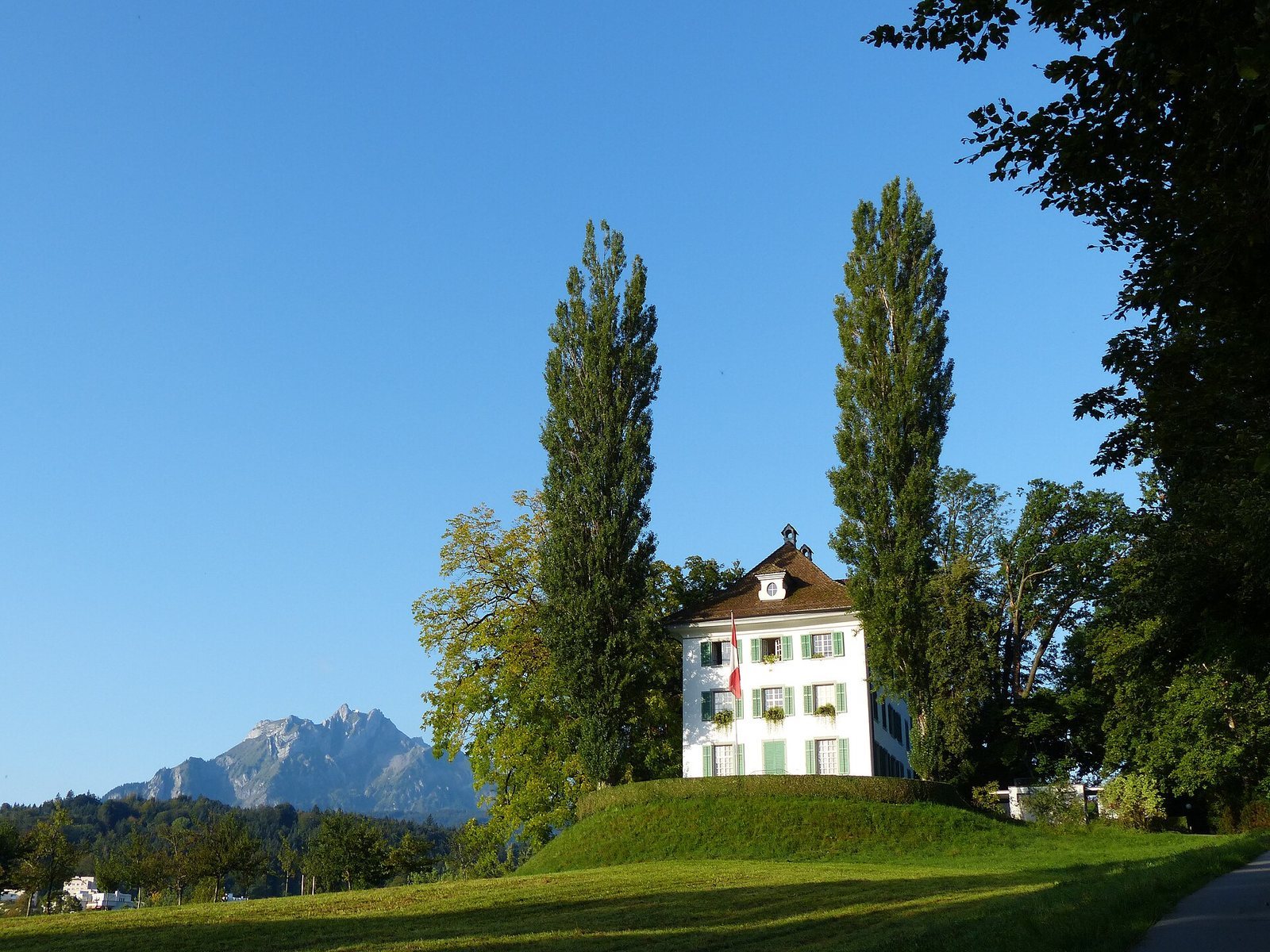
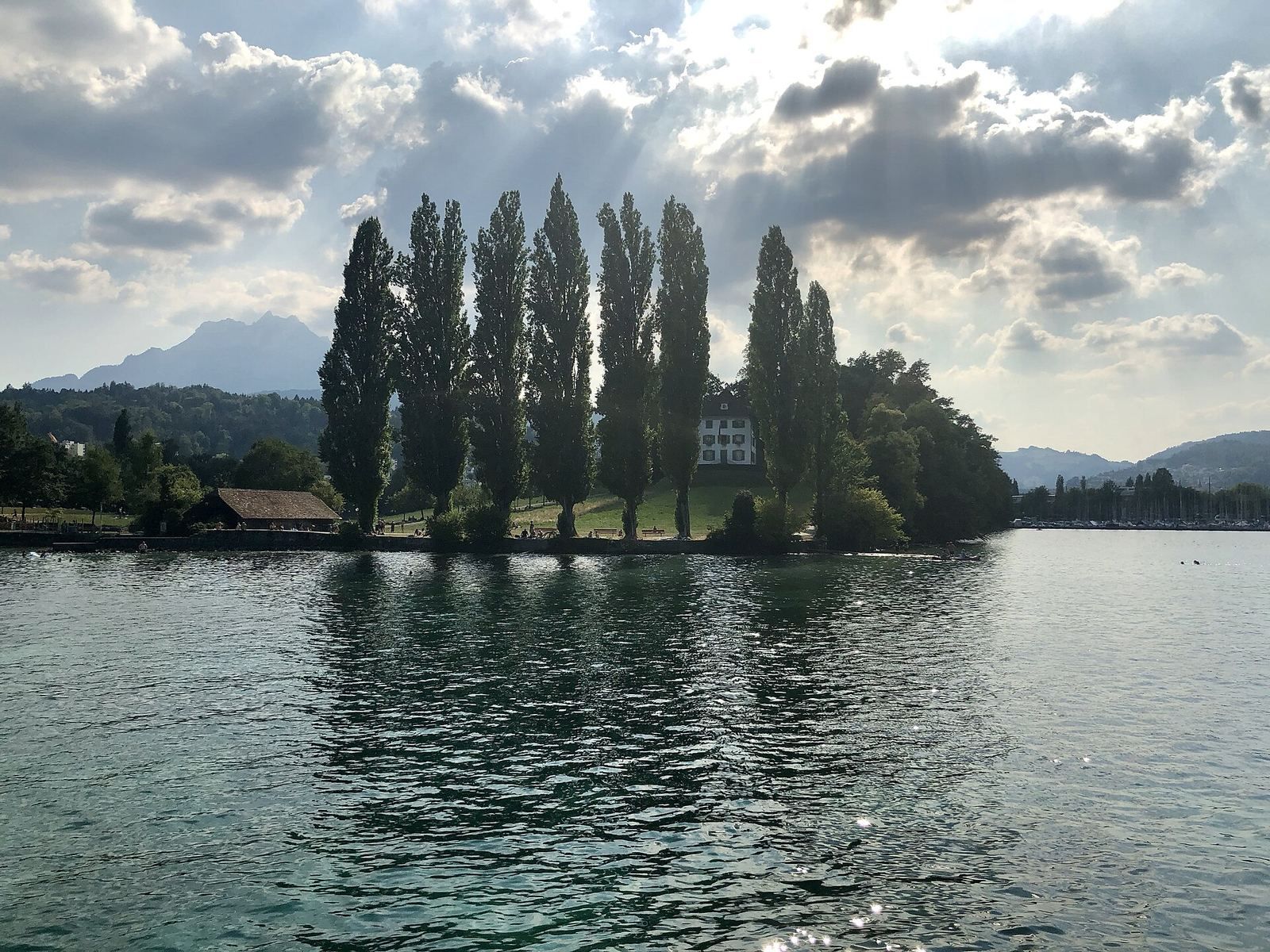
The estate occupies a small headland that projects into Lake Lucerne. Its cube-shaped manor stands on a small motte, an earth mound used as the base for a residence or fortified structure. The building now houses the Richard Wagner Museum.
Park buildings
The manor grounds include a park of 30,000 square metres. A peacock house was built there between 1866 and 1872 for Cosima Wagner’s peacocks. The estate’s boathouse was probably built in the early twentieth century.