Tregothnan: A Historic Country House and Estate in Cornwall
Site at a Glance
- Rating
- 4.3
- Popularity
- Medium
- Country
- United Kingdom
- Primary era
- Modern
- Eras represented
- Early Modern, Modern
- Civilizations
- British, English
- Site type
- Domestic
- Remains
- Manor House
On this page8 sections
History
Tregothnan is a country house and estate near St Michael Penkivel, about three miles southeast of Truro in the United Kingdom. It has been the historic seat of the Boscawen family, whose heads have held the title Viscount Falmouth, a rank in the British peerage, since 1720. The family continues to manage the estate.
Medieval origins
John de Boscawen acquired Tregothnan in 1334 or 1335 through his marriage to Joan de Tregothnan, an heiress. The original house was medieval and is attributed to the Plantagenet period, named for the English royal dynasty that ruled from 1154 to 1485.
Civil War and rebuilding
The original house was ransacked during the English Civil War, a series of conflicts fought in England, Scotland and Ireland in the mid-seventeenth century. Hugh Boscawen built a new house after 1650. His cousin Celia Fiennes, an English travel writer, visited and described it.
Estate and house in the eighteenth and nineteenth centuries
Admiral Edward Boscawen lived at Tregothnan in the eighteenth century. In 1818, William Wilkins enlarged the house; Lewis Vulliamy rebuilt and enlarged it from 1845 to 1848 for the second Earl of Falmouth, a rank above viscount. In 1872, the Viscount Falmouth’s land in Cornwall amounted to 25,910 acres (10,490 hectares), or 3.41 percent of the county, placing his holdings among Cornwall’s ten largest estates.
Gardening, tea and heritage status
Around 1800, Tregothnan grew the first camellias cultivated outdoors in the United Kingdom. A tea-growing venture began in 1999. Botanist and trading-company managing director Jonathon Jones investigated growing conditions at the estate and in tea-producing regions worldwide, supported by a Nuffield Scholarship, which funds research or study. The first commercial tea made from Camellia sinensis, the plant whose leaves are used to make tea, was developed in 2001. The estate sold its first “English tea” to Fortnum & Mason in November 2005. Tregothnan House received Grade I listing in 1952, the highest category of listed-building protection in England. The park and garden entered the Register of Historic Parks and Gardens in 1987, a register of places considered of special historic interest.
Remains
House and estate setting
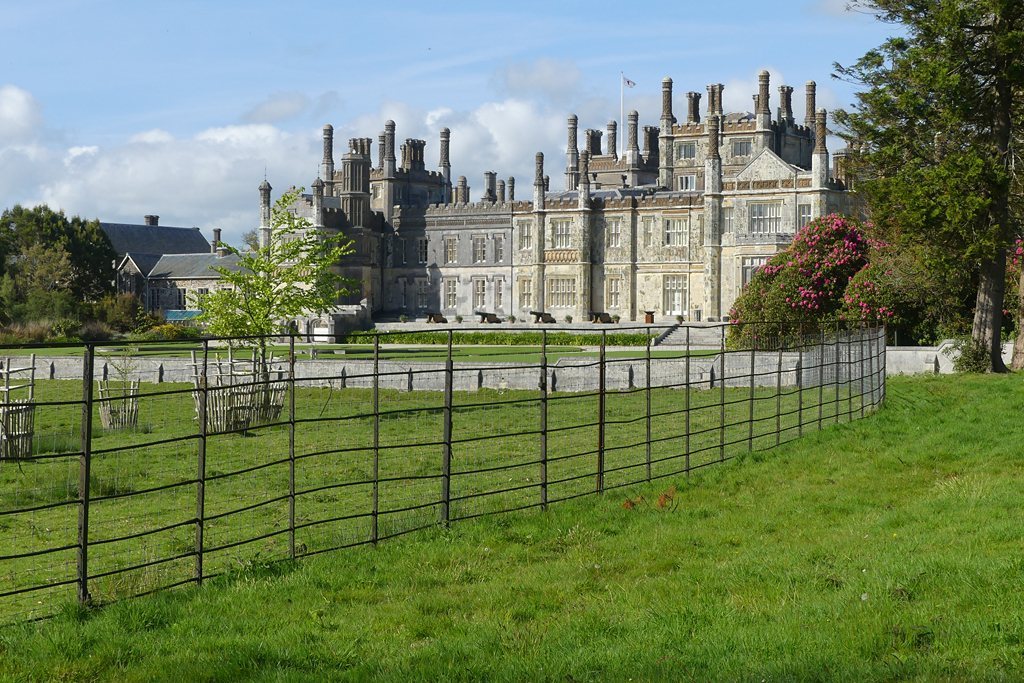
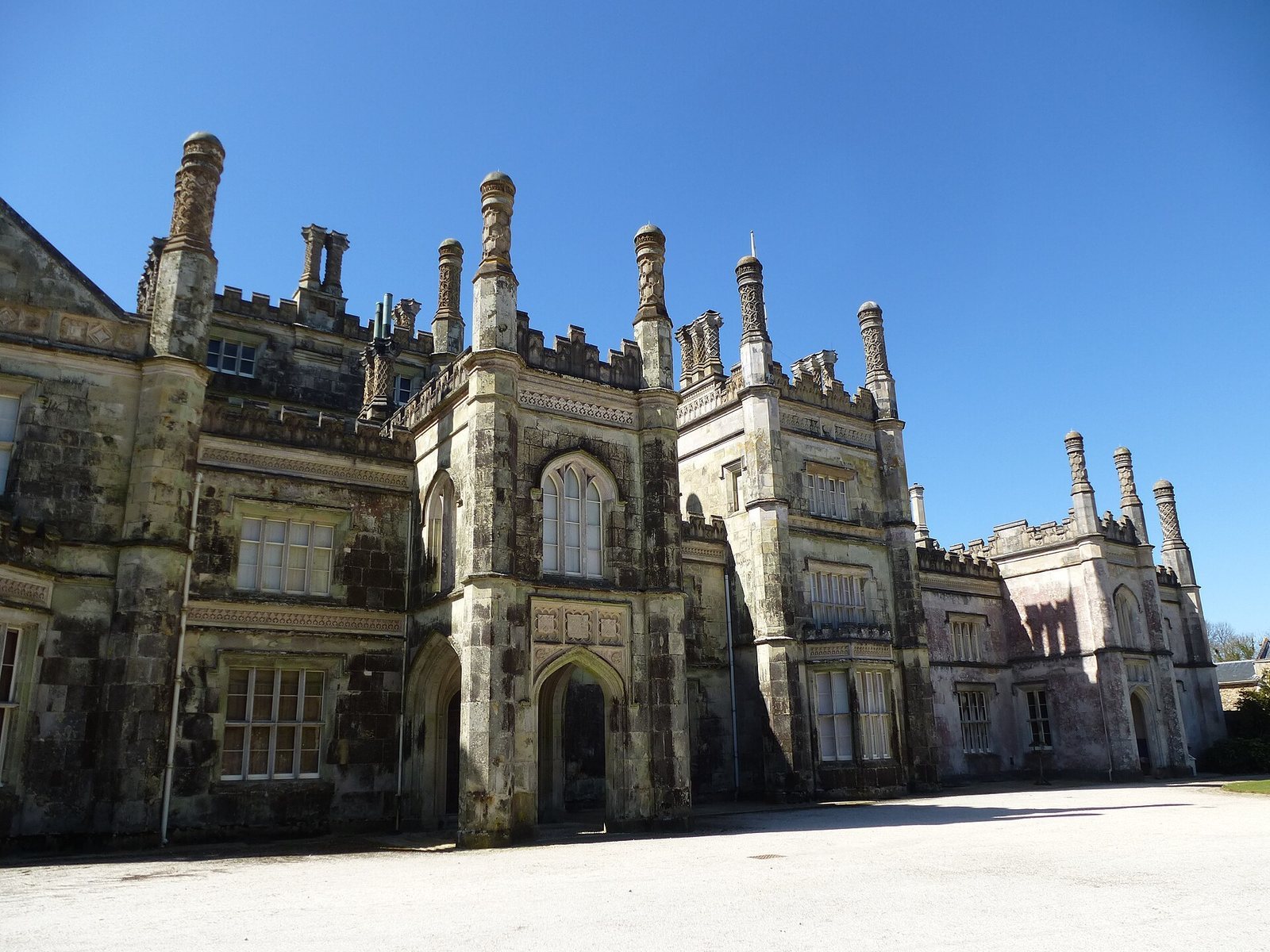
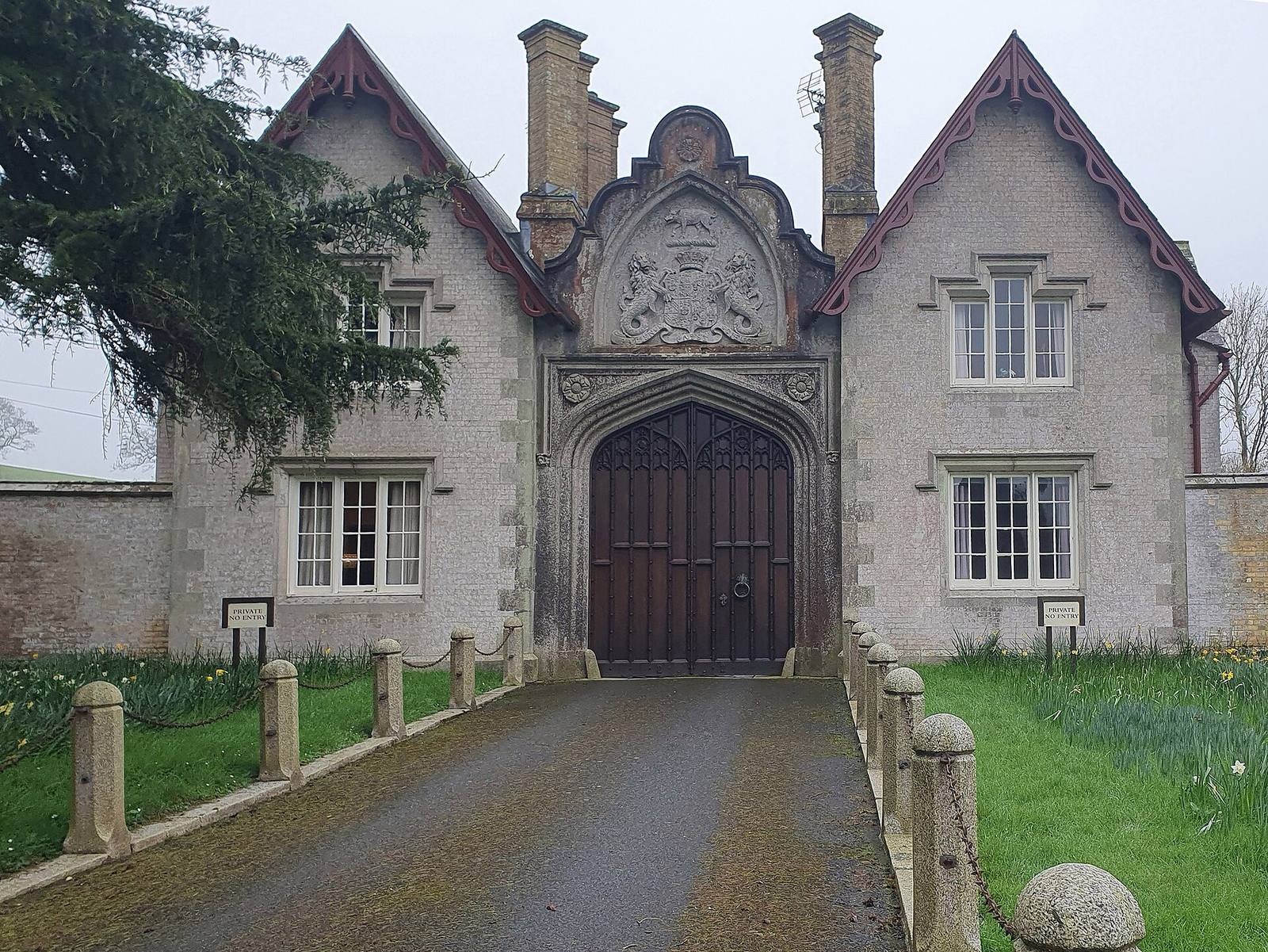
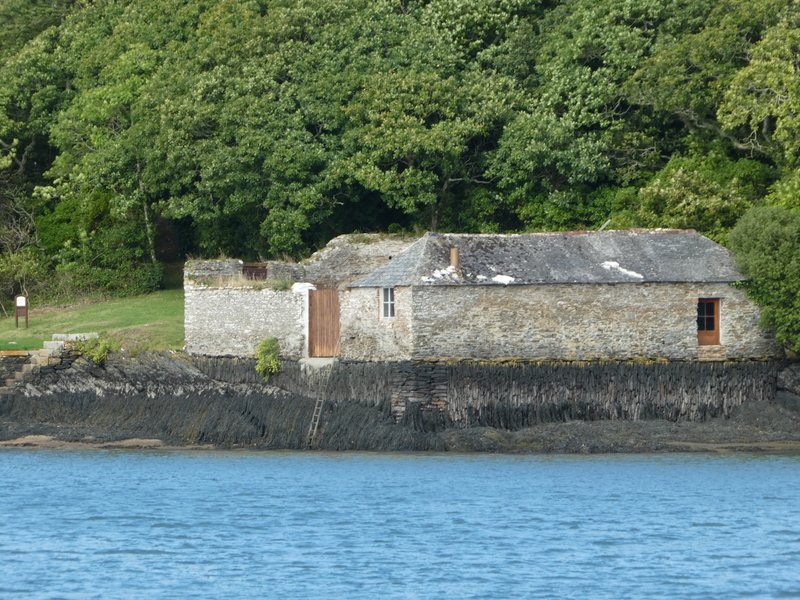
The house stands on a hill above an inlet of the Truro River, within an estate whose grounds and woodland extend beyond its immediate surroundings. The medieval house had a courtyard plan and a prominent gate tower. Wilkins’s 1818 enlargement used an East Anglian Tudor Gothic style, a Gothic Revival approach drawing on Tudor-period forms, and retained parts of the earlier house. Vulliamy’s rebuilding and enlargement from 1845 to 1848 removed the medieval fabric that remained.
Gardens and tea cultivation
The estate includes a large botanical garden and an arboretum, a collection of cultivated trees. Tea was first planted in the kitchen garden in 1999, but conditions there did not suit expanding the crop. More than 20,000 additional tea bushes are planted each year between April and October. A seawater creek, 60 feet (18 metres) deep, cuts through the tea gardens about six miles inland. It contributes to the gardens’ microclimate, while their position away from salt winds provides further shelter. Custom-made beehives are placed among manuka bushes, flowering shrubs in the genus Leptospermum. The resulting honey contains measurable methylglyoxal, a chemical compound.