Atago Shrine in Kasama: A Mountain Shrine for Fire Protection
Site at a Glance
- Popularity
- Medium
- Country
- Japan
- Primary era
- Early Modern
- Eras represented
- Early Modern
- Civilizations
- Tokugawa
- Site type
- Religious
- Remains
- Sanctuary
On this page15 sections
History
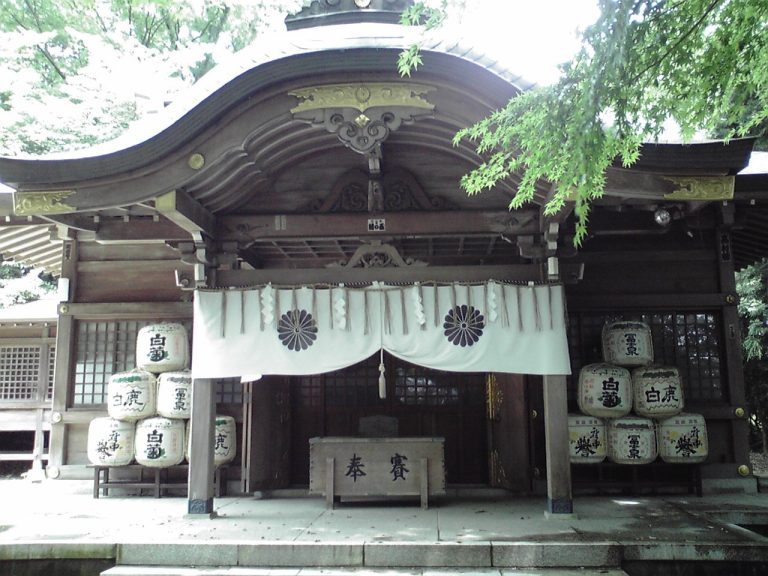
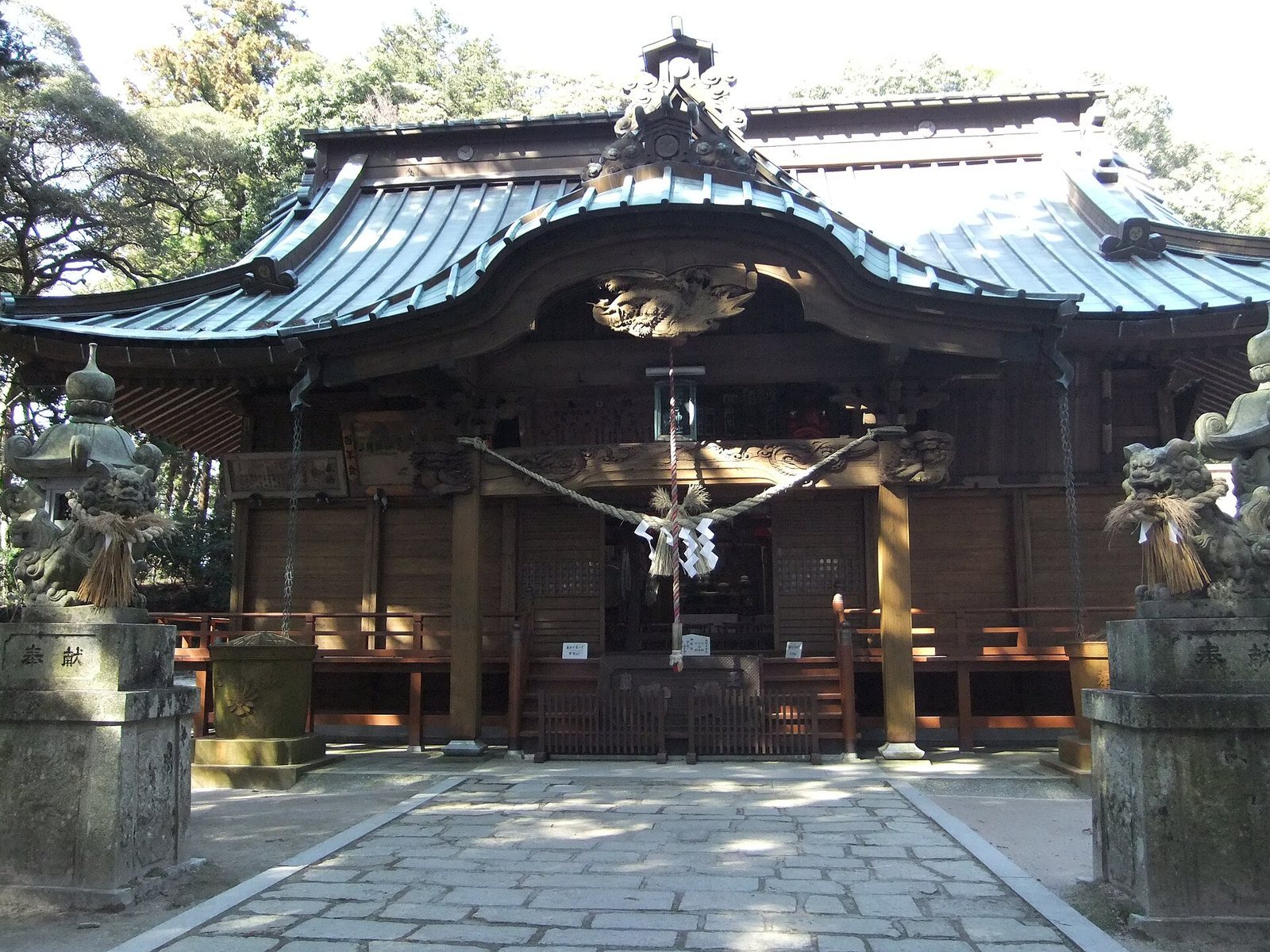
Atago Shrine is a mountain shrine in Kasama, Ibaraki Prefecture, Japan, whose foundation tradition dates to August 23, 806. Its worship centers on protection from fire, and it is sometimes counted among Japan’s three great fire-prevention shrines, though the other two in this grouping are unclear.
Early traditions and changing identities
Shrine tradition credits the Buddhist monk Tokuitsu, active in the early ninth century, with opening Mount Atago. The shrine was once called Atago Gongen, a name referring to a kami understood as the manifestation of a Buddhist deity, and was popularly known as Atago of Izumi. The mountain was formerly called Wind-Cave Mountain. A local tradition says it took the name Mount Atago after Atago worship was established there in the medieval period.
Water also figures in interpretations of the area’s earlier religious history. Izumi contains the source of the Tomoe River, and water-associated shrines stand on the mountain. Iizuna Shrine, at the summit, has been proposed as one of three minor shrines listed for Ibaraki District in Hitachi Province in the tenth-century Engishiki, a compendium of regulations that includes a shrine register. The identification is uncertain, and it does not establish the ancient shrine’s location. An oral tradition identifies Iizuna as that shrine and says its name gave rise to the name of an ancient township. Before the Second World War, the summit shrine bore the ancient shrine’s name; after the war, it returned to Iizuna Shrine.
Patronage in the Edo period
Atago Shrine attracted support from the lords of the Shishido and Tsuchiura domains, feudal territories governed under the Tokugawa shogunate. A tradition credits the lord of Shishido Castle, probably Akita Toshisue, with donating 1,000 pine and cedar trees in 1643; the trees were said to have grown large. In 1648, the shogunate confirmed a grant of three koku of shrine land. A koku was a measure of rice also used to express assessed agricultural yield, so the grant described yield rather than land area.
In 1658, Tsuchiya Kazunao, lord of Tsuchiura, came to hold the villages of Iwama Izumi, Kamimura, and Shimomura. They remained within the domain until the end of Tokugawa rule. The Tsuchiya family especially revered the shrine, helping to make it known in Tsuchiura. In 1671, Kazunao designated it as a place of prayer, sent an annual envoy with ritual offerings, and provided funds for them. In 1709, a son of Tsuchiya Masanao visited and donated an interior curtain, reflecting on the family’s ancestral ties to the area in a travel account.
Pilgrimage, records, and festival traditions
In 1823, the scholar Hirata Atsutane published an account based on an interview with Torakichi, a boy associated with stories of encounters with tengu, supernatural beings linked especially with mountains and ascetic practice. The account described Mount Iwama as home to thirteen tengu, alongside thirty-six at Mount Tsukuba, forty-eight at Mount Kaba, and many thousands at Mount Nikko. A map of Atago Mountain at Izumi Village made in 1827 depicts activity at the site. Pilgrims came in large numbers, particularly for the observance on January 24 in the lunar calendar. Writers and artists also visited often from the late Edo period (1603–1868) through the Meiji (1868–1912) and Taisho (1912–1926) periods. Parishioners later recalled a peak in popularity comparable to that of Naritasan Shinshoji, a major Buddhist temple.
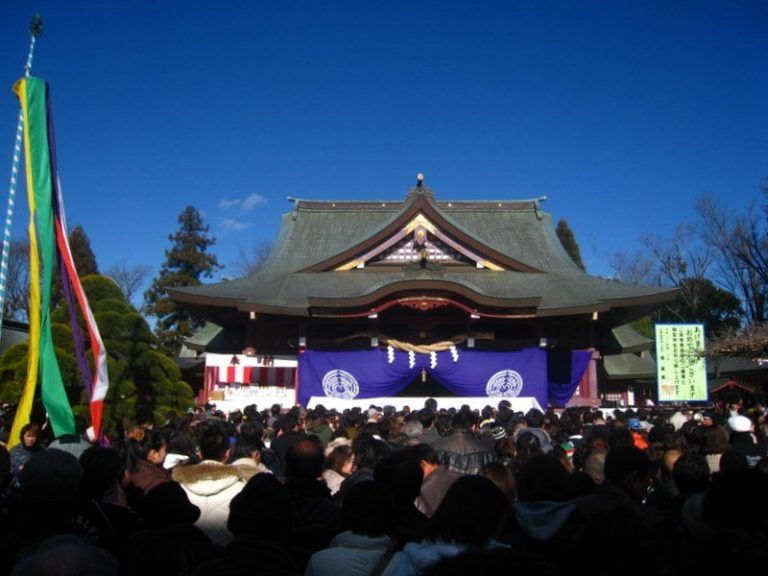
Iizuna Shrine’s annual Insult Festival centers on thirteen white-clad participants representing tengu. They make offerings at eighteen mountain shrines in silence while worshippers shout insults and compete for the offerings; the participants fend them off with green bamboo. Obtaining an offering or prevailing in the exchange of insults is said to bring good fortune. The festival’s beginnings are uncertain. One local story links it to Tsuchiura rulers hearing villagers’ political complaints in the mid-Edo period. Other interpretations connect it with the expulsion of vengeful spirits or epidemics, or suggest an earlier courtship custom before women were excluded. A prefectural inquiry interpreted the insults as purification and regarded the political-grievance story as promotional; none of these explanations has firm documentary support.
Modern changes
A wildfire probably destroyed the shrine completely during the late Meiji period. Under Japan’s modern shrine-ranking system, it was designated a village shrine. Atago confraternities, local devotional associations organized around Atago worship, are found in Kasama and nearby municipalities, including Hitachiota, Ibaraki Town, and Kasumigaura.
The mountain’s restriction on women was associated with Shugendo, a Japanese mountain-ascetic tradition combining Buddhist and local religious practices. Until 1941, the Insult Festival ran from midnight until dawn, and women were excluded; adult men from Goryo at the mountain’s foot were chosen to play the tengu. Wartime conditions interrupted the event. After the war it moved to daytime, narrowed gradually to a parishioners’ observance, and was sometimes suspended after accidents. It was revived as a larger public event around the early 2000s, with moderated physical competition. The revised event includes a station where only women may compete for offerings, and the tengu distribute rice cakes and sweets.
Remains
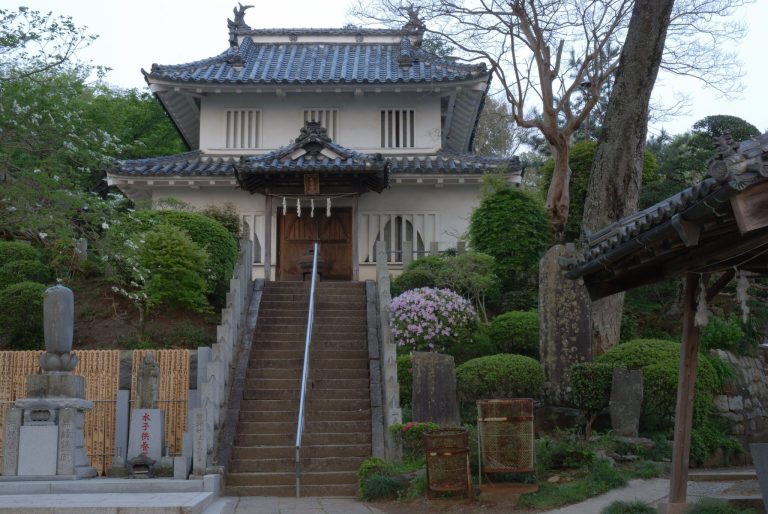
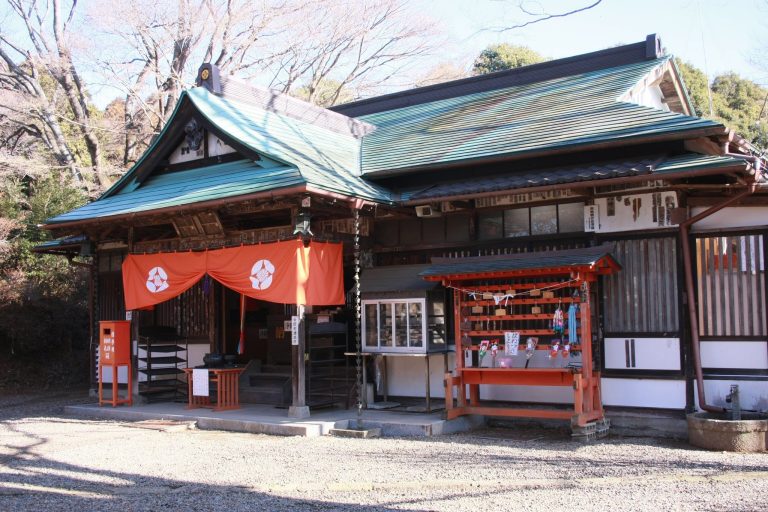
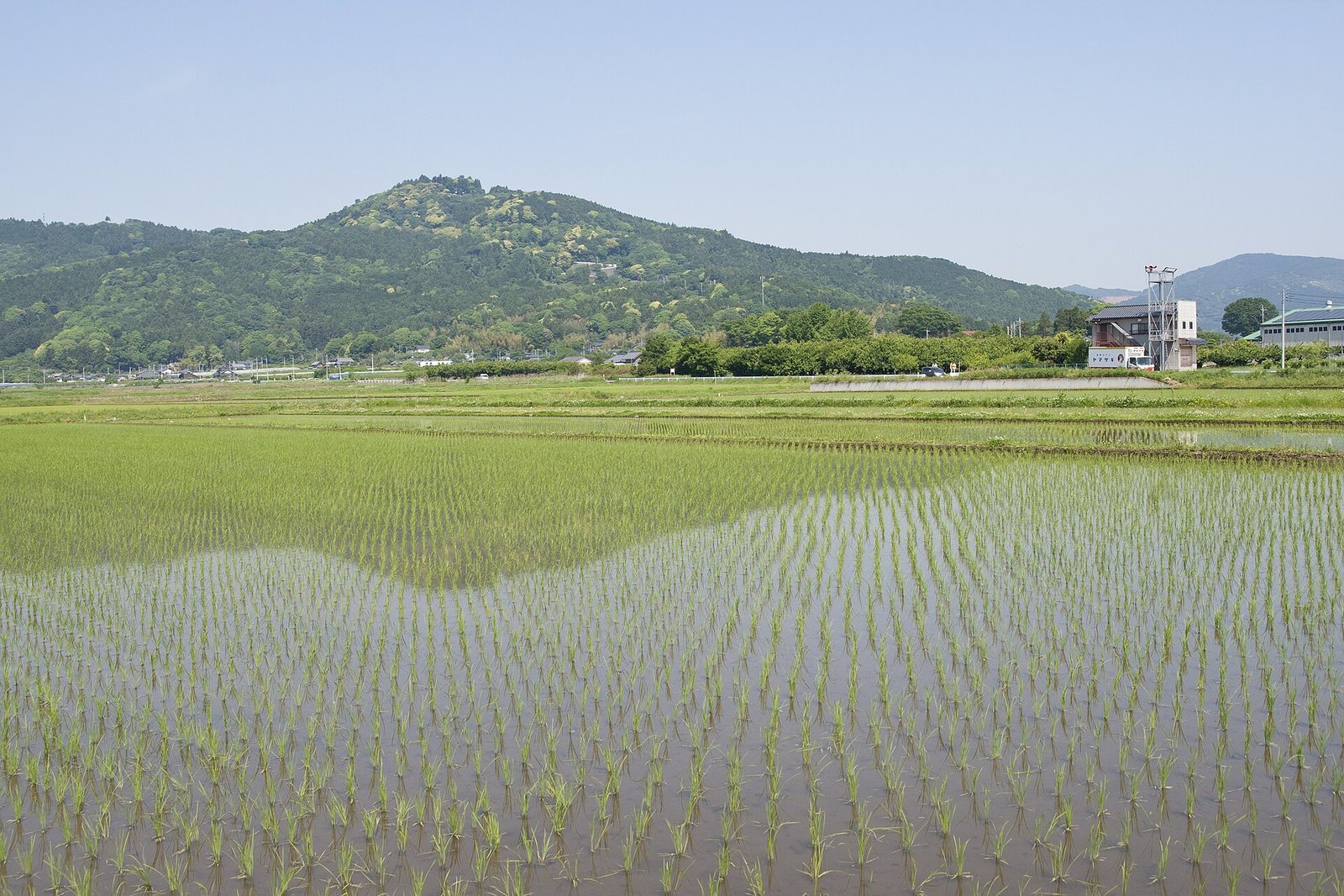
The religious complex occupies Mount Atago, a 305-metre peak in the northeastern Tsukuba Mountains. Atago Shrine stands below the summit, while Iizuna Shrine occupies a level area behind it. The summit features a massive rock shaped into a tortoise-shell-patterned base, with a hexagonal hall and a group of thirteen smaller shrines arranged around it.
Summit shrine complex
Hexagonal hall
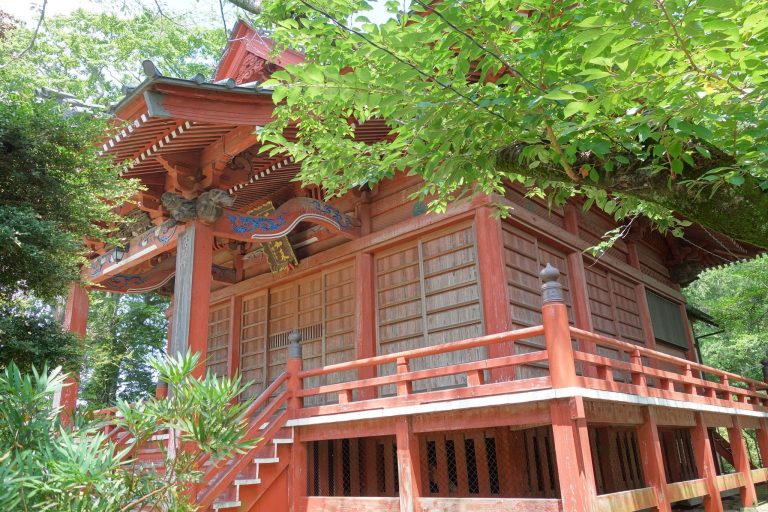
The hexagonal hall stands on the shaped summit rock and is surrounded by the thirteen tengu shrines. Hirata Atsutane’s 1823 account describes a copper hexagonal sanctuary. Fundraising led by the head priest of a Shingon Buddhist temple, belonging to an esoteric Buddhist school, in Kawaraya Village resulted in a hexagonal hall in 1824, but whether it was the same structure is uncertain. A prefectural investigation identified the hall as Iizuna Shrine’s main hall, while the hall and summit shrine are also treated as distinct objects of worship. The hall’s dragon-shaped projection was damaged in 1948 and repaired during the Shōwa 50s. A stone monument in the grounds commemorates a repair to the hall.
Iizuna Shrine
Iizuna Shrine stands on the summit and is dedicated to Tajikarao, a Shinto deity associated with strength. It is treated as an object of worship distinct from the hexagonal hall and the surrounding group of tengu shrines.
Thirteen tengu shrines
The thirteen small shrines encircle the hexagonal hall and form a separate group of objects of worship. Their number corresponds to the thirteen tengu represented in the mountain’s festival traditions.
Other subsidiary shrines
Records also list subsidiary shrines dedicated to Okitsuhiko and Okitsuhime, hearth deities; Oyamakui, associated with sake brewing; and Okuninushi. The Dragon Shrine is dedicated to Takaokami, a water deity, while Afuri Shrine is dedicated to Yamato Takeru, a legendary prince and warrior.
Eighteen festival shrines
Water, spring, and agricultural shrines
The eighteen shrines receiving festival offerings include a water shrine associated with the Goryo district’s water source, a Dragon Shrine linked with rain and water, and a shrine to a sacred spring credited with sustaining Atago Shrine’s prosperity. The Eastern Shrine is identified with Afuri Shrine and associated with agriculture and water.
Other shrine and ritual features
The offering sites also include Atago Shrine, Iizuna Shrine, Matsuo Shrine, known as the Pine King and associated with sake brewing, the hexagonal hall, and the thirteen tengu shrines. Other features are a Kasuga shrine with a deity transferred from Kasuga Grand Shrine, shrines to Bishamonten, a Buddhist guardian deity, and to Fudo, a Buddhist Wisdom King, in eastern and western forms, as well as a pine-cone Fudo shrine. The Gundari Wisdom King Hall honors another Buddhist Wisdom King. At a sacred stone cliff, carvings show a large and a small tengu; the cliff is said to have served as a place for tengu ascetic practice. A Hundred-Stone-Step Fudo shrine commemorates completion of the stone steps. The remaining offering sites include a Daikokuten shrine, associated with prosperity and identified with Izumo Shrine.
Women’s worship area and boundary marker
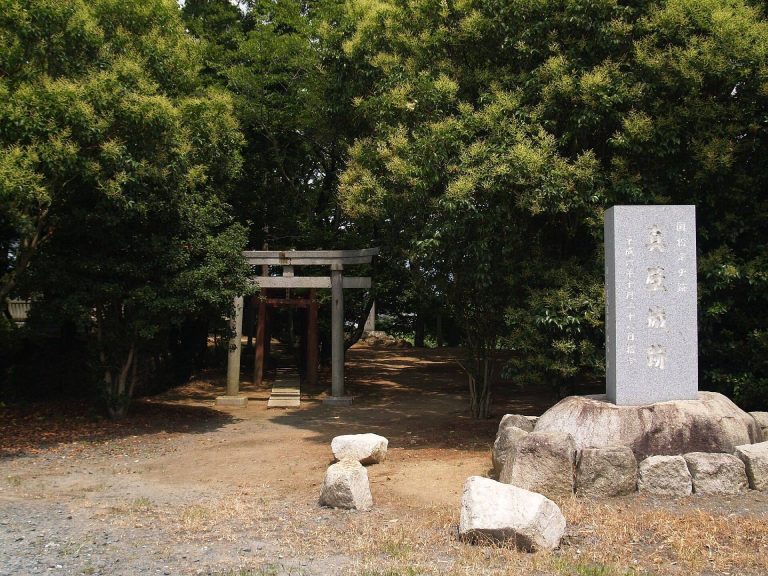
A stone monument marking the prohibition on women remains on the mountain. The former remote-worship place provided for women is also part of the site’s religious layout.