Trångsund Fortress: A Coastal Defence Complex in Vyborg Bay
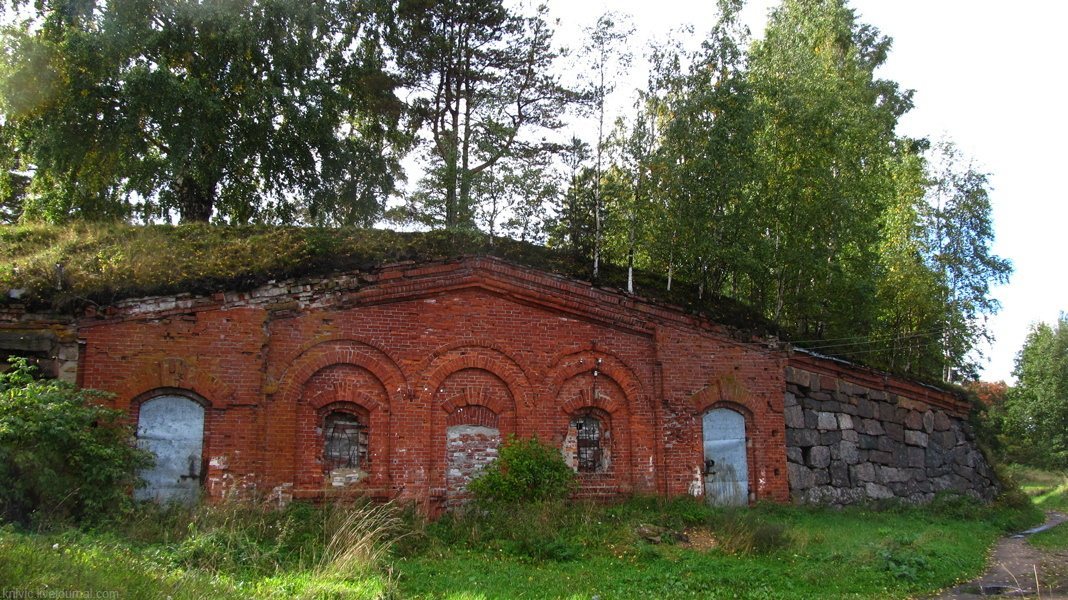
Site at a Glance
- Popularity
- High
- Country
- Russia
- Primary era
- Modern
- Eras represented
- Modern
- Civilizations
- Grand Duchy of Finland, Russian
- Site type
- Military
- Remains
- Fort
On this page7 sections
History
Trångsund Fortress is a coastal defence complex on Vysotsky and Maly Vysotsky islands in Vyborg Bay, near Vysotsk in Russia. It guarded the Trångsund Strait, one of three waterways leading to Vyborg.
Early fortifications
During the Great Northern War (1700–1721), a conflict in which Russia and its allies fought Sweden, Russian forces besieging Vyborg established early fortifications on the islands to guard against attack by sea. In 1710, Peter the Great, Russia’s ruler during the war, established an earlier fortification, the same year the town of Trångsund was founded. Artillery positions were already in place and engaged Swedish naval forces. The Swedish name Trångsund means “narrow strait” and refers to the channel between the two islands.
The nineteenth-century fortress
Construction of the fortress in its surviving form began in 1864 and was completed in 1867, after the Crimean War (1853–1856), in which Russia fought an alliance that included the Ottoman Empire, Britain, France, and Sardinia. By the 1880s, rapid advances in firearms and artillery had made the defences outdated and ineffective.
Twentieth-century changes
In the early twentieth century, the fortress was intended to join Peter the Great’s Naval Fortress, a planned Russian coastal-defence system. By the First World War it had been disarmed and took no part in the conflict. After 1917, the fortress and town passed to independent Finland with the former Vyborg Province, and the town became known as Uuras. During the Finnish Civil War of 1918, fought between the Reds and the Whites, the local Women’s Red Guard, an armed formation associated with the Reds, occupied the fortress. Fighting later took place on its works during the Winter War (1939–1940), the conflict between Finland and the Soviet Union. Apart from these events, the fortress was abandoned and unused.
Remains
Island defences
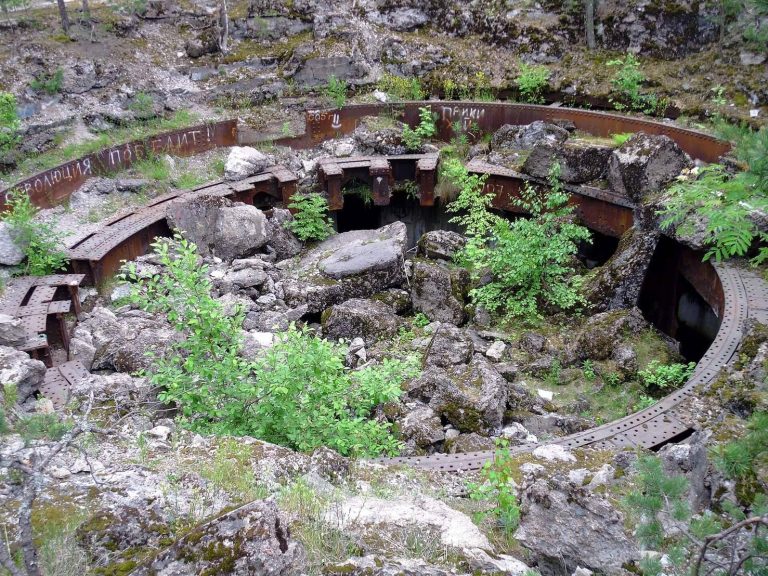
The fortress occupied both islands and commanded the Trångsund Strait, which narrows to about 180 metres and was the principal of three waterways leading to Vyborg. Its defences formed a substantial complex of artillery positions, projecting works, and fortified chambers cut into the granite coastal cliffs. The initial armament included eight-inch guns made by Krupp, with two placed at a defensive work and four at a separate artillery position.
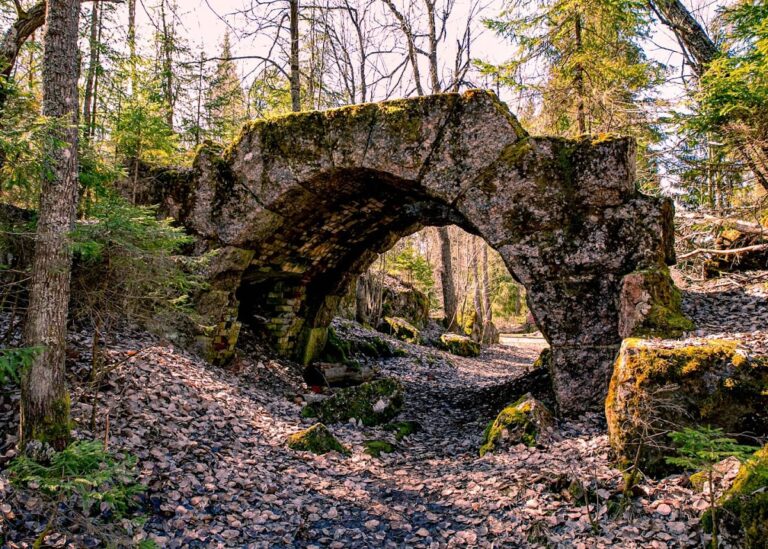
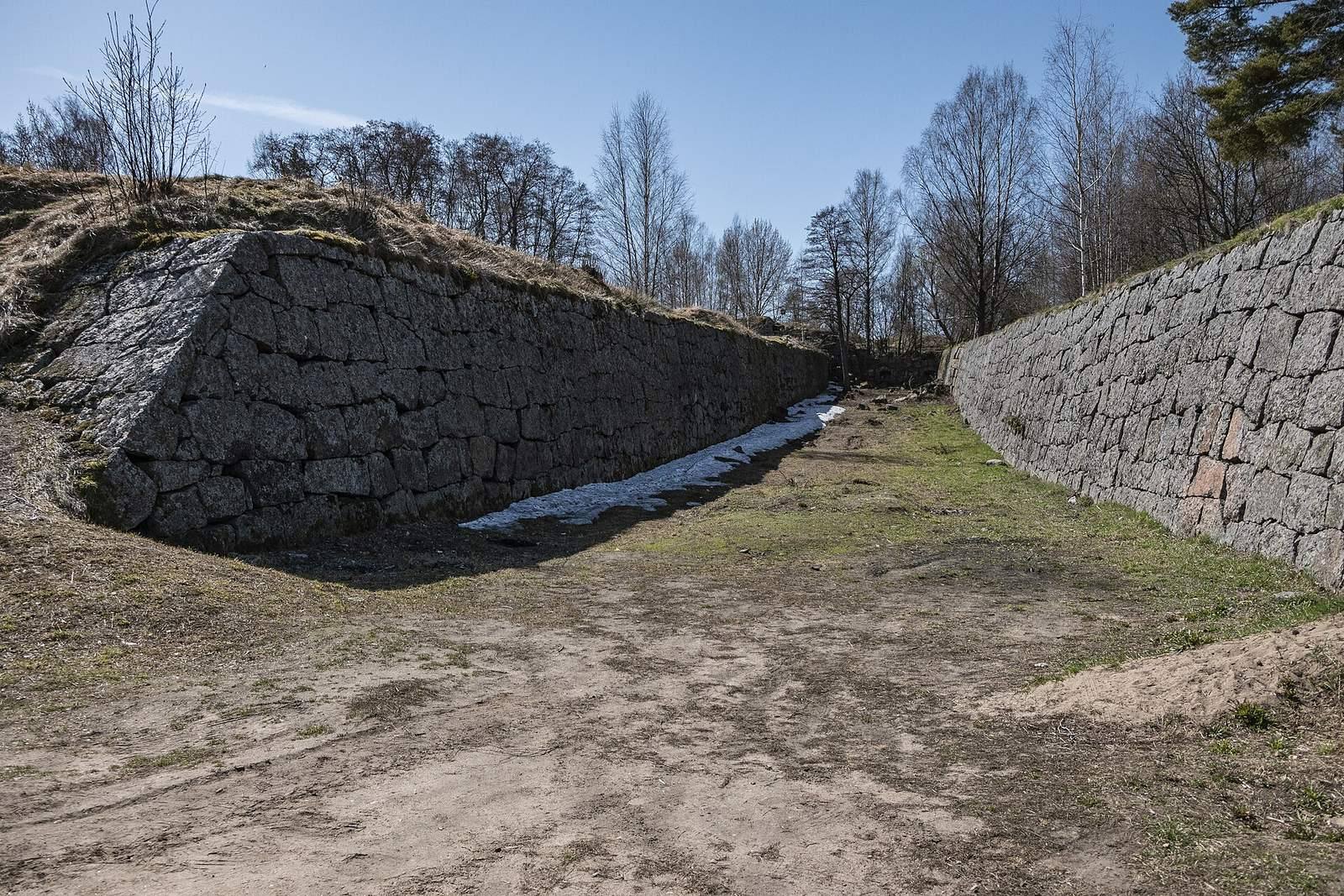
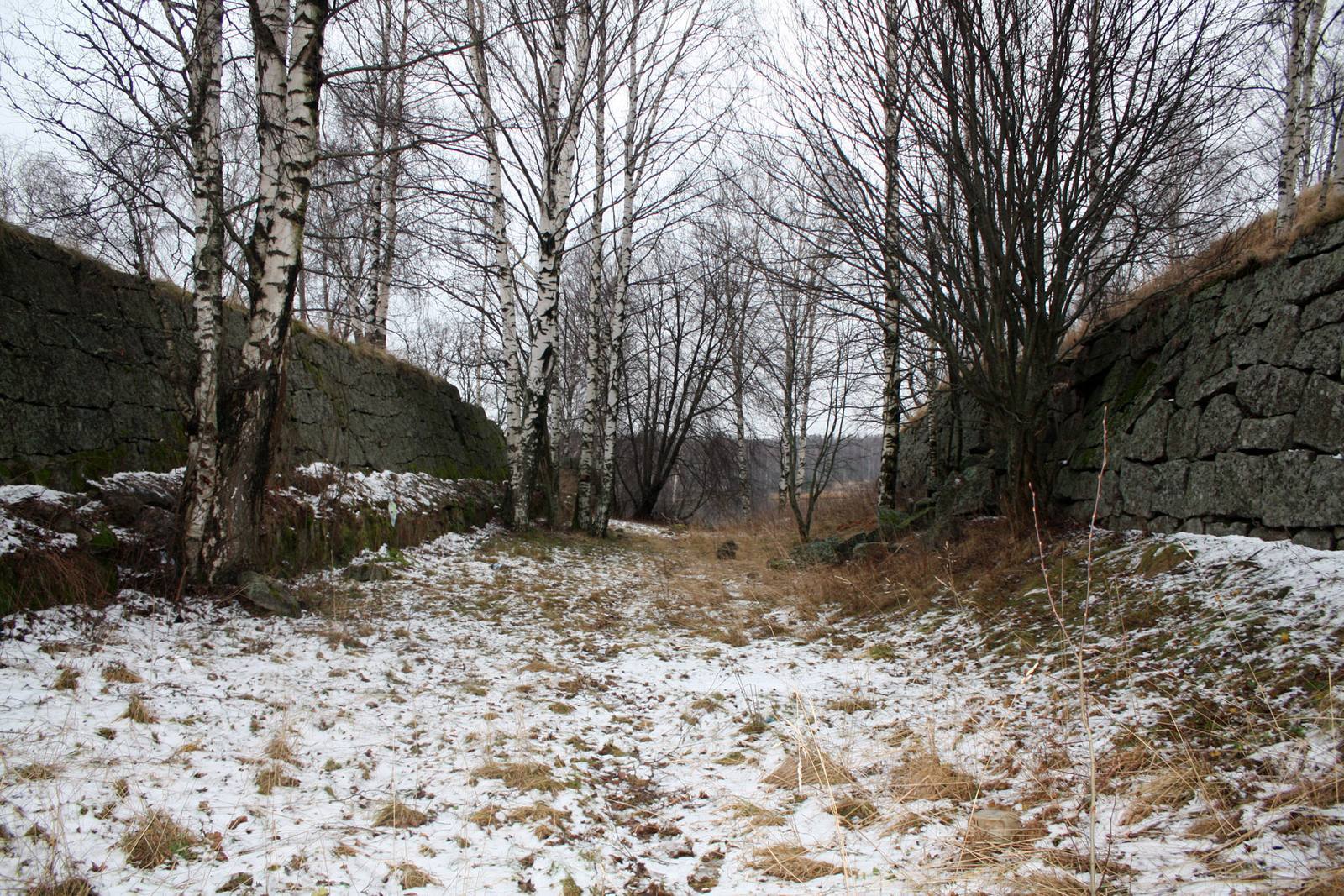
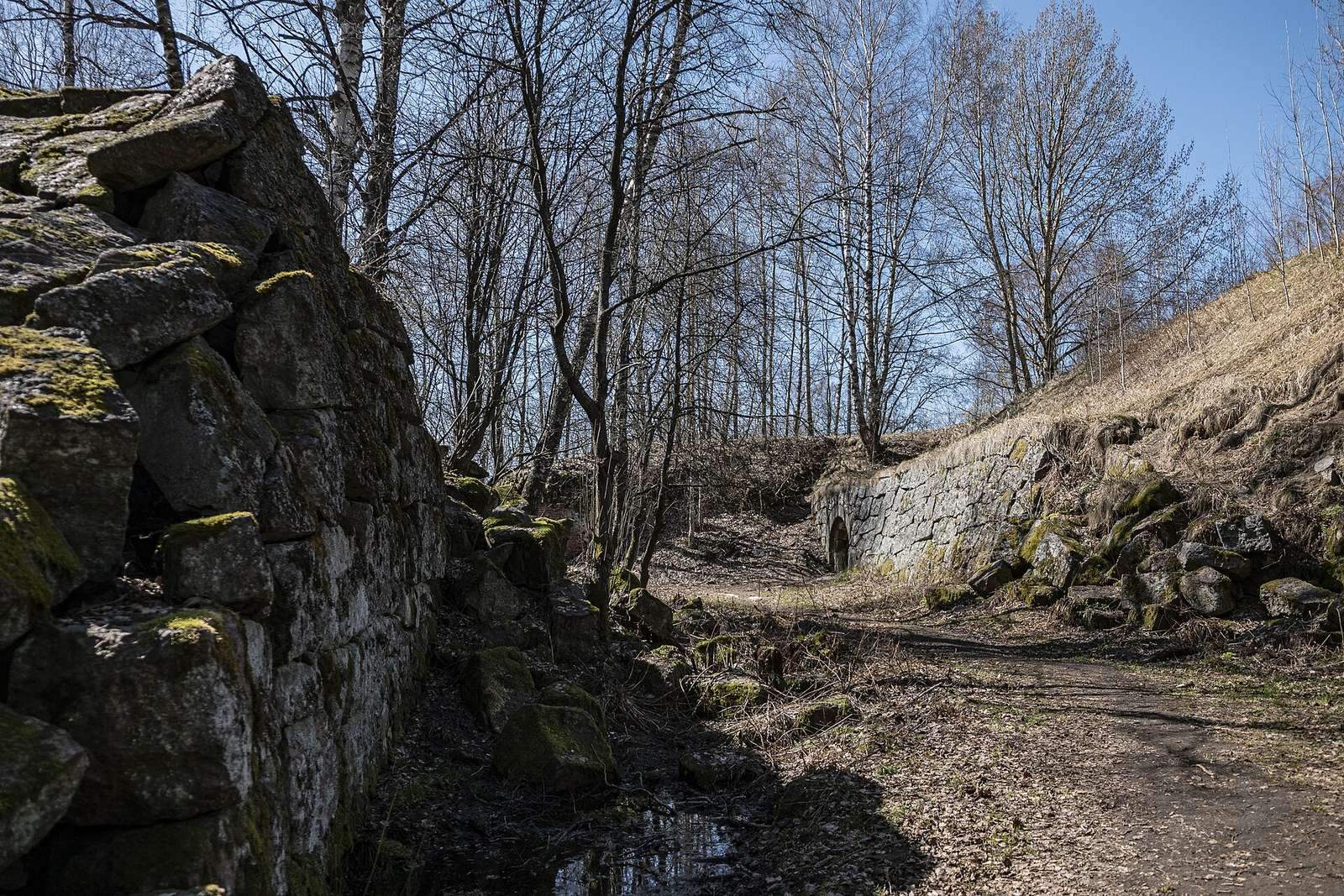
Surviving structures
Most of the surviving works are in ruins. They include earth ditches faced with granite blocks, rear walls, connecting defensive walls, and interior spaces. A powder magazine, a store for gunpowder, and stone-faced earth ramparts are also among the remains. Forest has grown over the site.