Tournay Castle: A Fortified Manor in Pregny, Switzerland
Site at a Glance
- Popularity
- Medium
- Country
- Switzerland
- Primary era
- Early Modern
- Eras represented
- Medieval, Early Modern
- Civilizations
- Duchy of Savoy, French
- Site type
- Domestic
- Remains
- Castle
On this page10 sections
History
Tournay Castle is a fortified manor above Pregny in the municipality of Pregny-Chambésy, Switzerland, generally attributed to the 15th century. It later served as a strategic base in conflict with Geneva and, after its defenses were dismantled, became a country residence.
The lordship and its early holders
The lordship of Tournay took shape during the 12th and 13th centuries, as smaller territories gained autonomy while the Counts of Geneva lost control of the area. By the 13th century, Tournay included Pregny and Chambésy and fell under the lordship of Gex, a historic region near Geneva. Gex came under Savoyard supremacy in 1353. The lordship’s earliest administrative seat may have been a manor rather than a castle. From the late 13th century, the fortified house and its fief, land or rights held under a feudal relationship, were associated with the nobles of Aguières, also known as Anières.
Around 1384, Isabelle d’Anières married Aymon de Genthod, and the property passed to his family. The Genthods held it until their family line ended in 1536. Tournay then passed through several hands and was divided. Jaques de Viry held the title of lord by 1541 and sold his rights in 1546 to Nicolas Le Flert and Antoine Calvin. The property subsequently passed to Adrien de Pregrimand, also called Briquemanet. Around 1558, his wife transferred it to François Moncel, and it later came to François Lullin. In 1573, François’s son Antoine sold half the fortified house to Jean de Brosses; the sons of Pierre Lullin received the other half.
Conflict with Geneva and rebuilding
Bern took control of the Pays de Gex in 1536, and the territory returned to Savoy in 1567. Tournay became a strategic base for military action against Geneva. In 1583, Claude de Crose transferred his lordship rights over Pregny and Chambésy to Jean de Brosses. Together with Tournay, these lands formed a county whose later boundaries corresponded to the municipality of Pregny-Chambésy. The de Brosses family held the estate until 1778. Jean de Brosses, a state councillor to the Duke of Savoy, left Catholicism for Calvinism, a Reformed Protestant tradition, and settled in Geneva.
A Savoyard company occupied the castle in 1589. During the Genevan campaign in the Pays de Gex in 1589 and 1590, Genevan troops burned it, and it was declared ruined. Jean de Brosses proposed disabling the defenses so the castle could not again be used against Geneva. Geneva’s councils allowed his family to retain the fief on condition that the walls and drawbridges be demolished, the moat filled, and the site made indefensible. The family carried out these measures.
After the Peace of Saint-Julien in 1603, the de Brosses family rebuilt the castle without restoring its fortifications, giving it the character of a country manor. Claude de Brosses commissioned repairs in 1691. When Claude died in 1741, his nephew Charles inherited the fief. Charles became grand bailiff of the Pays de Gex nobility in 1752, a senior administrative official, but usually lived at Montfalcon in Bresse and visited Tournay to review his estate accounts.
Voltaire and political upheaval
In 1758, Voltaire, the pen name of the French writer and playwright François-Marie Arouet, negotiated a lifetime lease of Tournay from Charles de Brosses. The agreement included the count’s title and required Voltaire to pay 35,000 livres, with a further 12,600 livres set aside for repairs. He moved into the castle on 24 December while waiting for his residence at Ferney to be built. Local residents welcomed him. He held theatrical performances at Tournay, continuing an activity that had already brought him into conflict with Geneva’s church authorities. He later moved to Ferney and died in 1778, the year after Charles de Brosses. Under the lease, the estate returned to the de Brosses family, and René-Augustin de Brosses inherited it.
During Geneva’s political conflict of 1782, three former syndics, senior civic officials, Jean-Louis Micheli-du-Crest, de Chapeaurouge, and Mallet, made Tournay a refuge for the committee of the Negatives. The Negatives opposed demands for regular General Council meetings and greater consultation of citizens. French troops also occupied the castle. The Negatives sought foreign intervention, and French, Sardinian, and Bernese forces besieged Geneva. On the night of 1 to 2 July 1782, troops entered the city from the heights of Pregny and Saconnex, restoring the Negatives’ government.
Revolution, 19th-century use, and modern ownership
During the French Revolution, the fief was dissolved and its property sold as assets belonging to emigrants. On 10 February 1794, the estate was split between Pierre-Jean Panissod, who paid 64,000 livres, and Lavergne, who paid 67,000 livres. Lavergne later sold his share to Piron, who in turn sold it to Panissod. The whole estate thus came into the Panissod family, which held it for four generations during the 19th century. Pregny was ceded to the Swiss Confederation in 1816 and formally attached to the Republic and Canton of Geneva that October.
From 1851 to 1896, the Panissod family made the castle available to the International Committee for Relief to the Wounded in Time of War. During summers it served as a boarding establishment for girls who were frail, ill, or recovering. Jean-Marie Panissod, mayor of Pregny from 1869 to 1906, also allowed the public free access to the family’s extensive estate.
Alfred Baur, a merchant and collector of Asian art, bought the castle in 1915. After his death in 1951, the Baur Foundation acquired the castle, estate, and separate Villa Baur. The estate was divided into three lots in 2008: the castle and villa, each with its surroundings, became separate lots, while the Foundation retained the agricultural land. A private individual acquired the castle between 2009 and 2011 and fully restored it. It is now privately owned by Nicole Propper and used as a residence. The castle and estate received cantonal protection in 1958; the estate entered the Swiss ICOMOS inventory of historic parks and gardens in 2002. In 2022, the surrounding Pregny hamlet and its setting were listed as a site of national importance, with the castle included in the Domaine du château de Tournay site.
The name Tournay may come from the Gaulish word toren, meaning hill, or from the Roman personal name Turnius, referring to his estate.
Remains
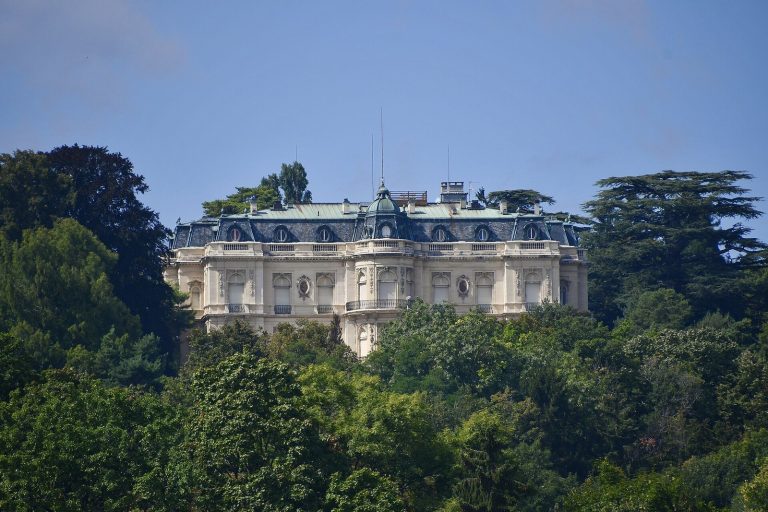
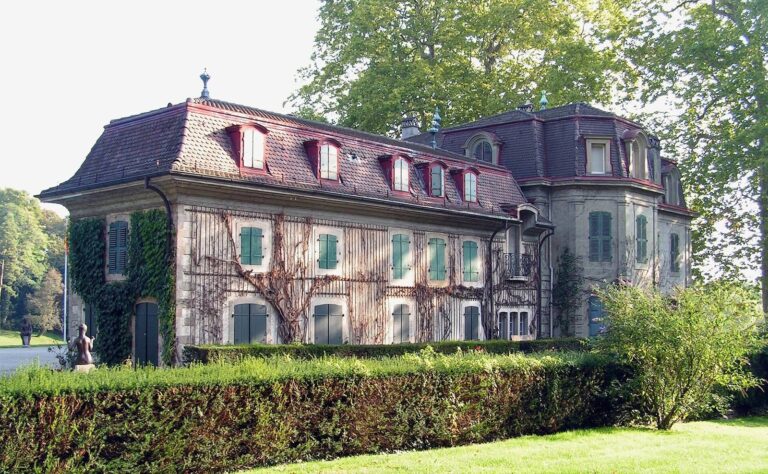
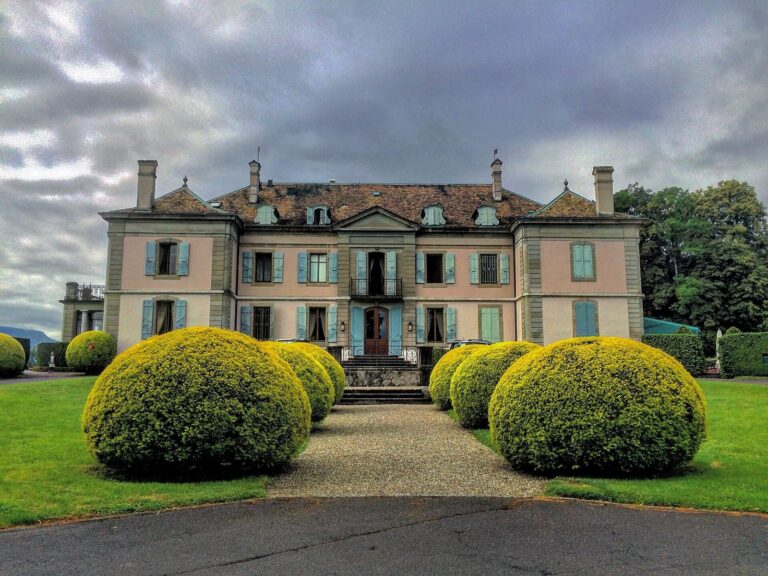
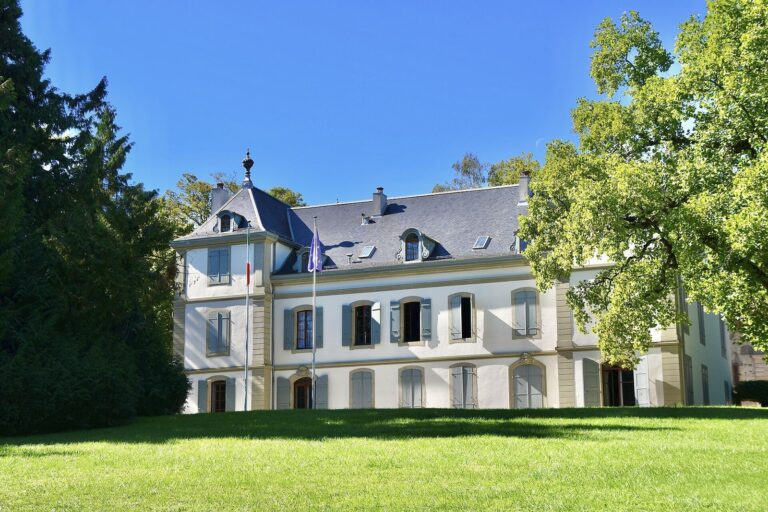
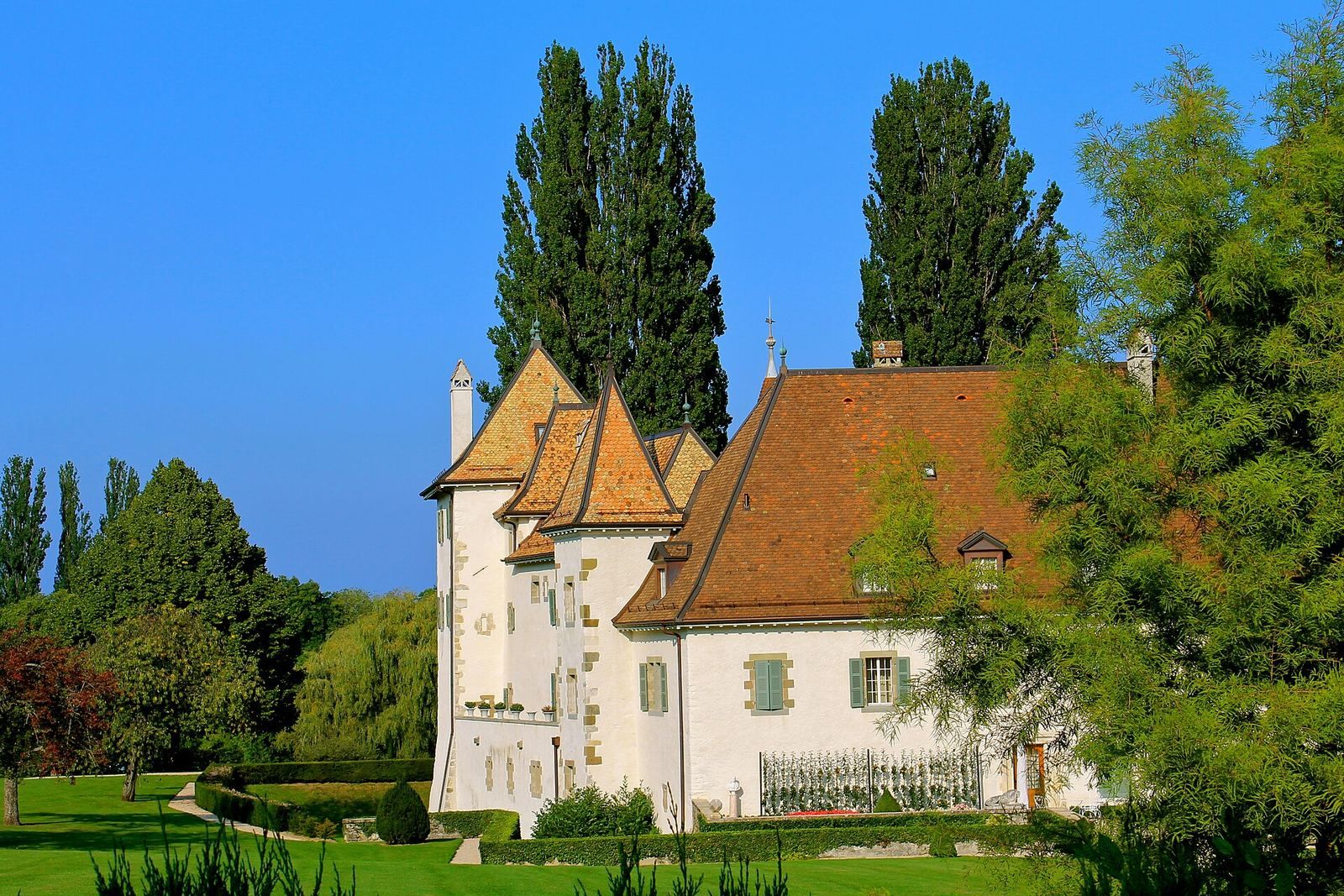
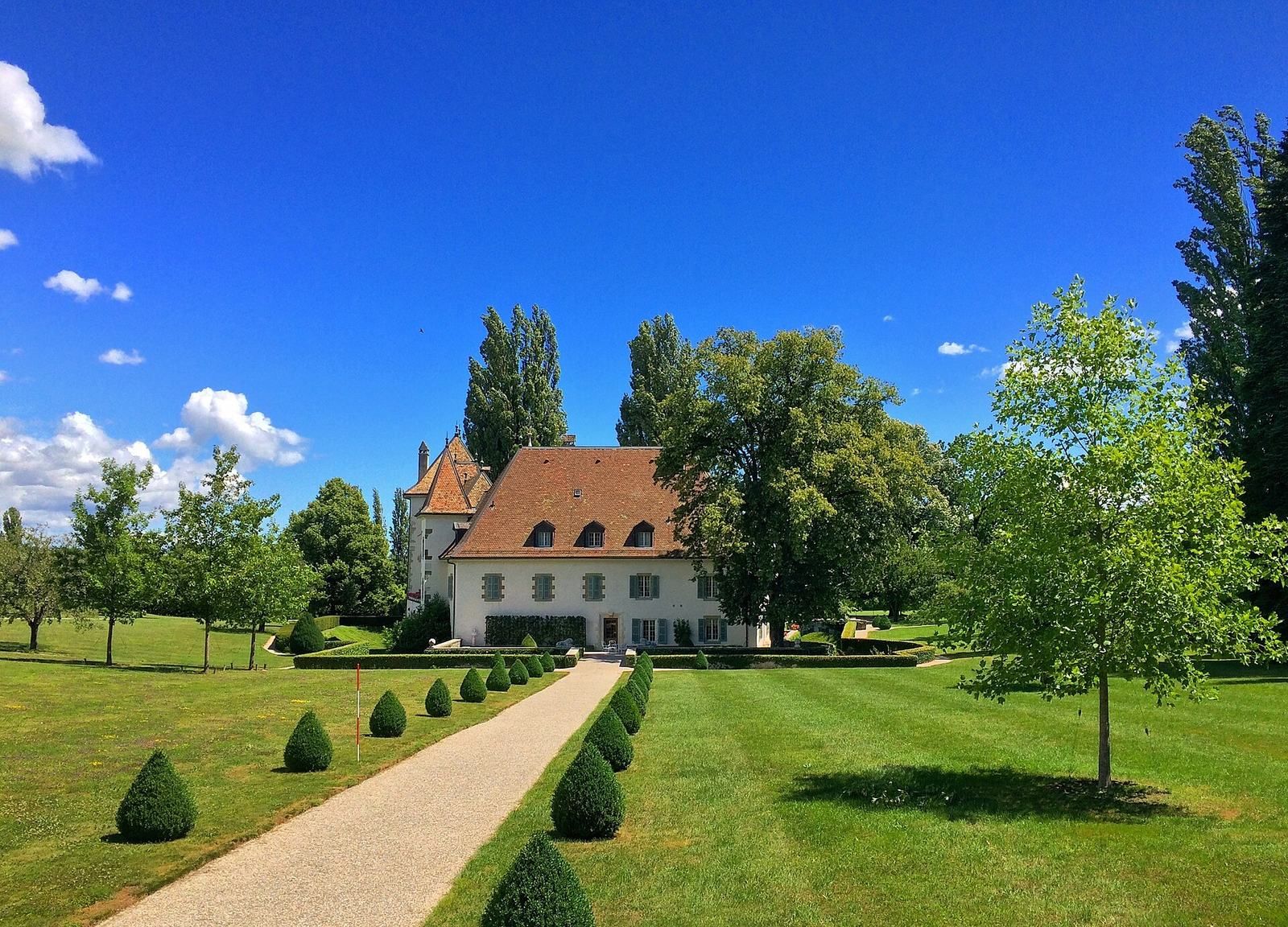
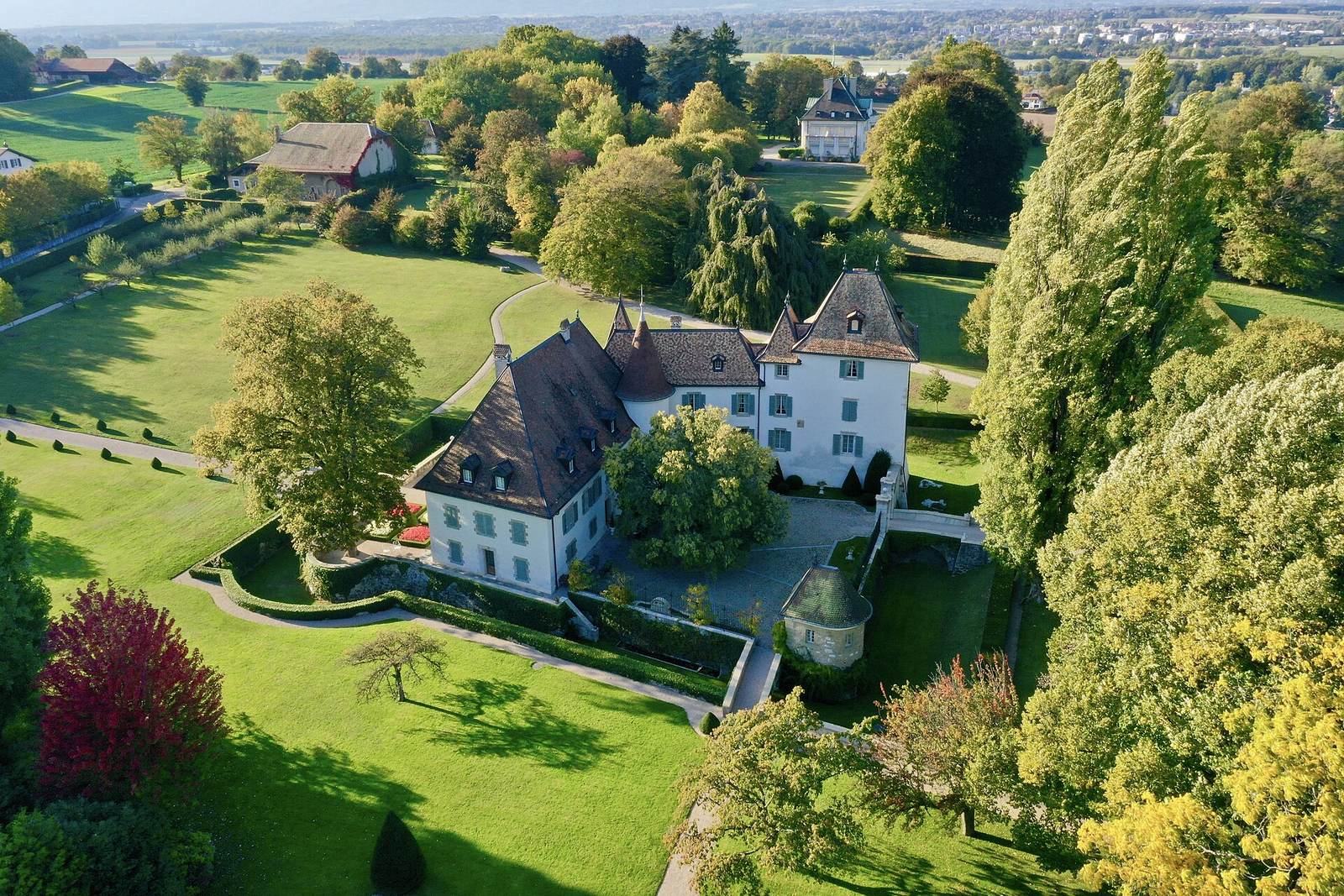
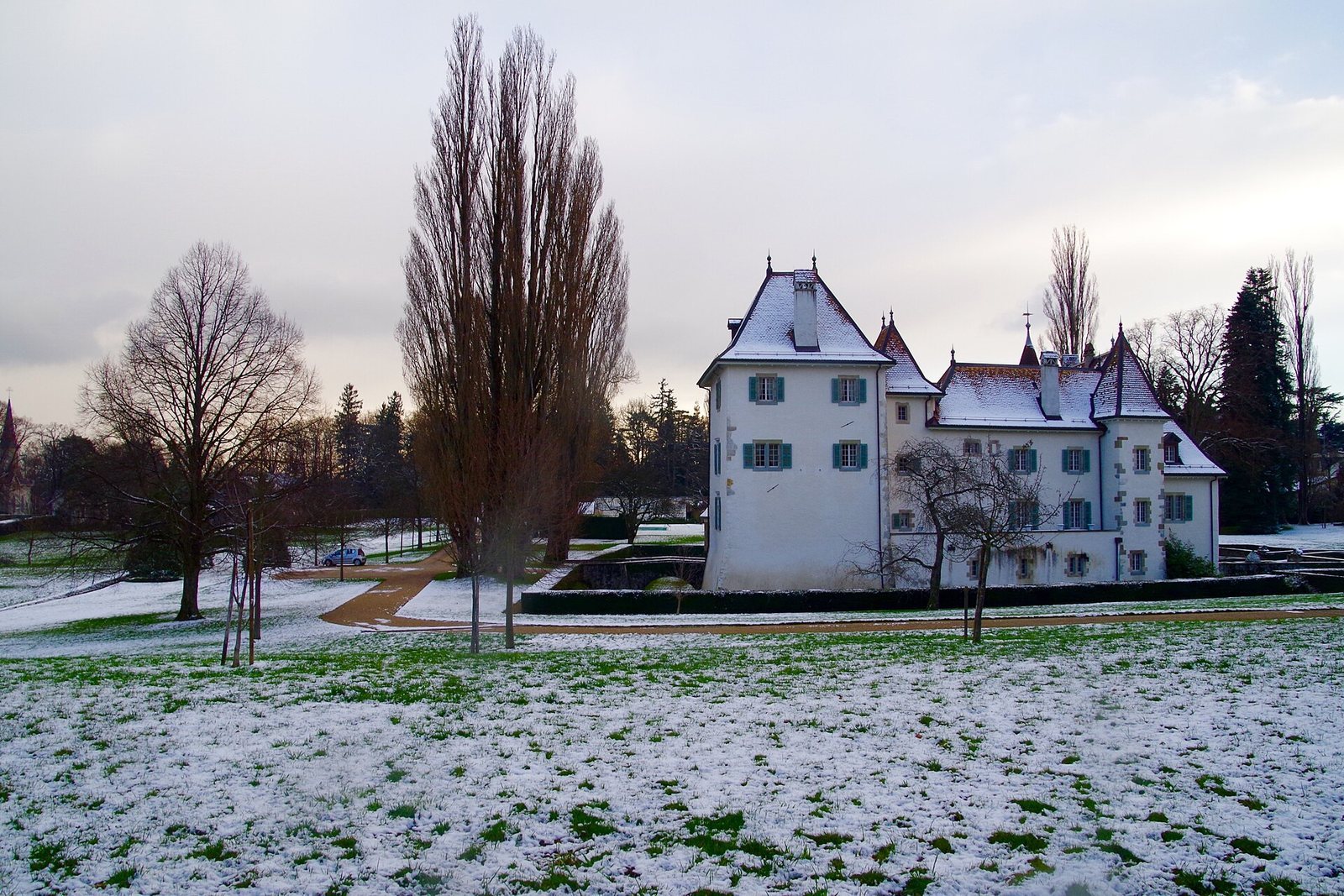
The castle stands on a slight rise above Pregny, on the right bank of Lake Geneva, in the southwestern part of the Tournay estate. The estate covers 335,156 square metres, while the land officially attached to the castle covers 31,911 square metres. The castle itself covers 521 square metres and rises 22 metres. Its compact form brings together two towers and a rectangular, two-storey residential building.
Castle form and fabric
The castle is attributed to the 15th century as a fortified manor, though its precise origins are unknown and an earlier manor may have served as the lordship’s seat. Its defensive character changed through rebuilding and later renovations. Restoration begun in 1918 addressed the masonry, timber framework, exterior, and surroundings. Because no historical documents guided the work, the architects drew on the forms of older manor houses rather than a known design specific to Tournay. The castle was fully restored again after its private acquisition between 2009 and 2011.
Defensive traces and garden
Traces of earlier walls and remains of a large square keep survive at the castle. A dry moat, now grass-covered, marks part of its defensive setting. Voltaire’s alterations included changing the staircase, clearing and widening the moat, and converting the drawbridges into swing bridges. Remains of the former perimeter wall, which once included round towers, are incorporated into the surrounding garden.
Estate buildings and grounds
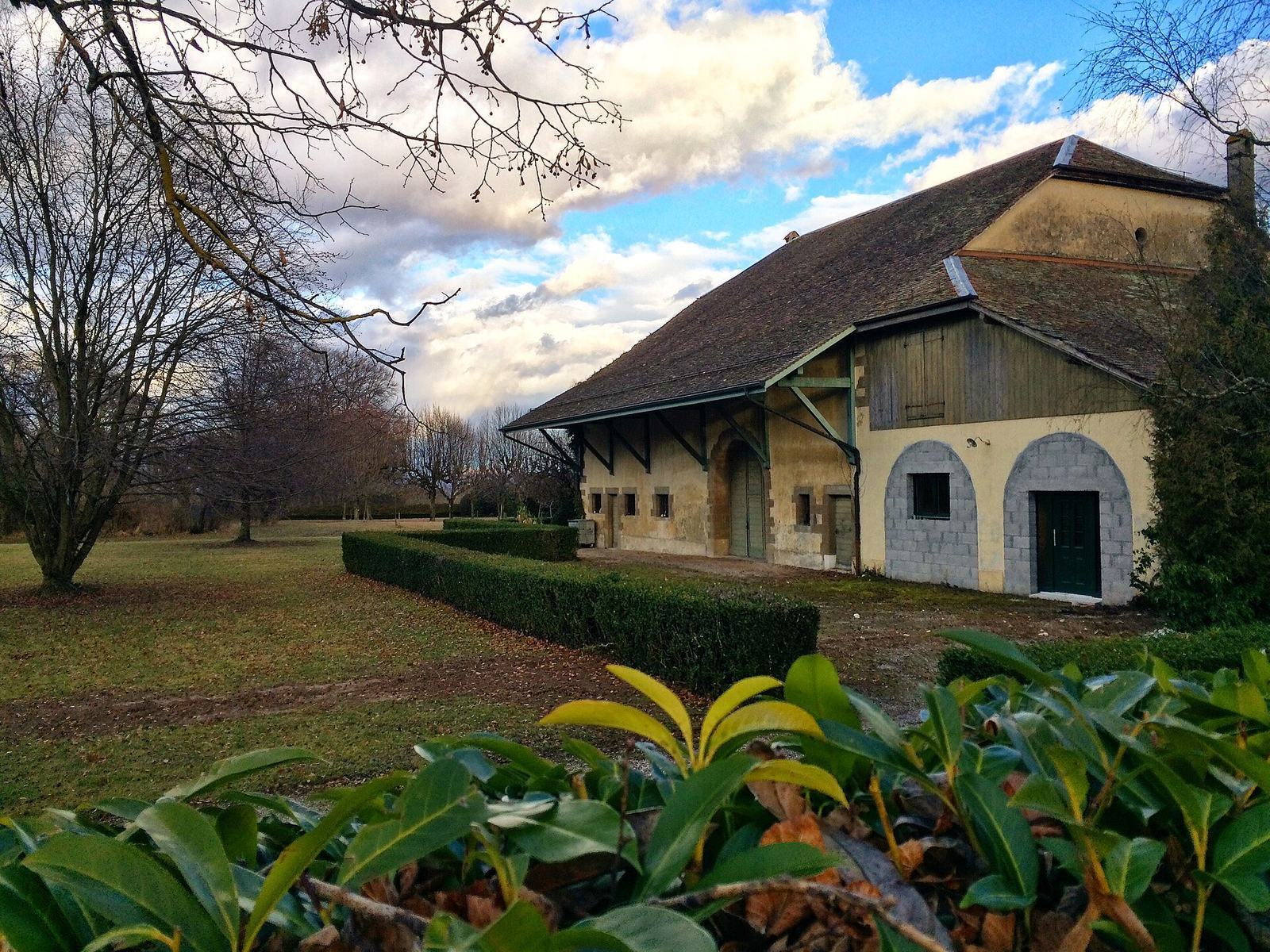
The wider estate includes a farm building and agricultural land formerly cultivated by the lords of Tournay. It also contains Villa Baur, a separate residence designed by Maurice Turrettini and Guillaume Revilliod. Its architecture recalls Geneva country houses of the 18th century. The estate includes the localities of Chambésy-Dessus and Château de Tournay.
Clock and interior alterations
A clock made by Ferdinand Cheneval in 1885 stood in the castle’s roof turret before being recovered after 50 years of inactivity. Between 2018 and 2022 it was restored and installed in the Nicolas-Bogueret Room, beside the renovated hall of Geneva’s Grand Council, the canton’s legislative body.