Toprak-kala: A Chorasmian Palace City in Uzbekistan
Site at a Glance
- Rating
- 4.5
- Popularity
- Low
- Country
- Uzbekistan
- Primary era
- Classical
- Eras represented
- Classical
- Civilizations
- Khwarazmian
- Site type
- City
On this page12 sections
History
Toprak-kala is an ancient Chorasmian palace city and royal residence in Uzbekistan, built by the rulers of Chorasmia during the 1st or 2nd century CE. Chorasmia, also known as Khwarezm, was an ancient Central Asian region centred on the lower Amu Darya, with its own rulers, cities, and written language. Toprak-kala served as the region’s capital or royal residence during the 2nd to 4th centuries CE and formed part of a wider network of fortified settlements in the Fifty Fortresses Oasis.
Foundation and royal residence
The city was probably founded by Artav, also identified as Artabanos, a ruler of Khwarezm. Its establishment probably followed the abandonment of Akchakhan-Kala, an earlier settlement about 14 kilometres to the southwest. Toprak-kala’s history extends across approximately the 1st to 5th centuries CE, while the settlement continued to prosper until the 6th century.
Toprak-kala and Chorasmia may have come under the control of the Kushan Empire during part of the 2nd century CE. The Kushans were a major Central Asian empire whose influence reached parts of modern Afghanistan, Central Asia, and northern India. Coins of the Kushan rulers Vima Kadphises and Kanishka were found within a sequence of coins issued by Chorasmian rulers. Other interpretations of the coin evidence conclude that the Kushans did not control Khwarezm, leaving the political relationship uncertain.
Change of capital and decline
Sometime after 305 CE, the Afrighid dynasty transferred Chorasmia’s capital to Kyat, the settlement now called Beruniy. The Afrighids ruled Khwarazm during late antiquity and the early Islamic period. Although it no longer held the capital, Toprak-kala remained prosperous until the 6th century.
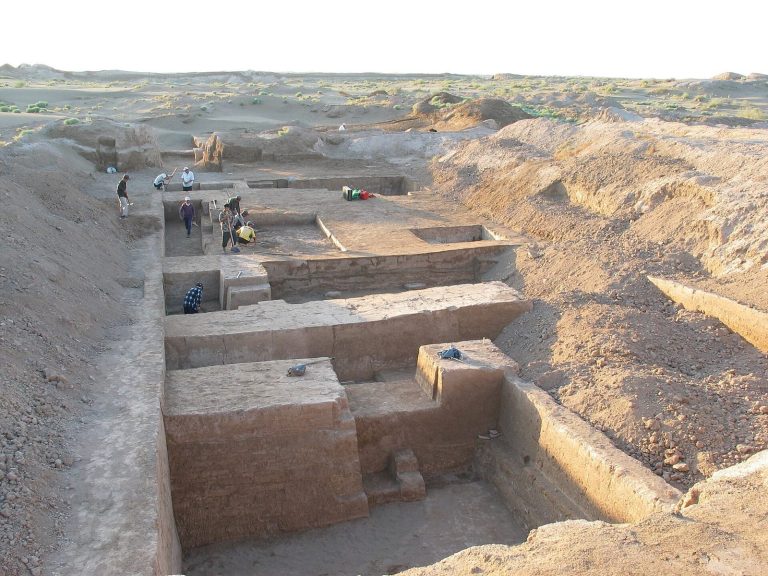
The settlement later became ruined after the failure of its irrigation installations and military clashes. Its place in the history of the region was clarified through archaeological work carried out by the Khwarazm Archaeological and Ethnographic Expedition under Sergey Tolstov. The site was explored in 1938, and investigations continued from 1938 to 1950. Tolstov also produced a reconstruction drawing of the ancient city. Toprak-kala now forms part of the Fifty Fortresses Oasis and is recognized in Uzbekistan as a tangible cultural-heritage site of republican significance.
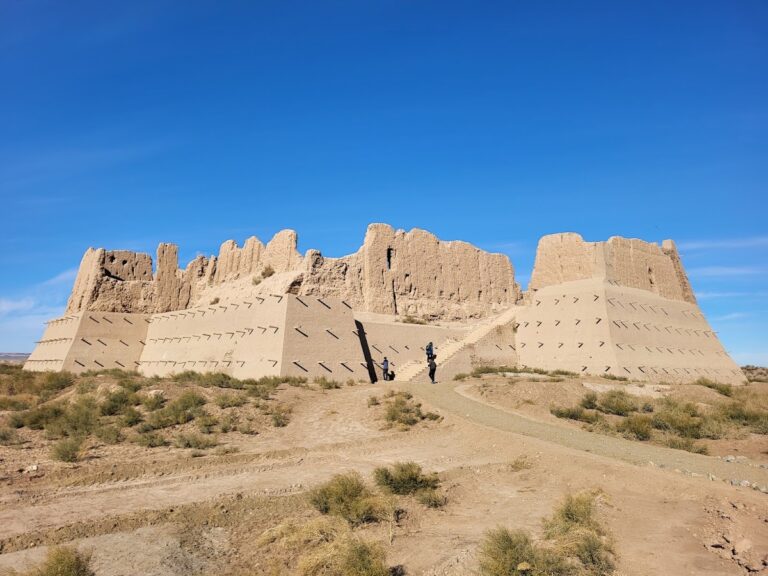
The settlement belonged to a wider landscape of fortified centres. Kyzyl-Kala, meaning Red Fortress, stands about 1 kilometre to the west and was probably built between the 1st and 4th centuries CE as a fortified defence for Toprak-kala. It was restored in the 12th century and has also been the subject of a modern renovation program intended to demonstrate its original appearance. Toprak-kala is also associated with Koi Krylgan Kala, about 30 kilometres to the southeast, and with Ayaz-Kala, both important components of the Fifty Fortresses Oasis.
Remains
City plan and fortifications
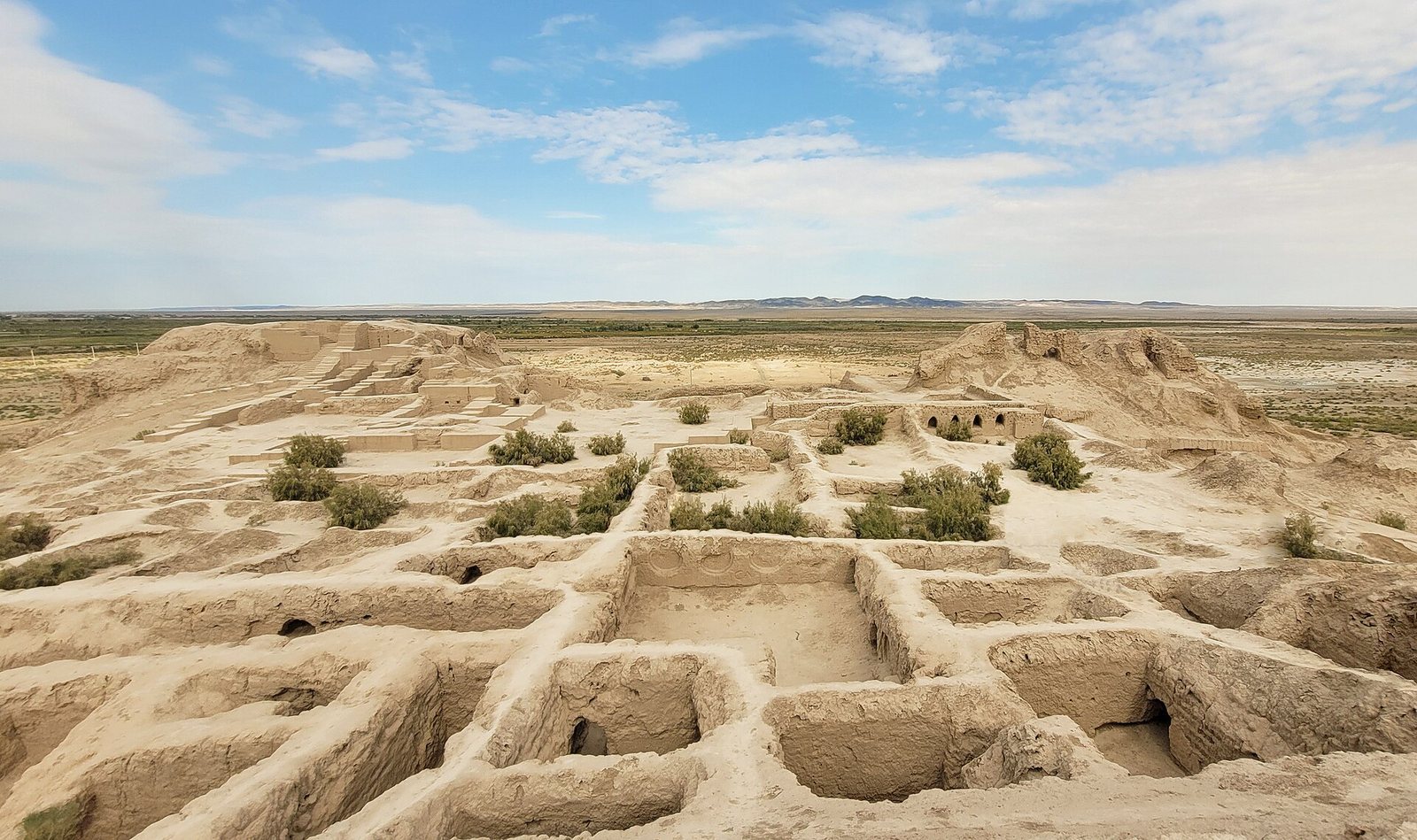
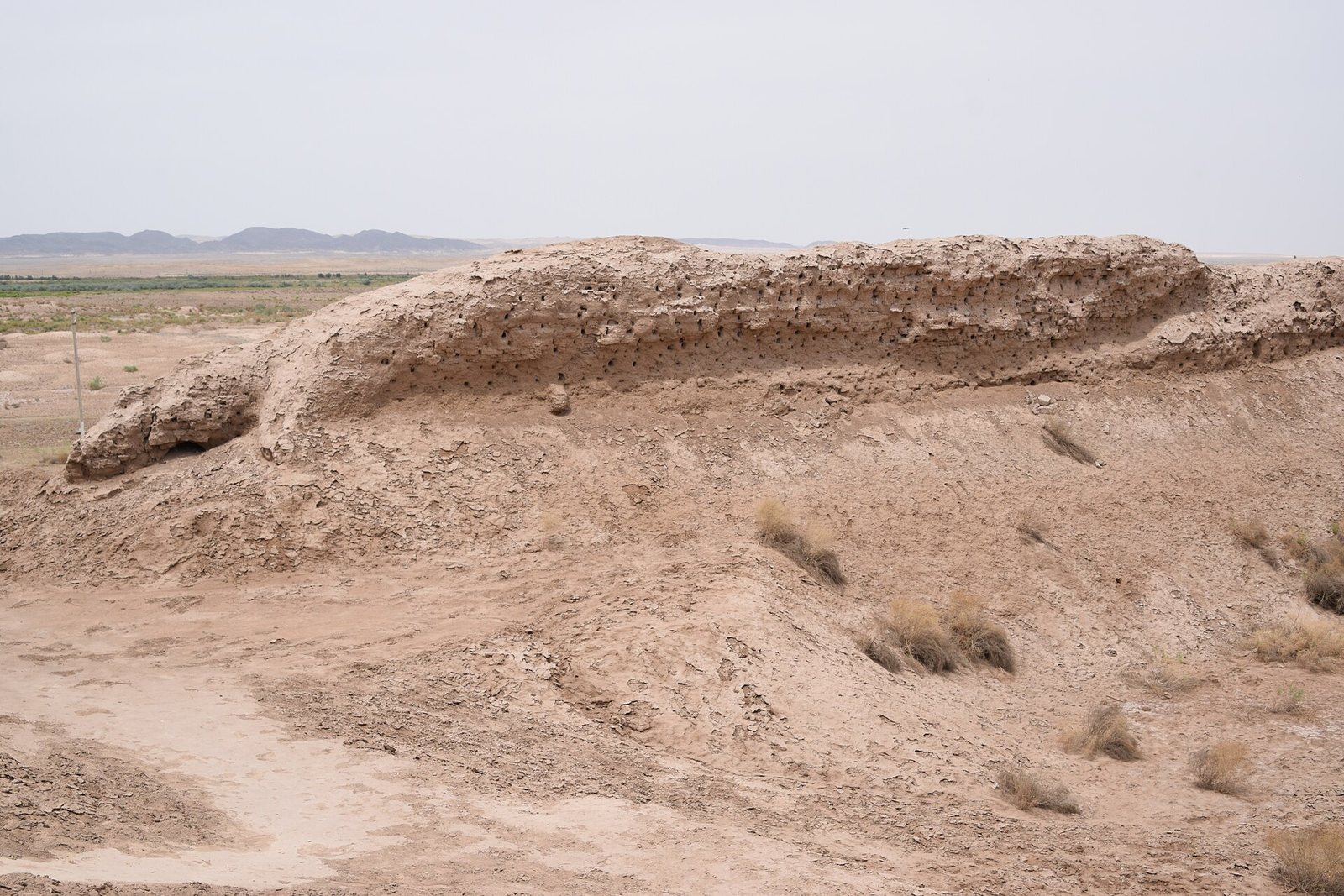
Toprak-kala occupied a rectangular enclosure approximately 500 by 350 metres in size. A defensive wall surrounded the settlement, incorporating vaulted passageways and towers. A strong gate on the southern side opened onto a central street that led toward a fire temple. Cross streets divided the urban area into ten quarters, creating an organized plan for its residential, domestic, administrative, and religious spaces.
Palace and citadel
Palace platform
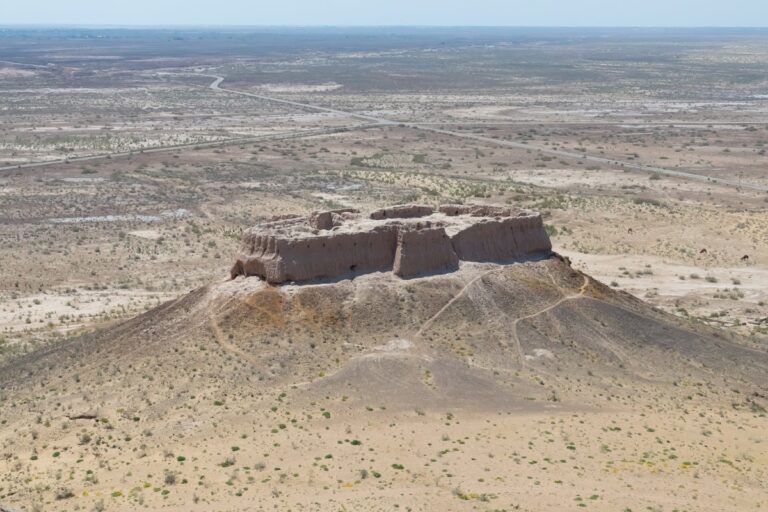
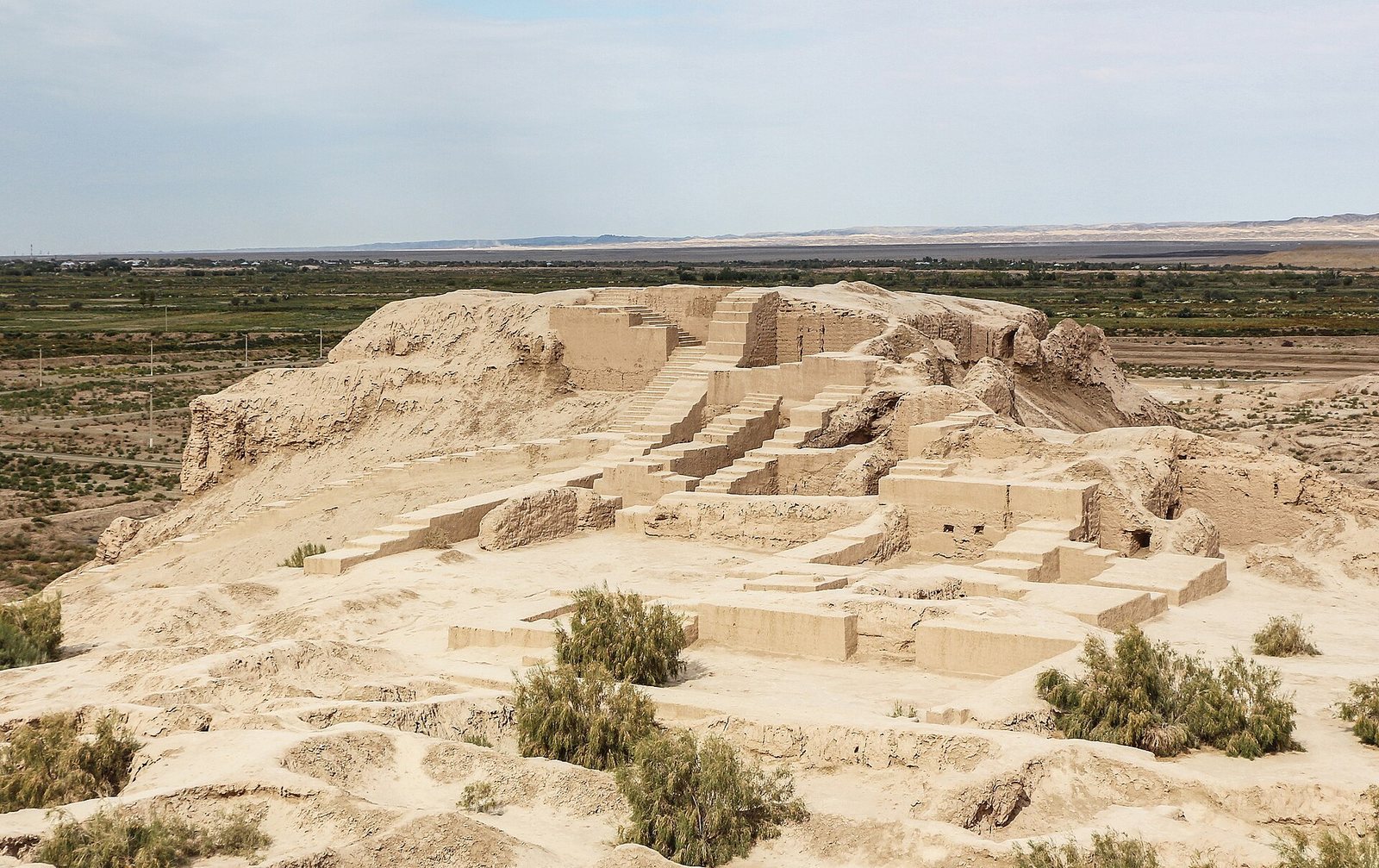
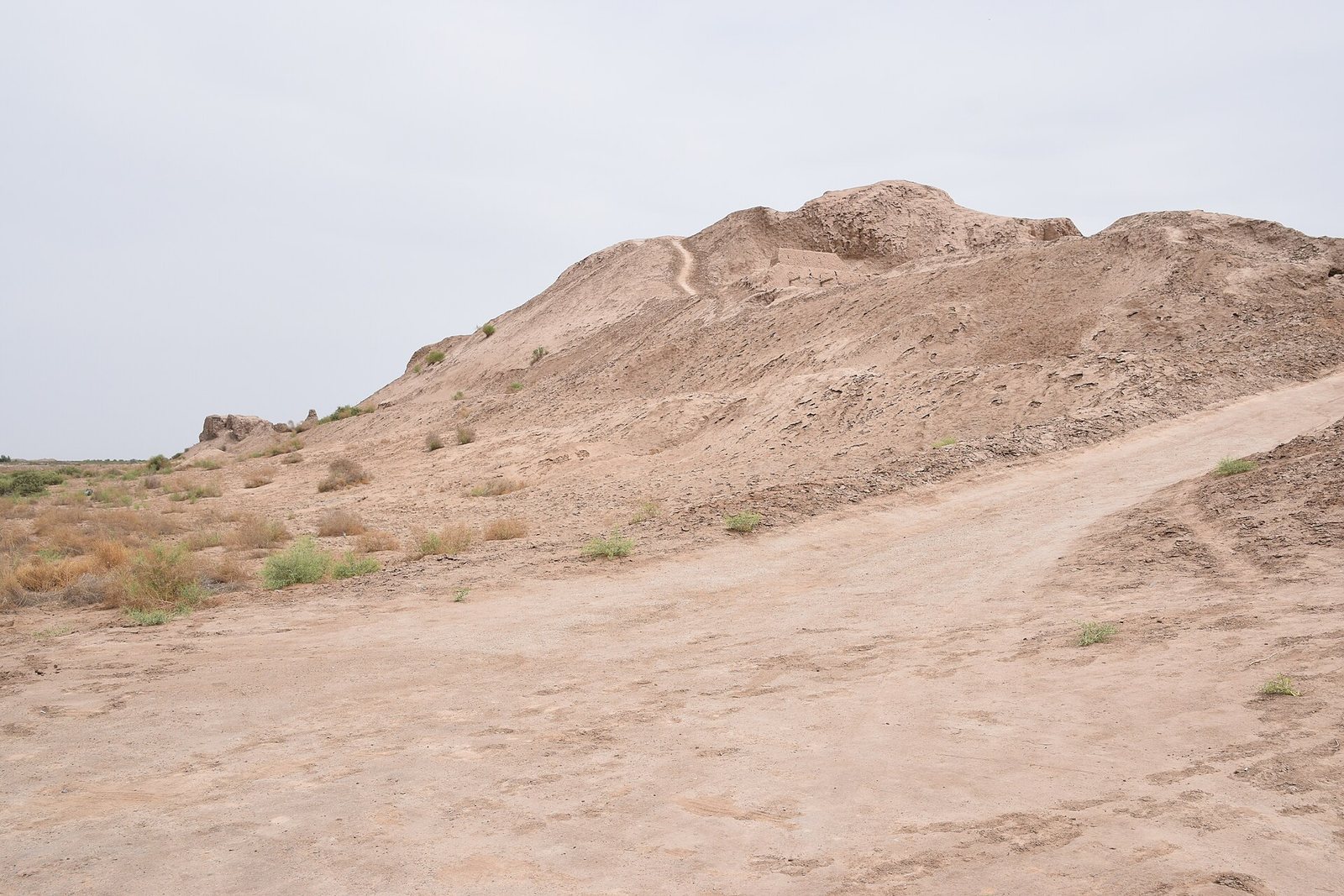
In the northeastern part of the city, a mud-brick palace stood on a raised platform approximately 14 metres high. The platform measured about 80 by 80 metres and supported the principal royal complex. Archaeological remains include around 100 residential and domestic buildings across the settlement, together with eight palace rooms. The palace rooms carried relief ornament and polychrome sculptural decoration. Wall paintings depicting Zoroastrian deities were also found there. Zoroastrianism is an ancient Iranian religious tradition associated with the worship of Ahura Mazda, fire temples, and a pantheon of divine beings.
Citadel enclosure
An adjacent citadel, or ark, formed a fortified inner enclosure for elite, administrative, or defensive buildings. It measured approximately 40 by 40 metres and had three towers, each about 25 metres high. The entrance lay on the eastern side and was reached by a raised approach. Together with the palace platform, the citadel created the elevated northeastern focus of the settlement.
Art, archive, and material remains
Palace art and sculpture
The palace yielded high reliefs of standing figures dressed in draped robes and rendered in a Hellenistic style. Their artistic language is thought to derive from the Greco-Buddhist traditions of Gandhara, an ancient region known for combining Hellenistic and Buddhist elements. The sculptures may have been made by artisans from nearby Bactria, where Hellenistic traditions remained active after the Greco-Bactrian kingdom. The surviving sculptures are now held in the Hermitage Museum in Saint Petersburg.
Other finds include an alabaster male head with traces of paint from the High Palace, dated to the 2nd or 3rd centuries CE. A woman’s face survives from a wall-painting fragment in the Harpist’s Hall, dated to the 2nd to 4th centuries CE. Additional remains include wall-painting fragments made with mineral pigments on clay bases, a wall painting dated to the 2nd or 3rd centuries CE, a torso of Anahita, and a mosaic. Anahita was an ancient Iranian goddess associated especially with water, fertility, and prosperity.
Royal archive
The ruined second floor of the palace contained a royal archive, a deliberate collection of records. It held more than 100 documents written on leather and wooden tablets in the ancient Khwarezmian language, the historical Iranian language of Khwarazm. These documents date from the 1st to 3rd centuries CE and provide written evidence connected with the palace complex.
Weapons workshop and domestic materials
A weapons workshop occupied the eastern part of the settlement. Finds from the workshop include iron spearheads and three-bladed arrows. Excavated materials from the palace and city also include fragments of wool, silk, and cotton textiles, mats, coloured carpets, pottery, numerous sculpture fragments, and Kushan coins. These remains reflect the range of craft production, furnishings, artistic activity, and political connections represented within the settlement.