Toppler Castle: A Late-Medieval Moated Residence in Germany
Site at a Glance
- Popularity
- High
- Country
- Germany
- Primary era
- Medieval
- Eras represented
- Medieval, Early Modern
- Civilizations
- Holy Roman Empire
- Site type
- Domestic
- Remains
- Castle
On this page9 sections
History
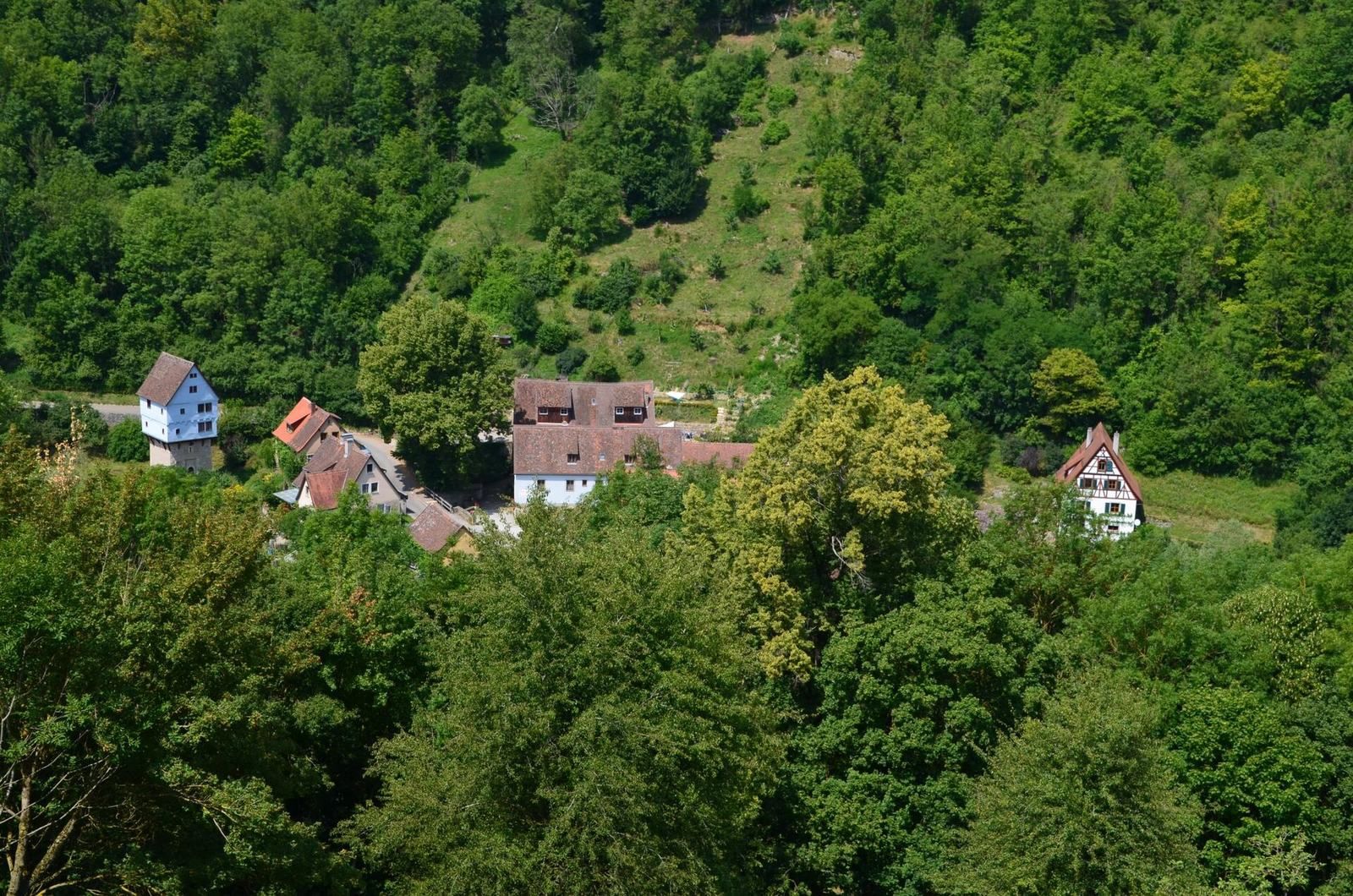
Toppler Castle is a late-medieval moated residence in the Tauber valley near Rothenburg ob der Tauber, Germany. Rothenburg mayor Heinrich Toppler bought the site from the city and built the house between 1388 and 1390 as a summer retreat and a place for formal display. The purchase agreement also connected the property with the protection of mills in the Tauber valley.
Heinrich Toppler’s civic career
Toppler held the mayor’s office at intervals from 1373 to 1407 and was regarded as Rothenburg’s most prominent mayor. In 1388, he became one of four captains of the Swabian League of Cities, an alliance of towns in Swabia. A captain was one of the league’s leading officers.
After an intrigue, Toppler was arrested in 1408 on suspicion of high treason. He died in the town-hall dungeon, though the circumstances of his death remain unclear. Following his outlawing, the property passed to the city of Rothenburg.
Ownership and later influence
The city later transferred the residence to various Rothenburg families. Daniel von Staudt was among its owners. The Boas family has held the property since 1861 and rented it as a holiday house until the 1960s.
In the early 20th century, the Duke of Saxe-Altenburg, a ruler of a German duchy, had a retreat called the Ducal Seat built on his Rieseneck hunting estate. Its design was modeled on Toppler Castle.
Remains
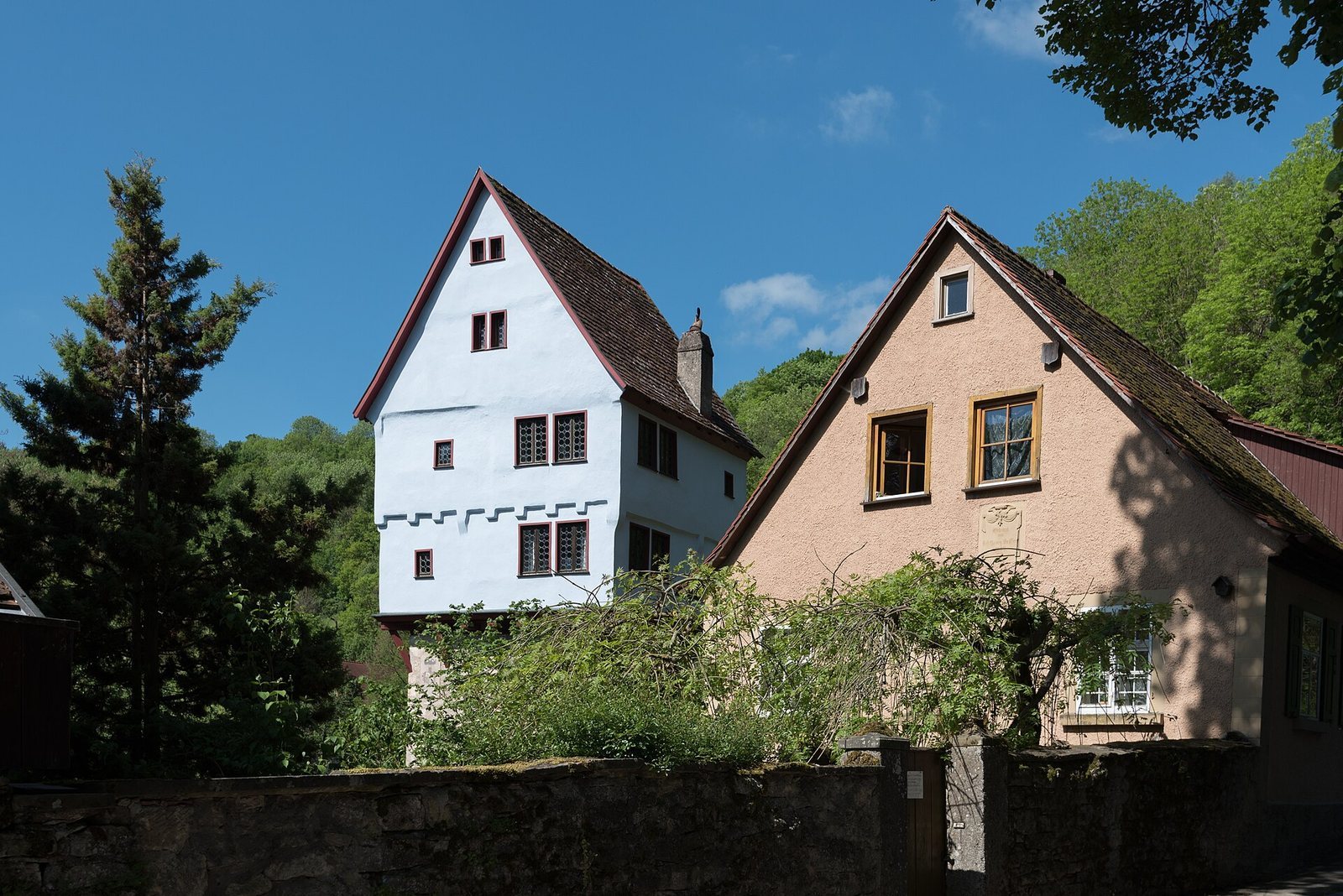
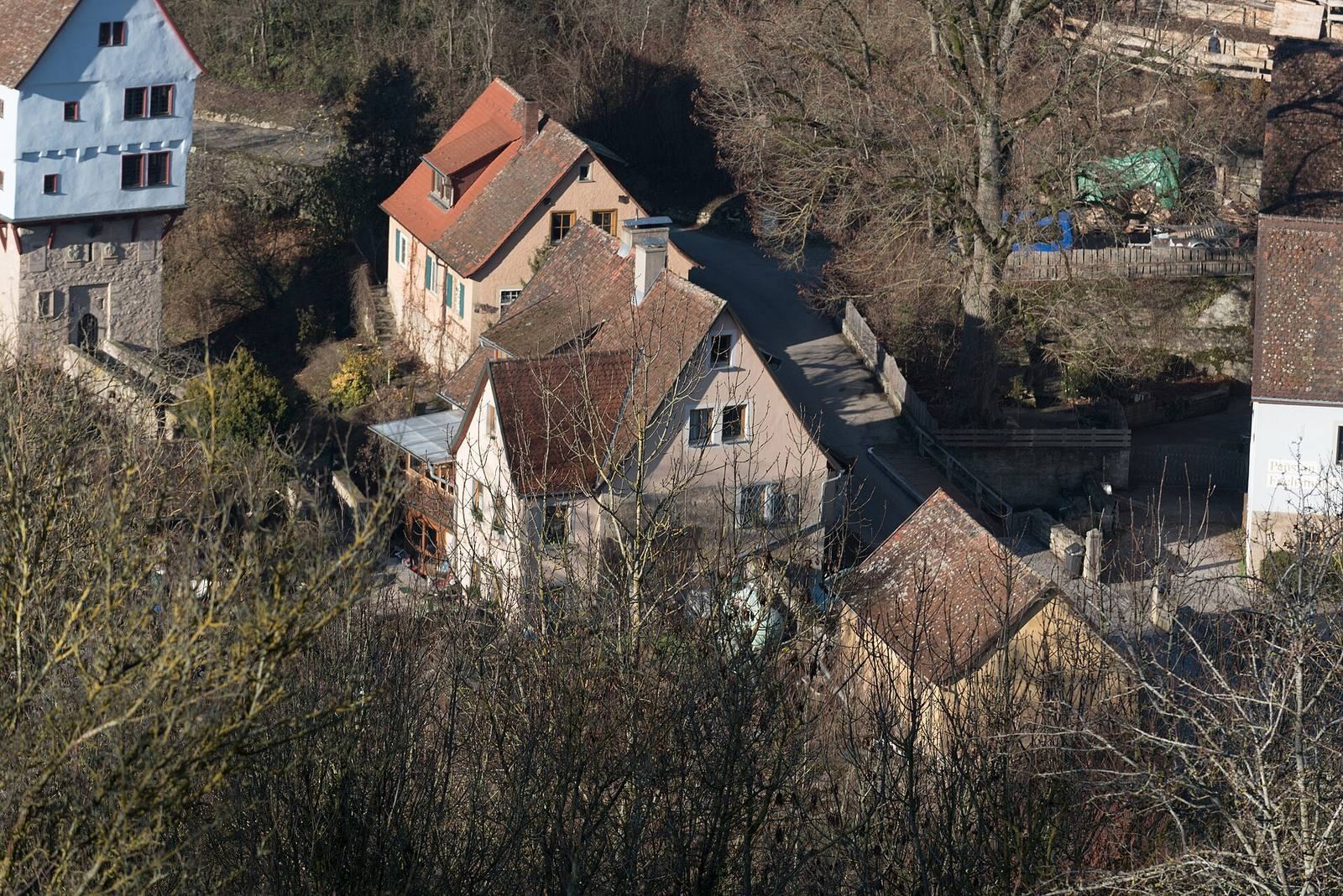
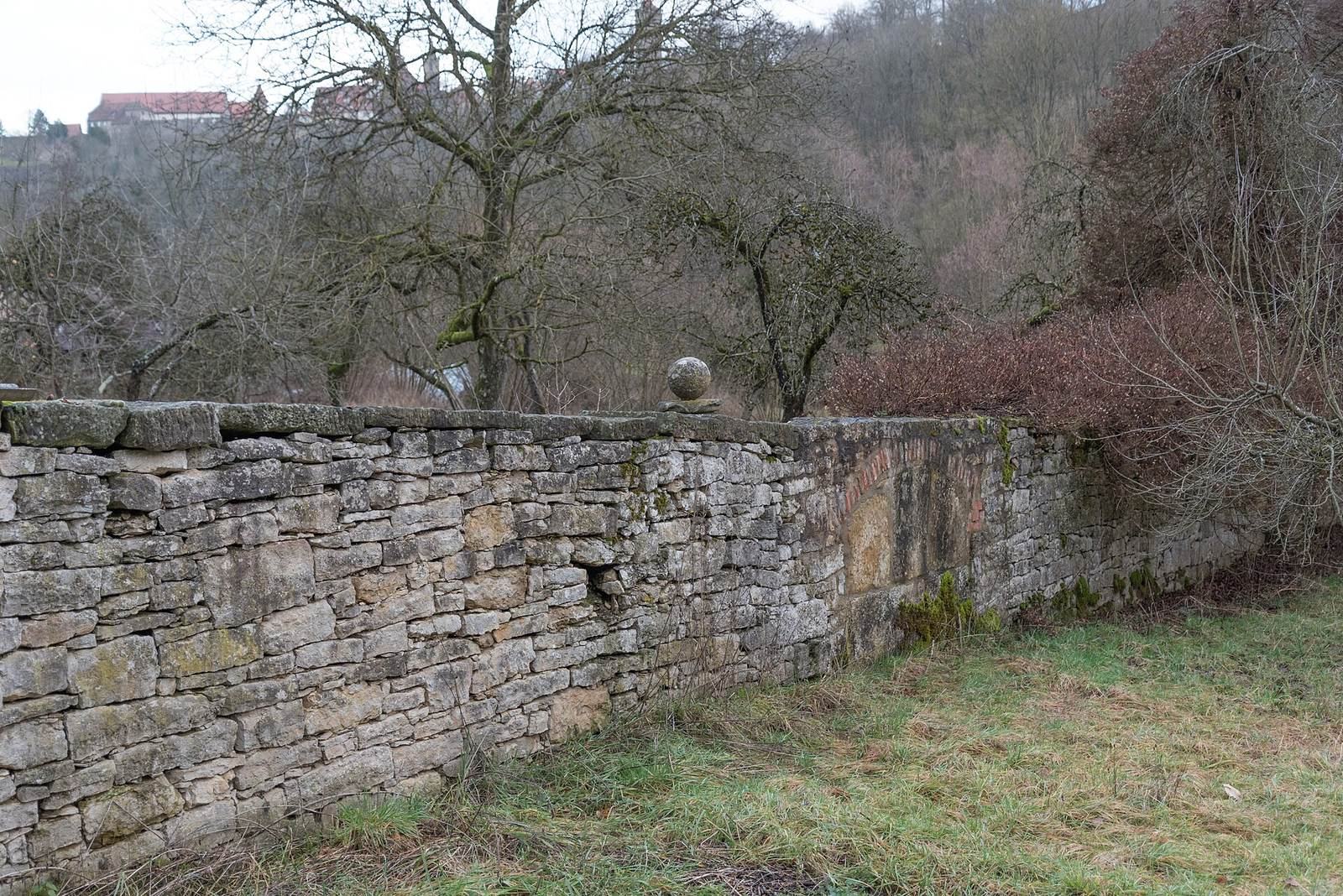
The surviving complex centers on the residence and its former pond, with a walled outer court in front and other domestic structures. The main building combines a stone lower section with projecting timber-framed upper floors.
The moated residence
Residential tower
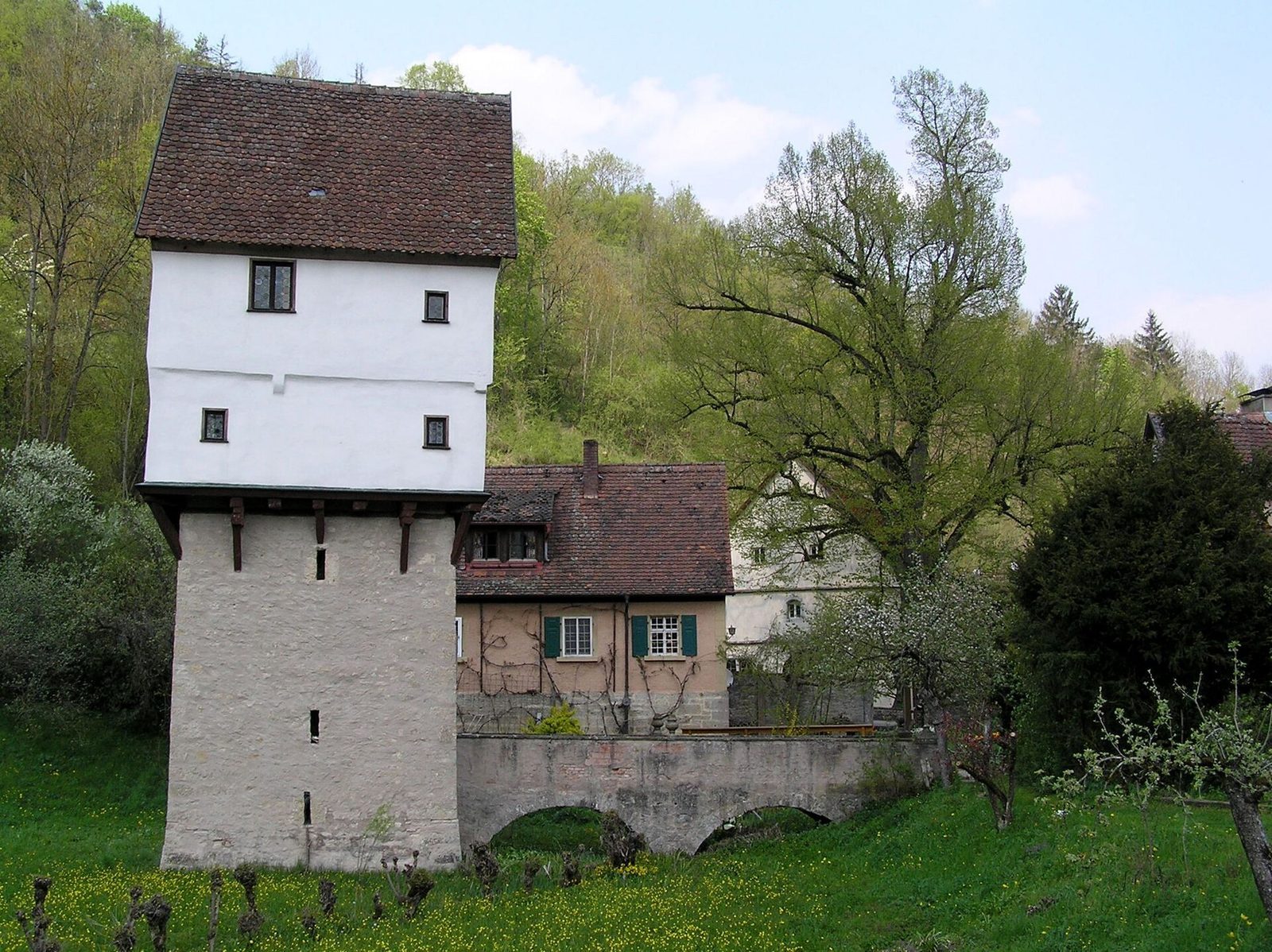
The fully preserved building has a tower-like base of rubble stone, two storeys high and 5.4 metres in diameter. Two widely projecting half-timbered storeys rise above it beneath a steep gabled roof. Small manor houses of this kind were common in the late Middle Ages, but few have survived.
Pond, bridge, and outer court
The house originally stood in an artificial pond, which measured up to 55 metres across and was supplied by a spring. Water could be released through the Fuchsmühle into the Mühlbach. The pond is now dry, and a stone bridge dating to the 16th century took the place of the original drawbridge. A walled outer court stood in front of the complex.
Entrance plaque and coats of arms
A plaque beside the entrance says the moated house was built at Toppler’s own expense and through his own labour while he was mayor. It describes a prolonged conflict in German lands between princes and nobles on one side and cities on the other, names the house as Rosental, and gives the dates 1388 and the following year. Above the entrance, the arms of Daniel von Staudt appear on the left. The central arms belong to Johann Christoph Schmidt von Eyssenberg auf Baldersheim and his wife Rahel Elisabeth von Seckendorff, and bear the year 1677; B. von Winterbach’s arms are on the right. At the plaque’s bottom, Toppler’s coat of arms shows two dice, one with five pips and the other with six.
Other buildings and furnishings
The complex also includes a residence, a well, and an outbuilding dating to the 18th century. The building is furnished with pieces from the 16th through the 19th centuries.