Averbode Abbey: A Premonstratensian Monastery in Belgium
Site at a Glance
- Popularity
- High
- Country
- Belgium
- Primary era
- Early Modern
- Eras represented
- Medieval, Early Modern, Modern
- Civilizations
- Belgian, Duchy of Brabant, Habsburg, Holy Roman Empire, Spanish
- Site type
- Religious
- Remains
- Monastery
On this page16 sections
History
Foundation and medieval community
Averbode Abbey is a Premonstratensian monastery in Scherpenheuvel-Zichem, Belgium. Arnold II, Count of Loon, invited canons from Sint-Michiels Abbey in Antwerp to establish a community there around 1131. The foundation took shape between 1131 and 1135, and its charter was issued in 1134. The first abbot, Andreas, and the founding canons came from Sint-Michiels, the house from which Averbode originated.
An earlier chapel dedicated to John the Baptist stood at Averbode by 1107. The new abbey lay on the boundary between the County of Loon and the Duchy of Brabant. Grants from Sint-Truiden Abbey and the lords of Aarschot and Diest helped sustain it, followed later by a gift from Godfrey III of Leuven. Averbode belonged to the Premonstratensians, also called Norbertines, a Catholic order whose canons combined communal religious life with pastoral service. It began as a double monastery, with communities of both men and women. The women moved to Keizerbos in the early thirteenth century and remained there until their house was suppressed in 1796.
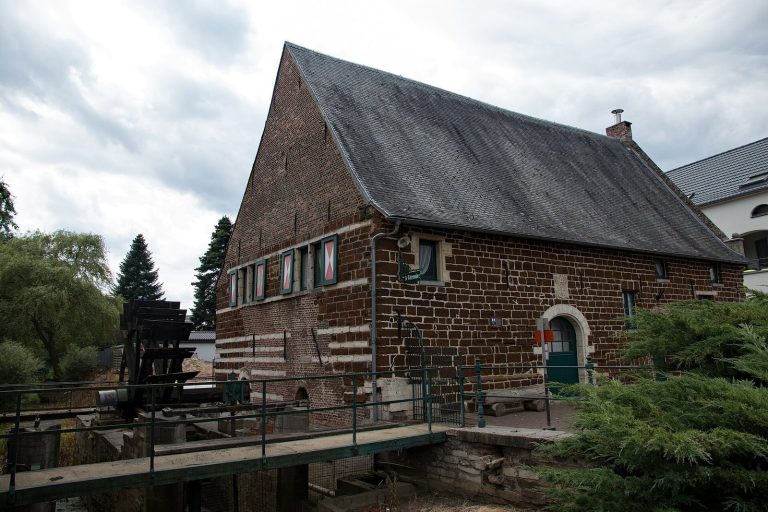
The canons supported themselves in part through farming, assisted by lay brothers, religious brothers who were not ordained priests. They also served parishes in nearby communities. Their first church was consecrated in 1194, and a library established in the thirteenth century provided theological books and some Latin secular works for the canons’ education. In 1154, Louis I, Count of Loon, granted the Bolderberg estate to Averbode. By the seventeenth century, the abbey’s holdings covered about 5,500 hectares of farms, fields, woodland, mills, heath, and chapels.
Conflict, rebuilding, and renewal
In 1454, Jan Baudewijns received the privilege of wearing a bishop’s mitre as abbot. A lightning-caused fire in 1499 destroyed the church and part of the monastic buildings. Under Abbot Gerard vander Schaeft, the community prospered during the first half of the sixteenth century and rebuilt and richly decorated its church. Troops repeatedly plundered the abbey, forcing the canons to seek safety in nearby towns. Averbode maintained refuge houses in Sint-Truiden and Diest, and another in Maastricht from 1490 to 1516.
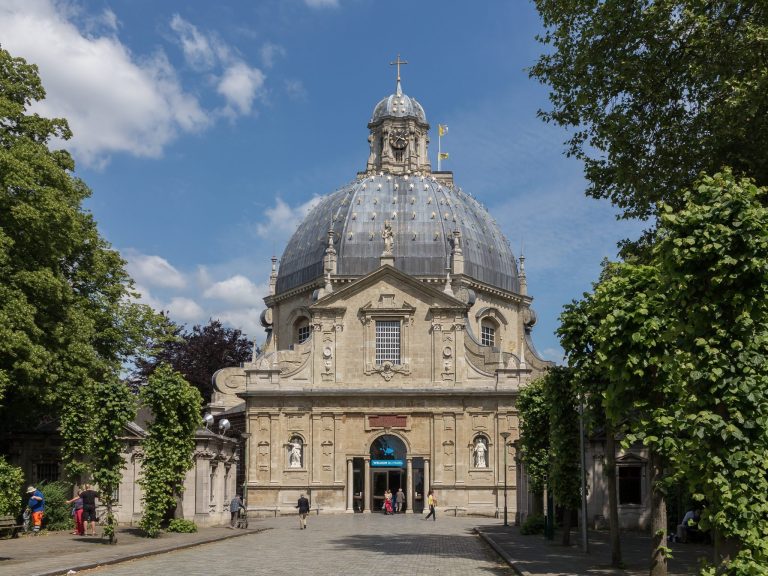
Amid religious and political unrest, the canons left Averbode in 1578. Bubonic plague killed twelve members of the community in 1579, and by 1584 only twenty-eight remained. They returned in 1604. Abbot Mathias Valentijns then led a broad renewal of religious life, the abbey’s material condition, and its intellectual work, in keeping with the Tridentine reforms, changes in Catholic teaching and practice shaped by the Council of Trent. The community had grown to about eighty members by 1670, while rebuilding continued through the seventeenth and eighteenth centuries. The canons also completed a pilgrimage chapel at Kortenbos in 1648, later known as the Basilica of Our Lady of Kortenbos.
Suppression and renewed monastic life
Political unrest and the movement of troops damaged the abbey in the late eighteenth century. French authorities suppressed it in 1796 and expelled the canons in February 1797. The property was sold, and the cloister was damaged. The Evangeliary of Averbode, a liturgical book of Gospel readings, and much of the library and archive had been moved to safety before the expulsion. Government authorities later seized library and archival collections. In 1822, 8,000 books and manuscripts went to the University of Liège, while archival material was transferred to the Royal Archives in Brussels.
Brother Ignatius Carleer bought the abbey back in 1802, allowing some monks to return. The church became the parish church of Averbode in 1803, but the community did not resume life in the monastery until its formal re-establishment in 1834. Twelve surviving monks then returned under superior Norbertus Dierckx. A papal delegate had required at least six residents for the re-establishment, a threshold Averbode met. The abbey’s buildings later received protection as a monument.
During the nineteenth century, the community resumed pastoral work and expanded into printing, publishing, and overseas missions. The Brotherhood of Our Lady of the Sacred Heart began in 1877 and became an archconfraternity for Belgium in 1885, an association authorized to affiliate or coordinate other confraternities. Its membership grew from 60,000 in 1879 to 400,000 in 1894. Averbode acquired a press in 1881, and the brotherhood’s periodical began in 1886.
At the request of Pope Leo XIII, Averbode sent missionaries to Brazil in 1896. They established a parish, pilgrimage center, and school at Pirapora the following year. From 1905 to 1949, that school also prepared students for priestly formation as a minor seminary. The abbey opened a school at Jaguarão in 1901, moved it to Jaú in 1915, and took over a school at Petrópolis in 1909. In Denmark, its canons established a parish at Vejle in 1903, followed by a Catholic school and, in 1913, a hospital. Ludolf Brems became apostolic vicar for Denmark in 1922, administering a Catholic territory not yet organized as a diocese, and later held the title of bishop of Roskilde.
Publishing, education, and twentieth-century change
Averbode’s publishing work grew rapidly. Its weekly periodical began in 1907, followed by the children’s magazine Zonneland in 1920, Vlaamse Filmpjes in 1930, and Zonnekind in 1958. By 1930, about twenty periodicals were producing roughly 230,000 copies in Dutch and French. The abbey also founded a cooperative dairy in 1907 and a bank in 1911. The Eucharistic Crusade, a Catholic movement encouraging young people’s devotion to the Eucharist, began in 1920 through the efforts of Averbode priest Basiel Vanmaele. Priest Edward Poppe, who was not a member of the abbey, led the movement until his death in 1924; publications for young people became an important part of the abbey’s press work.
The abbey took over Bois-Seigneur-Isaac as a priory in 1921. It became an abbey in 1925, returned to dependence on Averbode in 1957, and was transferred to the Lebanese Maronite Order in 2010. Tancrémont also became a priory dependent on Averbode in 1957. The canons established a parish at Berchem in 1923. After the independent Berchem-Groenenhoek house closed in 1931, they founded Sint-Michielscollege at Brasschaat. A German V-1 pilotless flying bomb destroyed the college on 13 February 1945, killing four Norbertines. A second college opened at Schoten in 1959; both schools were later transferred to Katholiek Vlaams Onderwijs, in 1984 and 1989.
A new abbey wing was built in the 1930s, but fire on 29 December 1942 destroyed the central complex apart from the church, chapter house, and sacristy. Abbot Emmanuel Gisquière directed the rebuilding. While work continued, some canons lived in an empty monastery at Gijzegem until the summer of 1943. A new farm was completed in 1949, and the community built a retreat house between 1949 and 1954. In 1970, Averbode and Postel opened a joint institution for training priests; Grimbergen joined the following year, and Tongerlo later became a participant. Known as Agripo, it offered two years of philosophy and four years of theology.
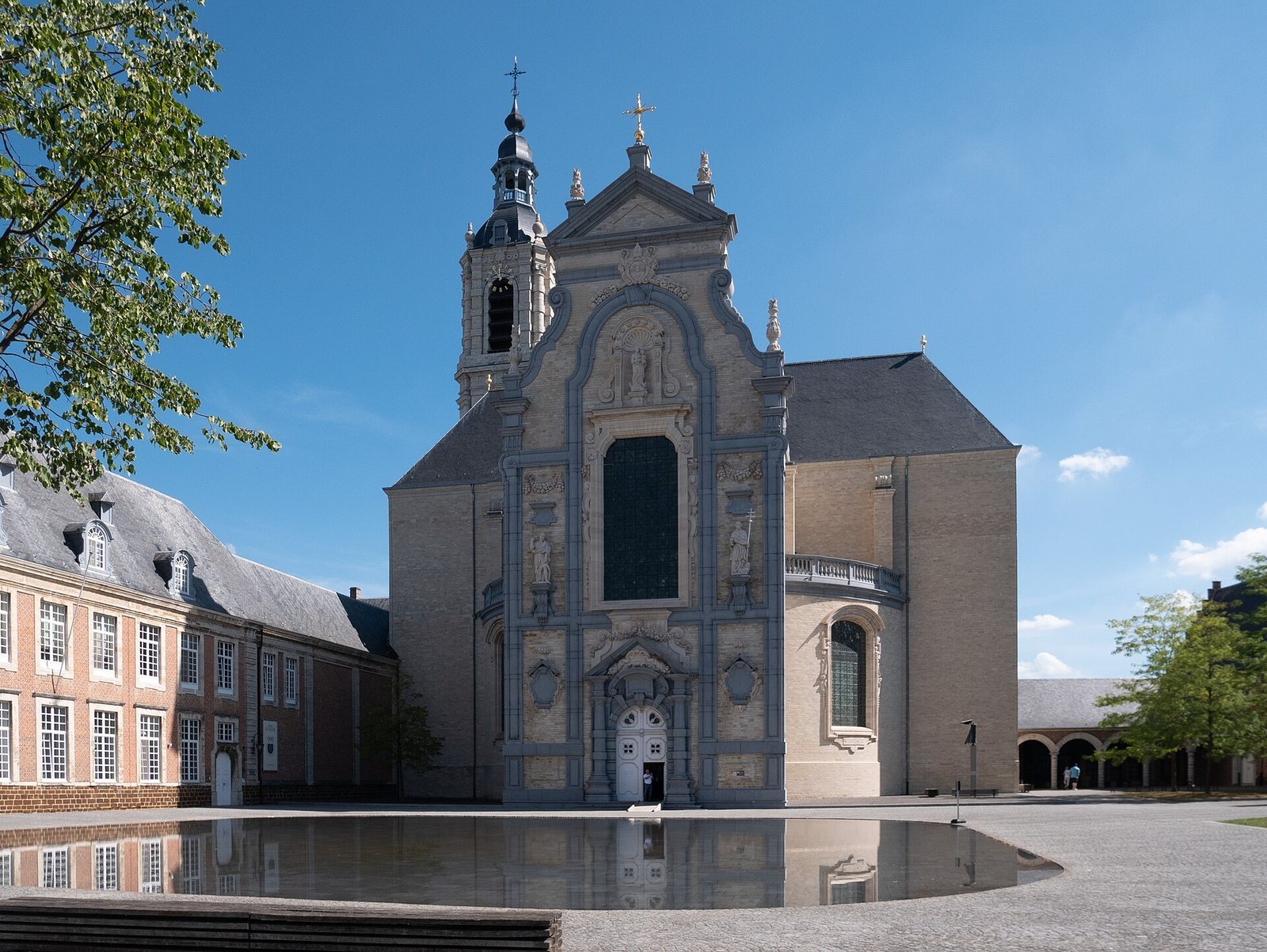
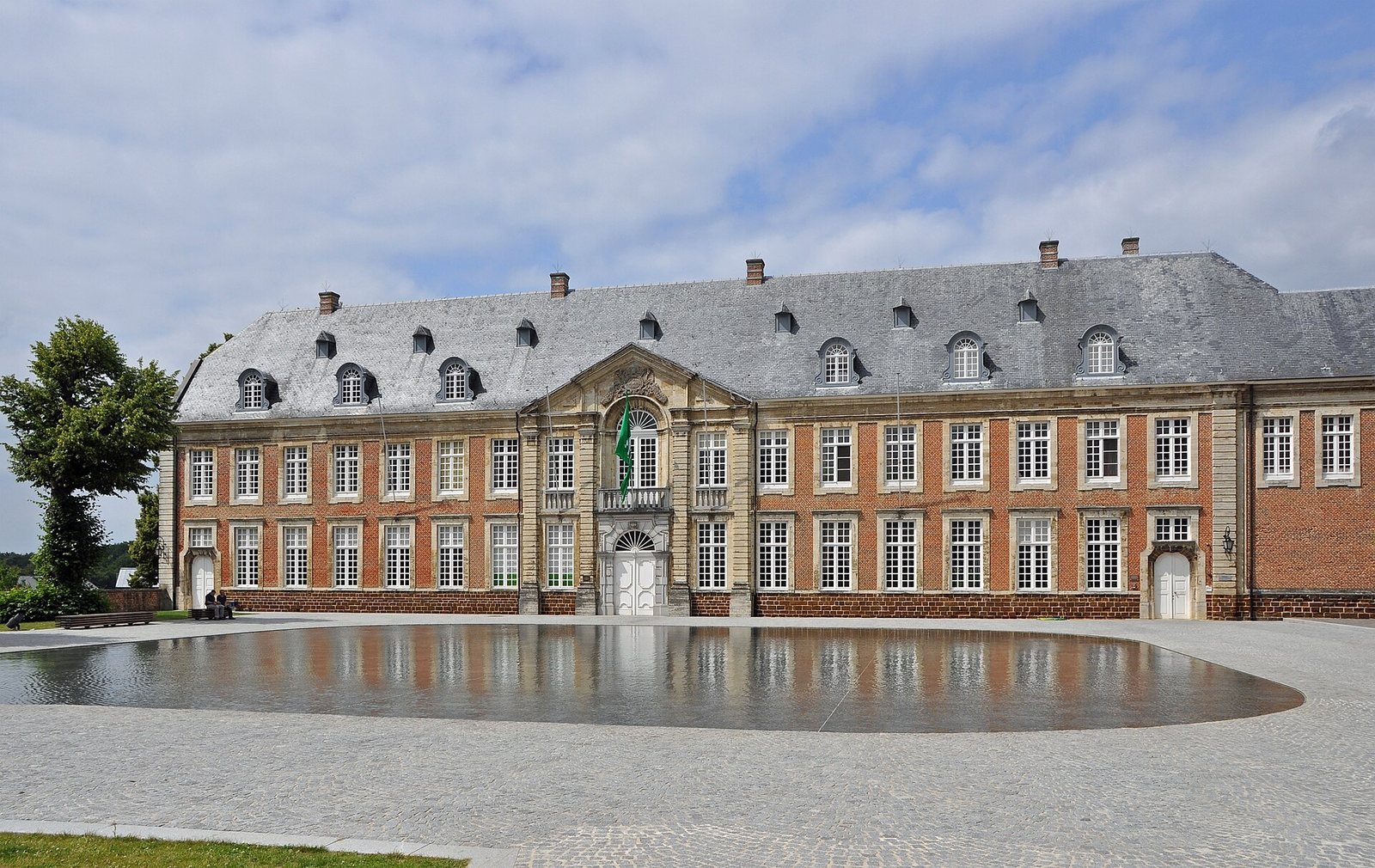
The abbey church was restored from 1969 to 1979, with further interior work, including repairs to the altars, in 2000–2002. The library gained an underground book repository in 1994. Averbode sold its printing operations to a private company in 1996, and its press closed in 2004, while its publishing house continued. The publishing house moved into a new building designed by architect bOb Van Reeth. In 2010, the abbey redesigned its courtyard to include a reflecting pool.
Food production remained part of the abbey’s activities. In 2013, arrangements were made for cheese production with Belgomilk and Milcobel, breadmaking with La Lorraine Bakery Group, and renewed production of Averbode beer with Brewery Huyghe. The dairy farm was rebuilt in 2016. Its 130-cow operation stopped in late 2024, and the land was converted to arable use. The community numbered 242 in 1959, including 88 residents at the abbey, and 78 canons in 2011, of whom 45 lived and worked there. It later numbered about 70 members, most living at Averbode. Marc Fierens became abbot in 2018, succeeding Jos Wouters, who later became general abbot of the Premonstratensian Order.
Remains
The abbey complex brings together a church, gates, service buildings, and structures used for communal life. Its church combines Baroque planning with Gothic structural forms and Renaissance ornament. The other buildings reflect successive periods of construction, rebuilding, and restoration.
The abbey church
Plan and construction
The church occupies the site of the earlier sanctuary and was designed by Antwerp architect Jan van den Eynde II. Iron sandstone from Langdorp and white sandstone from Gobertange were used in its construction. Its western end forms a cross-shaped space intended for lay worshippers, while a long, deep choir provides for the canons’ communal singing. The arrangement draws attention along the building’s main axis, and the church has a single main worship space.
No dome was completed over the central space. In January 1668, one major support pier collapsed, followed by two pillars. A fourth pillar had to be dismantled. Work resumed with stronger materials, and the church had a roof by the end of 1670. It was inaugurated on 11 July 1672, the feast of Saint Norbert, and consecrated on 19 June 1681. Van den Eynde also produced sculptures for the church.
Furnishings and organs
The church contains choir stalls by Antwerp artist Octave Herry, stucco decoration, statues, a lectern, paintings, and confessionals. Its high altar stands beneath a wooden canopy, while a marble screen separates the choir from the main worship space. Several paintings are by Pierre-Joseph Verhagen, and one altar is dedicated to Norbert. An altar honoring Our Lady of the Sacred Heart was installed in 1894, followed by a Sacred Heart altar in 1899; both were included in the interior restoration of 2000–2002.
The church’s organ history includes instruments by several builders. An organ made by Robustelly between 1770 and 1772 was sold in 1822 to St Lambert’s Church in Helmond in the Netherlands. A large Romantic-style organ by Hippolyte Loret came into use at Averbode in 1858. It is now unplayable and has a console with four keyboards. Bernard Pels Jr. installed a smaller organ in 1979, and the Verschueren firm built a third instrument for the church in 2001–2002.
Passion altarpiece
An altarpiece depicting the Passion was made for the abbey in 1514 and is now held at Antwerp’s Vleeshuis. Its painted left panel shows the Crucifixion, the carved wooden center depicts the Lamentation, and the right panel represents the Resurrection. The identity of the painter or painters is uncertain. On the lower section, called a predella, the donor, Norbertine Nicolaas Huybs van Poppel, kneels before three women representing Faith, Hope, and Charity. A beehive refers to funds he raised through beekeeping, and the coat of arms on the right belongs to Abbot Gerard vander Schaeft. Marks and hand symbols on the panels connect the work with Antwerp.
Gates and service buildings
Entrance, parish, and garden gates
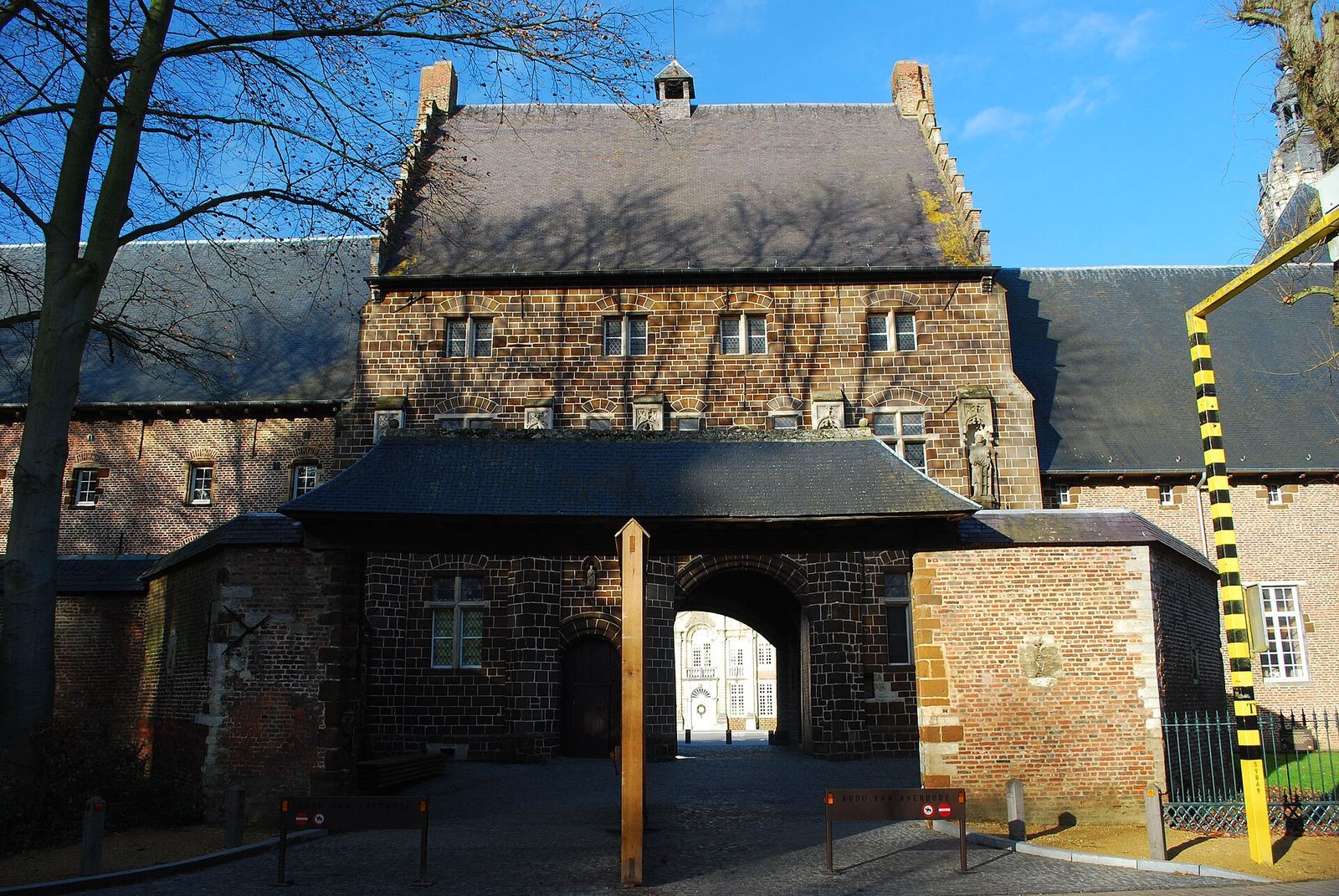
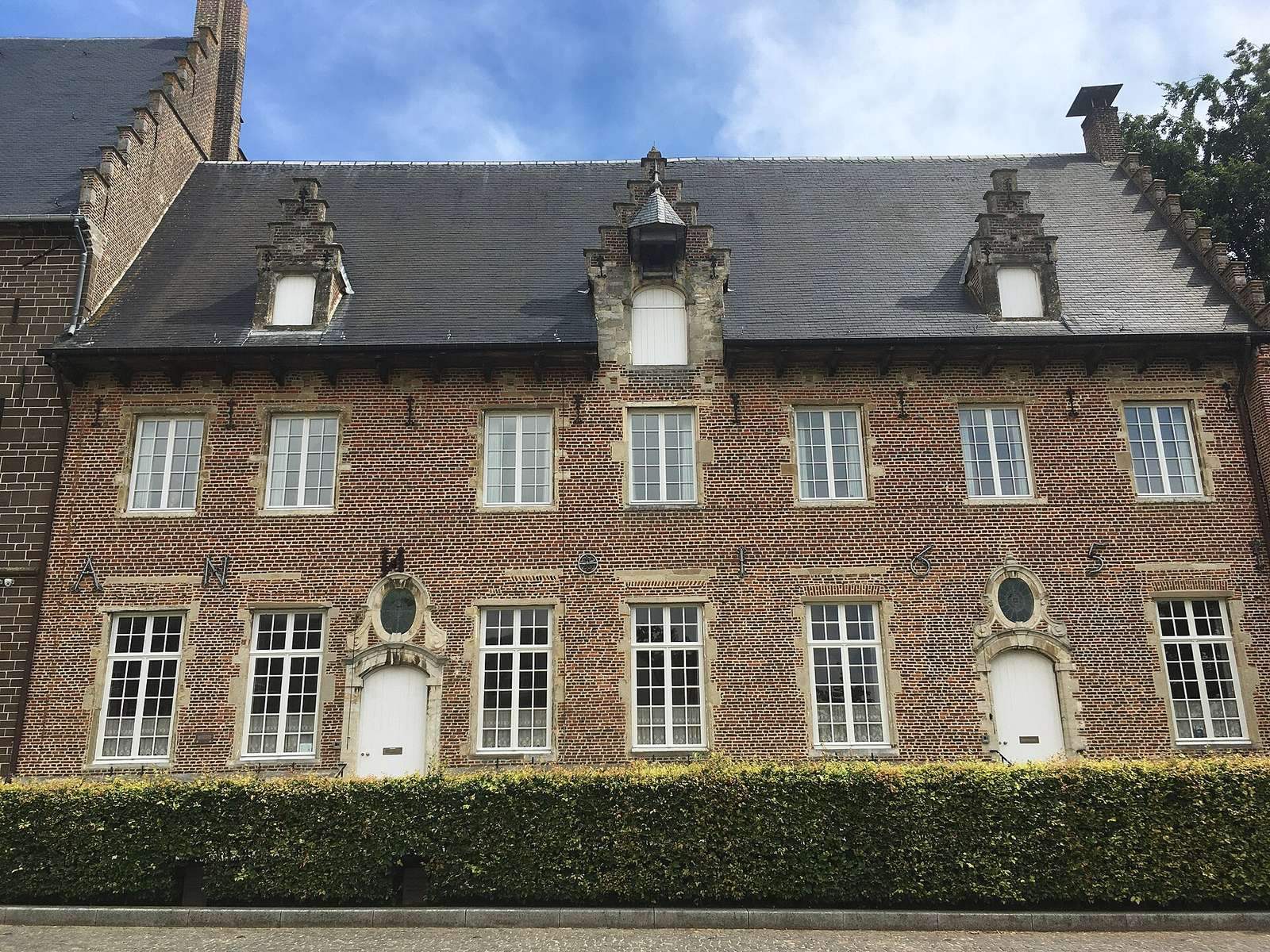
The entrance gatehouse dates to the late fourteenth century and is the oldest surviving building in the complex. The parish presbytery stands to its left and was built in 1651. At the rear, the Pikkel Gate, completed in 1659, provides an entrance toward the gardens and fields.
Laundry and tower
The laundry building dates to 1623 and is among the complex’s best-preserved older structures. A square tower, three storeys high, was completed in 1700. It overlooks the Demer valley several kilometres south of the abbey.
Conventual buildings and later additions
Cloister and communal buildings
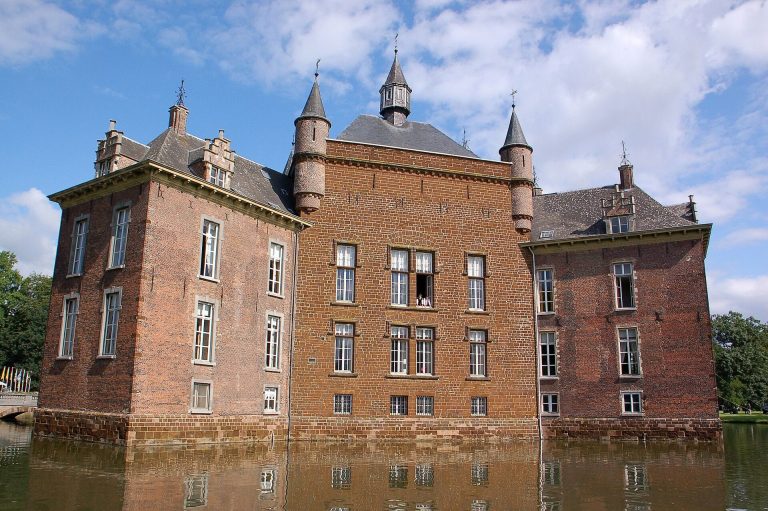
The cloister, library, infirmary, and abbot’s palace were rebuilt in the eighteenth century. The Neoclassical palace received an extensive restoration in 1834. The complex also includes a chapter house, where the community meets for business, and a sacristy, used for liturgical vestments and vessels.
Library and publishing house
The library was enlarged in 1994 with an underground repository for books. A separate building for the abbey’s publishing house was designed by bOb Van Reeth. Together, these additions reflect the continuing place of books and publishing in the life of the community.