Tomb of the Reliefs: An Etruscan Family Tomb at Cerveteri
Site at a Glance
- Rating
- 4.8
- Popularity
- Low
- Country
- Italy
- Primary era
- Classical
- Eras represented
- Classical
- Civilizations
- Etruscan
- Site type
- Burial
- Remains
- Tomb
On this page9 sections
History
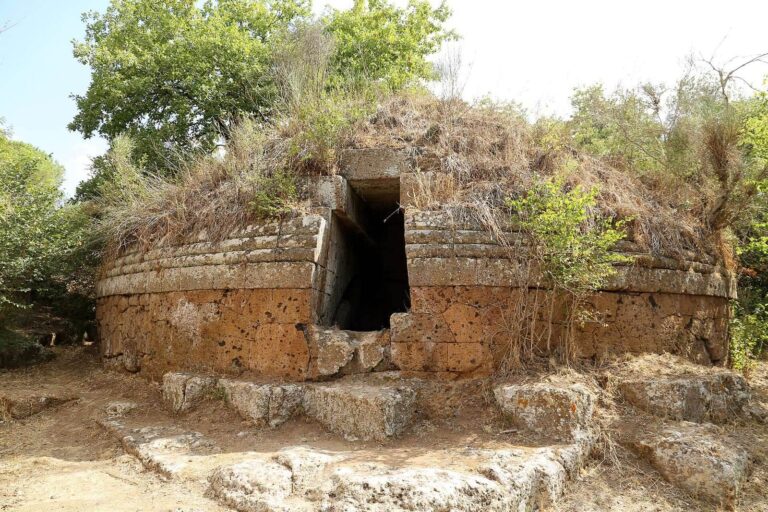
The Tomb of the Reliefs is an Etruscan family tomb in the Banditaccia necropolis near Cerveteri, Italy, dating to the late fourth century BC. The Etruscans were an ancient people of central Italy whose civilization flourished before Roman political dominance. The tomb was discovered in 1847.
It was intended for family burials, and inscriptions on a stone marker inside identify it as belonging to the Matuna family. The number of burial places suggests that the tomb may have served the family for more than a century.
Remains
Chamber and burial spaces
Chamber and entrance
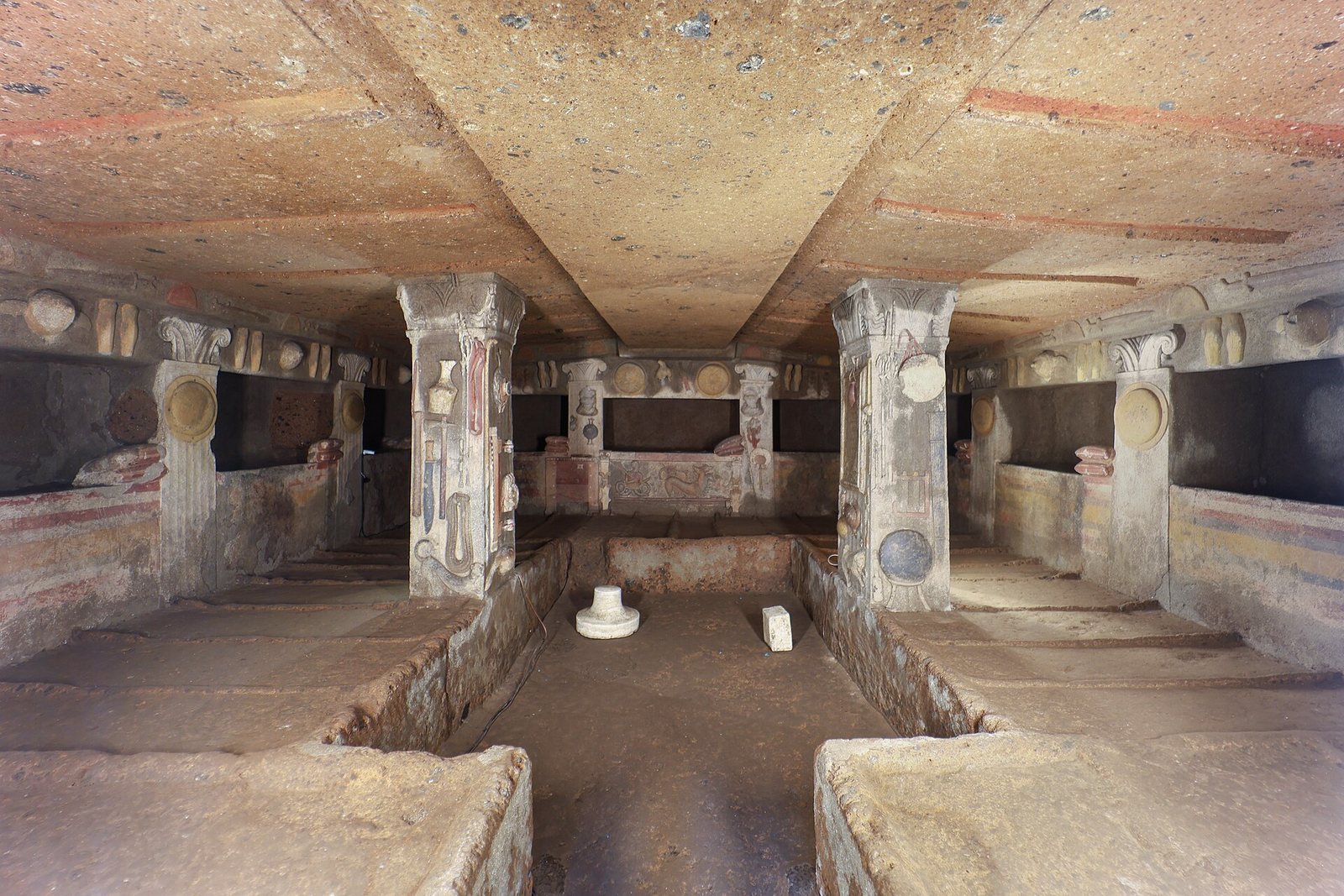
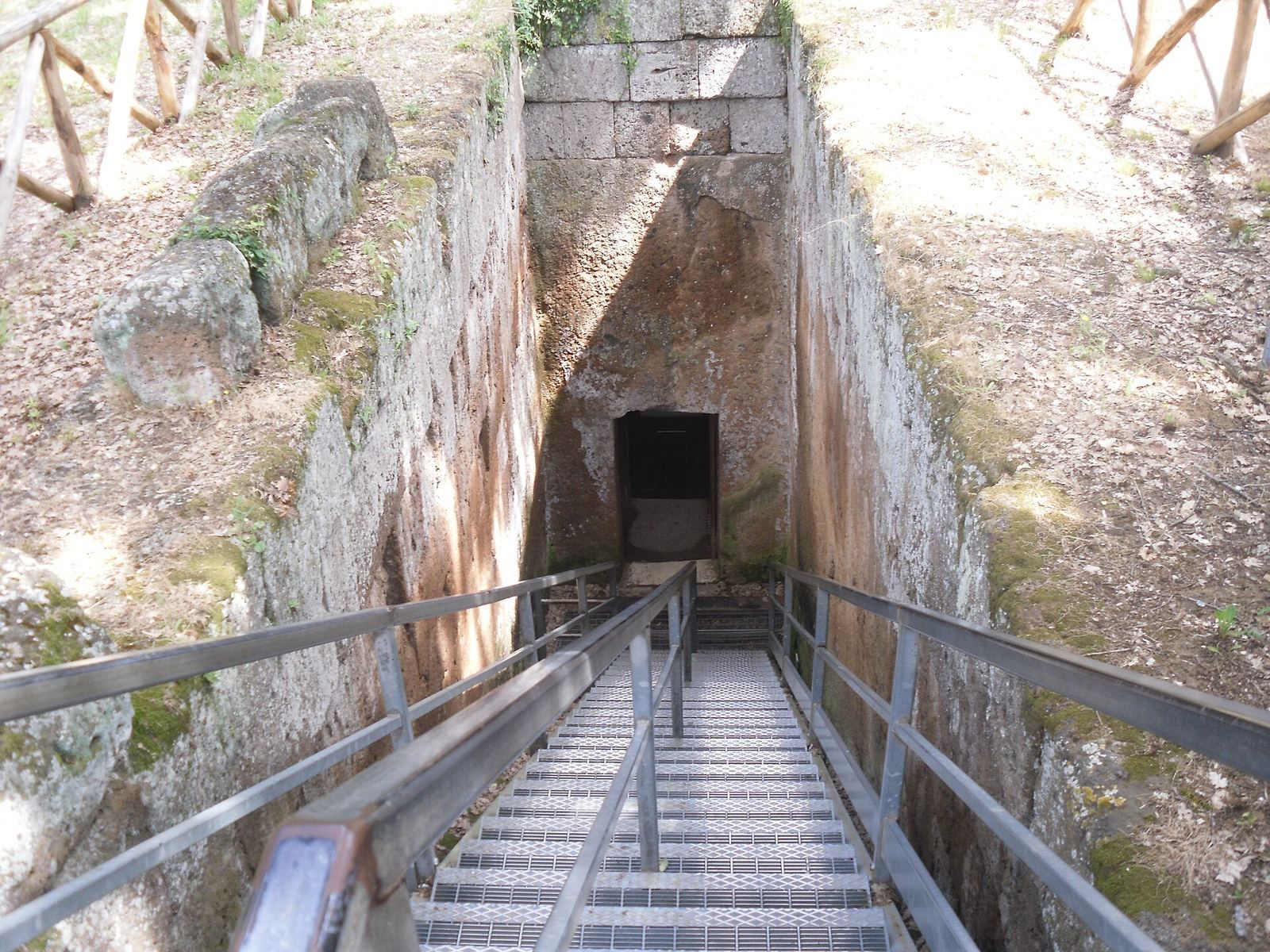
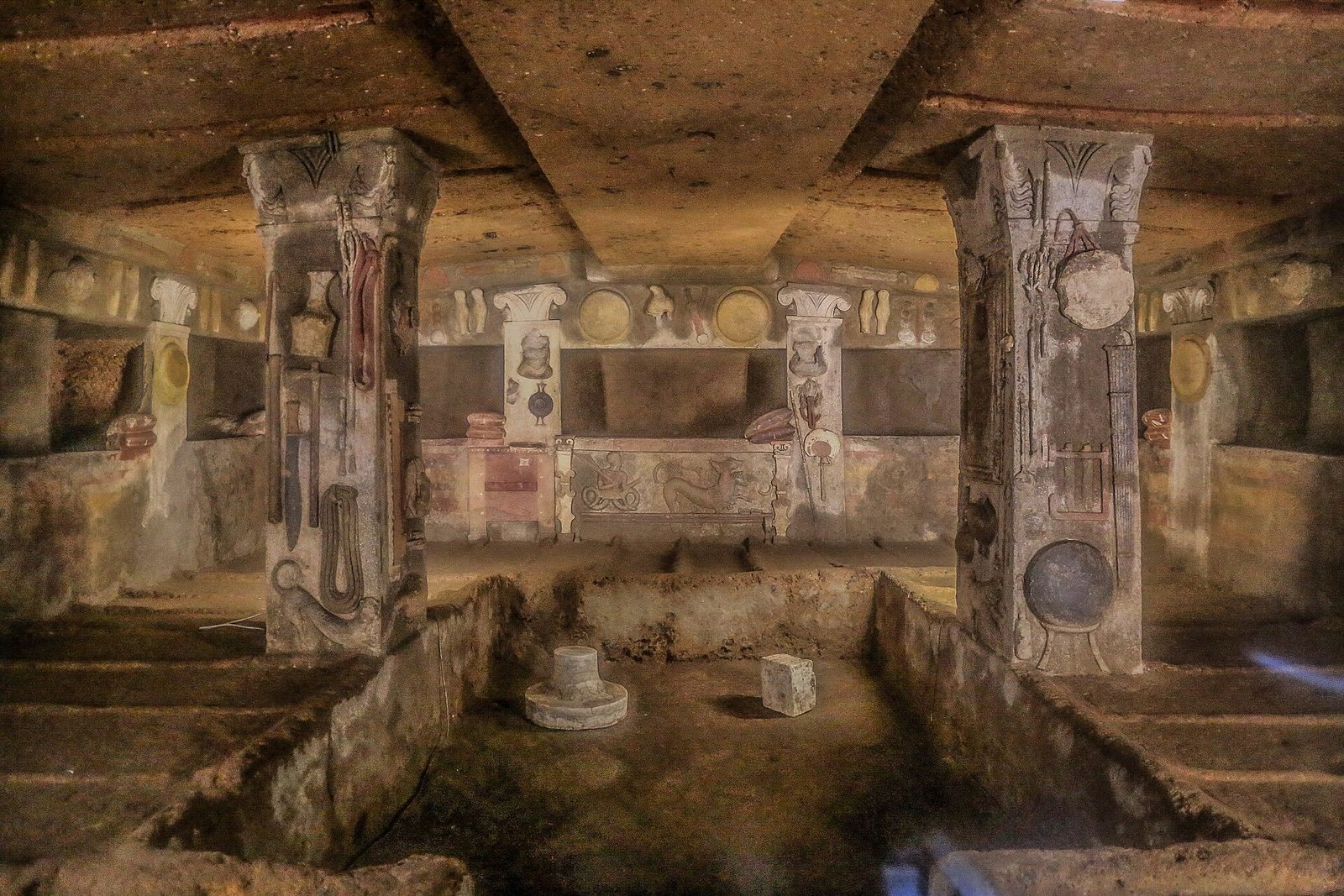
The tomb has a deep, rectangular chamber measuring 7.7 metres long, 6.5 metres wide and 2.6 metres high. A steep flight of steps descends through the entrance passage to the burial room, whose form evokes the interior of an Etruscan noble house. Two Aeolic, or proto-Ionic, capitals, column tops in an early Greek style, appear to support a double-pitched roof.
Burial places
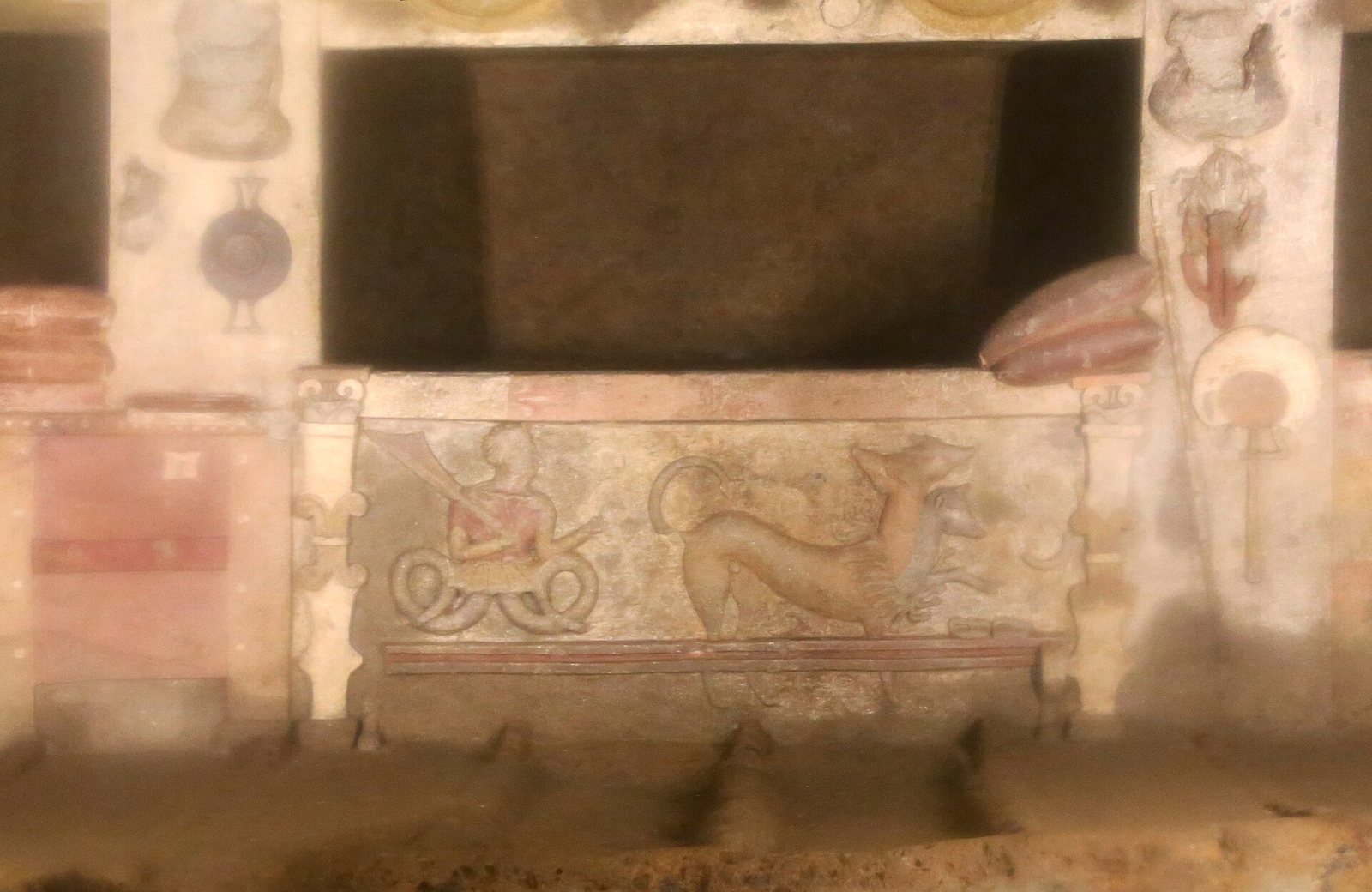
A raised platform runs around the room’s centre and is divided by low partitions into 32 burial spaces. Another 12 elongated niches are cut into the walls. Shaped like beds, they have stucco pillows. The deeper niche in the rear wall could hold two people side by side and was probably intended for the head of the Matuna family and his wife.
Painted reliefs
Household and personal objects
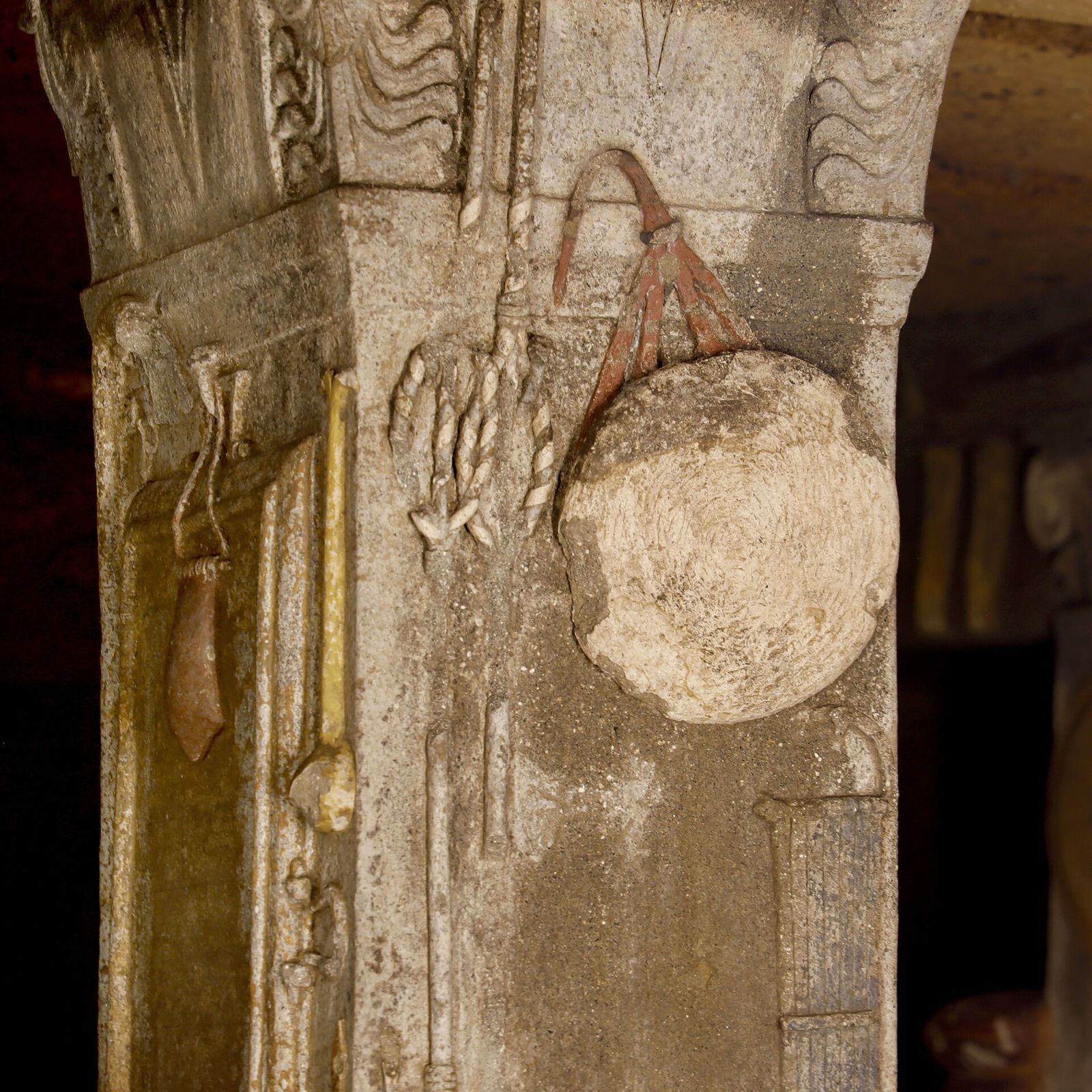
Painted stucco reliefs cover the walls and two pilasters, distinguishing the tomb from the more usual Etruscan tomb decoration in fresco. The carvings show furnishings and objects associated with the dead, including household items, domestic and other animals, and a game board. Their arrangement evokes Etruscan domestic interiors, where objects were hung on walls rather than stored in cupboards.
Images around the central niche
Reliefs beside the central niche associate the husband with helmets, shields, leg armour and swords, as well as a cup and a chest. On the wife’s side are an amber necklace and a feather fan; a pair of women’s sandals rests on a stool beneath the bed-shaped niche. Below it, Cerberus, the mythological guardian of the underworld, appears with an underworld demon, possibly Charon, a figure associated with conveying the dead. The demon has a fish tail and carries a rudder and a serpent. Its phallus is 30 centimetres long. Two damaged busts on the flanking pilasters may represent the deceased couple or the underworld deities Aita and Persipnei.
Authority and furnishings
Some objects refer to the Matuna family’s authority as magistrates, including a folding curule chair, a seat associated with magistrates, ivory horns and a lituus, a curved ritual staff. Armour and weapons evoke martial prowess. A chest at the foot of the central niche is one of the few pieces of furniture shown. It may have held money or valuables; folded material on top may represent linen rolls used for writing religious texts, contracts or family records.