Tofta Church: A Medieval Parish Church on Gotland
Site at a Glance
- Country
- Sweden
- Primary era
- Medieval
- Eras represented
- Medieval, Early Modern, Modern
- Civilizations
- Swedish
- Site type
- Religious
- Remains
- Church
On this page9 sections
History
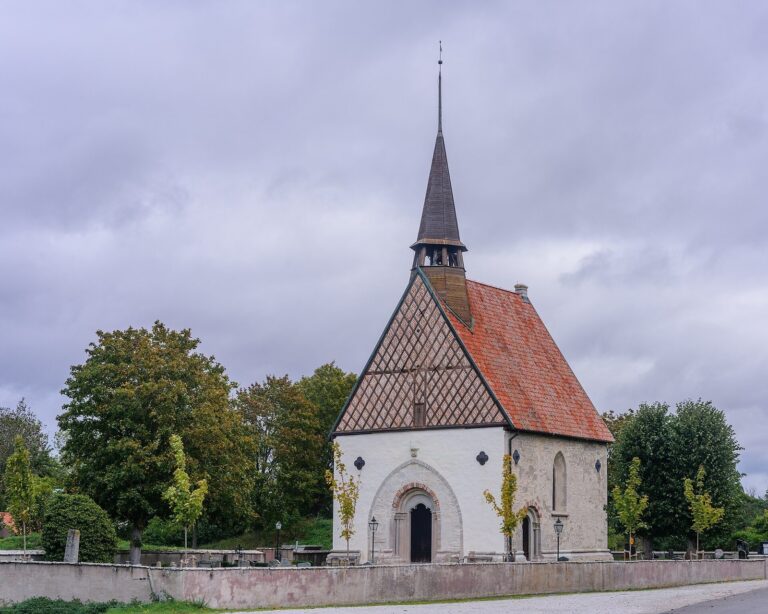
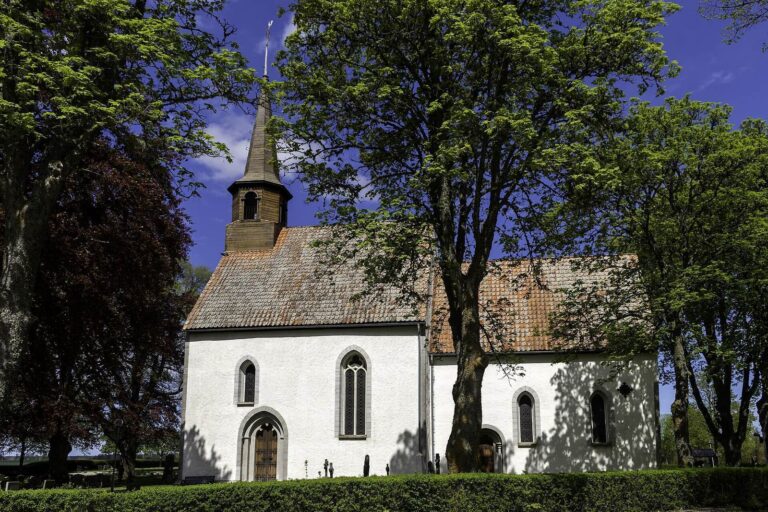
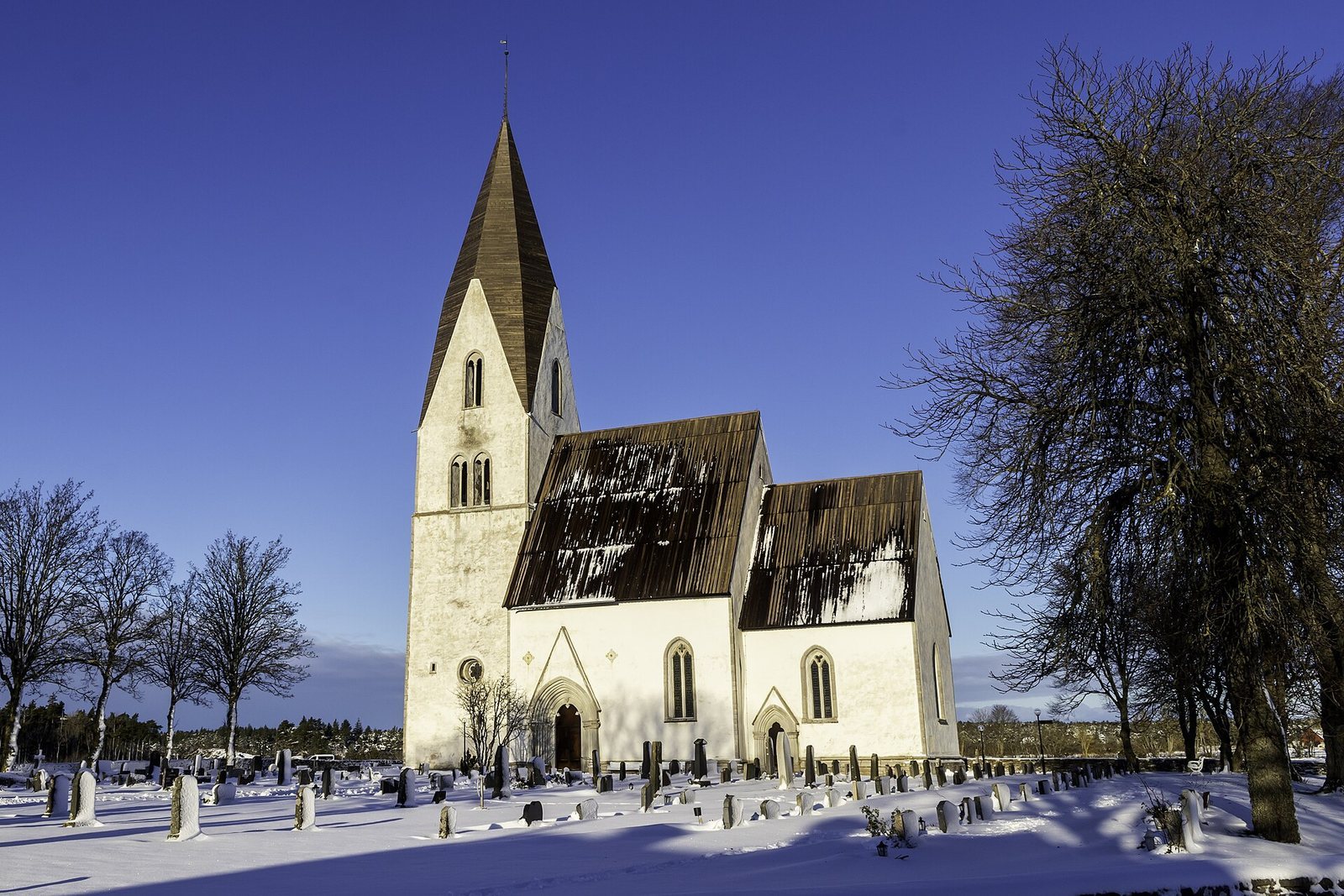
Tofta Church is a parish church of the Church of Sweden, an Evangelical Lutheran church, on western Gotland, Sweden. Its nave and choir are Gothic, with pointed arches, and date to the mid-14th century.
A smaller church probably stood on the site in the late 12th century. Its tower was built during the 13th century for that earlier building. The church was consecrated in 1300, before the present nave and choir were constructed. Tofta belongs to Visby Diocese, a regional church district, and Eskelhem-Tofta Parish, a local congregation within Eskelhem Pastorate, which groups parishes for pastoral administration.
A restoration in 1958–1959 brought fragments of medieval wall paintings to light. During church cleaning in 2004, a mail coif was found in a room in the tower. It may be connected with Gotland’s civil war of 1288.
Remains
Church fabric and layout
Earlier church and later building
The church is whitewashed and stands in open landscape. Its tower is the oldest visible part of the building. The earlier church had a nave 6 metres wide and a square chancel measuring 4 metres on each side. The present nave and straight-ended choir have pointed-arch windows and portals. A sacristy, a room for vestments and liturgical objects, was added in 1881.
Vaults and surviving decoration
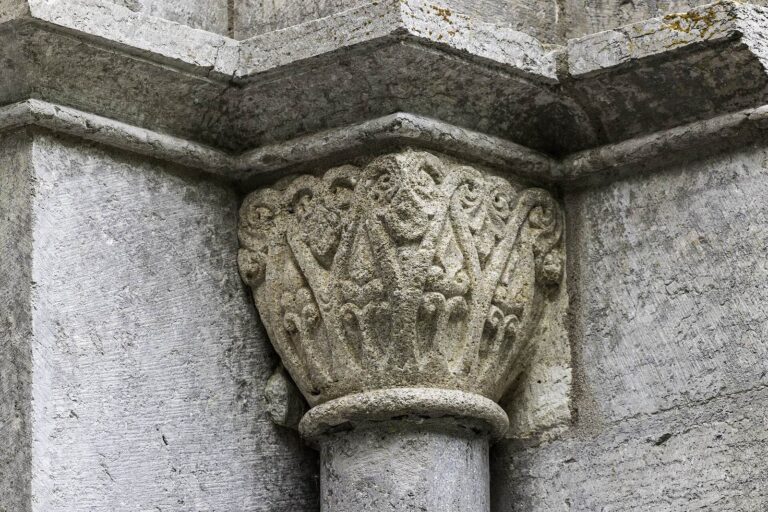
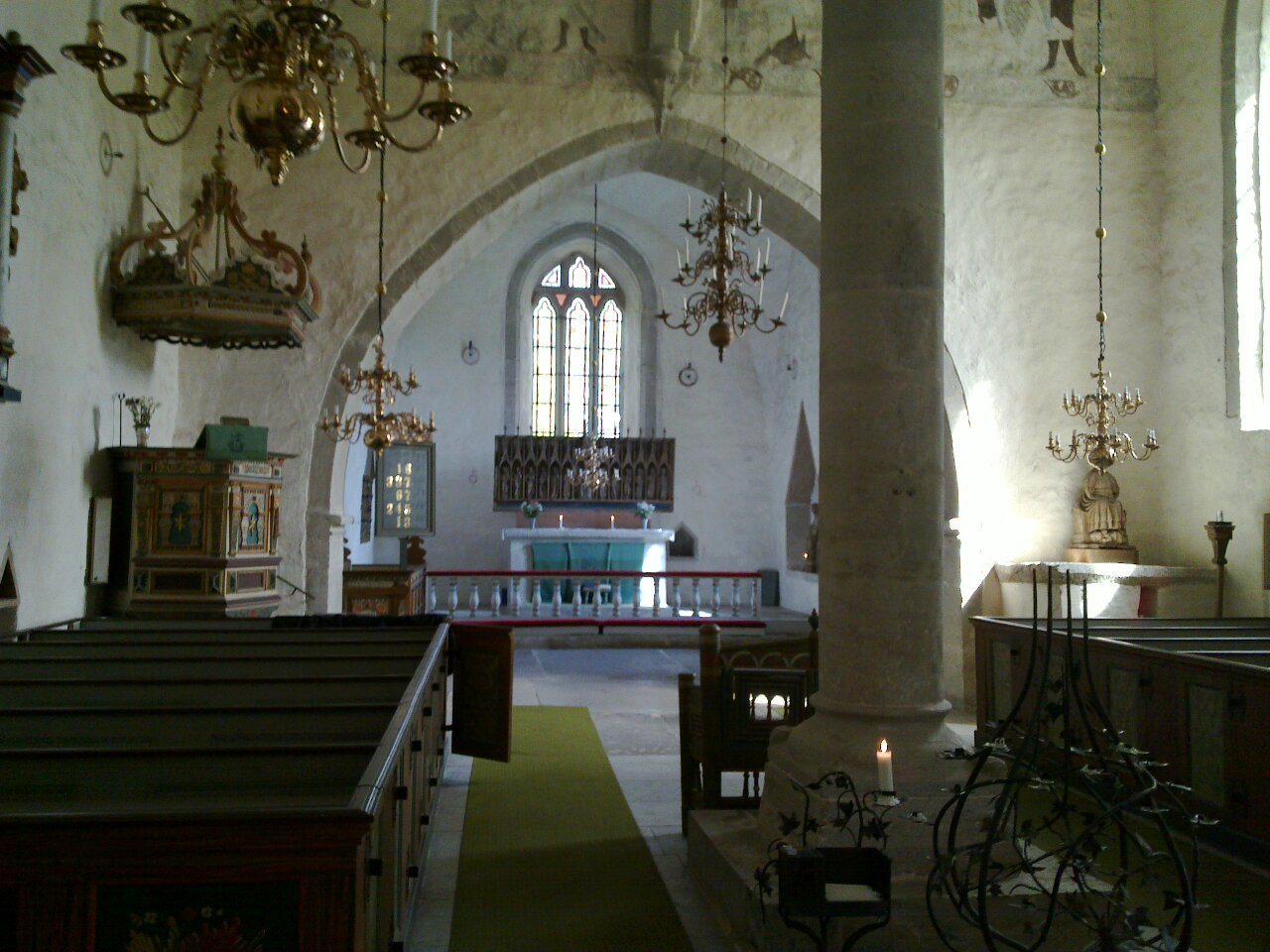
Four vaults are supported by a round pillar set on an ornamented base and topped with a carved capital. Fragments of 14th-century wall paintings remain on the wall of the triumphal arch, which divides the nave from the choir. Several medieval stained-glass windows also survive inside the church.
Furnishings and memorials
Medieval furnishings
A richly carved sandstone baptismal font, the basin used for baptism, dates to the 12th century and shows scenes from Jesus’s childhood. It was probably made for the earlier church and is attributed to Semibyzantios, an art-historical name for an unidentified medieval sculptor. The high altar has a 14th-century retable, a decorated structure behind the altar, probably carved in Lübeck, a medieval craft centre in northern Germany. Its central image shows God the Father holding the crucified Christ. Two 14th-century wooden sculptures depict the Virgin Mary and Saint Olaf, the medieval Norwegian king Olaf II, and a well-preserved medieval bridal bench also remains.
Later furnishings and memorial
The pews date from the Baroque period, a European artistic style that flourished especially in the 17th and 18th centuries. The pulpit probably dates to the 17th century, and its canopy bears a name cipher, or stylized monogram, of Frederick I, king of Denmark from 1523 to 1533. A mechanical organ acquired in 1900 has a Gothic-revival facade. It was made either by K. A. Anderssons Orgelfabrik of Stockholm or by Åkerman & Lund of Stockholm. A gravestone in the choir floor commemorates a farmer and his son, who were beaten to death in 1340.
Mail coif
The coif is a hood of interlinked metal rings that covers the head and chest. It is exceptionally well preserved and is displayed inside the church. It is reputed to be among Europe’s best-preserved examples, with a similar coif at the National Museum of Scotland described as better preserved.