Tinkinswood Burial Chamber: A Neolithic Community Tomb
Site at a Glance
- Rating
- 4.8
- Popularity
- Medium
- Country
- United Kingdom
- Primary era
- Stone Age
- Eras represented
- Stone Age, Modern
- Civilizations
- British
- Site type
- Burial
- Remains
- Tomb
On this page6 sections
History
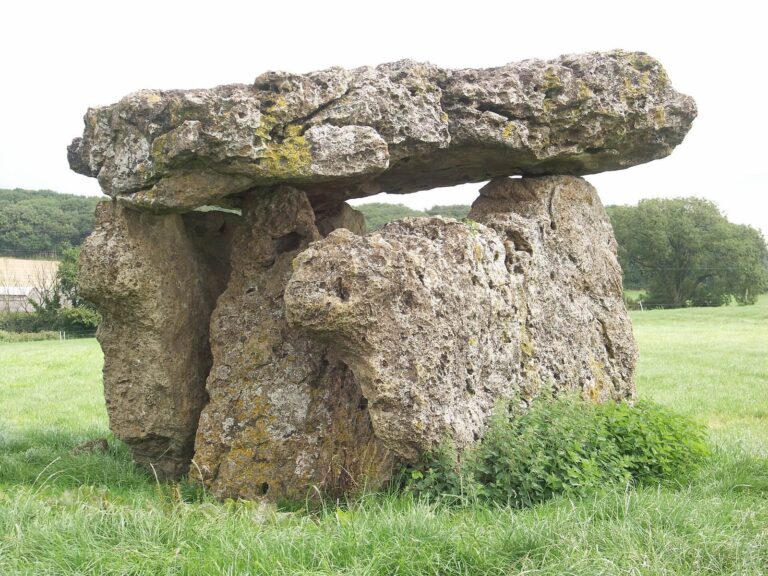
Tinkinswood Burial Chamber is a Neolithic tomb in the United Kingdom, built around 4000 BC. It is a chambered long barrow, an elongated burial mound containing a chamber, of the Severn-Cotswold regional type. The Neolithic was the later Stone Age, associated with farming and the building of durable monuments. Tinkinswood predates Stonehenge by about a thousand years.
The site was once a village, and the burial chamber appears to have served its community. Burials continued over an extended period and may have lasted into the early Bronze Age, the period that followed the Neolithic.
Conservation work accompanied an excavation in 1914, and further archaeological excavation took place in October 2011. Cadw, the Welsh Government’s historic-environment service, manages the site. It is a Scheduled Monument, a legally protected archaeological or historic site in Wales.
Folklore connects Tinkinswood with May Day and midsummer. One belief interprets the mound as a goddess, likening its original outline to a woman’s body and the chamber at its end to a womb. Another warns that anyone who spends the night there on the eve of May Day, on 23 June (St John’s Day), or at midwinter will die, go mad, or become a poet. A further legend says that boulders southeast of the monument are women turned to stone for dancing on Sunday. These traditions overlap with those associated with the smaller St Lythans Burial Chamber, about 1.5 km to the southeast. St Lythans was built at about the same time and may once have resembled Tinkinswood.
Remains
The monument combines a stone burial chamber with the remains of a long earthen mound and other features set around it. Its layout includes a forecourt at the chamber’s northeast front, avenues of stones, and individual standing stones nearby.
Chamber and Mound
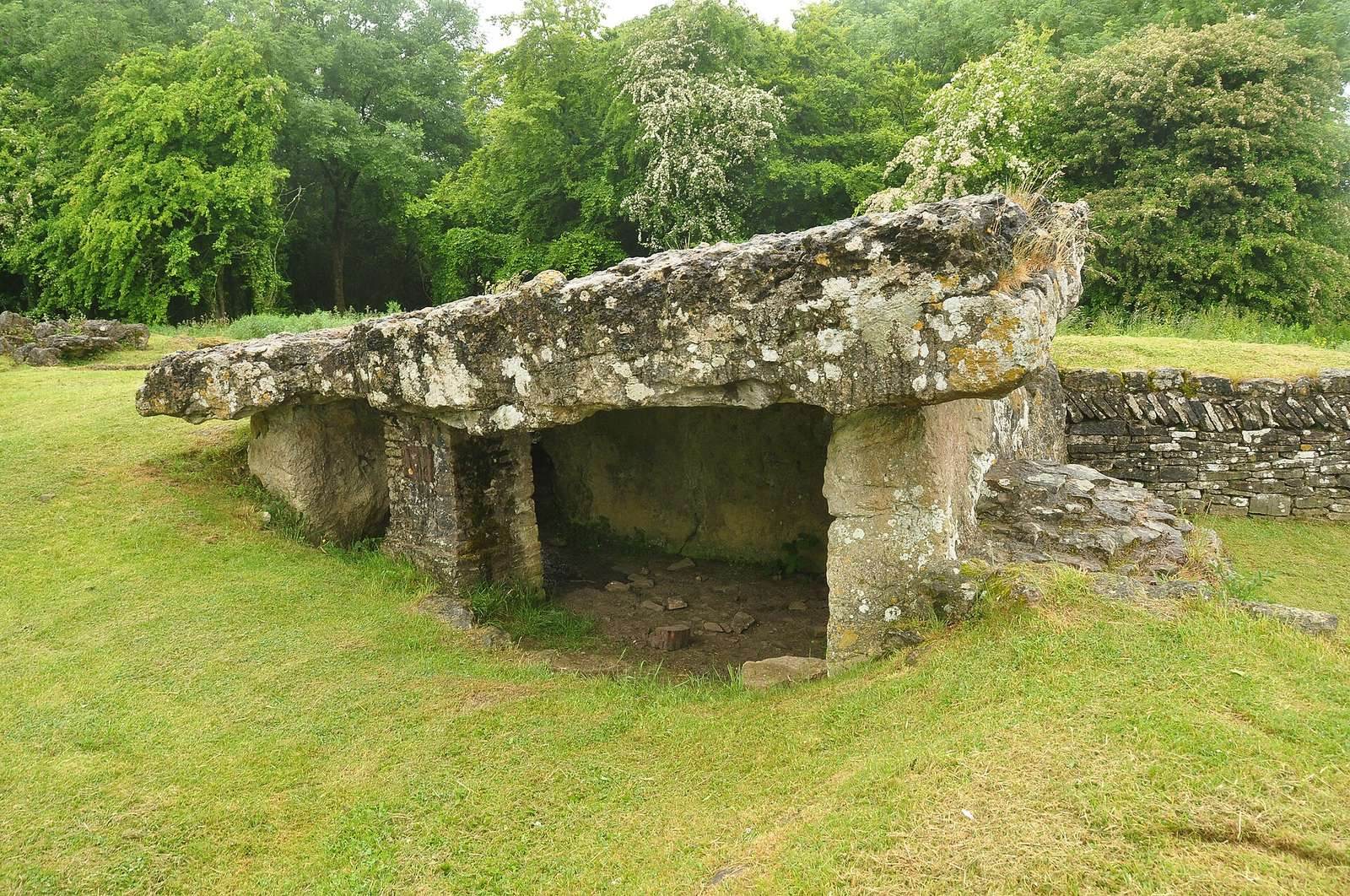
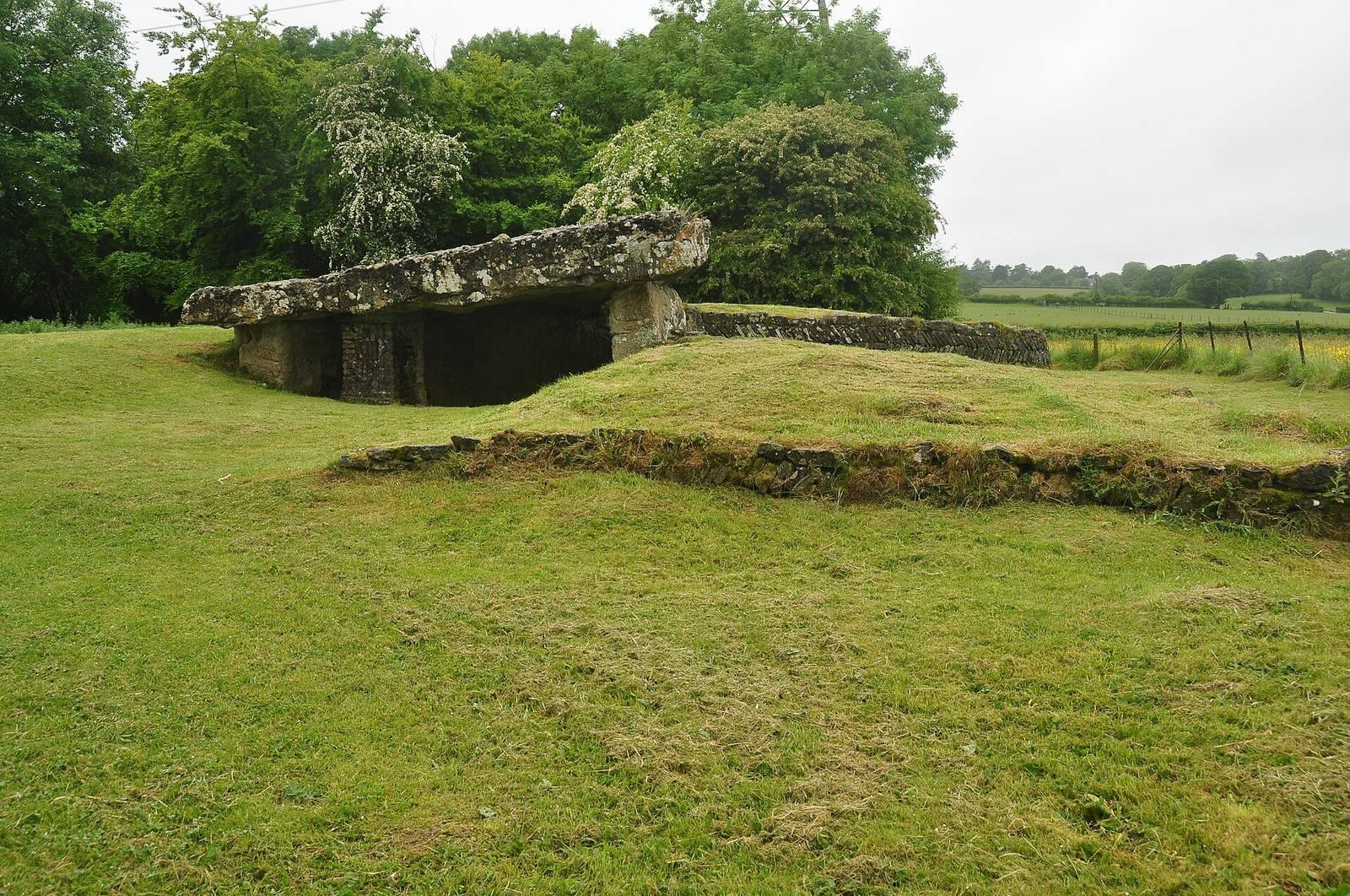
The tomb is a dolmen, a stone structure in which upright stones support a large capstone. This broad, slightly sloping slab measures about 7.3 by 4.3 metres and weighs around 40 long tons. It is regarded as the largest capstone in Britain and among the largest in Europe; raising it into position would have required about 200 people. A brick pillar installed during conservation in 1914 supports it. The chamber is in good condition, though it has sustained some damage.
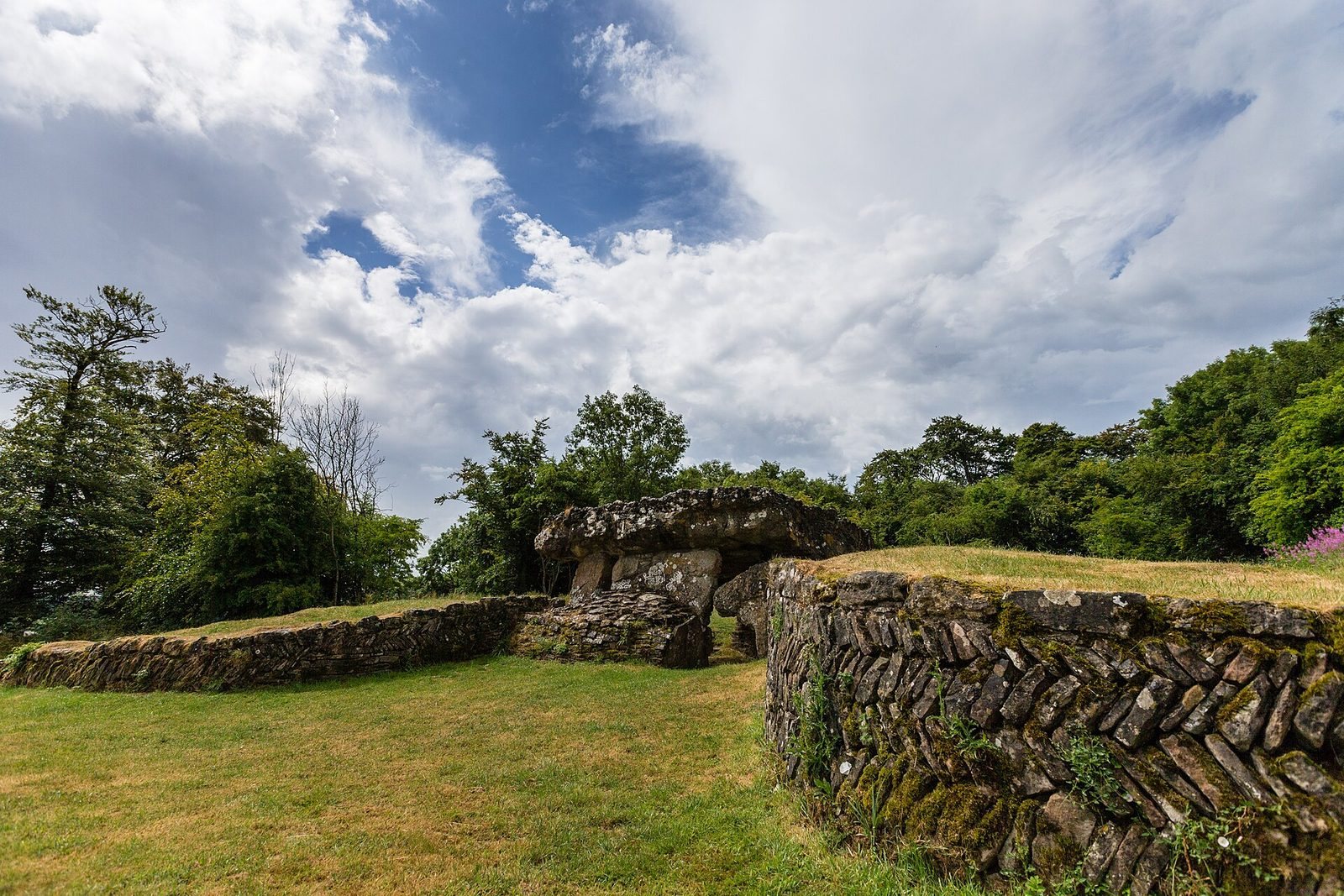
An earthen mound originally covered the chamber. Most of that covering has been lost, leaving a flat-topped, rectangular mound behind the chamber, about 40 metres long, 18 metres wide and 1 metre high. The mound runs east-northeast, toward the sun’s position on 1 May, while higher ground in that direction blocks the horizon.
Burial Evidence within the Mound
A pit covered with stones may have held bodies before they were left exposed and their bones transferred to the chamber. The 1914 excavation recovered 920 human bones, almost all broken, representing at least 40 people of different ages and sexes who were buried during the Neolithic. Worked flints, bone needles and pottery fragments were also found. Some pottery belongs to the Bell Beaker tradition, a prehistoric tradition identified in part by distinctive, bell-shaped vessels. Within the mound, excavators also found parallel rows of upright stones and another stone-covered pit containing animal bones.
Forecourt
The forecourt lies at the northeast front of the monument and has horn-like sides. Its walls were built from stones laid without mortar in a herringbone pattern. The forecourt was partly restored following the 1914 excavation.
Avenues and Standing Stones
Two mostly buried parallel rows of stones form an avenue extending southeast from the chamber. Another avenue runs northeast and contains many stones. A large single stone stands due east of the monument. Two flat, parallel standing stones point toward the summit of nearby Coed Sion Hill.