Thurnham Hall: A Historic House near Lancaster
Site at a Glance
- Popularity
- Medium
- Country
- United Kingdom
- Primary era
- Early Modern
- Eras represented
- Early Modern, Modern
- Civilizations
- British, English
- Site type
- Domestic
- Remains
- Elite Residence
On this page9 sections
History
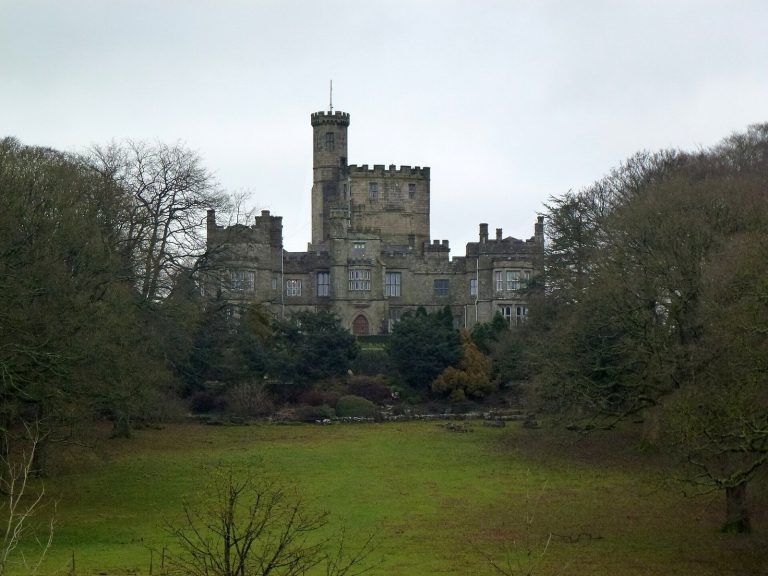
Thurnham Hall is a historic house near Lancaster in the United Kingdom, probably built for Robert Dalton in the 17th century. It contains a Jacobean Great Hall, from the English period and style associated with James I (1603–1625). The Dalton family’s recusant Catholic faith and confiscations linked to civil and Jacobite conflict shaped the estate’s history.
Medieval ownership and the Daltons
In the 12th century, the property belonged to the de Thurnham family. William de Thurnham granted land to the hospital of Cockersand Abbey, a charitable religious institution. The estate later descended through the Flemming, Cancerfield, Harrington, Bonvile, and Grey families. In 1553, Henry Grey, Duke of Suffolk, sold it to Thomas Lonne, a London grocer. Lonne sold it in 1556 to Robert Dalton of Bispam.
Robert was a grandson of William Dalton of Bispam and Jane, daughter of Sir John Towneley. He married Ann Kitchen, and the Dalton family acquired lands that had belonged to Cockersand Abbey. The family was recusant, meaning its Roman Catholics refused to conform to the established Church of England, a stance that carried particular weight after the Reformation.
The Civil War and confiscation
The house was probably built for Robert Dalton during the 17th century. Robert had one son and either seven or perhaps ten daughters. His only son, Thomas, was wounded at the Second Battle of Newbury in 1644, during the First English Civil War, a conflict between supporters of Parliament and the royalist cause. Thomas died at Marlborough less than a week later. Parliamentarians confiscated the estate, which was later returned and passed to Thomas’s young son Robert.
Jacobite conflict and 19th-century changes
The younger Robert’s only daughter, Elizabeth, married William de Hoghton. Their son John took the Dalton surname. After John became involved in the Jacobite rising of 1715, an attempt to restore the Stuart dynasty to the throne, he was imprisoned and his land was confiscated. Released and back in Lancaster, he paid a very large fine to regain Thurnham Hall. John married Mary Gage, daughter of Thomas Gage, 1st Viscount Gage, a British peerage rank. In 1823, John modernised the hall.
The estate passed to John’s daughter Elizabeth in 1837. In 1848, she financed much of a new Roman Catholic church in the village. She lived at the hall until her death in 1861.
Later ownership, decline, and restoration
Elizabeth was succeeded by a distant cousin, Sir James Fitzgerald, who added Dalton to his surname. He died without children in 1867, and his brother Sir Gerald Dalton-Fitzgerald inherited the estate. Gerald also died without children, bringing the baronetcy, a hereditary title separate from the peerage, to an end. Most of the hall’s contents were sold, while the remainder went to the Dalton-Fitzgerald estate in Essex.
Ownership later returned to William Henry Dalton of the main Dalton line, then passed to his sons John Henry and William Augustus. After William Augustus died, the hall stood empty and became derelict. A fire damaged part of the building in 1959. Stanley Crabtree bought it in the early 1970s and carried out a major renovation in 1973. Thurnham Hall received Grade I listed status in 1968, the highest listed-building grade in England, for buildings of exceptional interest. It now operates as a resort hotel.
Remains
Architectural remains
Main house
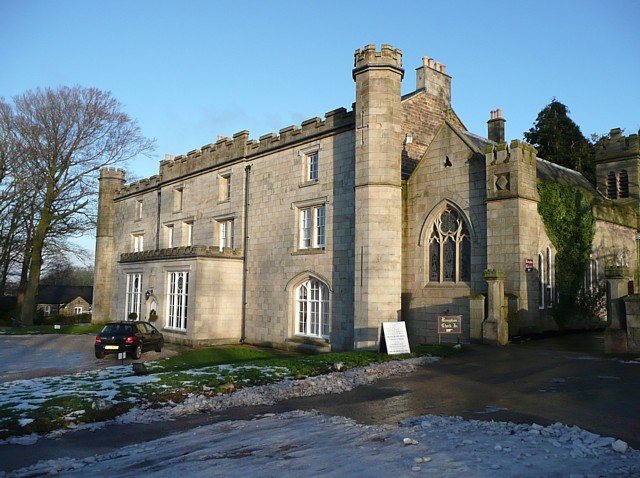
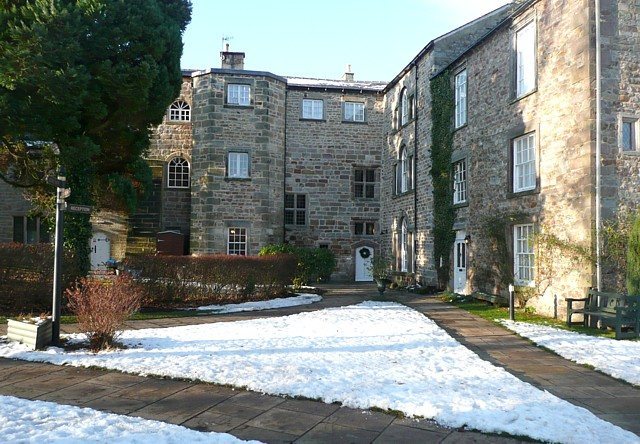
The three-storey house faces west and is built of sandstone rubble, with a west front of finely dressed stone and a slate roof. It stands amid 30 acres of rising ground, about a quarter of a mile from the left bank of the River Conder and roughly six miles south of Lancaster. Its principal communal room is the Great Hall.
During John Dalton’s 1823 modernization, the front’s Gothic windows, divided by vertical stone bars, were replaced. The coats of arms of John Dalton and Mary Gage were placed above the doorway. The 1959 fire caused the loss of interior panelling. In 1973, renovation restored the front, whose dressed stone had been in dangerous condition, and replaced the lost panelling.
Chapel and Dower House
A private chapel was built at the hall in 1854. A building identified as the Dower House is also associated with the property. A dower house was traditionally a residence provided for an estate owner’s widow.