Tholos Tombs of Gerokambos: A Minoan Burial Complex on Crete
Site at a Glance
- Popularity
- Very Low
- Country
- Greece
- Primary era
- Bronze Age
- Eras represented
- Bronze Age
- Civilizations
- Minoan
- Site type
- Burial
- Remains
- Tomb
On this page13 sections
History
The Tholos Tombs of Gerokambos are a Minoan burial complex at the western edge of Gerokambos on Crete, Greece. The Minoan civilization was a Bronze Age culture centered on Crete. Its two tholos tombs, or circular burial chambers, are broadly dated to about 3300–1900 BCE and were used from Early Minoan I through Middle Minoan I A, subdivisions of Minoan chronology.
Early Minoan use
Gerokambos is one of three areas of tholos tombs around ancient Lebena. The Gerokambos tombs are called Lebena II and Lebena IIa; the nearby Papoura area contains Lebena I and Lebena Ia, while the tomb at Zervos is Lebena III. Lebena II is the older tomb, and its lowest burial deposit dates to Early Minoan I. The smaller Lebena IIa was probably built during Early Minoan II A. Rooms AN and Delta were constructed during Early Minoan II, probably at about the same time as Lebena IIa, while Rooms A and M were later additions.
Rebuilding and continued burial
After the roof of Lebena II collapsed, the tomb was repaired and burials continued from Early Minoan II through Middle Minoan I A. Some burials were placed above the fallen stones. Earlier human remains were moved to make room for later burials. The central part of the tomb was probably looted in antiquity, while fallen roof stones shielded burial goods in other areas.
Excavation and chronological evidence
Stylianos Alexiou excavated the complex in 1958, 1959, and 1960. In 2004, Alexiou and Peter Warren of the University of Bristol analyzed the finds together. A beetle-shaped Egyptian scarab, an object commonly used as a seal or amulet, came from an upper layer in Lebena IIa. It belongs to Egypt’s Eleventh Dynasty, part of the early Middle Kingdom, and helps link Minoan chronological phases with Egyptian dates.
Remains
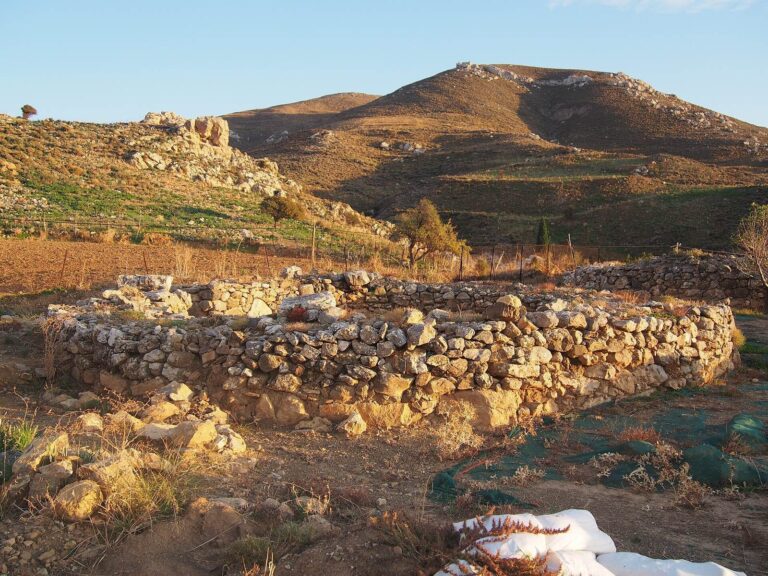
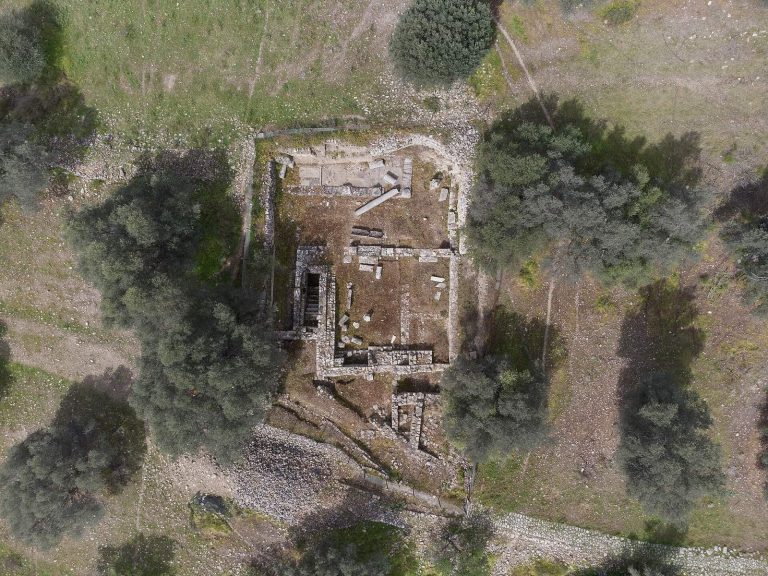
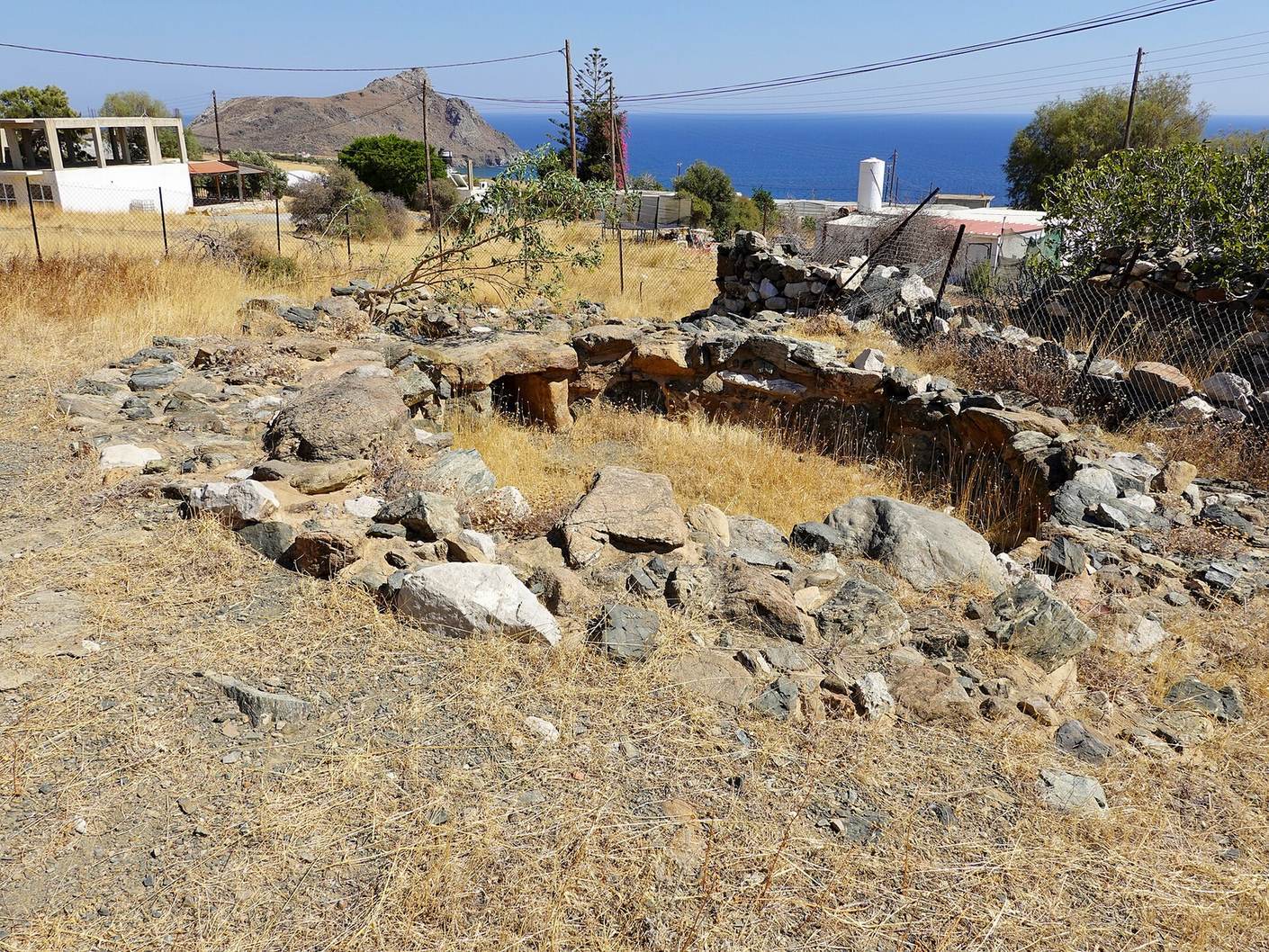
The tombs stand on open ground about 90 m above sea level and approximately 540 m north of the coast. The two circular chambers are different in size and adjoin one another. Four rooms are attached to the tomb complex, with traces of a further room to the east of Room Delta. Both tombs probably had corbelled dry-stone roofs, formed by courses of stones laid without mortar and projecting inward until they met.
Burial chambers
Lebena II
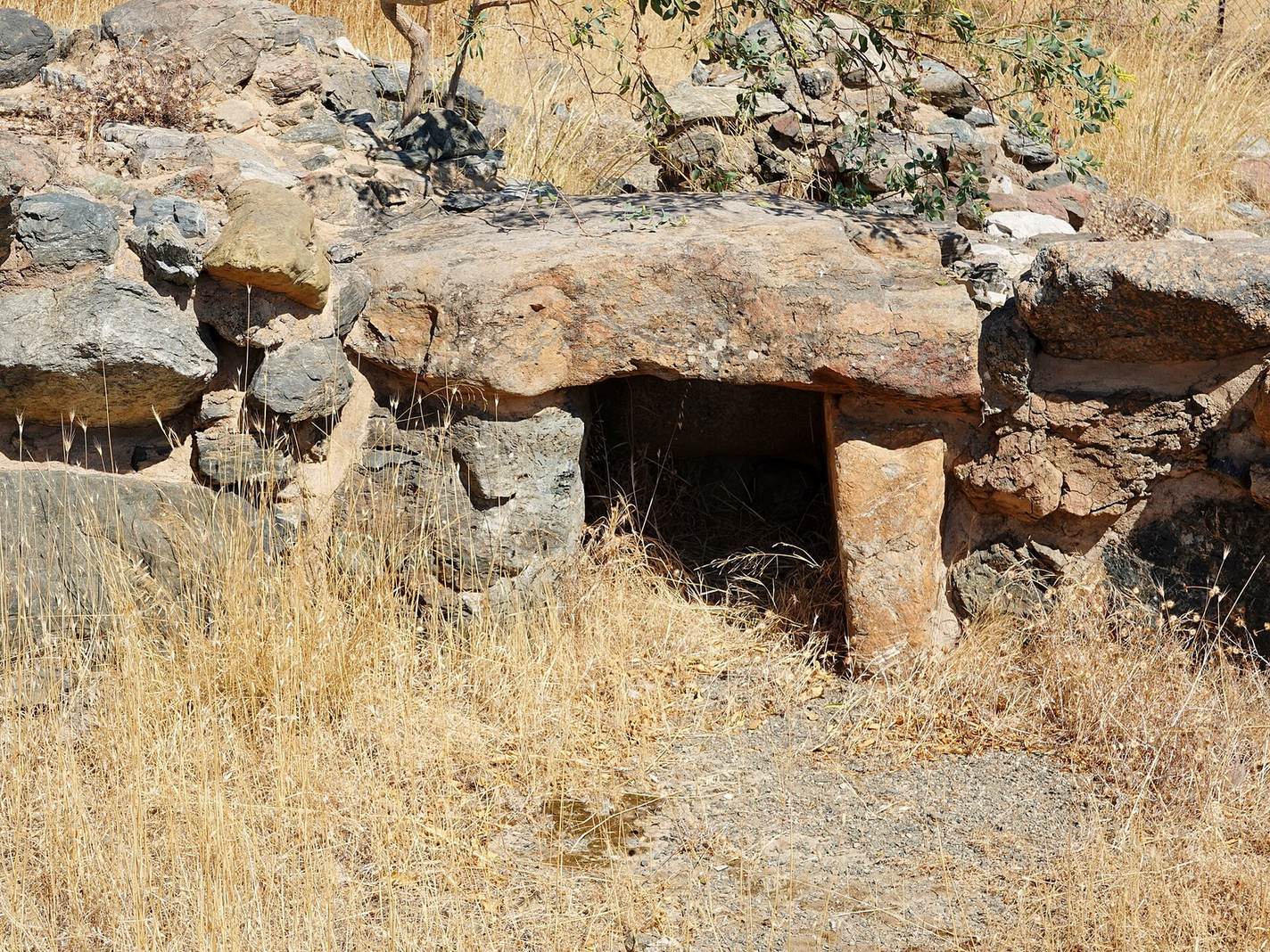
Lebena II has an interior diameter of 5.10 to 5.15 m and walls about 1.9 m thick. Its surviving outer wall reaches roughly 1.6 m and slopes inward. The circular plan, wall profile, and positions of fallen stones support the reconstruction of a corbelled roof. On the east, the entrance is a trilith, two upright stones supporting a lintel. It is 0.64 m high and 0.60 m wide, and narrows toward the top.
The tomb yielded 959 vessels and fragments from 2,253 vessels. They were handmade rather than wheel-thrown and decorated in Early Minoan I, Early Minoan II, and Middle Minoan I A styles. Many were pyxides, small containers probably used for aromatic liquids such as perfumes. Early Minoan I finds include small Cycladic figures, associated with the prehistoric cultures of the Cyclades, necklaces of clay and cylindrical soapstone beads, two bronze daggers, a green chlorite-stone seal, and pottery in the Agios Onouphrios style, a Minoan pottery style.
Material from the later burial phases includes three bronze daggers, vessels of green chlorite schist, a pendant, a grey soapstone ring, and 18 seals made from materials including ivory, chlorite, serpentine, and soapstone. Of 1,138 beads, 14 necklaces could be reconstructed. The tomb also contained 124 obsidian objects, including 115 prismatic blades, long blades with prism-like profiles. Lids had been removed from many vessels, apparently so the dead could symbolically eat or drink their contents. These included olives, small animals, birds, and snails.
Lebena IIa
Lebena IIa adjoins the southeast side of Lebena II. Its interior diameter is 3.30 to 3.40 m, its walls are about 1 m thick, and they survive to a maximum height of 1.15 m. A modern building partly overlies its southwest side. Like Lebena II, the tomb probably had a corbelled roof. At its center, two stones were arranged like hearth stones. A layer containing burnt human remains was covered by sand, which also covered the tomb floor.
The deposit beneath the sand contained 25 vessels, including a pyxis and Vasiliki-style cups, a named Minoan pottery style, as well as seven seals, obsidian pieces, and a dagger. The seals date to Early Minoan II. Above the sand were 31 vessels dating from Early Minoan III through Middle Minoan I A, two foot amulets, and five seals, including one of ivory. The layer also contained 200 beads of chlorite, serpentine, and soapstone, which could be assembled into six necklaces.
Associated rooms
Room AN
Room AN adjoins the east side of Lebena IIa and measures 1.70 by 1.45 m. Benches run along its west side and occupy its northeast corner. A large flat stone was interpreted as an offering table, and the room has been noted for its resemblance to later Minoan shrines. A burnt layer was found inside. Its contents included 119 vessels and fragments from a further 524 vessels, dating from Early Minoan II B through Early Minoan III and Middle Minoan I A.
Room Delta
Room Delta lies immediately south of Room AN and measures 2.60 by 1.65 m. Its finds include many human bones, 18 vessels, fragments from at least 77 additional vessels, 17 beads of various materials, and three stone vases.
Rooms A and M
Rooms A and M lie east of Lebena II, northeast of Lebena IIa, and northwest of Room AN. Room A stands directly in front of Lebena II’s entrance. Both rooms occupy a level slightly above the tomb floor and were linked by a passage about half a metre wide, blocked by a stone slab when excavated. Room A contained human and animal bones and handleless cups dating to Middle Minoan I A. Room M contained handleless cups and a jug. Alexiou proposed that it may have been used for offerings to the dead.
Traces east of Room Delta
Traces east of Room Delta indicate a further room, of which little wall fabric survives. It was probably built at about the same time as Rooms AN and Delta.