Thibilis: A Roman Municipium in Algeria
Site at a Glance
- Rating
- 4.5
- Popularity
- Very Low
- Country
- Algeria
- Primary era
- Classical
- External website
- Open
- Eras represented
- Classical, Medieval
- Civilizations
- Byzantine, Numidian, Roman
- Site type
- City
On this page12 sections
History
Thibilis is a Numidian town in Sellaoua Announa, Algeria, with substantial Roman and later Byzantine occupation. During the Early Roman Empire, it functioned as a pagus, a local administrative community within the larger Cirtaian confederacy, before becoming an autonomous municipium with its own recognized civic government.
From Cirtaian Pagus to Municipium
Thibilis initially depended on the Roman colony of Cirta, approximately 57 kilometres to the northwest. Cirta, Rusicade, Chullu, and Milève formed the Cirtaian confederacy, an administrative association centred on Cirta. Thibilis possessed a degree of local autonomy within this system and was administered by two annually appointed magistri, or local magistrates, assisted by one or two aediles, officials associated with civic maintenance and public facilities.
The town later became a municipium, a Roman community with recognized civic status and local government. The precise date is uncertain, but the change probably occurred between about AD 260, when the last known magister is recorded, and AD 268, when the first known duumvir appears. The duumviri, the two leading magistrates of a municipium, probably took office as the Cirtaian confederacy was dissolved.
Local Elites and Religious Life
During the reigns of Antoninus Pius and Marcus Aurelius, members of Thibilis’s local elite reached high imperial offices. Quintus Antistius Adventus Aquilinus Postumus became suffect consul around AD 167, serving after another consul left office before the end of the annual term. His son, Lucius Antistius Burrus, who became a son-in-law of Marcus Aurelius, was consul in AD 181. The Antistii family included senators and was prominent in the civic life of Thibilis.
Priesthoods and magistracies also served as honorific offices within the community. These included the flamen Augusti, a priest of the imperial cult, a perpetual priest of the Thibilitan community, and a priest of Saturn. The Saturn priesthood could be held by either a man or a woman. Each spring, the town’s magistrates travelled about 30 kilometres to a cave in Djebel Taya, where they worshipped the local deity Bacax and carved inscriptions recording their visits on the cave walls.
Two undated inscriptions attest to the worship of Magna Mater deorum Idaea, the Great Mother of the Gods, the Roman form of the Anatolian goddess Cybele. A votive dedication associates her with Venus Augusta, Venus under an imperial or state-related title. Q. Clodius Quintillus made the dedication in memory of his deceased wife, Fuficia Vita. Another altar from Thibilis was dedicated to Venus Erycina, whose cult was connected with the celebrated sanctuary of Venus on Mount Eryx in Sicily.
Excavation and Later Occupation
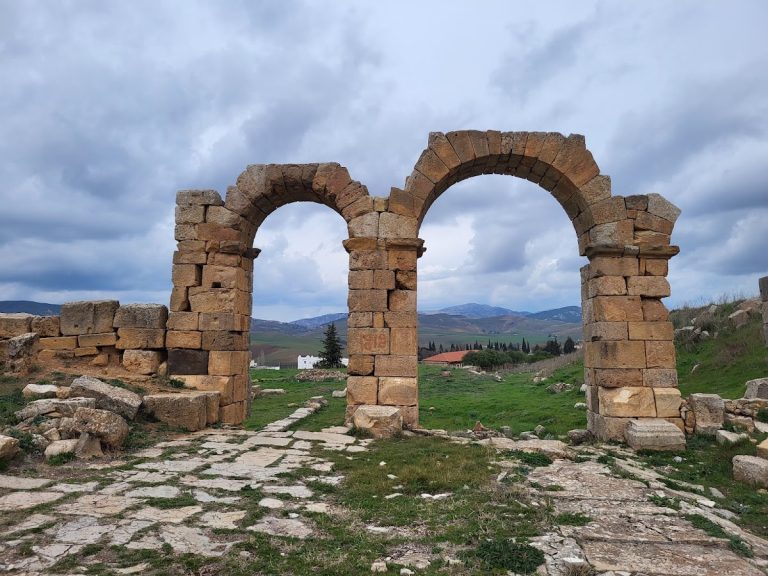
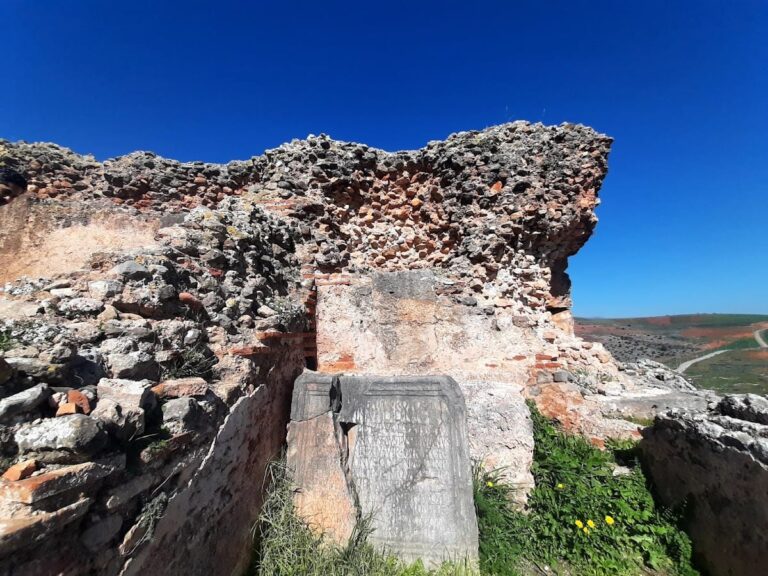
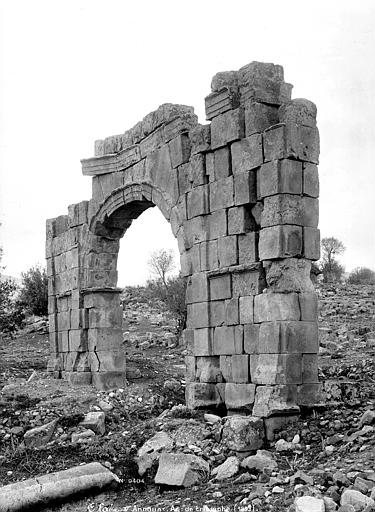
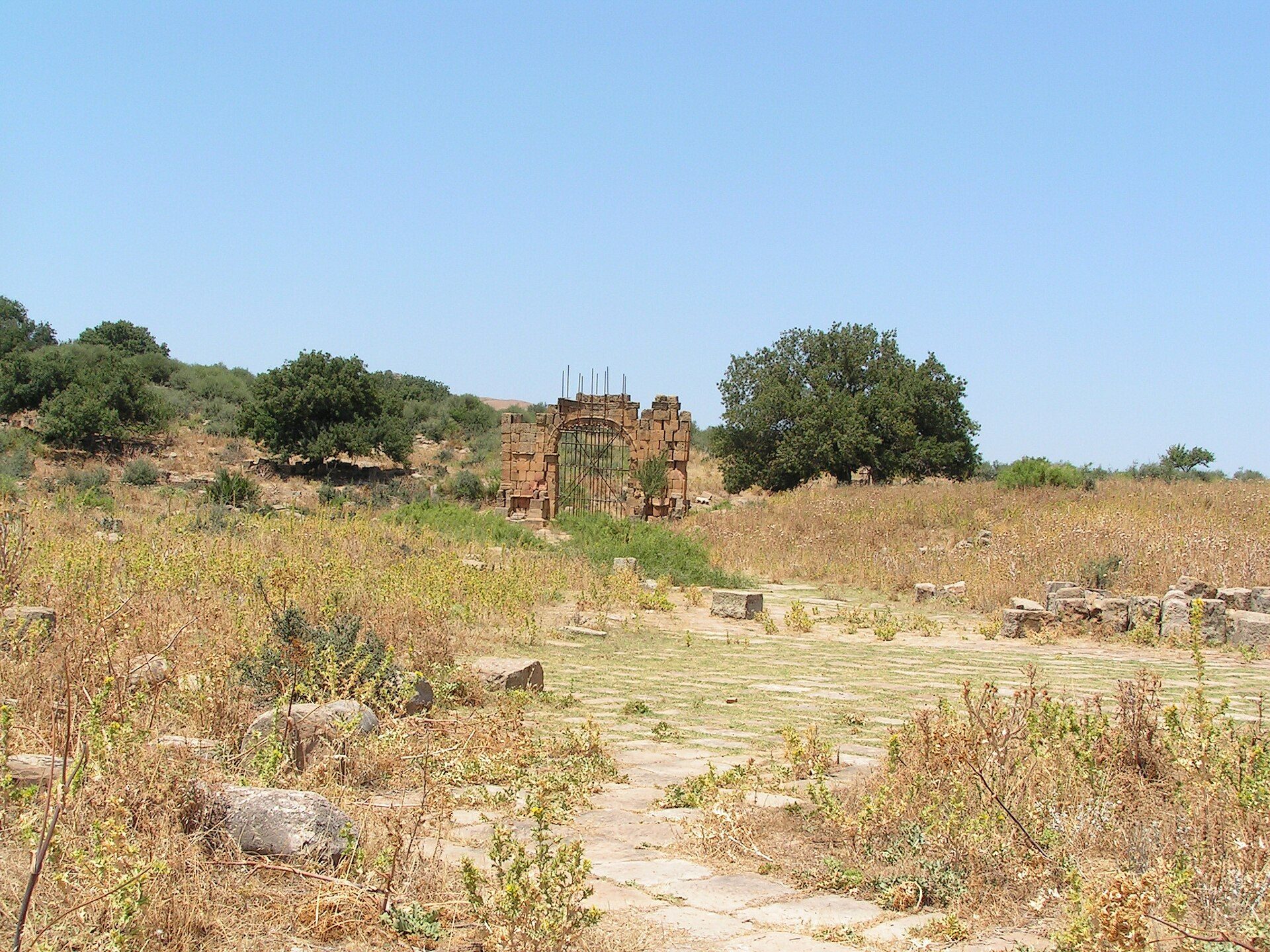
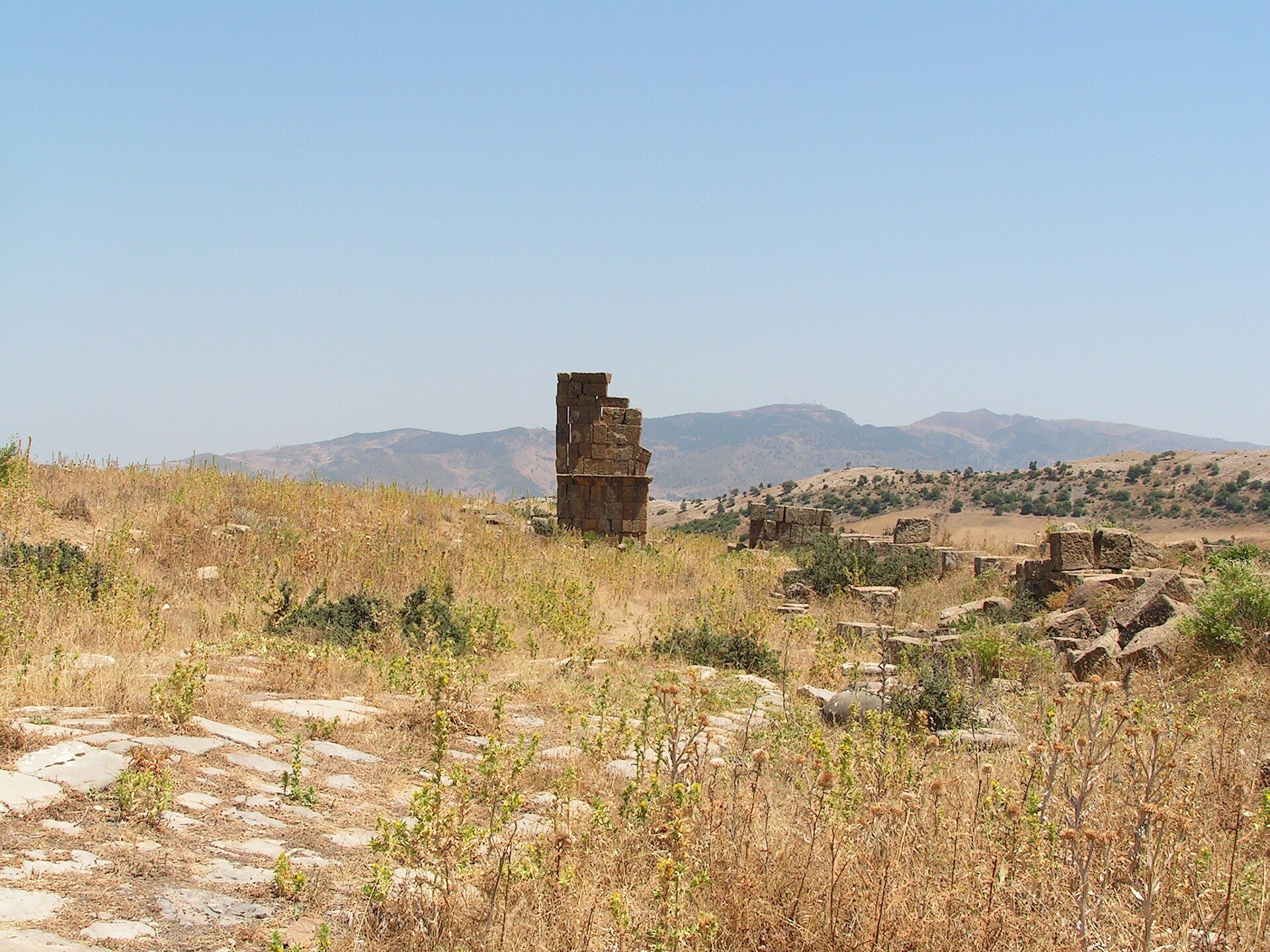
Thibilis experienced later Byzantine occupation, and its ruins preserve evidence from Roman and Christian phases of settlement. At the beginning of the twentieth century, Charles-Albert Joly excavated parts of the site for the Historical Monuments Service. The work exposed civic, religious, domestic, commercial, and Christian areas, while the Latin inscriptions brought to light the town’s offices, priesthoods, elite families, and social hierarchy. The site also contained extensive ruins, including the remains of a triumphal arch documented in 1893.
Remains
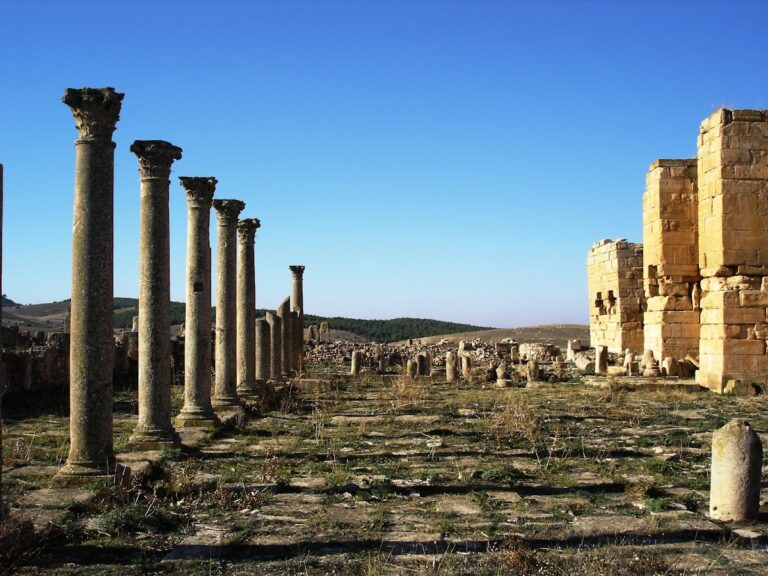
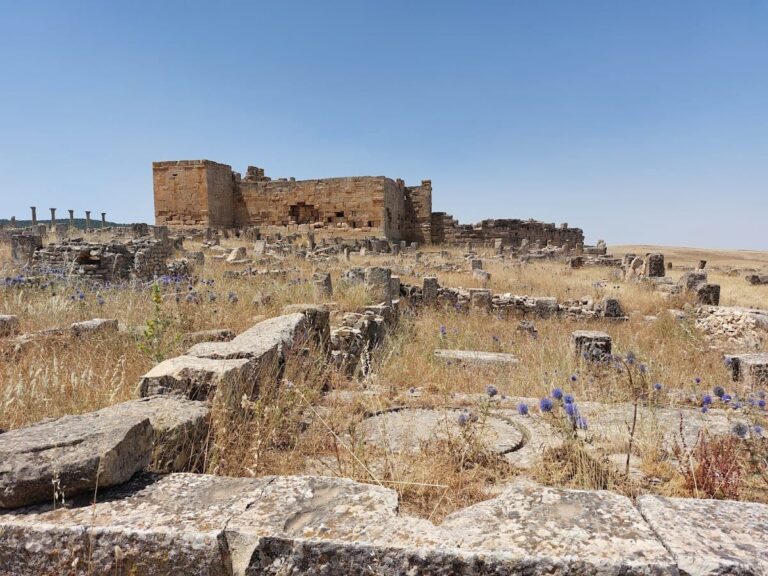
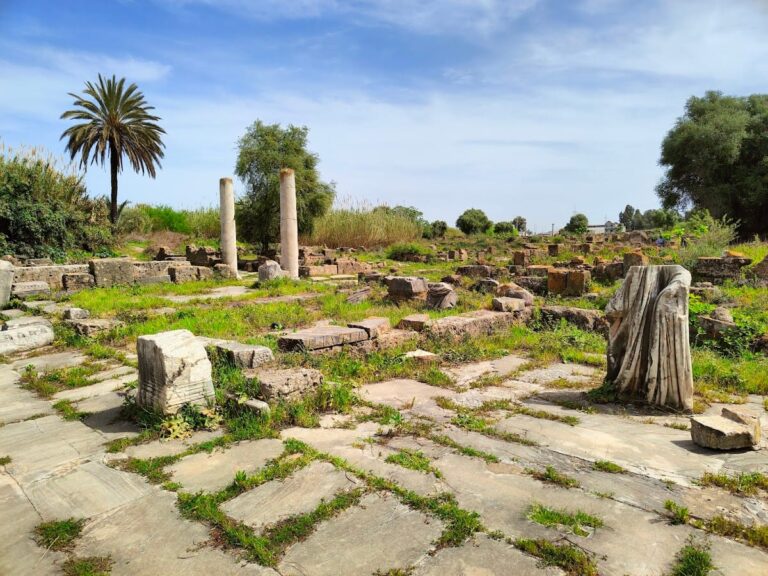
The excavated remains extend across a civic centre with public and religious buildings, a small commercial area, houses, and Christian structures. The buildings represent several aspects of town life, from government and worship to domestic occupation and later Christian practice.
Civic and Religious Buildings
Forum and Public Buildings
A small forum, the public square used for civic, commercial, and judicial activities, forms part of the town’s central remains. One side was lined with small rooms. One of these rooms had more elaborate decoration and may have served as a curia, the meeting place of the civic council. The forum’s surviving arrangement differs from the more complete form often associated with Roman public squares, and a larger nearby building has a plan with features resembling those of a basilica, a large hall used for administrative, judicial, or commercial purposes.
Temples and Market
Excavation exposed a Capitolium, a principal Roman temple normally associated with Jupiter, Juno, and Minerva, together with a small neighbouring temple dedicated to an unidentified deity. A small market was also uncovered, adding a commercial building to the civic and religious complex.
Antistii Residence
One substantial house is associated with the Antistii family through several Latin inscriptions found at the site. Its atrium, the principal interior court or reception space of a Roman house, contained an altar at the centre dedicated to sacrifices for the Genius domus, the protective spirit of the household. The residence also had a semicircular peristyle, a courtyard surrounded by columns, arranged around a central fountain.
Christian Buildings
Two Christian churches and a chapel were excavated at Thibilis. The church in the northwestern part of the site preserves a particularly well-preserved baptistery, a structure or room used for Christian baptism. These buildings form part of the remains associated with the later religious life of the settlement.
Altars and Cult Images
A small quadrangular altar found in the courtyard of a gendarmerie barracks during an inspection of the ruins bears a dedication to Venus Augusta and Magna Mater deorum Idaea. Its inscription commemorates Fuficia Vita. Another altar dedicated to the Great Mother of the Gods was discovered at Thibilis and is preserved in the Louvre. A bas-relief from the site shows the goddess seated in profile on a lion. The ruins also yielded an altar dedicated to Venus Erycina.
Domestic Areas
Alongside the civic, religious, commercial, and Christian buildings, the excavated area includes a limited number of houses. These domestic remains complement the inscriptions and public architecture by showing that residential spaces formed part of the settlement’s surviving archaeological landscape.