University of Madaure: An Ancient Roman Centre of Higher Learning in Algeria


Site at a Glance
- Rating
- 4.6
- Popularity
- Very Low
- Country
- Algeria
- Primary era
- Classical
- Eras represented
- Classical
- Civilizations
- Numidian, Roman
- Site type
- Civic
- Remains
- University
On this page6 sections
History
The University of Madaure was an ancient public university in Algeria, located in modern M’Daourouch, and associated with the Roman city of Madaure from around AD 75 or the first and second centuries AD. Founded under the Flavian dynasty, the Roman city developed on the site of an earlier Numidian settlement. The Flavian dynasty ruled the Roman Empire from AD 69 to 96 and included Vespasian, Titus, and Domitian. The institution is regarded as one of Africa’s earliest centres of higher learning and is sometimes described as possibly the oldest on the continent.
Roman Foundation
Madaure’s Roman foundation dates to around AD 75, while the earlier Numidian city on the same site dated from the third century BC. Its public functions expanded during the first and second centuries AD, when Madaure became a centre of cultural influence in the ancient world. Numidia was an ancient North African kingdom and later a Roman province, corresponding broadly to parts of present-day Algeria and Tunisia.
Intellectual Life
Madaure attracted writers, philosophers, mathematicians, and rhetoricians. Its intellectual associations included Saint Augustine, Apuleius, Maximus of Madaurus, and Martianus Capella. Saint Augustine of Hippo was a late-fourth- and early-fifth-century Christian bishop, theologian, and philosopher whose writings became highly influential in Christian thought. Apuleius was a Numidian writer, orator, and philosopher, best known as the author of The Metamorphoses, also called The Golden Ass. Maximus of Madaurus was a Roman orator and grammarian, while Martianus Capella was a writer, poet, music theorist, and philosopher known for The Marriage of Philology and Mercury, an allegorical work arranged in nine books that introduced the liberal arts in a structured form.
The university’s associated linguistic environment brought together Numidian, Latin, and Greek. Madaure is mentioned in ancient manuscripts dating from the third century, reflecting the city’s place within the intellectual and written culture of Roman North Africa.
Decline and Closure
Madaure entered a period of decline after the Muslim conquest of the Maghreb in the seventh century, when Muslim rule spread across North Africa. The university was completely closed during that century. Its ruins now form part of the archaeological remains of M’daourouch in Souk Ahras Province, Algeria.
Remains
Urban Archaeological Setting
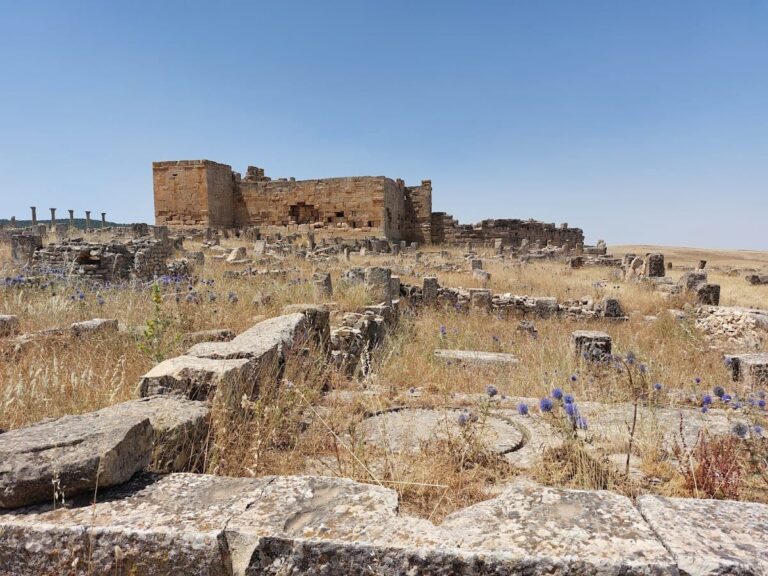
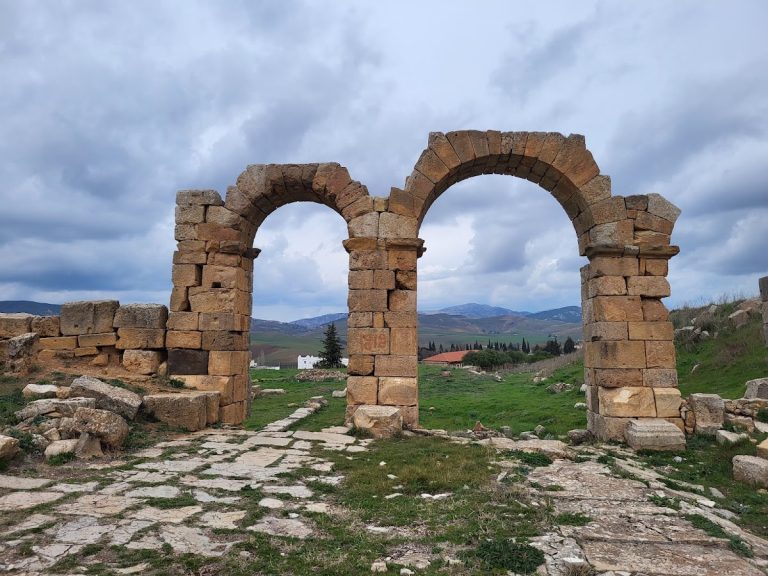
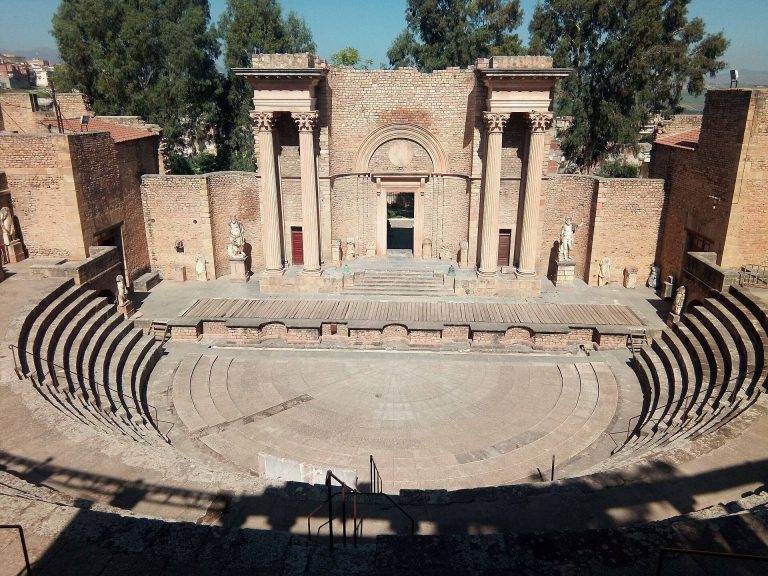
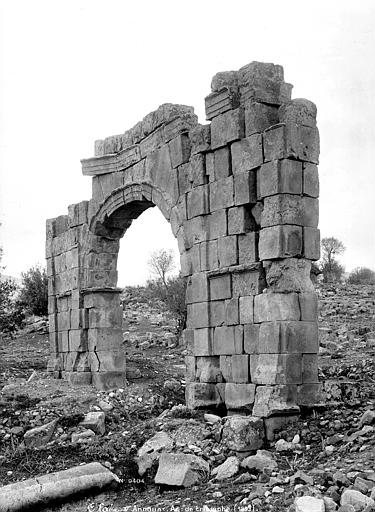
The surviving remains of the University of Madaure are ruins within an urban archaeological site that formed part of the Roman city of Madaure. The university stood on the remains of the earlier Numidian city, creating an archaeological landscape with both pre-Roman and Roman phases. The physical evidence therefore belongs to the wider ancient settlement as well as to the institution’s Roman setting.