Termonfeckin Castle: A Fortified Tower House in Ireland

Site at a Glance
- Rating
- 4.1
- Popularity
- Very Low
- Country
- Ireland
- Primary era
- Medieval
- Eras represented
- Medieval, Early Modern
- Civilizations
- Unclassified
- Site type
- Military
- Remains
- Castle
On this page8 sections
History
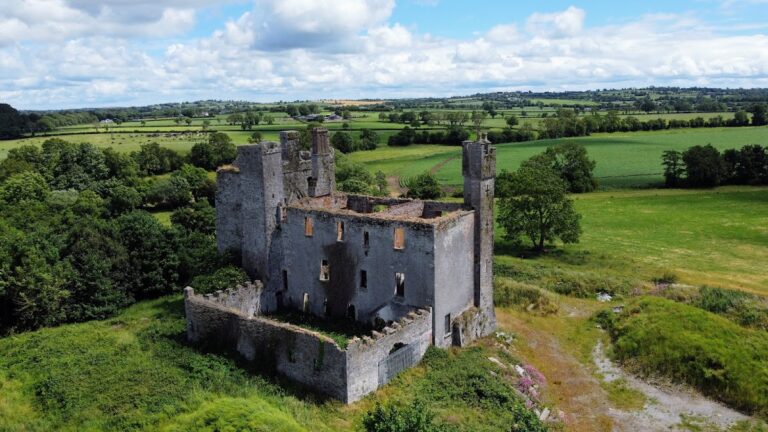
Termonfeckin Castle is a partly ruined fifteenth- or sixteenth-century tower house in Termonfeckin, Ireland, built as a fortified residence. Its exact construction date is uncertain. The village lies near Drogheda, and its Irish name, Tearmann Feichín, means “Fechin’s refuge.” The castle stands within a landscape associated with religious foundations dating back to the seventh century.
Early religious history
Saint Fechin Fóra founded a monastery at Termonfeckin in the seventh century. The settlement was raided several times during the medieval period, first by Vikings in 1013, then by an Irish clan in 1025, and later by raiders from the Kingdom of Brega in 1149.
An Augustinian monastery was established at Termonfeckin in the twelfth century. An Augustinian community followed the religious rule and institutional traditions associated with Saint Augustine. The foundation began as a male institution and later became a female one. Henry VIII dissolved it in 1540 during the Reformation, the sixteenth-century movement that challenged papal authority and reshaped Christian institutions under the English crown.
The castle and the archbishops of Armagh
Termonfeckin Castle was built approximately in the fifteenth or sixteenth century. Its later history was connected with the religious and political upheavals of Ireland. The nearby Primate’s Castle provided an additional residence for the archbishops of Armagh, including Richard Creagh. A primate is a senior archbishop with precedence among bishops in a particular church or region.
After the Reformation, several Protestant archbishops lived at the Primate’s Castle. The best known was James Ussher, who served as Protestant archbishop of Armagh from 1625 to 1656. Ussher left for England in 1640 and never returned to Ireland. Protestant churches emerged from the Reformation, which had separated the English crown from papal authority and transformed religious government in its territories.
Seventeenth-century damage and later survival
In 1641, during Oliver Cromwell’s suppression of the Irish rebellion, the castle was damaged. Cromwell was an English parliamentary military and political leader whose forces campaigned in Ireland during the seventeenth-century conflict. Captain Brabazon later restored Termonfeckin Castle.
Cromwell’s forces also destroyed the nearby Primate’s Castle in 1641. It was not rebuilt, and its ruins were demolished in 1830. Termonfeckin Castle survived in a partly ruined state and is recognized as a National Monument of Ireland.
Remains
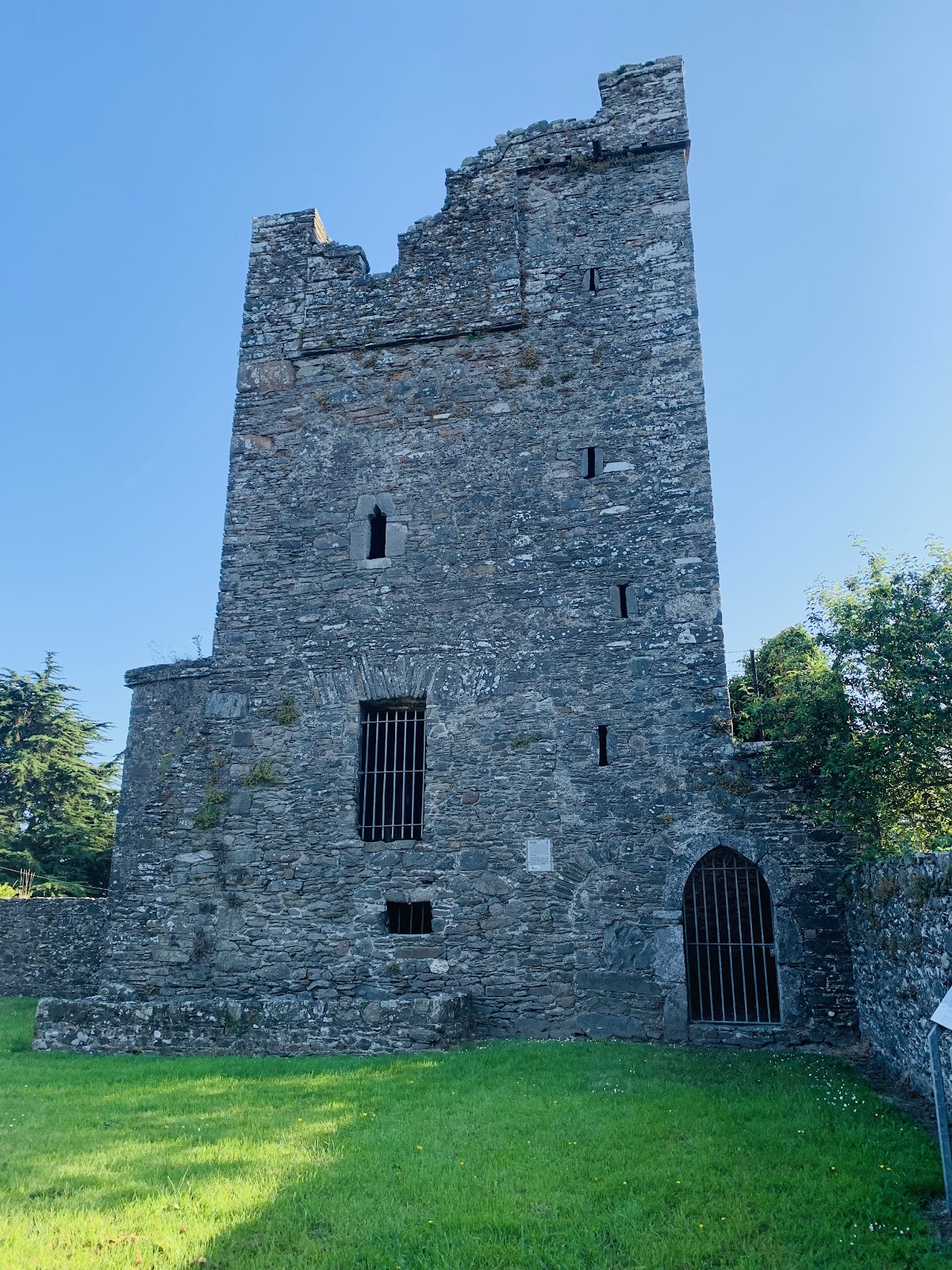
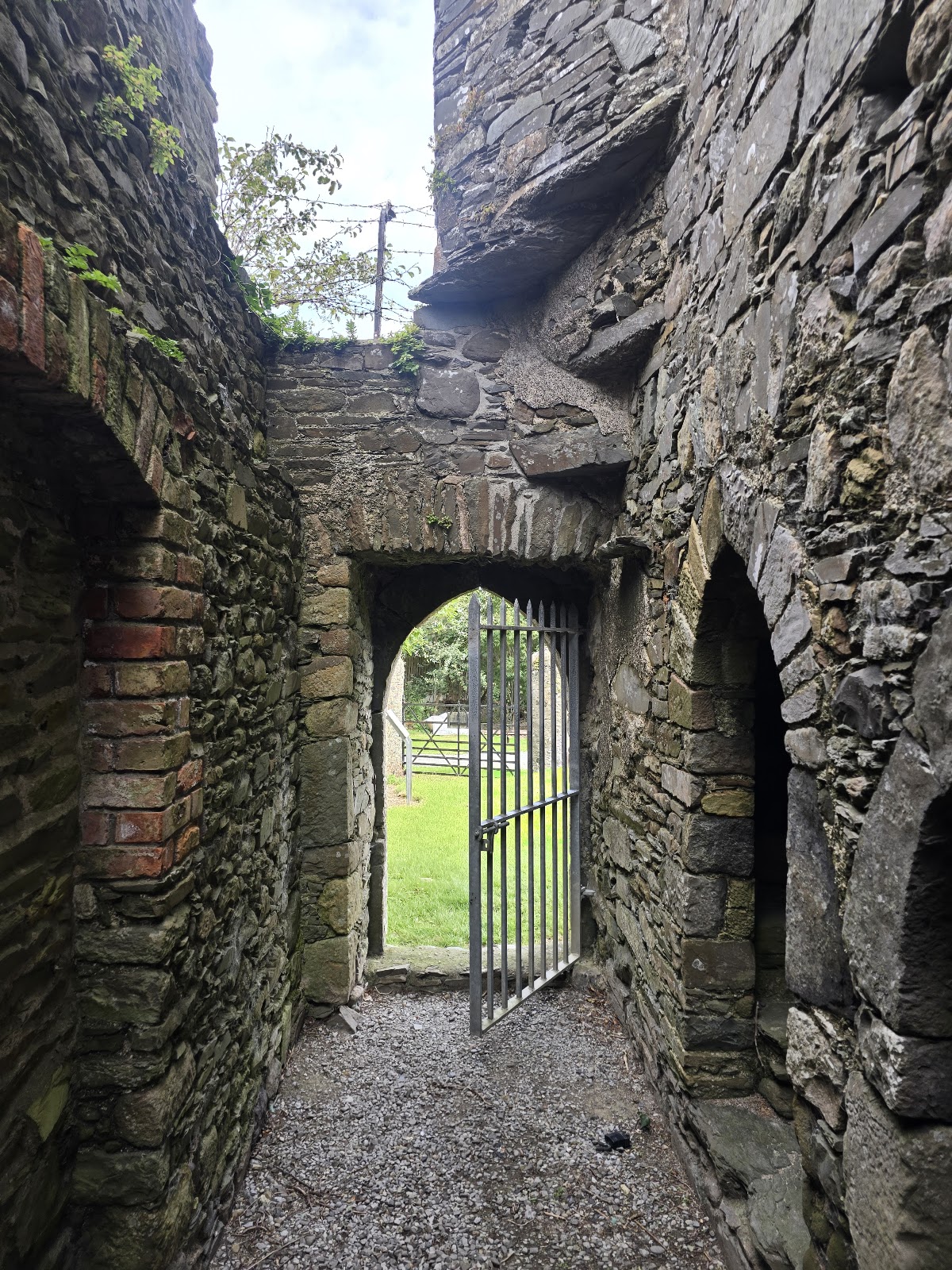
The surviving monument is a three-storey rectangular stone tower with defensive and residential features. Its layout includes an arched entrance, narrow loopholes, strengthened corners, internal stair access, vaulted construction, and an unusual stepped roof. The castle survives as ruins rather than as an intact building.
Fortified tower
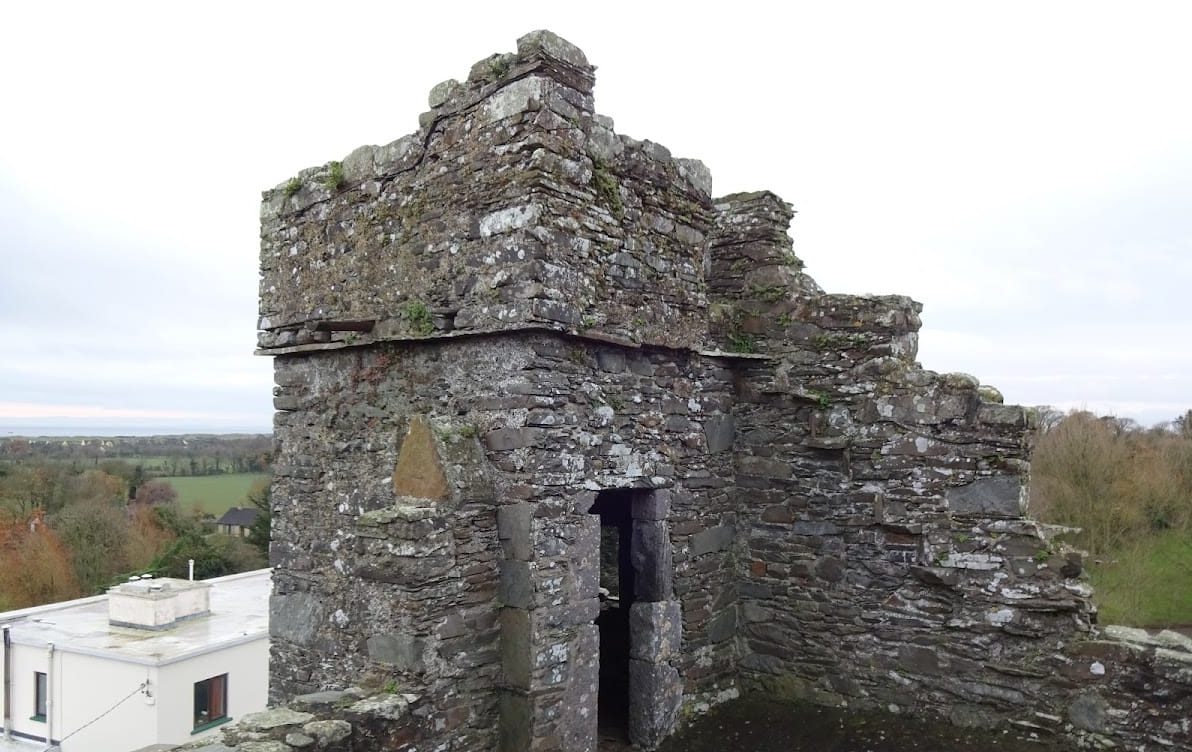
The building is a tower house, a fortified residential tower that combines domestic accommodation with defensive features. Its northern and southern corners are reinforced by watchtowers, while loopholes pierce the stone walls. An arched entrance provides access to the structure. A spiral staircase remains in the north-eastern corner and rises to the roof, and a very thin stone vault spans the second floor.
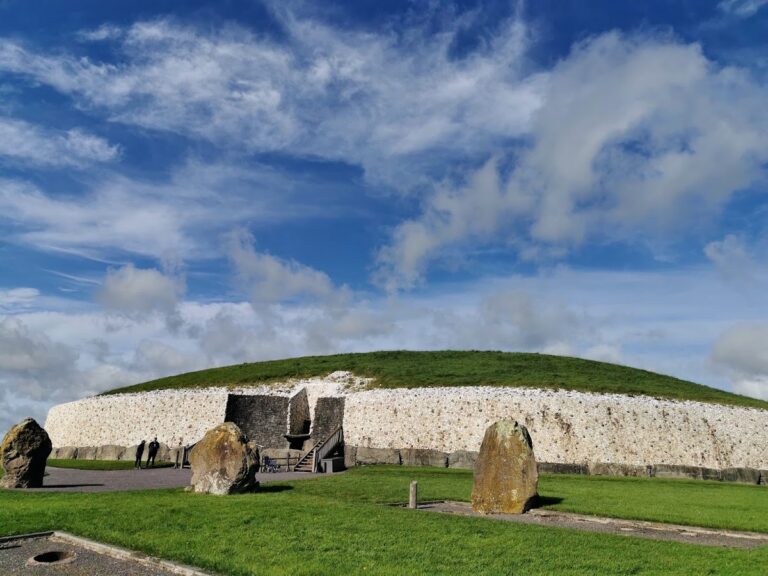
The roof has an unusual stepped form. A third-floor room has a roof constructed with a technique also used at Newgrange, a Neolithic passage tomb in County Meath known for its large stone structure and corbelled roof construction.
Cemetery monuments
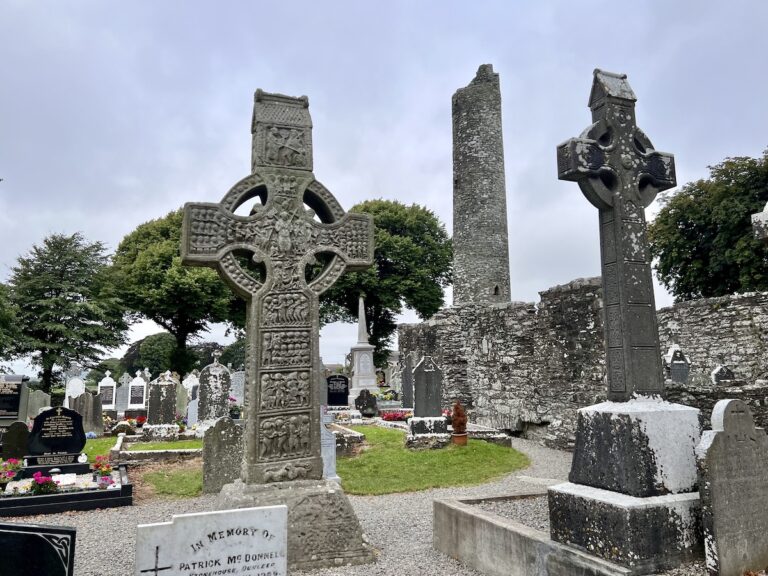
In the nearby cemetery of Saint Fechin is a ninth-century high cross. A high cross is a monumental Irish stone cross decorated with biblical scenes and interlaced or geometric ornament. The eastern face shows a winged figure above a Crucifixion, while the western face depicts Christ in Glory. Geometric Celtic ornament covers the remaining surfaces.
A nearby stone carries the inscription, “A prayer for Ultan and Duvach, who made this stone.” The wording connects the monument with the individuals named in the inscription and preserves a small piece of the religious landscape surrounding the castle.
An Grianan
Near the castle stands An Grianan, an eighteenth-century house. It was used as Ireland’s first educational institution for adults and later became a horticultural college. Its later educational functions form part of the continuing history of the buildings around Termonfeckin Castle.
Nearby sites