Ten Putte Abbey: A Monastery and Pilgrimage Center in Gistel
Site at a Glance
- Rating
- 4.6
- Popularity
- Low
- Country
- Belgium
- Primary era
- Modern
- Eras represented
- Medieval, Early Modern, Modern
- Civilizations
- Belgian, County of Flanders, Habsburg, Habsburg Spain, Spanish
- Site type
- Religious
- Remains
- Monastery
On this page15 sections
History
Ten Putte Abbey is a monastic house in Gistel, Belgium, founded between 1137 and 1171 and closely associated with the veneration of Saint Godelieve.
Origins and traditions
The abbey’s earliest historical records date to the 12th century. Tradition places Godelieve’s murder at the site in 1070, carried out by agents of her husband, Bertolf of Gistel. A separate tradition connects the location with an 11th-century castle and an early monastery.
A foundation story names Edith, a daughter of Bertolf’s second marriage, as the first abbess. It says she was born blind and regained her sight after washing her eyes with water from the pond. The story is uncertain, and another tradition holds that Godelieve and Bertolf’s marriage was never consummated. A further legend tells how Godelieve, guarding a grain field, ordered crows into a barn during Mass. The tale accounts for her association with crows and the bird imagery linked to the abbey.
Attack, pilgrimage, and exile
On 12 October 1578, the Forest Beggars attacked and devastated the abbey during the religious conflicts in Flanders. These rebel groups were active in the Low Countries during the Dutch Revolt. The nuns fled to Bruges, where they established a new monastery in Boeveriestraat in 1623 under Abbot H. van den Zype.
The church at Gistel was restored in 1614 and 1615, and the site became a busy pilgrimage destination. Visitors came particularly in July for Saint Godelieve’s feast day, using water from the well to moisten their eyes in prayers for healing and seeking the saint’s intercession. Although the community had moved to Bruges, it retained the Gistel estate until shortly after the French Revolution began in 1789.
Return and renewed community
In 1815, the estate passed to Louis Joseph Bortier after the forced sale of the assets of Count Anselme de Peellaert, who had acquired it as national property. Bortier arranged repairs to the deteriorated chapel, and his heirs made further repairs, but the wider complex remained in poor condition. The remaining farm buildings, chapel, and lands were sold in 1889. Nuns returned from Bruges in 1891, 313 years after the attack, under Abbess S. Van de Velde. Bishop Johan Joseph Faict consecrated the new monastery buildings on 2 July that year.
The community was re-established as a priory in 1891, meaning a monastic house led by a prior or prioress, and recovered its abbey title on 8 November 1934 under P. de Keuster. Extensive building work followed from 1952 to 1958. A museum devoted to Godelieve and her long veneration was established within the grounds in 1987, and the abbey is protected as a Flemish historic monument.
Before 2007, nine Benedictine nuns lived at the abbey as members of the Subiaco Cassinese Congregation. Benedictines follow the Rule of Saint Benedict, a guide to communal monastic life. In 2007, members of the Mother of Peace community took up residence. Founded by Father Bernard Debeuf in 1992, the community was recognized by the Bishop of Bruges in 1998 as a public association of the faithful and became a congregation of diocesan right in 2007, under the authority of the local diocese. Its spirituality centers on Mary and Christ, and its members wear blue habits.
Remains
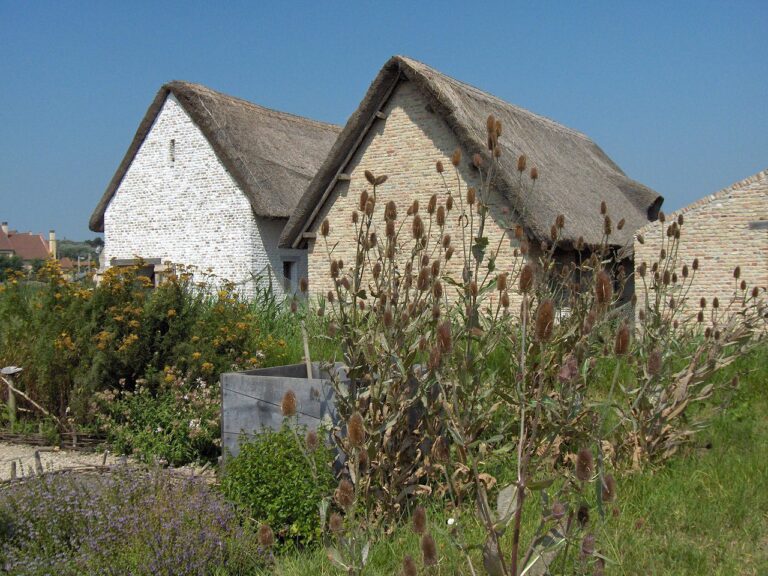
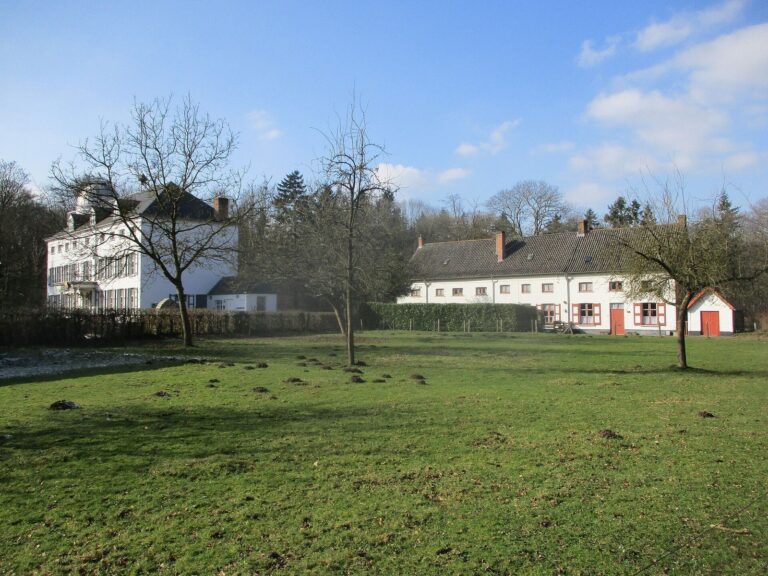
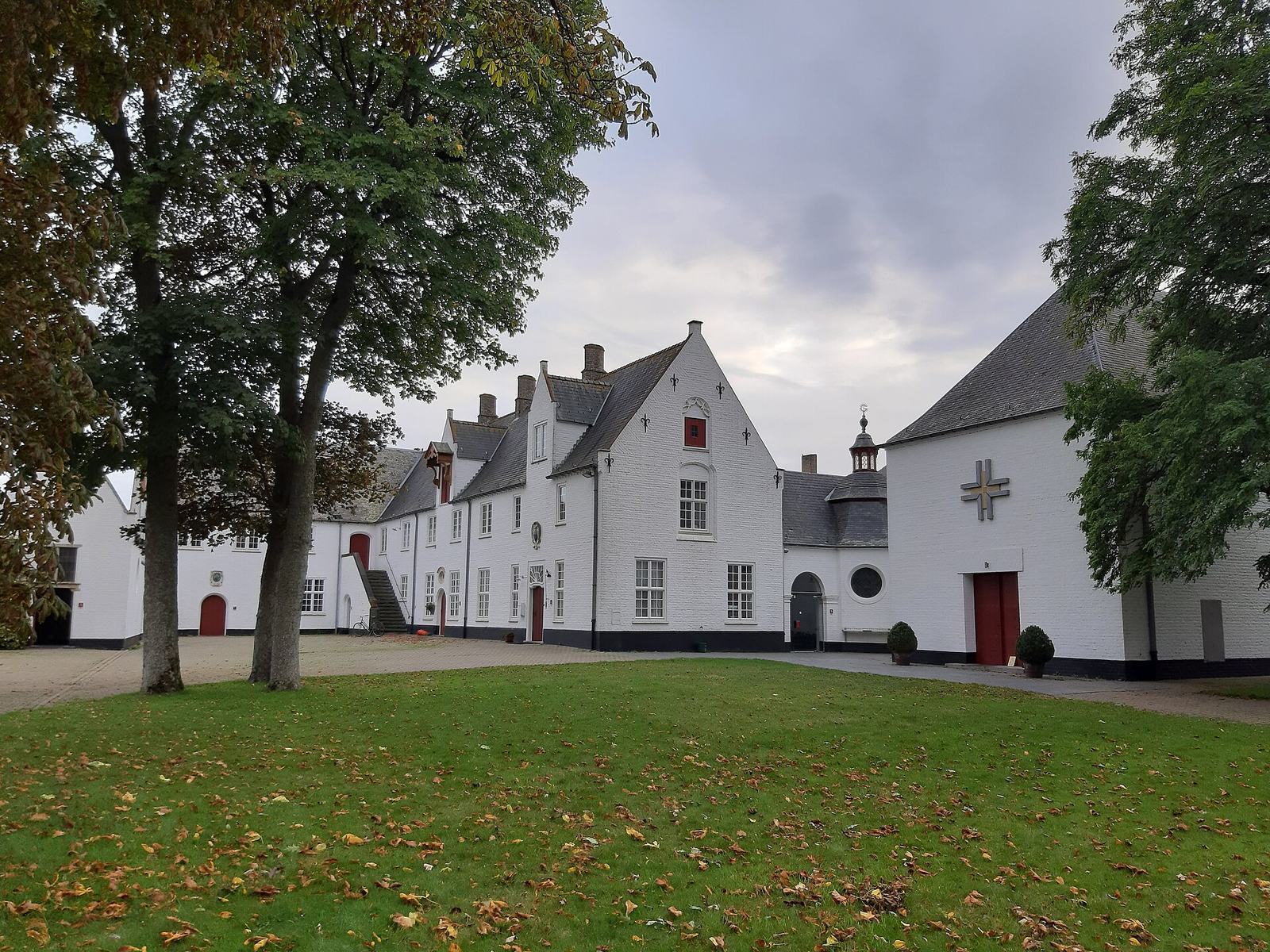
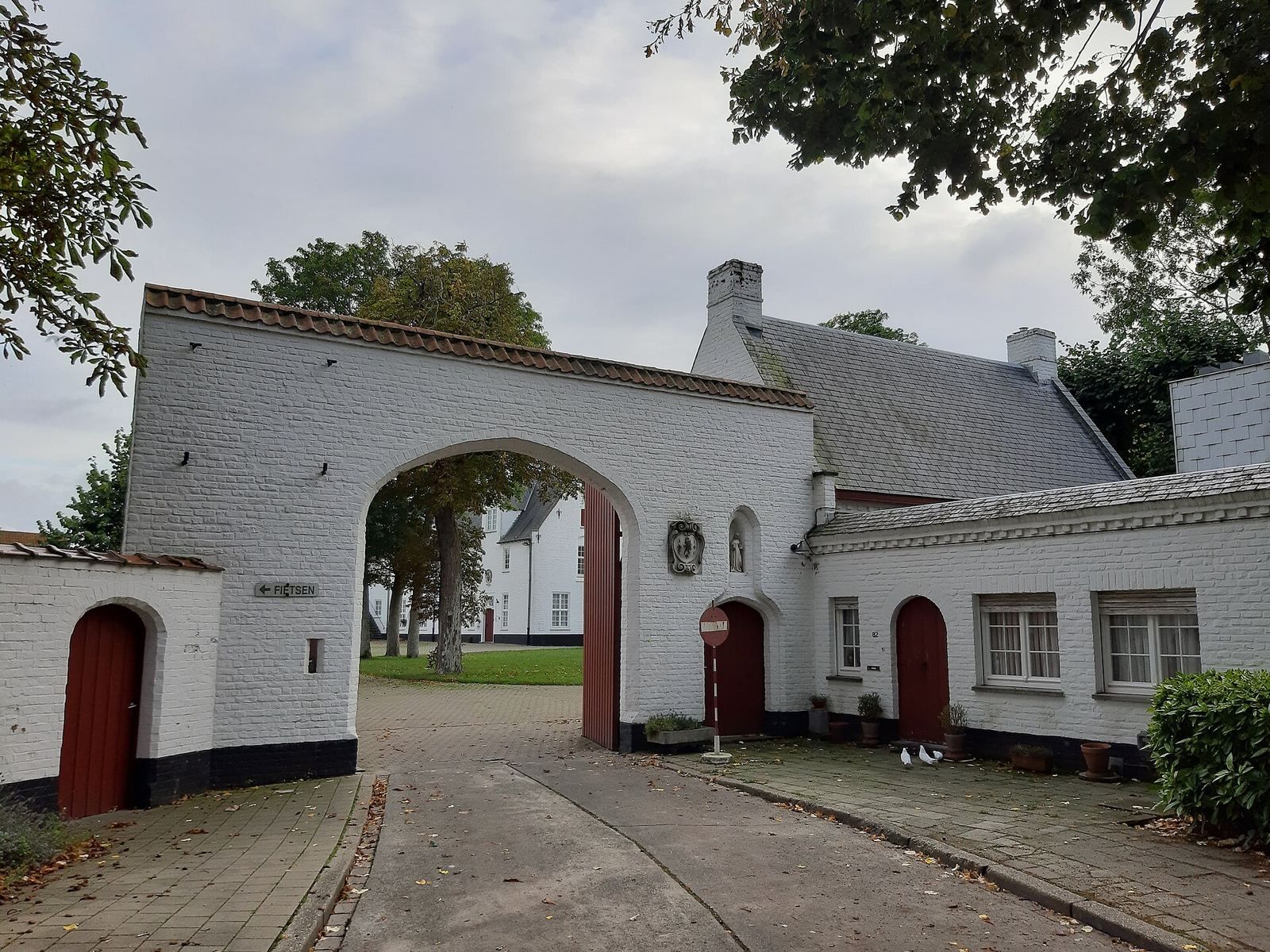
The abbey occupies a walled compound of white buildings and a garden at the boundary between the Houtland, the sandy inland region of West Flanders, and the Polders, low-lying lands reclaimed and managed for agriculture.
Church and earlier fabric
Abbey church
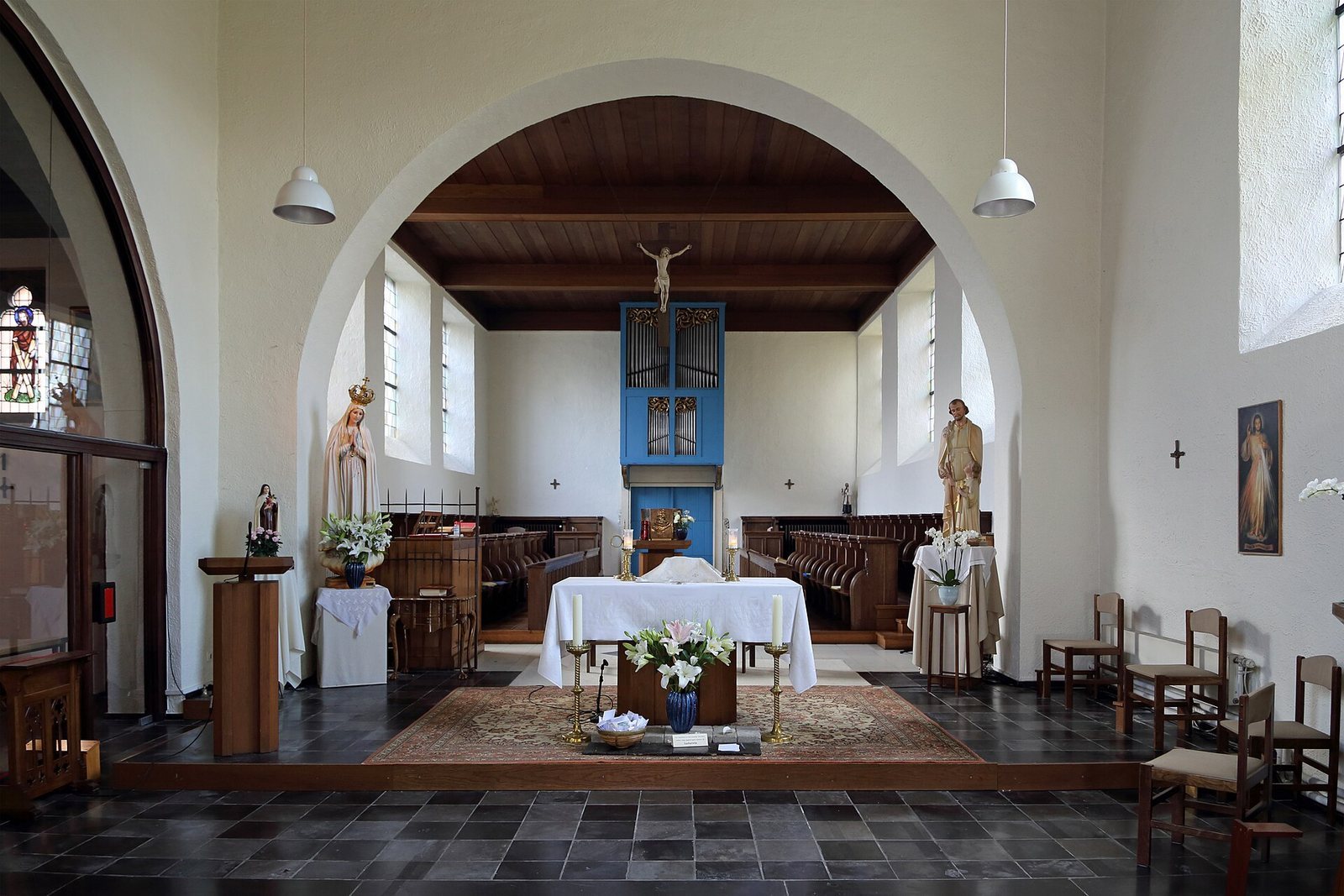
The abbey church stands within the compound. It was restored in 1614 and 1615, then renovated again before Bishop Emiel-Jozef De Smedt consecrated it on 26 June 1962.
Late-medieval tower
A shell of a small tower dating to the late 14th century was retained when the monastery was rebuilt in 1891. It survives as a remnant of the earlier complex.
Godelieve memorials in the garden
Miracle well
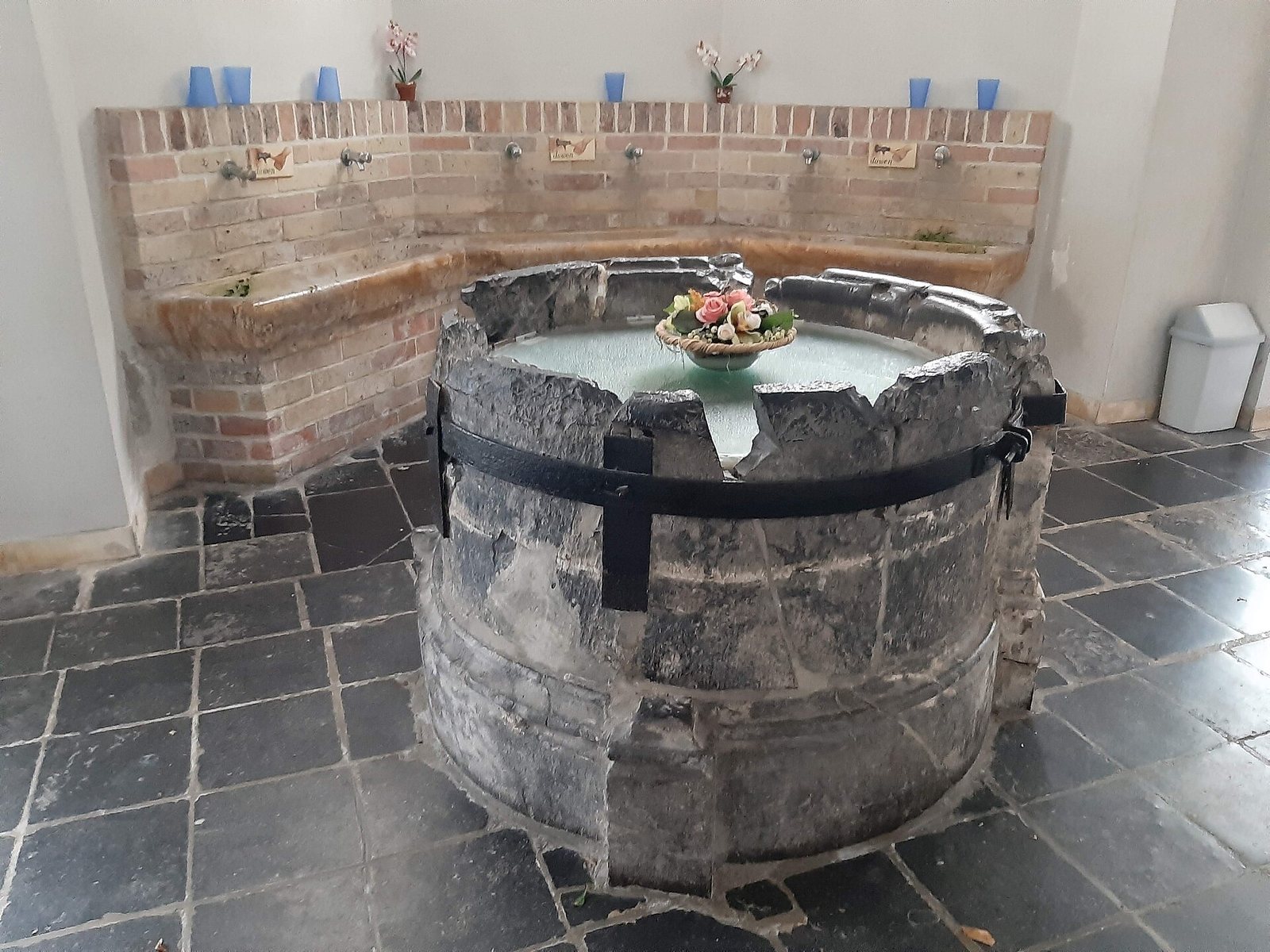
A small, domed structure encloses the miracle well, which dates to 1634. The well stands at the location associated with the pond into which Godelieve’s body was thrown.
Memorial plaque
A plaque in the garden marks the place where Godelieve was strangled and her body cast into the pond.
Motte and Crow’s Hill chapel
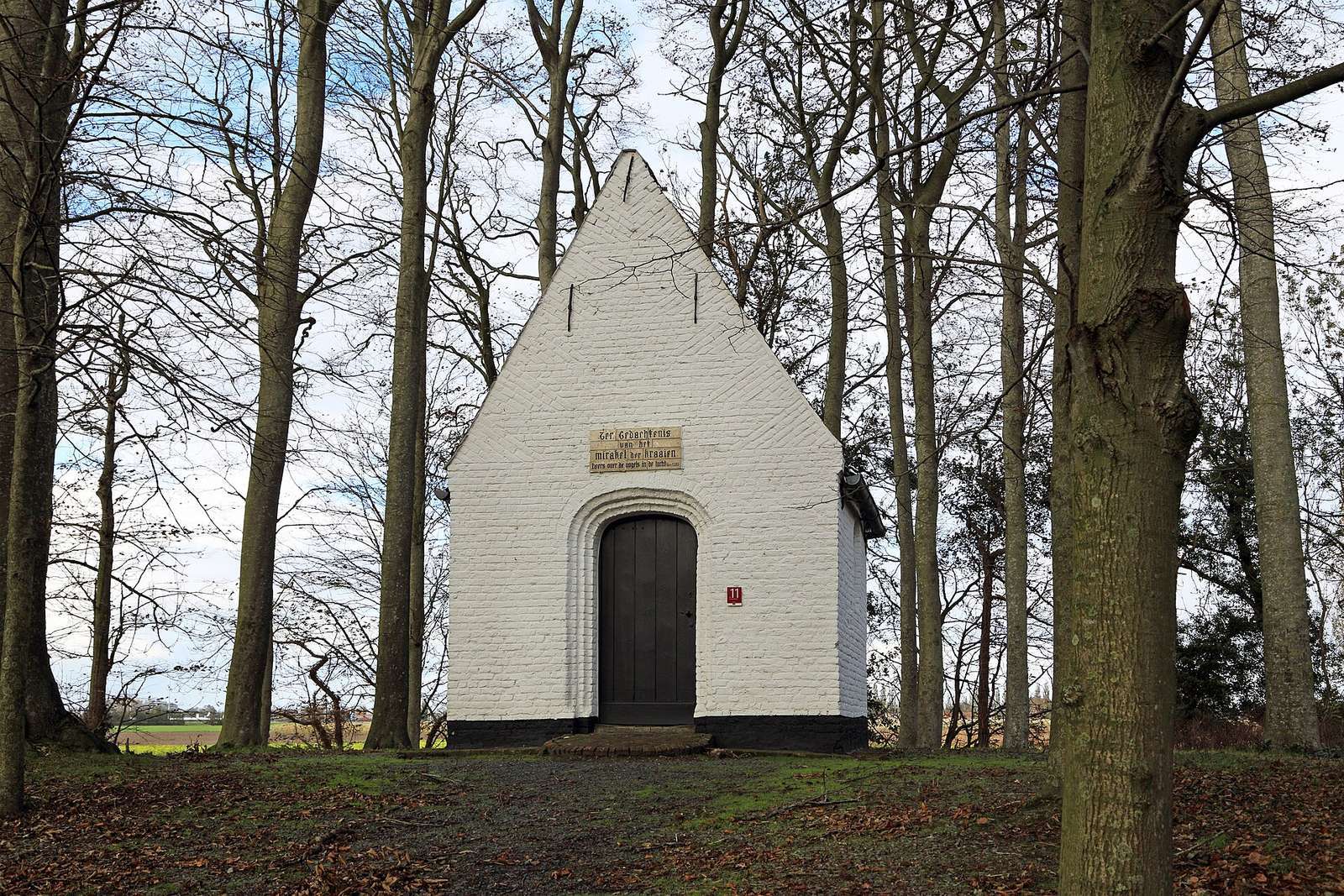
At the rear of the garden, the Godelieve motte is a small mound probably dating to the 11th century. A motte is a defensive earth mound surrounded by a ditch and topped by a tower, which could also serve as a residence for a castle lord. A chapel built on the mound in memory of the crow legend gives the place its other name, Crow’s Hill. Its gable bricks are arranged in a dovetail pattern.
Other chapels and the museum
The shirt chapels
A chapel in the courtyard, opposite the church, has housed an old seamless shirt since 1896. The garment is associated with another Godelieve legend. The Little Sewing Chapel on Abdijstraat, about half a kilometre from the abbey, also commemorates that story.
Godelieve museum
The museum within the abbey grounds presents the history of Godelieve, Gistel’s patron saint, and the long history of her veneration through documents and visual displays.