Walraversijde: A Medieval Fishing Village on the Belgian Coast
Site at a Glance
- Popularity
- Medium
- Country
- Belgium
- Primary era
- Medieval
- Eras represented
- Classical, Medieval, Early Modern
- Civilizations
- County of Flanders, Duchy of Burgundy, Roman
- Site type
- Settlement
- Remains
- Village
On this page22 sections
History
Walraversijde was a medieval fishing village near Ostend, Belgium, on Testerep, a former coastal island. It was occupied in two main phases: a beach settlement from about 1200 to 1400, followed by a village on reclaimed land from about 1400 to 1600.
Early settlement and coastal change
People lived in the area as far back as the Neolithic and Bronze Age, when nomadic hunters and fishers used the coast. Saxon settlement on higher ground began in the eighth century, and residents farmed and raised sheep. An early medieval hamlet developed behind the dunes. From the tenth century, the counts of Flanders expanded their estates across Testerep’s marshes and built dikes inland. Permanent reclamation of the coastal plain began around 1150.
The first Walraversijde settlement stood near the beach. On 22 January 1394, the St Vincent’s flood broke through the dune belt and inundated Testerep. The dunes had been poorly maintained and weakened by rabbit burrows, leaving the settlement exposed. Residents abandoned it and rebuilt farther inland. In 1399, John the Fearless, Duke of Burgundy, ordered a coastal dike, known as Count John’s Dyke, behind which the new village gradually developed.
Fishing, trade and maritime conflict
The village’s first known written mention dates to 1357, in the form Walravens Hide, interpreted as Walraf’s landing place. Fishing, sheep raising and trade supported its residents, and some also took part in piracy. Their trading connections reached northern Scotland. Herring was a major catch and food source. From the early thirteenth century, the Hanseatic League, a network of northern European trading towns, monopolized the trade in barrel-salted herring. Around 1420, Flemish fishers gained the right to produce it too, opening a wider inland market. They also caught cod and flatfish. Women gathered mussels and crabs, while shrimp may have been caught in shallow water using horse-drawn nets.
Walraversijde had about twenty fishing boats, usually crewed by thirteen to twenty people each. Captains owned their vessels and nets, while fishers initially worked independently and shared profits. With no local market, intermediaries sold the catch. Some captains became fish merchants and financiers. Later in the fifteenth century, merchants invested in larger vessels for offshore fishing grounds such as the Dogger Bank. As those investors gained control, more independent fishers became wage workers.
Fishers sold their catch in England and returned with coal, grain, tin and cloth. Residents also piloted Spanish merchant ships to Bruges. Piracy affected the community in both directions: Walraversijde fishers faced accusations of attacking ships, but pirates also targeted them. Around 1460, French pirates from Honfleur and Dieppe killed many local fishers. Those working abroad could face imprisonment or retaliation for attacks blamed on people from their village.
Between 1383 and 1413, English and Flemish fishing and trading vessels took part in privateering, state-authorized maritime raiding, under the supervision of the admirals of the Count of Flanders and the Duke of Burgundy. Walraversijde fishers participated and were warned not to plunder or damage ships without the duke’s orders. During the fifteenth century, they also supplied vessels for the ducal fleet and guard boats for fishing fleets.
The village reached a high point around 1465 and became one of the region’s important economic and political communities. Its population may have numbered 500 to 600, with roughly half away at sea at any given time. The conflict between Louis XI of France and Charles the Bold, Duke of Burgundy, from 1465 to 1477 drew the fishers into military service. They had to provide ships and sailors to protect the Flemish fleet, and eventually had to buy an expensive warship armed with a small cannon. Fishing fleets then sailed in convoys guarded by warships. A later Flemish civil war, in which Ostend and Nieuwpoort supported opposing sides, brought further hardship.
Decline and abandonment
During the war that began in 1483 between Maximilian and the towns of Bruges and Ghent, regional fighting ruined and emptied Walraversijde’s eastern quarter. Drifting dunes and the closure of the village brewery added to its difficulties. In July 1489, forces supporting Maximilian I, led by Nieuwpoort’s captain Daniel van Praet, plundered and burned Ostend. Walraversijde’s decline continued: some houses were already dilapidated by about 1510, and parts of the village had been deserted by 1534. The capture of Ostend by English and Dutch forces in 1548 brought further destruction.
The Eighty Years’ War, a long conflict between Habsburg Spain and Dutch rebels that began in 1568, brought more violence to the coast. Dutch rebel privateers known as the Sea Beggars blockaded coastal ports, while mercenaries looted the area. In 1571, dikes around Ostend were breached in an attempt to defend the town. The surrounding region, including Walraversijde, remained flooded and uninhabitable for eleven years, and the area was still devastated in 1598.
After the Battle of Nieuwpoort on 2 July 1600, the army of Maurice of Nassau, Prince of Orange, damaged the area while retreating toward Ostend. During the Siege of Ostend from 1601 to 1604, Spanish cavalry used the remaining village houses as quarters. Walraversijde ceased to function as a fishing community. A map from 1628 shows fields where the settlement had stood. Its church fell into disrepair and became a barn; the tower remained as a navigational beacon until it disappeared in the nineteenth century.
Archaeology and interpretation
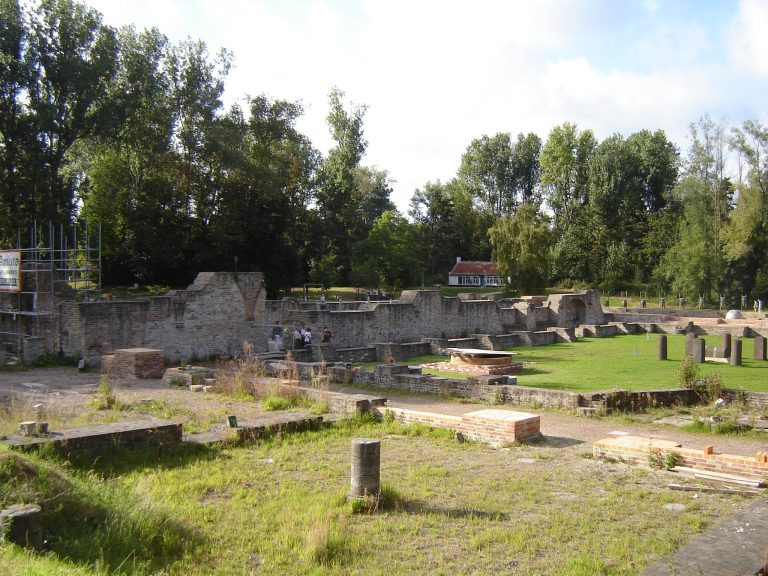
Some remains of the beach settlement were investigated around 1950. Systematic archaeological work began in 1992 behind the dunes in the Raversijde provincial estate, led by archaeologist Marnix Pieters. The excavations revealed rich evidence of daily life, fishing and trade, as well as weapons and well-preserved remains. The Province of West Flanders developed a museum to present the findings; it opened in 2000. In 2020, foundations belonging to an eighteenth-century chapel tower were uncovered during the demolition of a barn. The chapel had been destroyed on 15–16 June 1944.
Remains
The archaeological site contains two related settlement areas, an earlier beach community behind a dune belt and a later, closely built village on a polder, low-lying land reclaimed from water and protected by dikes. The beach settlement’s houses stood in small, loosely arranged groups, while the later village had at least about one hundred closely spaced houses. Brick was the main building material in the later settlement.
Beach settlement and Roman-period remains
Beach settlement
The earlier settlement’s houses were arranged in small, loose clusters. The largest measured about 7 by 12 metres. Foundations and peat workings from the beach settlement were once visible at low tide, before later breakwater construction covered them with sand.
Roman-period dike and activity
A Roman-period dike, dating from the first to the third centuries, was about 12 metres wide and reinforced with peat. Other remains of activity from this period include a salt-working installation, pits dug to extract peat and red-gloss Roman pottery.
Later village layout and housing
Houses
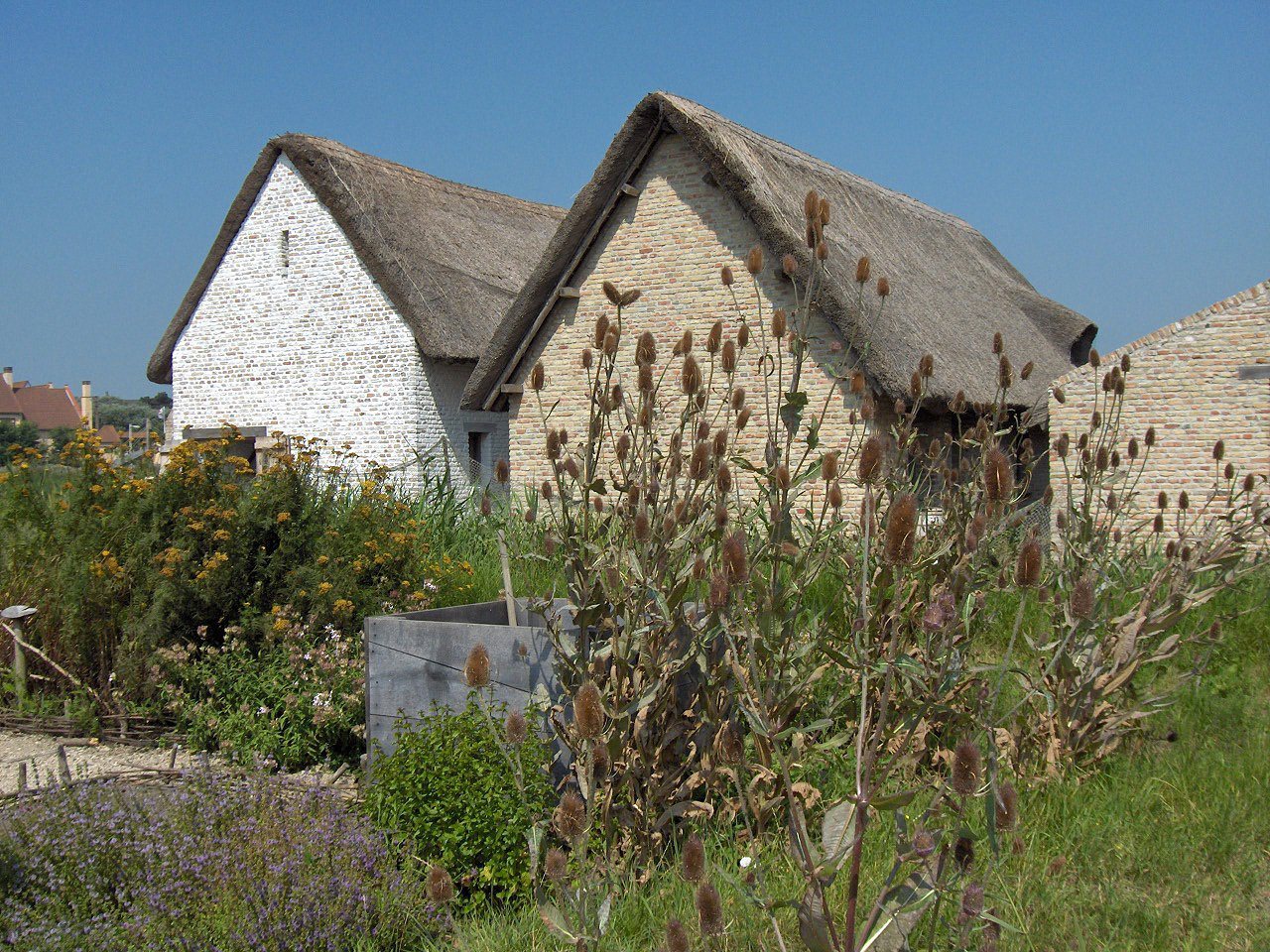
The later village’s houses ranged from 3.7 to 8.8 metres wide and 12.4 to 17.5 metres long. Some covered about 100 square metres, and a few approached 150 square metres. Most were built of brick, sometimes plastered inside and out. Floors were made of brick paving, clay covered with sand or compacted earth. Roofs were thatched with reeds, straw or galingale, a wetland plant used for thatching. Some houses had glass windows. Domestic fittings included brick wells and latrines, underground cesspits and at least one costly cesspit with a curved brick ceiling.
Community buildings and church
Workplaces and shared buildings
Community and work areas included a brewery, a mill and places for making rope. A gaming house also served as a brothel.
Church of St John the Baptist
Built in the early fifteenth century, the church was dedicated to John the Baptist, whom Christians regard as the forerunner of Jesus. It had three aisles, with a central space flanked by two side aisles. Its low Gothic tower had a flat roof used as a lookout and a navigation beacon. The tower’s construction was similar to that of the Church of Our Lady of the Dunes in Mariakerke.
Museum reconstructions
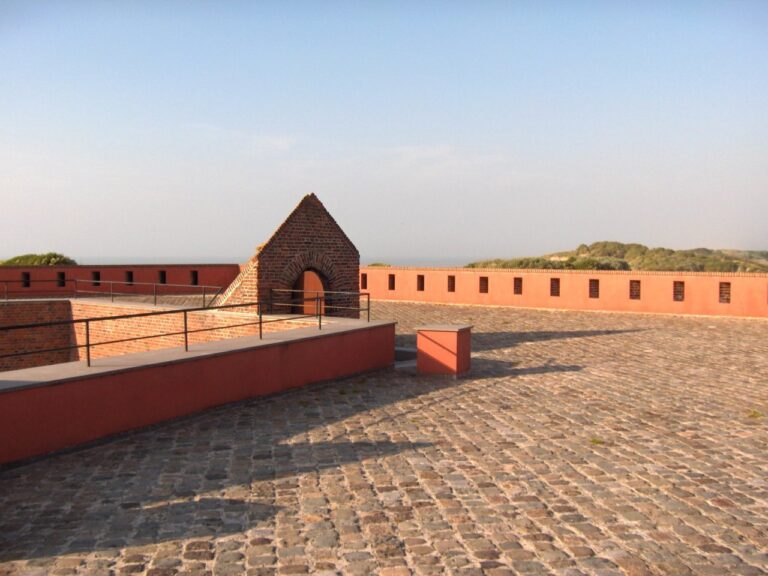
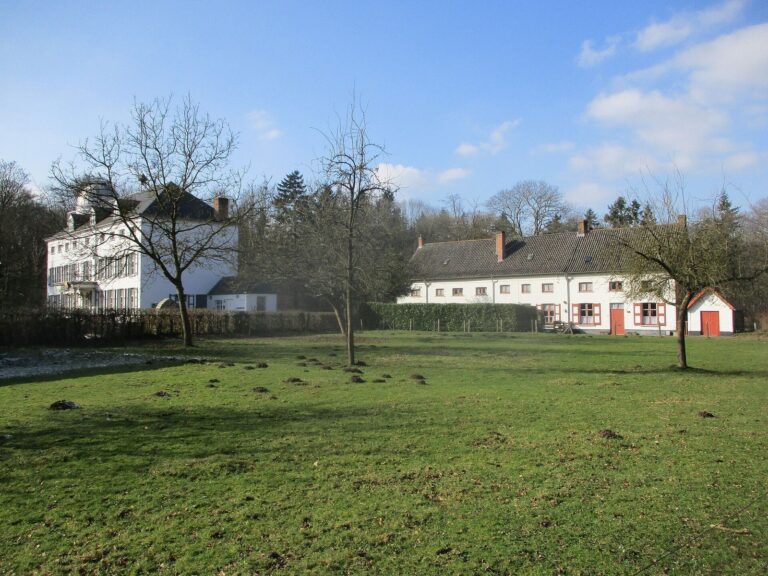
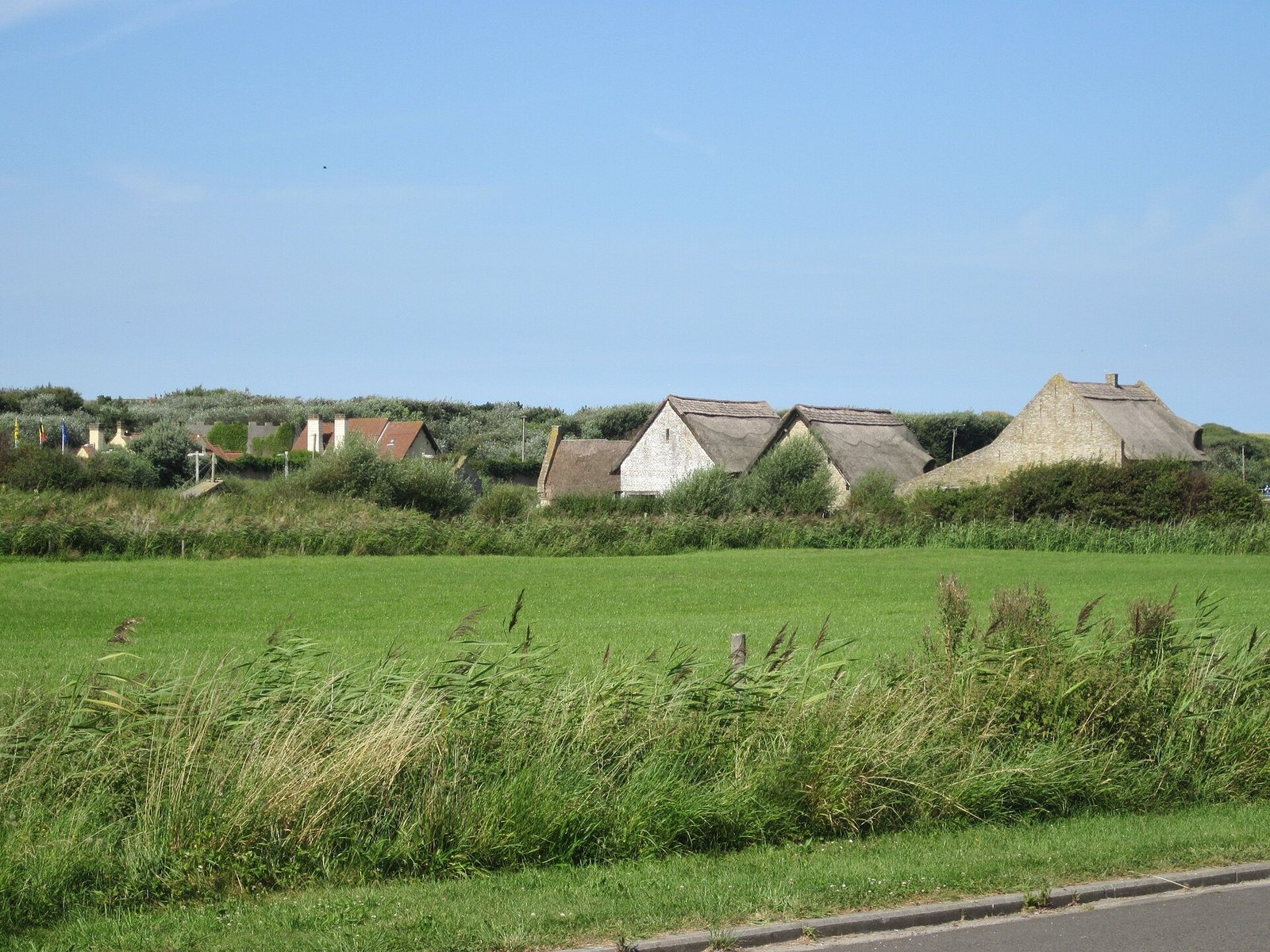
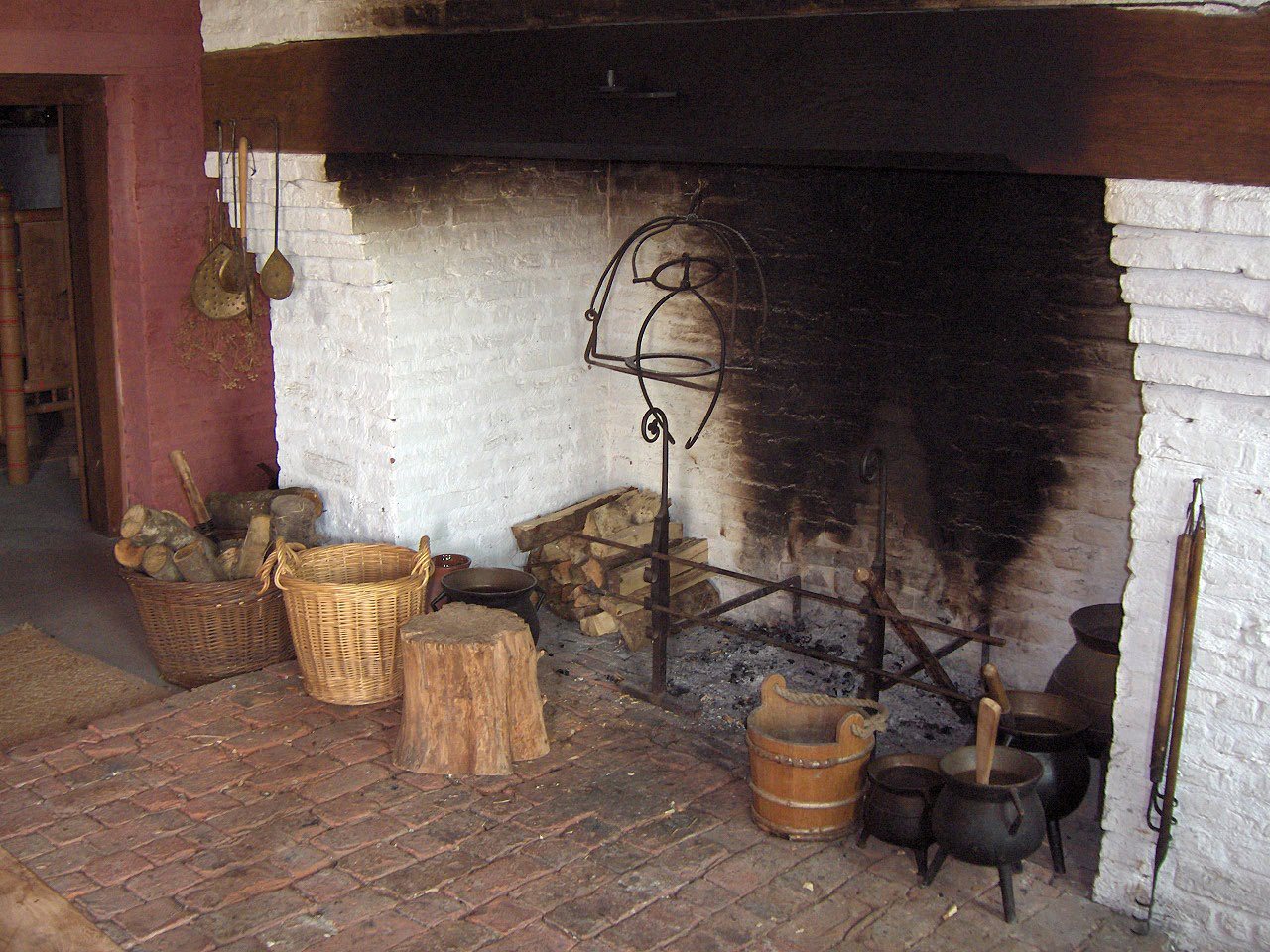
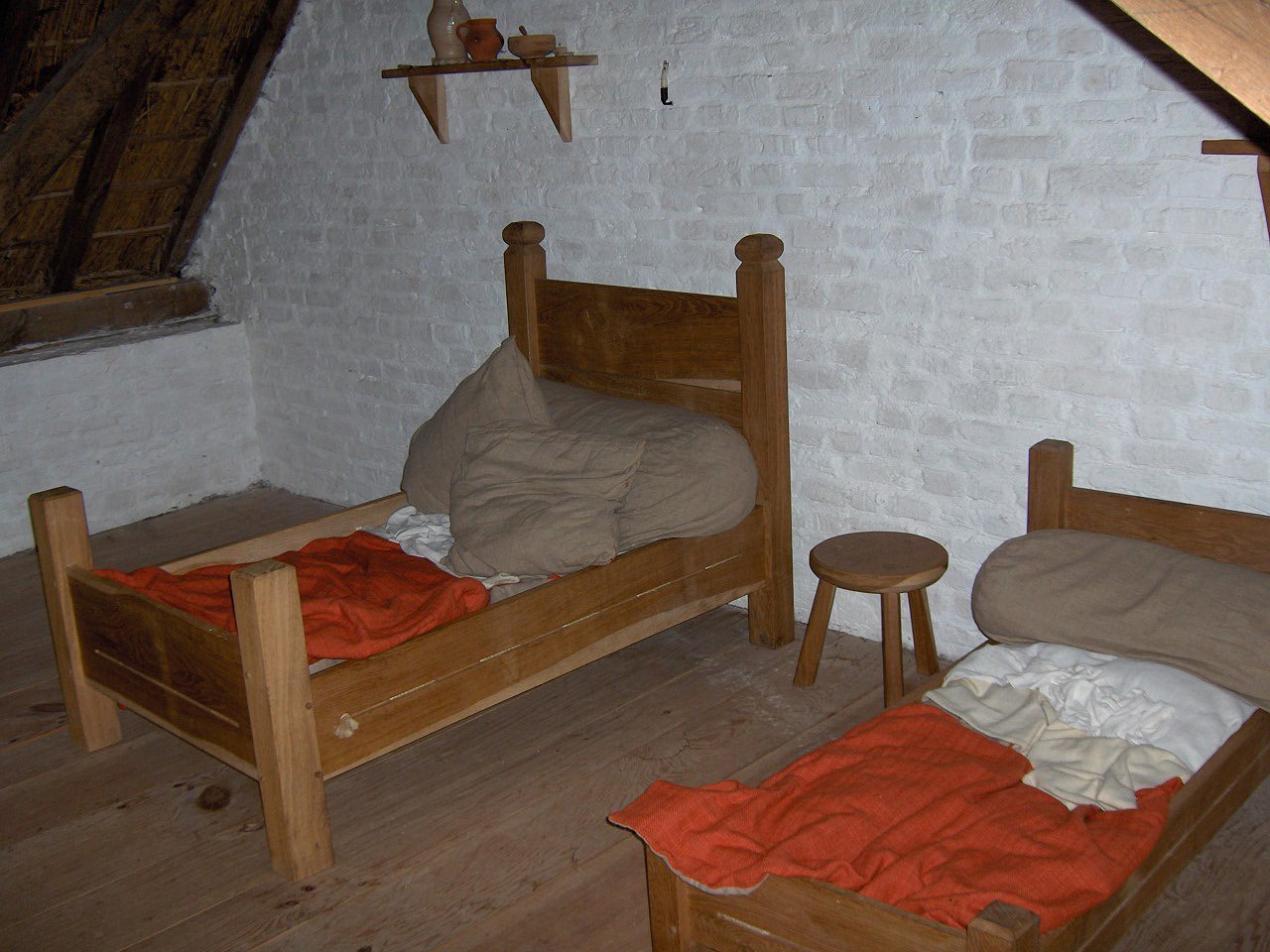
Several reconstructed buildings present the village as it may have looked around 1465. Their brickwork uses material recovered at the site, while furnishings and fittings draw on excavated objects, replicas, paintings, miniatures and illustrated manuscripts. A bakery and a smokehouse are also part of the reconstructed group.
Shipowner’s house
The reconstructed shipowner’s house is a large dwelling. Its fittings include glass windows, a decorated chest, a strongbox, a dish cupboard, formal chairs and a table with a writing tablet. Wax-tablet notebooks, reusable writing surfaces, wool-and-linen wall coverings and a canopy bed help furnish the interior.
Fisher’s widow’s house
In the reconstructed home of a fisher’s widow, willow-twig grilles and wooden shutters cover the windows. The furnishings include a simple table, a barrel chair, wooden bowls and spoons, round chopping boards, red pottery, a knife with a bone handle and a linen tablecloth. The bed is placed beneath the stairs.
Fish-smoker’s house
The fish-smoker’s house includes painted fabric made to resemble a wall hanging. A high bed stands in a built-in alcove, with a storage step at its foot. A child’s bed and a rattle are nearby.
Archaeological finds
Fishing and personal equipment
Finds connected with fishing include wooden and bone netting needles, floats made from cork or wood, and weights of lead, brick or natural stone. Weighted lines with iron hooks also survive. Cannonballs, ordinary and kidney-shaped daggers, and crossbow parts show the presence of weapons. Reconstructed fishing equipment includes nets and drying racks. Fishers’ waterproof clothing was made from striped linen sailcloth treated with oil.
Trade goods, coins and writing equipment
Imported objects include an African ivory comb, black pepper from South India, salt-glazed stoneware from the Rhine region, and Spanish tin-glazed earthenware with metallic gold decoration. Other finds include paradise grains, cloves, pomegranates, cast-bronze candlesticks and luxury ceramics.
A hoard found in 1999 contained 211 high-silver double-groat coins, a medieval denomination worth two groats, from the period of Louis of Male, Count of Flanders. They were probably minted between 1373 and 1380. A gold coin bearing the image of Conrad III von Dhaun, Archbishop of Mainz, probably dates to 1411–1434 and was found in the shipowner’s house. A bone eyeglass frame from the site suggests that some residents may have been able to read, write and keep commercial records.
Eighteenth-century chapel tower
The foundations of the chapel tower discovered in 2020 measure 5.17 by 5.44 metres.