Tel Motza Temple: A Judahite Sanctuary near Jerusalem
Site at a Glance
- Popularity
- Medium
- Country
- Israel
- Primary era
- Iron Age
- Eras represented
- Stone Age, Iron Age
- Civilizations
- Israelite
- Site type
- Religious
- Remains
- Temple
On this page9 sections
History
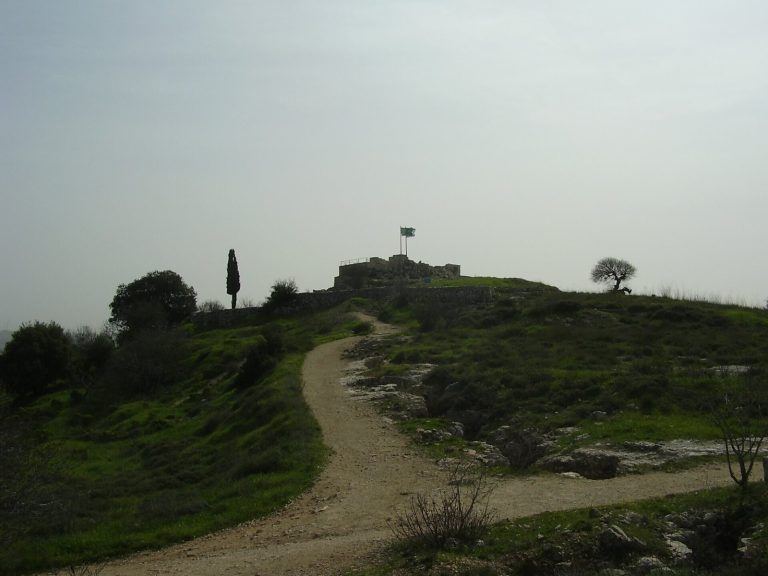
The Tel Motza temple is a ninth-century BCE sanctuary at Motza, on the outskirts of Jerusalem, Israel, built during the Kingdom of Judah. It appears to have operated alongside Jerusalem’s First Temple, making it a rare archaeological site from the First Temple period, the era associated with Jerusalem’s ancient temple and traditionally linked to Solomon.
Religious life in Judah
The sanctuary’s ritual vessels date to the early ninth century BCE, before reforms associated with Hezekiah and Josiah, later kings of Judah, centralized religious practice in Jerusalem. Researchers have interpreted the finds as evidence of both Judahite worship and practices they classify as idolatrous. The possible presence of Baal, a Canaanite deity associated especially with storms and fertility, has also prompted the view that religious life in Judah differed from the later Bible’s portrayal of monotheistic Judaism.
One hypothesis identifies the sanctuary with the House of Baal mentioned in the biblical Book of Kings. Under this proposal, Judahite king Jehoram, his son Ahaziah, or Jehoram’s wife Athaliah may have built it. Its position near Jerusalem but away from the main ridge route has been suggested as a way to make the sanctuary accessible to the king and Baal worshippers while limiting opposition from the city. The same hypothesis proposes that, after the House of Baal was destroyed, the building was put to another use and later returned to ritual activity at local high places, or cult sites outside a central temple.
Excavations and later interpretations
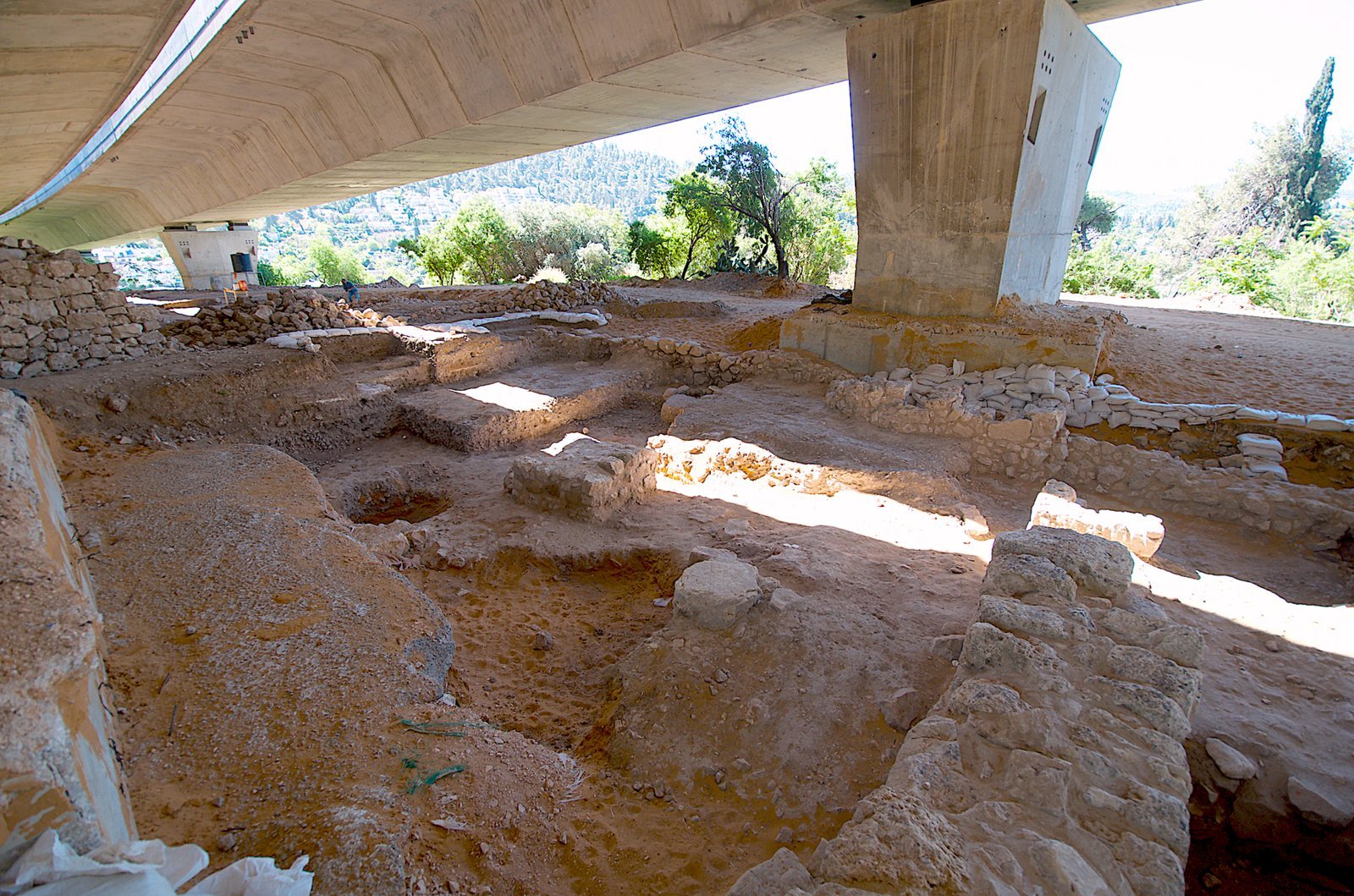
Three excavation seasons between 1993 and 2003 revealed settlement remains from Iron Age IIA. Work prompted by the upgrading of Highway 1 exposed the temple in 2012; excavation continued through 2013 and resumed in 2019. The Israel Antiquities Authority carried out the work, with temple excavations led by Shua Kisilevitz, Zvi Greenhut, and Anna Eirikh-Rose. The older occupation area near the temple precinct was excavated before it was due to be covered by Highway 16 in 2019.
Following the renewed work in 2019, archaeologist Oded Lipschits proposed that Motza was the biblical town of Kiriath-jearim, challenging its traditional identification with another location dating to the Byzantine period.
Remains
The temple precinct
Main temple
The temple was a large public building, at least as large as the temple traditionally associated with Solomon, and shared architectural similarities with Jerusalem’s temple. It survived the destruction of Jerusalem’s First Temple. A wide entrance in its wall faced east. This orientation has been interpreted in relation to ancient Near Eastern temple traditions in which the rising sun illuminated an object inside, representing divine presence.
Storehouses and silos
Storehouses and silos stood alongside the public building. These remains belong to Iron Age IIA, an archaeological phase of the Iron Age in the southern Levant.
Ritual objects and animal bones
A cache found near the altar contained pottery vessels, chalices, and small ceramic figures of men, horses, and other animals. The vessels date to the early ninth century BCE. Animal bones from the site have cut marks that may indicate sacrifice; analysis found that they came only from animals permitted under Jewish dietary law.
Earlier settlement
Much older occupation in and near the temple area includes building remains, figurines, and bones of domesticated animals dating to about 7000 BCE. A settlement dated to 7100–6700 BCE comprised more than 20 building complexes and contains the earliest known use of dolomitic lime plaster, a plaster made with dolomite-rich limestone, within a settlement.