Takekoma Inari Shrine: A Historic Inari Shrine in Iwanuma, Japan


Site at a Glance
- Rating
- 4.4
- Popularity
- Medium
- Country
- Japan
- Primary era
- Early Modern
- External website
- Open
- Eras represented
- Early Modern, Modern
- Civilizations
- Japanese, Tokugawa
- Site type
- Religious
- Remains
- Sanctuary
On this page21 sections
History
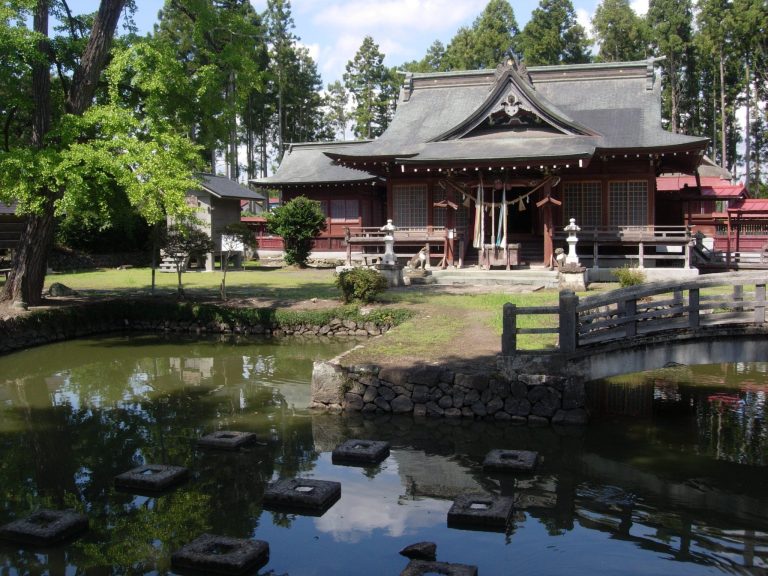
Takekoma Inari Shrine is a Shinto Inari shrine in Iwanuma, Japan, traditionally founded in June 842 by Ono no Takamura, a ninth-century court official and provincial governor. The shrine’s main sanctuary follows the three-bay nagare-zukuri style, whose front roof slope extends beyond the rear slope to shelter the entrance. Takekoma Inari is traditionally regarded as Japan’s second-oldest Inari shrine and is sometimes counted among the country’s three principal Inari shrines, although that classification is not fixed.
Foundation and Early Associations
According to tradition, Ono no Takamura founded the shrine after inviting the kami, or revered spirit, of Fushimi Inari Shrine to establish a branch sanctuary. At the time, Iwanuma stood on the left bank of the east-flowing Abukuma River in the southern part of the former Natori District on the Sendai Plain. It was a transport junction where the Tosan-do and Tokaido routes converged before continuing north toward Tagajo and, later, Sendai.
This position brought the shrine the attention of successive governments and ruling houses, including the central government, the Oshu Fujiwara, and the Date clan. Iwanuma also contained a residence called Takekuma-no-tate, later known as Mutsu-no-tate and Ugagasaki Castle. Historical writings associate the residence with successive provincial governors of Mutsu, including Fujiwara no Motoyoshi, Minamoto no Mitsunaka, Tachibana no Sadamichi, and Tachibana no Takayoshi. The tradition linking the residence with Ono no Takamura’s foundation of the shrine is part of the site’s early historical identity.
Takekoma Temple and the Medieval Shrine
During the reign of Emperor Go-Reizei, from 1045 to 1068, the poet Noin is said to have encountered the shrine’s kami in the form of a child riding a bamboo horse. He established a hermitage on a nearby mountain. The hermitage later developed into Takekoma Temple, the shrine’s former administrative temple, and gave the temple its mountain name.
The shrine declined during the Sengoku period, an era of prolonged political conflict and civil warfare in Japan. It later received a land donation from Date Tanemune and developed under the patronage of the Date family. Support from the Date clan of Sendai Domain continued during the Edo period, the era of Tokugawa rule from 1603 to 1868. In 1807, the shrine received the Shō-ichi’i rank, the highest position in the traditional ranking of kami.
Religious Reorganization and Modern Reconstruction
Takekoma Inari is dedicated primarily to Ukanomitama, commonly identified with Inari, a kami associated especially with rice cultivation, agriculture, food, and prosperity. Uke Mochi and Wakumusubi are enshrined alongside Ukanomitama, and the three are collectively called Takekoma Inari Okami. They are revered as protectors of the foundations of human life, particularly food, clothing, and housing.
In 1869, under the Meiji government’s policy of separating Shinto and Buddhism, Takekoma Temple moved slightly east to its present location and became a temple of the Chisan branch of Shingon Buddhism. The policy ended many traditional shrine-temple institutional relationships. The former association with Takekuma Myojin was rejected during the development of State Shinto, the Meiji-era system that closely linked Shinto institutions with the Japanese state, and an Inari kami became the shrine’s primary deity. The shrine was designated a prefectural shrine in 1874 and became a Beppyo Shrine after the Second World War, joining the Association of Shinto Shrines’ special list of prominent shrines.
The main sanctuary built in 1710 by Date Yoshimura, the fifth lord of Sendai Domain, was destroyed by arson during the early hours of November 21, 1990. It was rebuilt in 1994. The former sanctuary site remains beneath the worship hall, while the surviving Zuishinmon gate is now the oldest structure in the grounds.
Festival Tradition
The shrine traditionally holds the First Horse Grand Festival for seven days beginning on the first horse day of the second month in the lunisolar calendar. The regular festival falls on the fifth day. In recent years, the event has been held on a Sunday in February or early March and is estimated to attract about 250,000 people.
The name Takekoma is explained as a transformation of Takekuma, an old name for the present Iwanuma area. That name is ultimately derived from the Abukuma River, which forms part of the shrine’s historical setting.
Remains
Takekoma Inari’s grounds combine formal approaches, torii gates, the worship hall, the rebuilt main sanctuary, older gates, subsidiary shrines, and a sacred rice field. The surviving buildings and sites reflect the shrine’s long development, including structures associated with the Edo period and the rebuilding that followed the 1990 fire.
Approach and Main Sanctuary
Zuishinmon
The approach includes front and rear torii gates and formal paths leading toward the Zuishinmon, a two-story gate tower erected in 1812. A zuishinmon is a shrine gate containing guardian figures. Statues of guardians and sacred foxes are installed inside this gate, reflecting the tradition that foxes serve as messengers of Inari. The gate was designated an Iwanuma City tangible cultural property in 1990.
Mukai Karamon
The Mukai Karamon is a four-legged gate with a Chinese-style gabled roof known as a karamon. It measures 5.4 meters in both depth and frontage and was built entirely of zelkova in 1842. The gate became an Iwanuma City tangible cultural property in 1990 and a Miyagi Prefecture tangible cultural property in 2019.
Main Sanctuary and Original Site
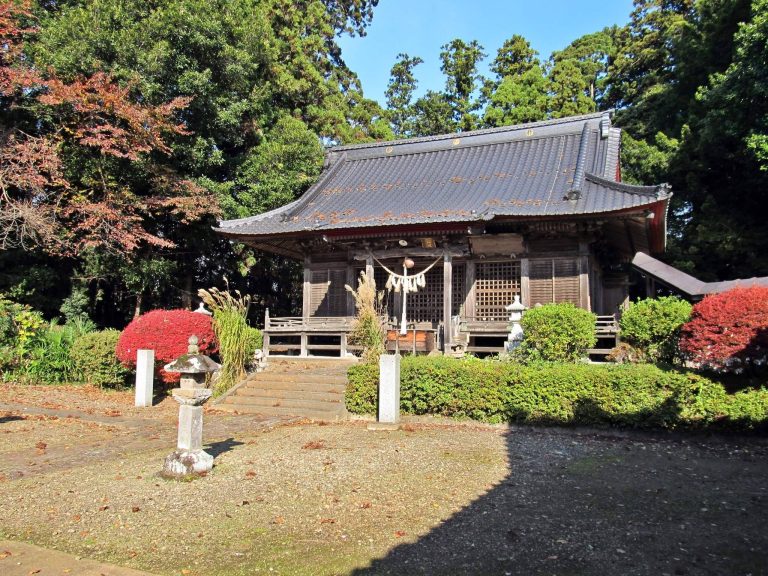
The present main sanctuary is built in the three-bay nagare-zukuri style. A passage beneath the worship hall leads to the site of the original sanctuary, which was destroyed in the 1990 fire. The rebuilt sanctuary stands above this earlier location, preserving the physical relationship between the present worship complex and the shrine’s former main building.
Subsidiary Shrines
Kitano and Akiba Shrines
Several subsidiary shrines stand south of the main buildings. Kitano Shrine enshrines Sugawara no Michizane, while Akiba Shrine enshrines Homusubi.
Izumo Shrine
Izumo Shrine enshrines Okuninushi and Hiruko. Its sanctuary follows taisha-zukuri, a traditional Shinto architectural style especially associated with Izumo Taisha. Built in 1956, it is one-eighth the size of the main sanctuary of Izumo Taisha.
Sosha-gu
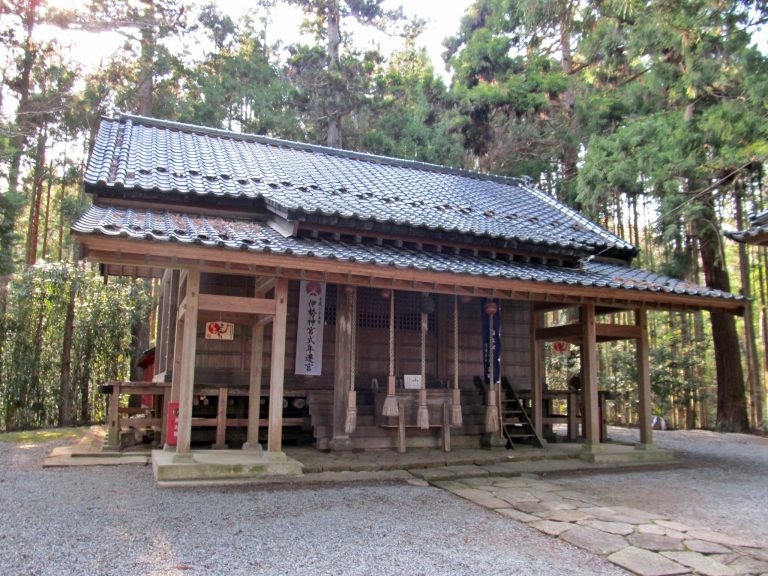
Sosha-gu enshrines the kami of all shrines within the local jurisdiction. Its present sanctuary was built in 1843 and was designated an Iwanuma City tangible cultural property in 2020.
Hachiman Shrine
Hachiman Shrine enshrines Emperor Ojin. Its sanctuary was built in 1727 and was designated an Iwanuma City tangible cultural property in 2020.
Atago Shrine
Atago Shrine enshrines Kagutsuchi. Its sanctuary was also built in 1727 and received designation as an Iwanuma City tangible cultural property in 2020.
Inner Shrines and Sacred Grounds
Myōbu Shrine
North of the original sanctuary site stands Myōbu Shrine, which enshrines the sacred fox regarded as Inari’s messenger. Its stone shrine has three wish-granting jewels, said to represent the shrine’s three principal kami.
Inner Sanctuary
The inner sanctuary of Takekoma Inari is also located north of the original sanctuary site. Its position forms part of the northern group of sacred structures within the shrine grounds.
Uga Shrine and Sacred Rice Field
A sacred rice field lies on the southern side of the grounds, where Uga Shrine is also located. Uga Shrine enshrines Ukanomitama, the primary kami of Takekoma Inari.
Other Facilities
The grounds also contain an amulet office, an assembly hall, a horsemanship museum, and an archery hall. The horsemanship museum opens during the first three days of the New Year and during the First Horse Grand Festival.