Kumano Shrine: A Shinto Sanctuary and Center of Kumano Worship in Natori


Site at a Glance
- Rating
- 4.1
- Popularity
- Low
- Country
- Japan
- Primary era
- Medieval
- External website
- Open
- Eras represented
- Medieval
- Civilizations
- Unclassified
- Site type
- Religious
- Remains
- Sanctuary
On this page12 sections
History
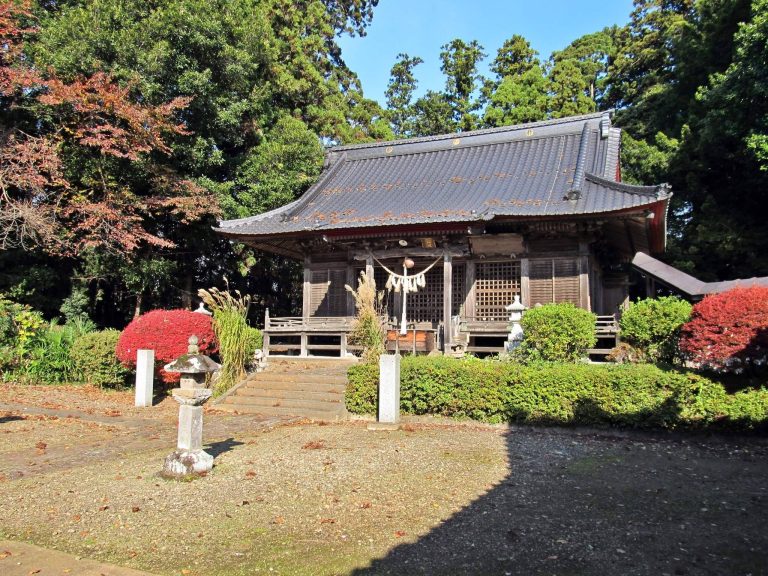
Kumano Shrine is a Shinto sanctuary in Japan, in Natori, Miyagi, founded in 1123 as Kumano Shingu Shrine. It was one of three Natori Kumano shrines modeled on the three major Kumano sanctuaries of the Kii region, the center of a religious tradition that later spread through the Tohoku region. As the central shrine of the three, it eventually brought the Kumano Shingu, Kumano Hongu, and Kumano Nachi shrines together and took the name Kumano Shrine.
Medieval authority and the Date family
During the medieval period, the office of Natori Kumano betto was established at the shrine. A betto was a senior supervisory official, and the holder of this office came to exercise considerable religious and military power within the shrine complex and its surrounding community.
The shrine also developed a close relationship with the Date family, a powerful samurai lineage that ruled much of the Sendai region. In 1514, Date Tanemune exempted the shrine estate from labor and land-tax obligations. Date Harumune, Date Terumune, and Date Masamune later granted similar exemptions, while successive lords of Sendai made donations and offerings to the shrine. Date Masamune was the best-known member of the family and established the Sendai domain in the early seventeenth century.
Religious separation and heritage status
The historical combination of Shinto worship and Buddhist institutions, practices, images, and doctrines was formally prohibited in 1868 by the ordinance separating Shinto and Buddhism. Buddhist materials held at the shrine, including honji Buddha images, copies of the Lotus Sutra, complete Buddhist canons, the Great Perfection of Wisdom Sutra, and ritual implements, were transferred to Monjudo. The building was later moved south of the shrine precincts and placed under Kumanozan Shinguji, a temple of the Chizan branch of Shingon Buddhism.
Kumano Shrine was elevated to the historical rank of village shrine in 1921 and to prefectural shrine in 1935. Its main buildings are prefectural tangible cultural properties. The associated Shinguji Complete Buddhist Canon is a nationally designated Important Cultural Property. An investigation in 1978 and 1979 found that many of its volumes had belonged to a complete canon presented by retired Emperor Toba to Jionji in Sagae, Yamagata.
Ritual traditions
The spring and autumn festivals include Kumanodo Kagura, Japanese sacred dance and music performed in a ritual setting. Tradition attributes its origin to transmission from Kaguraoka in Kyoto between 1185 and 1190. This Iwato kagura tradition, associated with the myth of the rock cave and the restoration of sunlight, belongs to the Izumo lineage. It is regarded as an ancestor of kagura traditions around Sendai and in southern Miyagi, and survives as a silent prayer dance without recited texts, retaining traces of ascetic ritual practices. Before the Edo period, it was performed in a nagatoko on the site of the present worship hall. It is now presented on a permanent stage in the pond before that hall.
Kumano Shrine also preserves Kumanodo Bugaku, a court-derived ceremonial dance accompanied by music. It is performed only at the spring festival, after the kagura offering, and its five transmitted pieces draw on the Kojiki, Japan’s oldest surviving major chronicle, compiled in the early eighth century. The tradition is performed on a temporary stage over the pond and is one of the few surviving bugaku traditions in Miyagi Prefecture. Seven shrine families have transmitted it as a restricted, closed tradition.
Remains
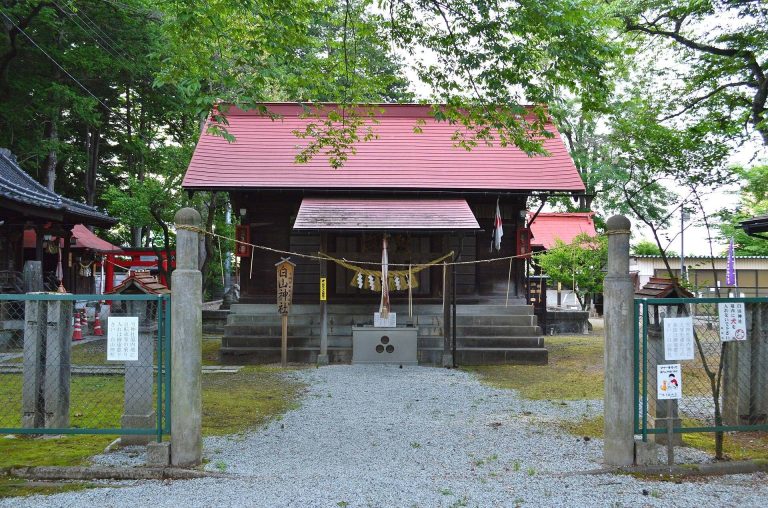
The inner sanctuary centers on the New Shrine Shōjō Hall, with Nachi Hiryū Gongen Shrine to the east, Hongu Twelve-Gongen Shrine to the west, and the Old Woman Shrine farther west. The buildings combine shrine forms associated with the Kumano tradition, while the sacred pond called Mitarai, its floating island, and related structures extend the precincts before the worship hall.
Inner sanctuary buildings
New Shrine and Nachi Hiryū Gongen
The New Shrine Shōjō Hall stands at the center of the inner sanctuary and enshrines Hayatamao no Mikoto. Together with Nachi Hiryū Gongen Shrine to the east, it is built in the Kumano-zukuri style, an architectural form associated with the Kumano shrines. These are described as the only examples of the style in Miyagi Prefecture. Nachi Hiryū Gongen Shrine enshrines Kotosakao no Mikoto.
Hongu and the Old Woman Shrine
Hongu Twelve-Gongen Shrine is a three-bay structure in the nagare-zukuri style, characterized by a flowing, extended gabled roof over the front entrance. It enshrines Izanami no Mikoto. To its west, the Old Woman Shrine enshrines Natori Rōjo, the traditional female religious figure known as the Old Woman of Natori, together with a wooden tablet bearing the inscription “Kukurihime no Okami” in Abiru-kusamoji script.
Stone deity pillars
East of Nachi Hiryū Gongen Shrine, eight square-section stone pillars bear the names of nine deities: Ame-no-Oshihomimi no Mikoto, Ninigi no Mikoto, Hikohohodemi no Mikoto, Ugayafukiaezu no Mikoto, Toyojimune no Mikoto, Kunisatsuchi no Mikoto, Uidoni no Mikoto, Ōtomichi no Mikoto, and Omotaru no Mikoto. The pillars also represent Hassha Jingu, one of the former buildings associated with the sanctuary. Nyakuoji Shrine, also called Hakusan Shrine, was regarded as the original shrine of Kukurihime, now enshrined at the Old Woman Shrine.
Pond and Buddhist association
Mitarai and the ritual stages
In front of the worship hall, the sacred pond Mitarai contains a floating island with the kagura stage and a Benzaiten Hall. The permanent kagura stage is used for Kumanodo Kagura, while a temporary stage is constructed over the water for Kumanodo Bugaku during the spring festival. A bell tower in the southwestern part of the precincts preserves a physical expression of the shrine’s former Shinto-Buddhist syncretism.
Monjudo
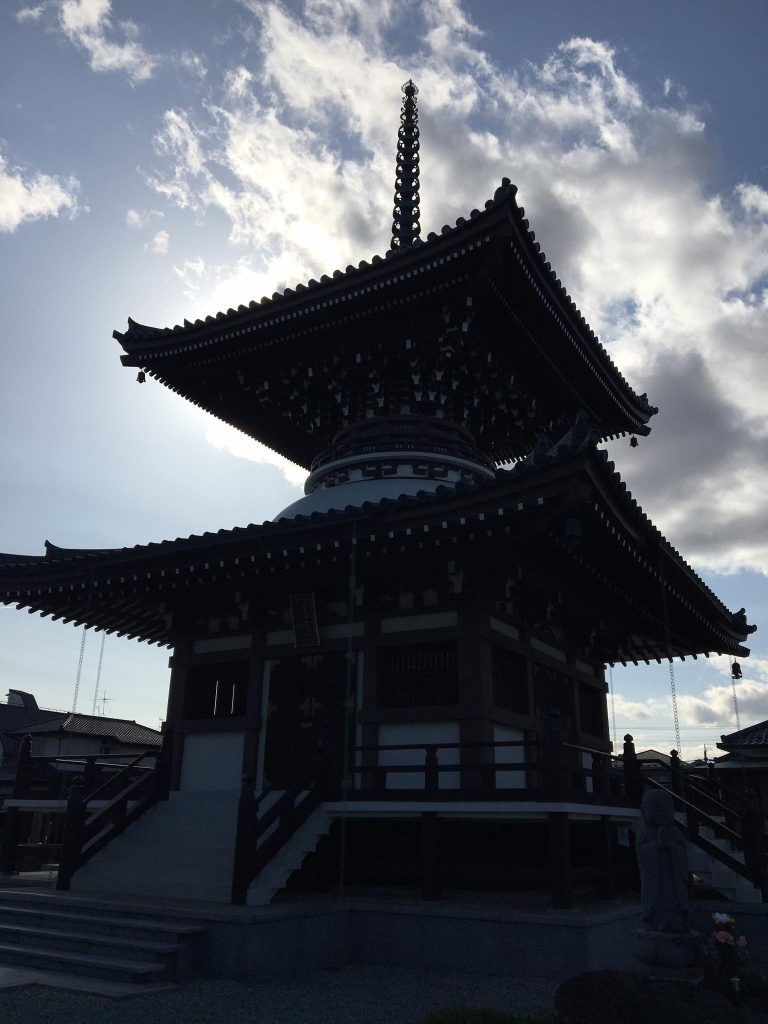
Monjudo stands beside the entrance to the shrine precincts. After the nineteenth-century separation of Shinto and Buddhism, it became the home of the Shinguji Complete Buddhist Canon and related Buddhist materials transferred from the shrine. Its connection with Kumanozan Shinguji preserves the institutional link between the shrine precincts and the Buddhist tradition that once formed part of their shared religious setting.