Tairyū-ji Temple: A Special Head Temple of the Toji Shingon Tradition


Site at a Glance
- Rating
- 4.3
- Popularity
- Low
- Country
- Japan
- Primary era
- Early Modern
- External website
- Open
- Eras represented
- Early Modern
- Civilizations
- Tokugawa
- Site type
- Religious
On this page11 sections
History
Foundation and early traditions
Tairyū-ji Temple is a temple in Kobe, Japan, traditionally founded in 768 by Wake no Kiyomaro on Mount Futatabi, then known as Mount Mani. It belongs to the Toji Shingon tradition, a major Japanese Esoteric Buddhist lineage associated with Tō-ji Temple in Kyoto, and holds the status of a special head temple.
Temple tradition connects its foundation with an imperial command from Empress Shōtoku, an eighth-century Japanese sovereign. While searching for a suitable site, Wake no Kiyomaro was attacked by assassins sent by Dōkyō, an influential Buddhist monk and court figure. The attack took place on the southern slope near the summit of Mount Mani. A dragon is said to have appeared and saved Kiyomaro’s life.
After receiving imperial permission, Kiyomaro built a hall in 768 for a sacred standing image of Cintāmaṇicakra Avalokiteśvara. Avalokiteśvara, known in Japan as Kannon, is a Buddhist bodhisattva associated with compassion. In this form, the figure holds a wish-fulfilling jewel and a wheel. The statue was traditionally attributed to Gyōki, an eighth-century Buddhist monk associated with religious activity and temple construction. According to the tradition, Gyōki made one cut and performed three bows for each cut while carving it. Kiyomaro then enshrined the image and named the temple Mount Mani Tairyū-ji.
Kūkai and Mount Futatabi
Kūkai, also known as Kōbō Daishi and regarded as the founder of the Shingon school of Japanese Esoteric Buddhism, is traditionally said to have visited Tairyū-ji in 804 before travelling to Tang China. The tradition also places a second visit after his return. These visits became associated with the gradual adoption of the mountain name Mount Futatabi.
Medieval decline and revival
During the Northern and Southern Courts period, a fourteenth-century era marked by rival imperial courts in Japan, Tairyū-ji formed part of Norimura Akamatsu’s Tatabe Castle. Norimura Akamatsu was a medieval samurai leader. Warfare repeatedly affected the temple, and the complex declined until Priest Zenmyō led a revival during the Kan’ō era from 1350 to 1352, when the buildings were rebuilt.
In 1375, Emperor Go-En’yū, a fourteenth-century emperor of the Northern Court, suffered from apoplexy. Zenmyō is said to have prayed for his recovery and brought it about. Tairyū-ji consequently became associated with protection from apoplexy and is commonly called the Temple for Preventing Apoplexy.
Later rebuilding and religious affiliations
The present temple complex was rebuilt from the beginning of the Edo period onward. The Edo period was the era of Tokugawa rule, lasting from the early seventeenth to the mid-nineteenth century. Tairyū-ji is affiliated with several pilgrimage networks, including the Kinki Thirty-Six Fudō, Saigoku Seventeen Aizen, Settsu Eighty-Eight Temples, Settsu Thirty-Three Temples, Kobe Thirteen Buddhas, and Kinki Jūraku Kannon pilgrimages. It also represents Daikokuten in the Kobe Seven Lucky Gods pilgrimage.
The temple’s wooden standing bodhisattva statue, traditionally identified as Cintāmaṇicakra Avalokiteśvara and traditionally dated to the Nara period, is designated an Important Cultural Property. This Japanese legal designation protects culturally significant objects and structures.
Remains
Mountain setting and entrance
Tairyū-ji stands on the southern slope near the summit of Mount Futatabi, formerly called Mount Mani. Its large mountain gate is painted vermilion and stands amid the forest, forming a prominent entrance feature in the Mount Futatabi landscape. The gate is also incorporated into hiking routes across the Rokko Mountains.
Sacred buildings and features
Daishi Hall
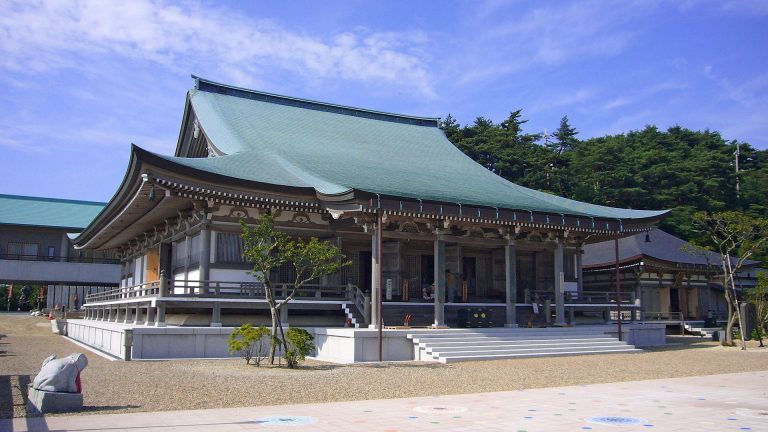
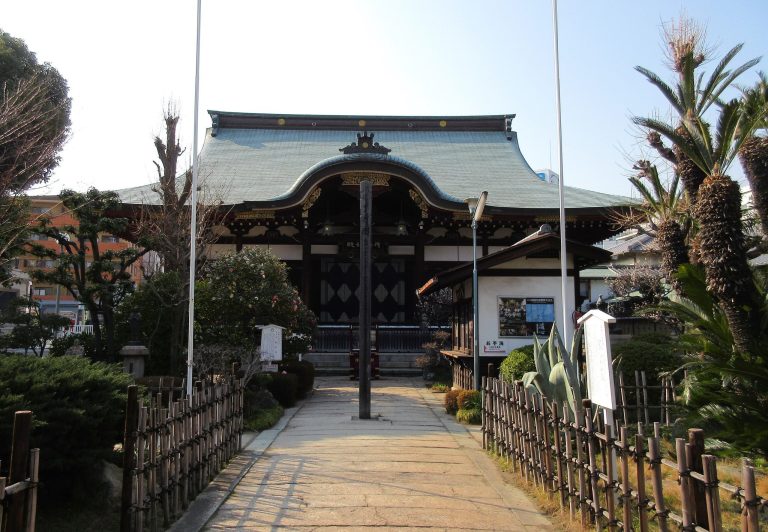
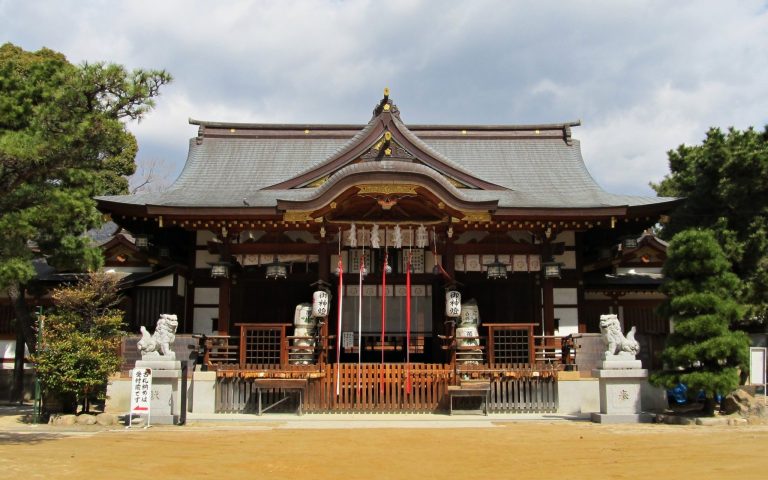
The principal hall of the temple is identified as the Daishi Hall. It forms the main architectural focus of the present complex, whose buildings were rebuilt from the beginning of the Edo period onward.
Standing bodhisattva image
The principal image is a secret image, meaning a sacred image normally kept concealed from public view. It is a wooden standing bodhisattva statue traditionally identified as Cintāmaṇicakra Avalokiteśvara and dated to the Nara period, Japan’s eighth-century imperial capital era. Its standing form differs from the seated form in which this bodhisattva is usually represented. The statue is designated an Important Cultural Property.
Turtle Rock and the Daishi Path
A rock known as Turtle Rock is located within the inner sanctuary and is traditionally attributed to Kūkai. The mountain path associated with Kūkai’s ascent is called the Daishi Path. Nearby Mount Futatabi Park is traditionally associated with Kūkai’s practice and retains a place-name rendered in Latin script as Shio-ga-hara.