Ta’ Ħaġrat: A Neolithic Temple Complex in Malta
Site at a Glance
- Country
- Malta
- Primary era
- Stone Age
- Eras represented
- Stone Age
- Civilizations
- Maltese Temple Culture
- Site type
- Religious
- Remains
- Temple
On this page8 sections
History
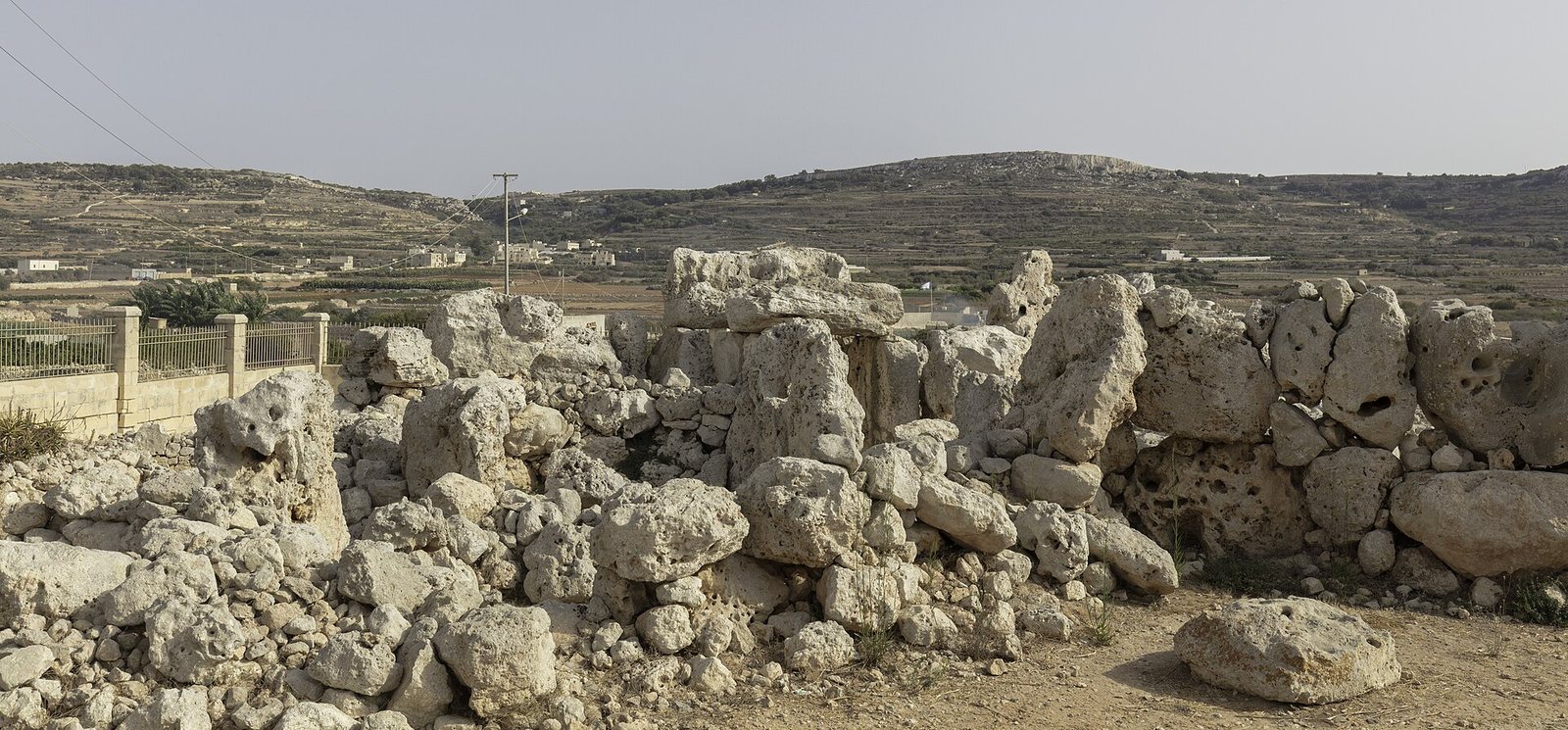
Ta’ Ħaġrat is a Neolithic temple complex on the eastern outskirts of Mġarr, Malta. Built with large stones, its two temples belong to different prehistoric phases and are counted among the world’s oldest religious sites.
Village and temple phases
Before the temples were built, a village occupied the site during Malta’s Mġarr phase, around 3800–3600 BC. Pottery deposits mark this earlier settlement.
The larger temple dates to the Ġgantija phase, around 3600–3200 BC. The smaller temple was added during the Saflieni phase, around 3300–3000 BC.
Excavation and heritage status
Themistocles Zammit, then director of museums, led excavations from 1923 to 1926. Parts of the façade and doorway were reconstructed in 1937. John Davies Evans excavated the complex in 1954, and David H. Trump’s work in 1961 established a more precise date for it.
Ta’ Ħaġrat forms part of the UNESCO World Heritage property Megalithic Temples of Malta. The property was inscribed in 1980 under criterion (iv), which recognizes an outstanding example of a building type or architectural ensemble, and was extended in 1992 and 2015.
Remains
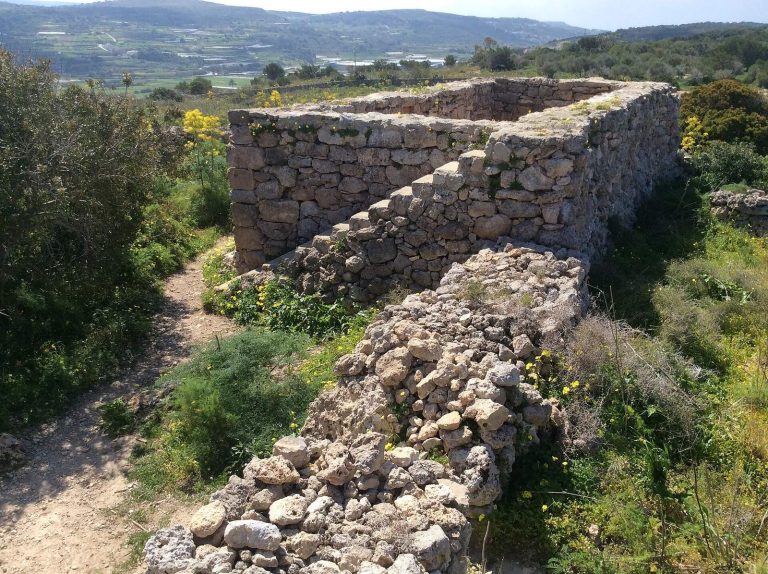
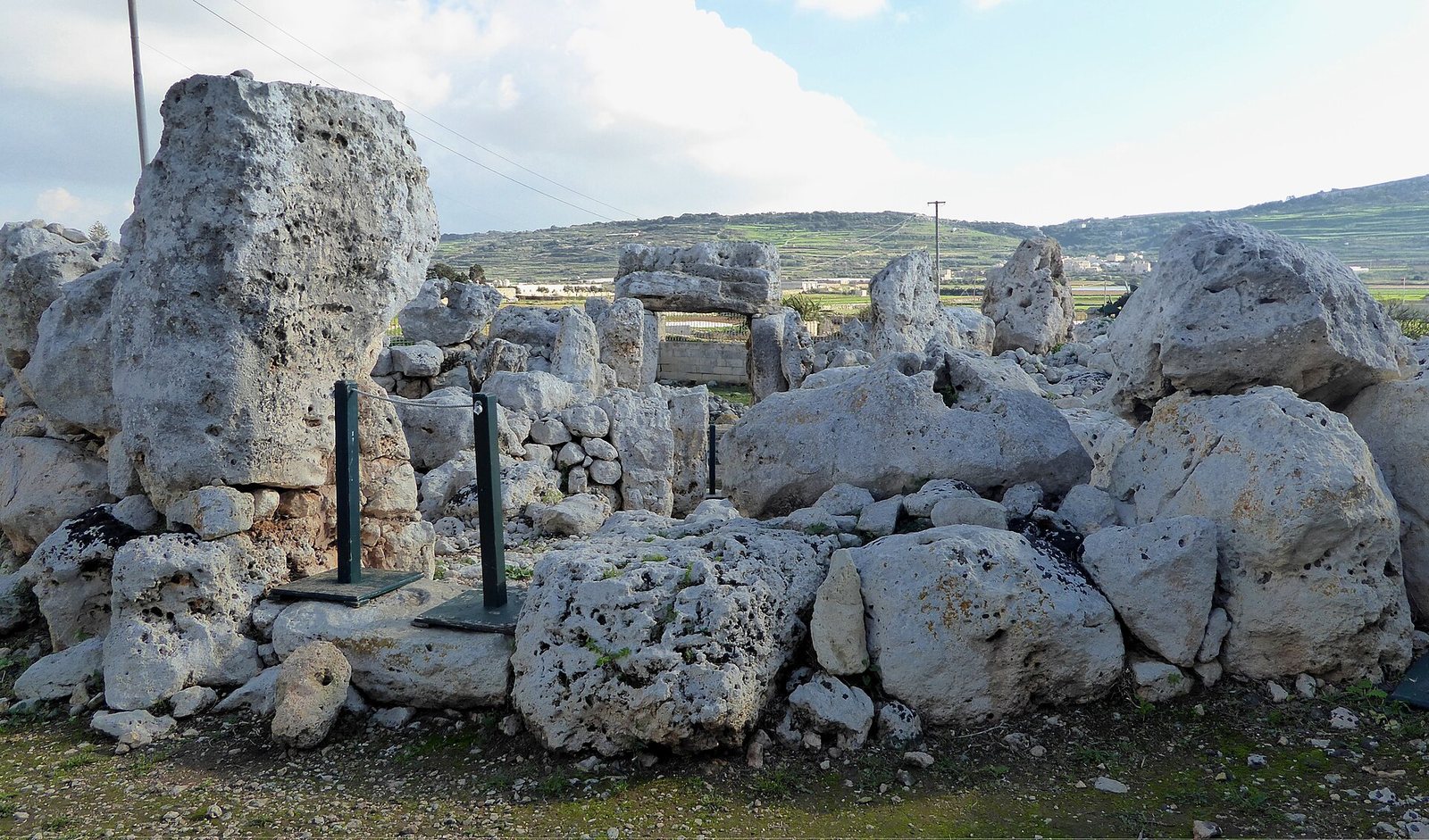
The complex consists of two adjacent temples built from lower Coralline limestone, the oldest exposed rock formation in the Maltese Islands. The smaller temple joins the larger one on its north side. Both are less regularly planned and smaller than many other Neolithic temples in Malta.
Temple complex
Larger temple
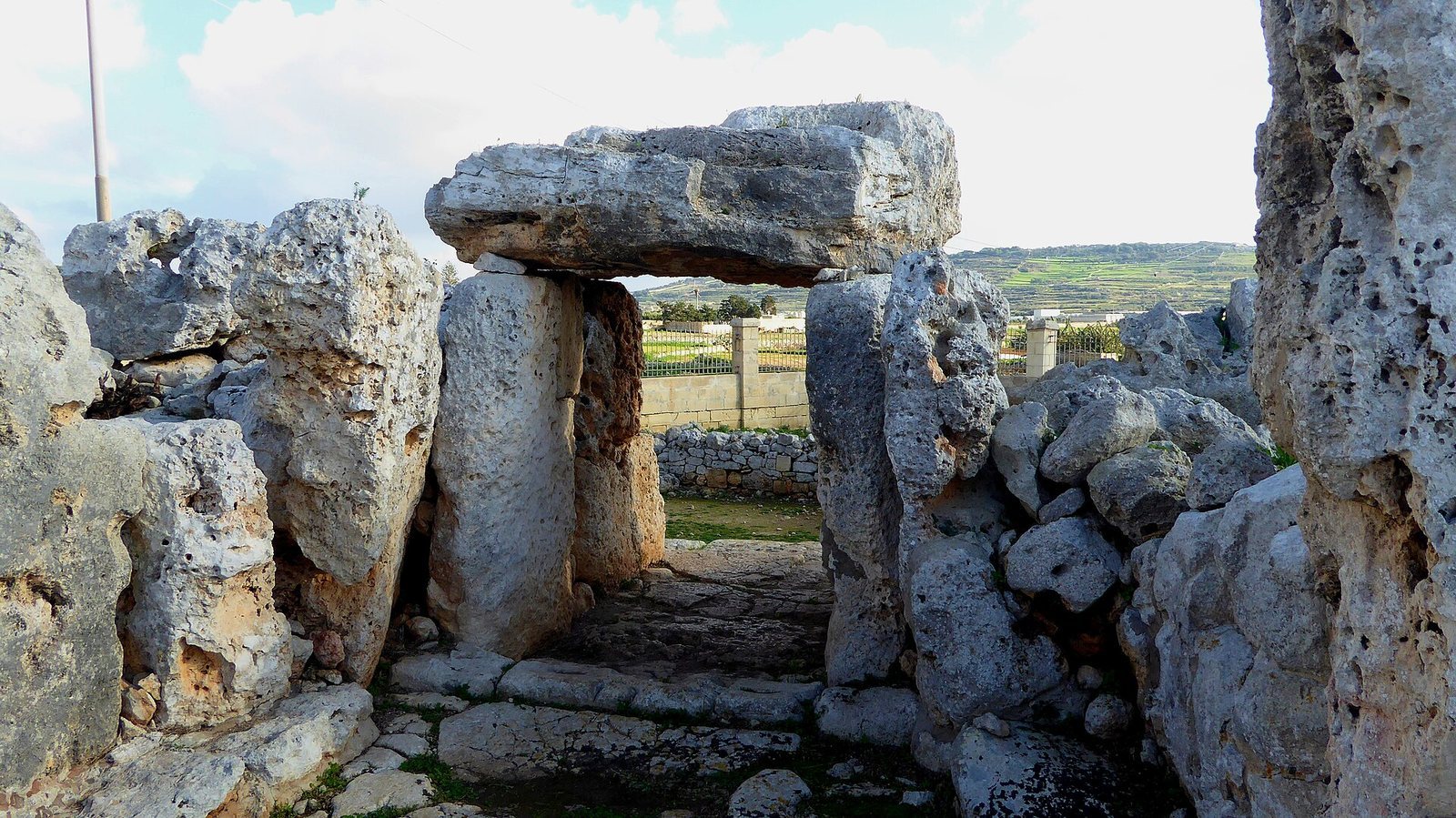
The larger temple has a three-lobed plan. Its concave façade faces a broad semicircular forecourt and includes a central monumental doorway and a bench at its base. Two steps lead into a corridor lined with upright limestone blocks, which opens onto a central court with a floor of torba, a cement-like material.
Three semicircular chambers extend from the court. Their roughly worked stone walls and rock floors survive, with inward-projecting stone courses indicating that the chambers had roofs. During the Saflieni phase, portions of the chambers were enclosed by walls; pottery fragments were found packed into their construction. The façade resembles those at the Ta’ Skorba temples, about one kilometre away.
Smaller temple
The smaller temple is 6.5 metres long and uses smaller stones. Its entrance is reached through the larger temple’s eastern semicircular chamber. Its irregular design has been described as archaic or provincial in character.
Stone temple model
A small model found in the larger temple is carved from Globigerina limestone, a distinct limestone formation in Malta, and has a roof. Its façade depicts a trilithon, two upright stones supporting a horizontal one. The model also shows alternating narrow and broad walling and upper stone courses that project inward.