Castle of Ónod: A Medieval Fortress and Border Stronghold in Hungary


Site at a Glance
- Rating
- 4.4
- Popularity
- Low
- Country
- Hungary
- Primary era
- Medieval
- External website
- Open
- Eras represented
- Medieval, Early Modern
- Civilizations
- Habsburg, Hungarian
- Site type
- Military
- Remains
- Castle
On this page11 sections
History
The Castle of Ónod in Hungary stands at Ónod, where it developed from a medieval estate centre into a fortified position guarding the Sajó valley. Established around 1350, it is the oldest historic monument of Ónod. Members of the Czudar noble family enclosed the local parish church with strong stone walls, creating a protected centre for their estate.
Foundation and royal authorization
Peter Czudar, son of Bulchidi Domokos, began the construction without royal permission. His sons Simon and Jakab later secured authorization from King Sigismund, whose reign included the early fifteenth-century approval connected with the castle. Ónod was certainly complete by 1413, when charters mentioned it for the first time.
When the male line of the Czudar family ended, King Matthias Corvinus granted the estate and its surrounding serf villages to John Rozgonyi and his sons in 1470. The castle changed hands repeatedly during the following decades. In 1508, King Vladislaus II designated it a queen’s castle, meaning a royal castle associated with the queen and her household or estates, and pledged it for 7,000 forints to John Tarcai of Tótselymes and his sons. In 1511, he sold it for 13,000 forints to Ambrus Sárkány of Ákosháza, the ispán, or county official, of Pozsony. Imre Török of Enying acquired it in 1514 and exchanged it in 1516 with Peter Perényi, ispán of Abaúj, for other estates.
Transformation into a border fortress
During the sixteenth century, the Perényi family converted the earlier castle into a powerful artillery fortress. The redesign, attributed to the Italian military engineer Alessandro Vedani, introduced projecting old-Italian bastions, a Renaissance fortification form developed for artillery warfare. Increasing Ottoman pressure prompted the improvements, including Ottoman sieges in 1561 and 1582.
Stephen Báthory inherited Ónod in 1585, after which it passed to Anna Losonczy. The Ottoman conquest of Eger in 1596 placed Ónod on the first line of the Habsburg border-fortress system, a network of military positions defending the frontier and strategic zones against Ottoman expansion. Its garrison took responsibility for the defence of the Sajó valley. In 1602, the Diet, the kingdom’s representative political assembly, declared Ónod a border fortress and ordered its renovation. The castle was later purchased by Zsigmond Rákóczi of Felsővadász.
Ottoman attack and reconstruction
On 10 October 1639, Ottoman forces from Eger and Szolnok made an unexpected attack on the palisaded market town. They then besieged the quadrangular stone castle, destroyed the palisade, set the fortress on fire, and released Ottoman prisoners held inside.
Captain Miklós Keglovich rebuilt the damaged ruins with a contribution of 2,000 forints from Zsuzsanna Lorántffy. The renewed stronghold was enclosed by a wooden palisade and enlarged with a separate hussar fort, a fortified enclosure associated with hussar cavalry. Its garrison could include 400 infantrymen and 500 cavalrymen.
Kuruc conflicts and loss of military importance
During the Kuruc uprising at the end of the seventeenth century, the strategically weakened fortress repeatedly changed hands. Kuruc forces, the anti-Habsburg insurgent groups active in the Kingdom of Hungary, captured it for Francis Rákóczi I in 1670. Imperial General Spandau retook it in 1671, but Kuruc troops burned it again in 1672. In 1682, the Buda Pasha and his ally Imre Thököly captured Ónod. Thököly, a leading Kuruc commander and prince of Upper Hungary, ordered repairs.
The Imperial army recovered the fortress in 1685. Thököly took it once more with Ottoman assistance in 1688 and ordered it burned. In the same year, Crimean Tatar cavalry allied with the Kuruc forces also burned the castle buildings. During the Hegyalja uprising, an earlier Kuruc revolt in northeastern Hungary, Kuruc forces made two attempts to capture Ónod and were heavily defeated on both occasions. Imperial reinforcements under Vaudemont and Corbelli arrived at the fortress, and Vaudemont used it as the base for operations against Tokaj and Patak.
Ónod then lost its military role. An inventory from 1701 described it as a deserted castle. During the Rákóczi War of Independence, the anti-Habsburg uprising led by Francis II Rákóczi from 1703 to 1711, the Ónod Diet of 1707 met in the Sajó-Köröm field rather than inside the castle because the Sajó had flooded. Among its decisions, the assembly declared the Habsburg dynasty deposed.
Dismantling and preservation
Local inhabitants briefly used the ruined castle as a granary before it was gradually dismantled. The Török counts reused its stone for a castle in the village and later for the Roman Catholic church. Stone quarrying was prohibited only in the mid-nineteenth century. Floods of the Sajó in 1845 and 1855 further undermined and weakened the walls.
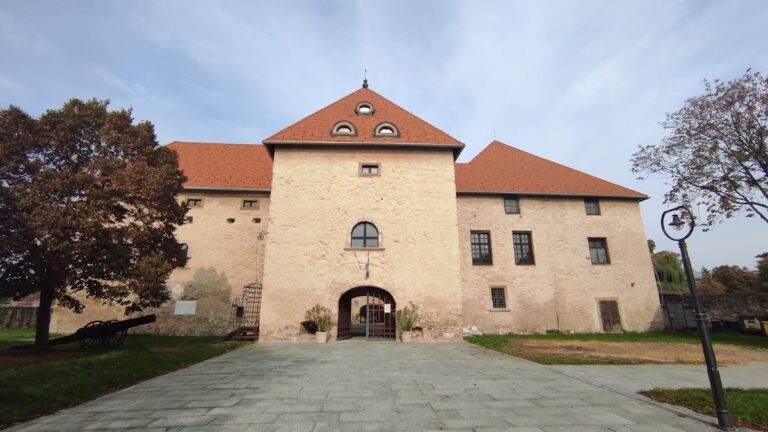
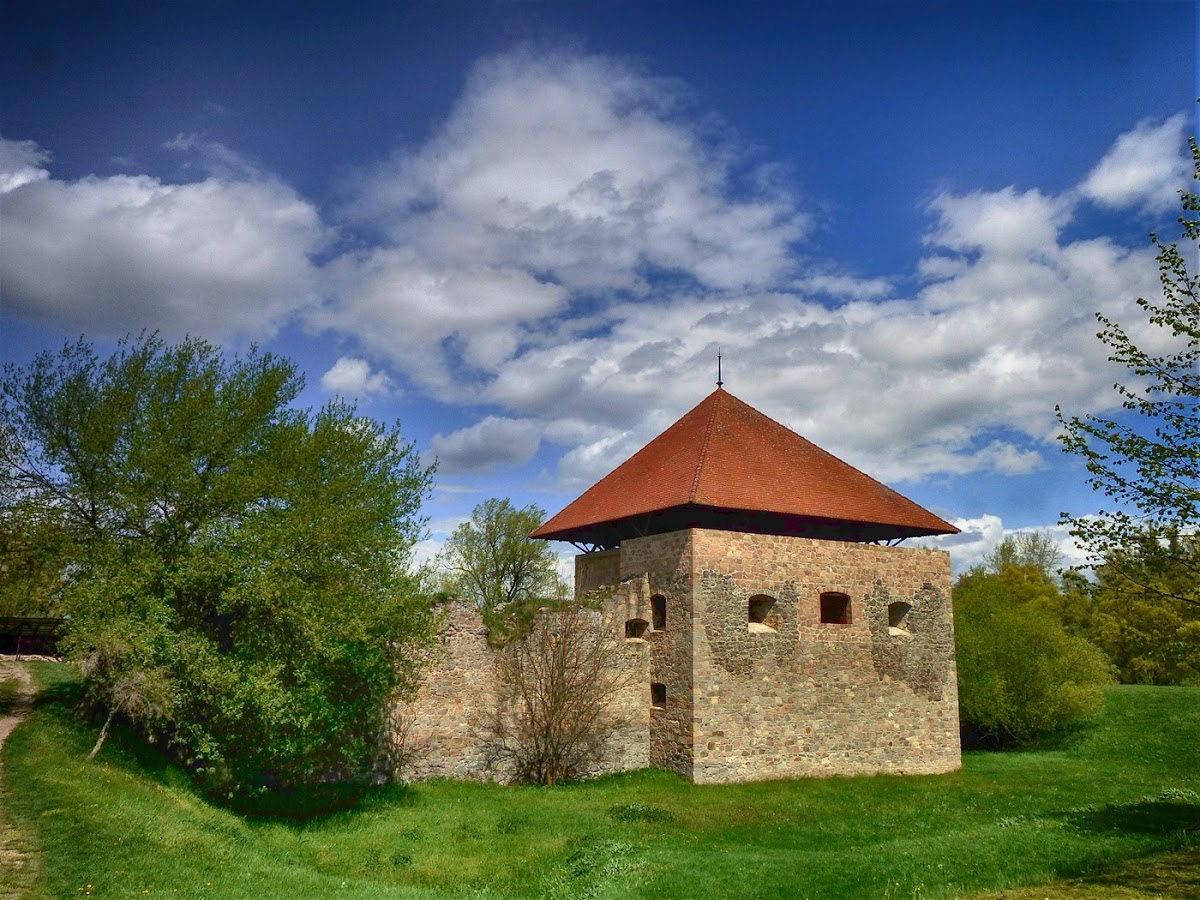
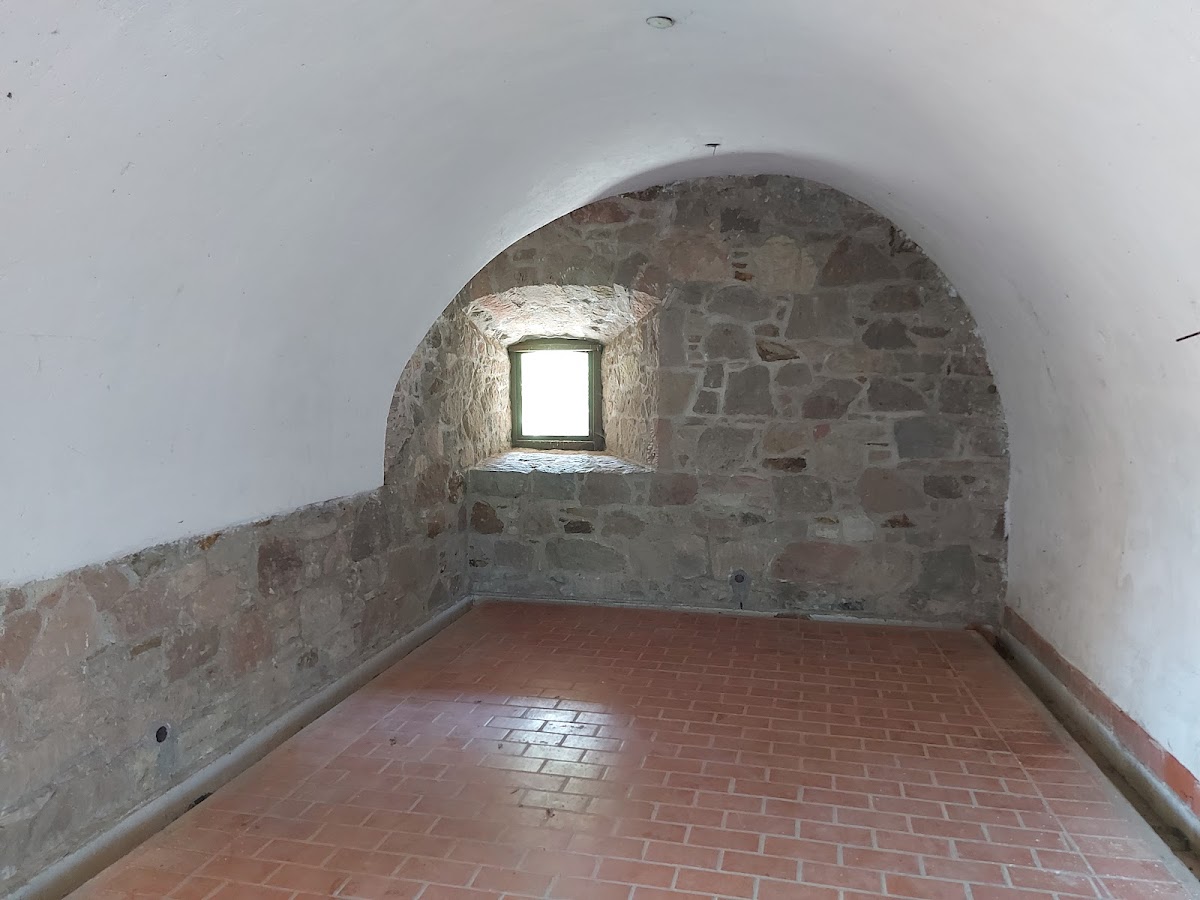
Archaeological excavation and restoration began in 1985 and continued intermittently. This work halted the site’s final destruction, rebuilt the southeastern bastion and adjoining wall sections, and established an exhibition within the bastion.
Remains
River-terrace setting and fortress plan
The castle occupies a gravelly, sandy river terrace between the village of Ónod and the Sajó. The terrace rises 5 to 6 metres above surroundings that were formerly marshy. The Sajó, Hernád, Hejő, and Szinva rivers and streams made approach difficult and helped defend the elevated position. The site also protected a crossing of the Sajó and roads leading eastward.
The fortress follows a square plan measuring approximately 70 by 70 metres. One old-Italian artillery bastion projects from each corner, allowing defensive fire along the walls, and the entrance lies on the southern side. The arrangement is known from a 1662 drawing by a master builder from Tállya and from a military-engineering drawing found in Karlsruhe.
Walls and defensive structures
Stone castle
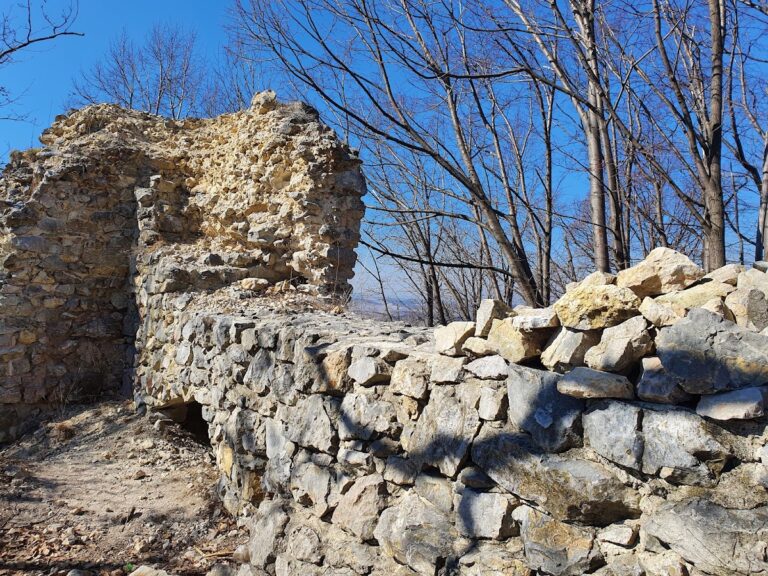
The original fortress was built of stone. Foundations of the walls and corner bastions survive, while some wall sections still stand several metres high. The southeastern bastion has been restored, and its adjoining wall sections were rebuilt during modern conservation work.
Palisade and hussar fort
The seventeenth-century fortress was enclosed by a wooden palisade and included a separate hussar fort. The palisade formed part of the expanded defensive arrangement created after the attack of 1639, although that Ottoman assault destroyed it. The restored southeastern bastion now contains an exhibition.
Nearby sites