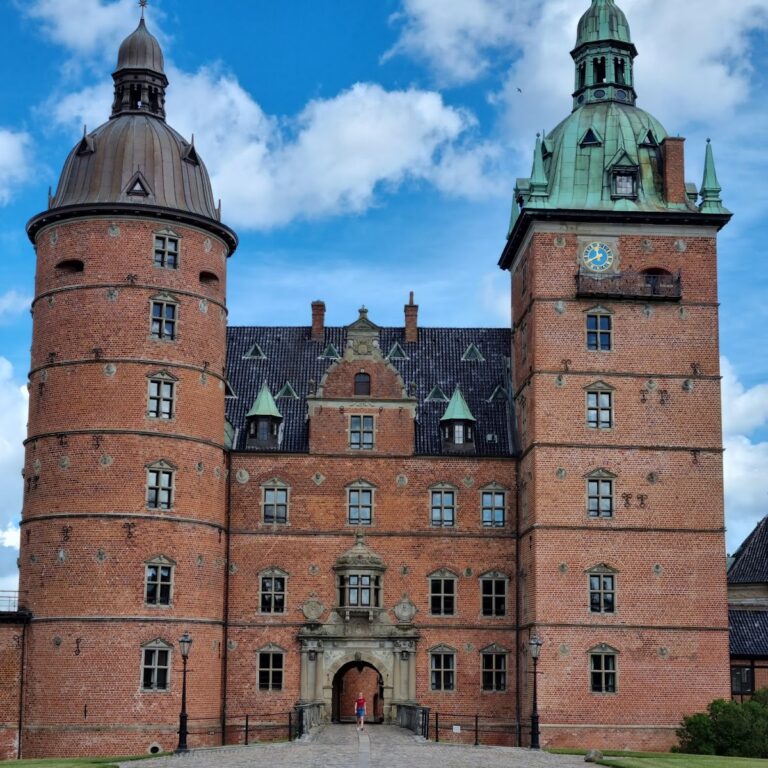
Svenstrup: A Historic Manor House and Estate in Denmark


Site at a Glance
- Rating
- 4.3
- Popularity
- Low
- Country
- Denmark
- Primary era
- Early Modern
- External website
- Open
- Eras represented
- Early Modern
- Civilizations
- Danish
- Site type
- Domestic
- Remains
- Manor House
On this page10 sections
History
Svenstrup is a manor house and estate near Borup in Denmark, with a history reaching back to the thirteenth century. It has belonged to members of the Neergaard and Wedell-Neergaard family since 1751, linking the estate to several centuries of Danish landholding and agricultural development.
Medieval origins and royal administration
Svenstrup is first mentioned in the thirteenth century, when it belonged to a widow named Ingerd Sunesen. During the Middle Ages, it was a farm under Antvorskov Abbey, a religious house whose lands included agricultural estates. In 1454, Svenstrup was transferred to the Bishopric of Roskilde in exchange for other land.
The Reformation of 1536 transformed Denmark’s religious and political order and brought Catholic church property under Crown control. Svenstrup was confiscated and administered as a fief, meaning an estate managed for the Crown by a royal official, until 1666. Its administrators included Peder Basse, Frederik Reedtz, Frederik Banner, and Johan Christoph von Körbitz.
King Frederick II used Svenstrup as a hunting lodge from 1577. A new main building, furnished with lavish interiors, was completed in 1584. The estate was later drawn into the political and military tensions of the seventeenth century. In 1623, Bishop Lauge Urne supported Duke Frederick in a conflict with King Christian II. Soon afterward, Niels Pedersen Halveg, a loyalist of Christian II, looted and burned Svenstrup.
From royal grant to private estate
In 1666, King Frederick III granted Svenstrup to Hans Svane, an archbishop who had supported the king’s introduction of absolutism in 1660. Danish absolutism was a system of centralized hereditary monarchy. Svane also became a justice of the Supreme Court and a member of the statskollegiet, a central advisory body of the absolute monarchy.
At the time, Svenstrup was among the largest estates in Denmark. It received birk status in 1678, giving it a local jurisdiction with its own court. Hans Svane died later that year, and his widow, Marie Fuiren, retained the estate until 1687.
Marie Svane, the granddaughter of Hans and Margrethe Svane, inherited Svenstrup in 1730. Her first husband, Jesper Friis, died during the Great Northern War, a conflict fought across northern and eastern Europe from 1700 to 1721. In 1733, she married the army captain Frederik Oertz. Their unhappy marriage produced divorce proceedings that lasted about fifteen years and involved King Christian VI and Bishop Hersleb before the marriage was dissolved.
After the divorce, Frederik Oertz sold Svenstrup to Peter Johansen Neergaard, who had been appointed a military councillor. Neergaard managed the estate successfully, beginning its long association with the Neergaard family.
Neergaard ownership and agricultural change
Jens Bruun Neergaard built a new main building in 1780 and enlarged the estate by acquiring additional land. In the same year, he was ennobled as Jens Bruun de Neergaard. After his death in 1788, his widow, Anna Marie Møller, retained Svenstrup. Between 1791 and 1802, she introduced contemporary agricultural reforms and bought Skjoldenæsholm.
In 1844, Johan Andreas de Neergaard converted Svenstrup into a fideikommis, an inheritable estate arrangement intended to keep property together within a family. His son, Joachim Bruun de Neergaard, took over Svenstrup in 1846, while his brother Andreas received Skjoldenæsholm. The sale of tenant farms to their farmers began at Svenstrup in 1860.
Joachim Bruun de Neergaard was succeeded by his grandson Joachim Wedell, who received royal permission to use the name Wedell-Neergaard. During the twentieth century, he sold the remaining tenant farms. Svenstrup thereby became the last manor in Denmark to complete this process.
Twentieth-century changes and continuing ownership
The 1919 Danish Lens Abolition Act, known as the lensafløsningsloven, dissolved fideikommis estates. Joachim Wedell-Neergaard died in 1926, and his widow, Henny Caroline Julie Moltke, transferred Svenstrup to their son Christian Wedell-Neergaard in 1937.
Maria Benedicte Wedell-Neergaard bought Svenstrup from her father with effect from 1 July 2020. This continued the estate’s association with the Wedell-Neergaard family, which began in the eighteenth century.
Remains
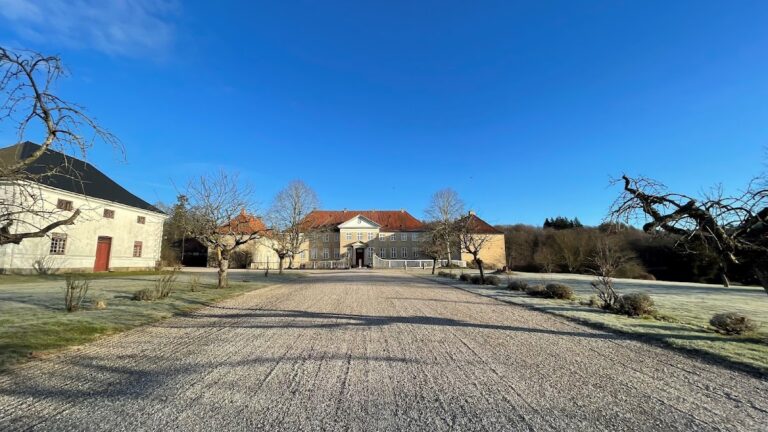
Svenstrup survives as a manor house accompanied by an estate whose physical extent grew through the acquisition of additional land. Its principal buildings represent two major construction phases, with the earlier house associated with the royal hunting lodge period and the later house with the Neergaard family’s eighteenth-century rebuilding.
Main buildings and estate
The sixteenth-century main building
The earlier main building was completed in 1584, during the period when Frederick II used Svenstrup as a hunting lodge. It had lavish interiors and belonged to the estate’s phase under royal administration. The building’s historical importance lies in its connection with the late sixteenth-century transformation of Svenstrup into a royal hunting residence.
The eighteenth-century main building
A replacement main building was constructed in 1780 and completed in 1782 to 1784. Its architect was J. C. Kitzling. The building belongs to the period when Jens Bruun Neergaard was expanding the estate and consolidating its role as a private Neergaard property.
The enlarged estate
The estate’s landholding was expanded by Jens Bruun Neergaard through the purchase of additional land. This enlargement formed part of the late eighteenth-century development of Svenstrup and accompanied the construction of the new main building.