Sugu-Okamoto Site: A Yayoi-Period Cemetery and Settlement in Japan
Site at a Glance
- Rating
- 4.1
- Popularity
- Very Low
- Country
- Japan
- Primary era
- Classical
- Eras represented
- Classical
- Civilizations
- Yayoi
- Site type
- Burial
- Remains
- Necropolis
On this page12 sections
History
A Yayoi-period center
The Sugu-Okamoto Site is a Yayoi-period cemetery and settlement on the Fukuoka Plain in Japan. The Yayoi period is associated with settled farming and distinctive pottery. The site forms the northern part of the wider Sugu archaeological complex, which is regarded as the center of Nakoku, an early polity in northern Kyushu mentioned in Chinese historical accounts. The quantity and quality of remains across the complex, together with evidence of bronze casting nearby, support this interpretation.
A large stone-marked burial at Sugu-Okamoto has been proposed as a royal tomb, and its occupant as a king of Nakoku, but neither identification is certain. The burial is considered approximately contemporary with a royal tomb at an archaeological site in Itoshima, a dating based on Western Han mirrors and bronze weapons associated with it. The occupant is generally thought to have lived before the Nakoku ruler who received a gold seal from Emperor Guangwu of Han in 57 CE. Whether the burial belonged to that ruler is unknown. A farmer discovered the seal on Shikanoshima Island during the Edo period.
Discovery and investigation
In 1899, a landowner moving large stones while building a house uncovered a jar-coffin burial and artifacts. The finds and excavated soil were placed in an underground chamber, and many of the grave goods later became dispersed. The burial drew attention in the late Meiji period. From 1912, a researcher collected and published fragments of mirrors recovered from the chamber. A Kyoto University investigation in 1929 marked the end of this early sequence of inquiries.
Investigations in 1979 and 1980 established the scale of the cemetery and settlement. The megalithic burial itself has not been directly excavated in an academic investigation, so interpretations of its original form draw on earlier observations and excavations at nearby sites. The site has National Historic Site of Japan status. Its protected area was expanded in 2000, when the designation took its present name.
Remains
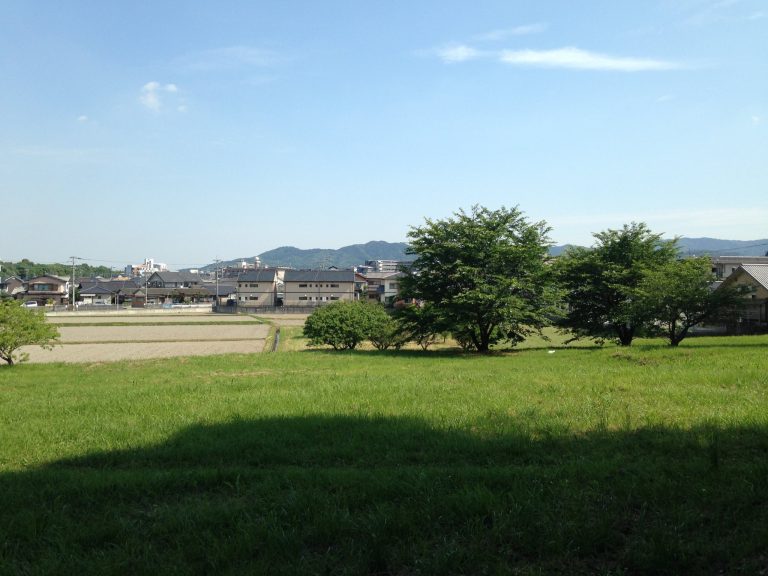
The site lies on a low plateau in the northern Kasuga Hills, which extend into the Fukuoka Plain. The wider Sugu complex covers roughly 2 kilometres from north to south and 1 kilometre from east to west, with Sugu-Okamoto at its northern end. Excavations focused on the complex’s highest point, 36.3 metres above sea level. A lower, level area lies to the west.
Cemetery and settlement
Burial area
Excavations identified more than 116 jar-coffin burials, in which large ceramic vessels served as coffins, as well as wooden-coffin burials and ritual remains. The cemetery contained about 300 grave pits overall. These remains date from the middle Yayoi period to the beginning of the late Yayoi period.
Settlement area
On the lower ground to the west, excavators found the remains of nine pit dwellings, houses built partly below ground. They also recovered a mold for a small bronze bell, made from gneiss, a banded metamorphic rock.
Megalithic burial and associated finds
Stone markers and possible tomb forms
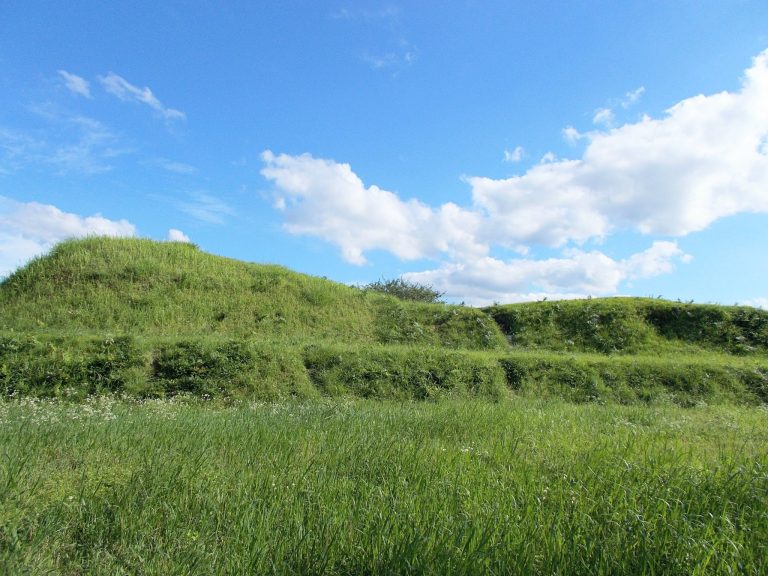
The megalithic burial was marked by a horizontal stone 3.60 metres long, 2 metres wide, and 30.3 centimetres thick. A standing stone beside it measures 1.20 metres high, 1.50 metres wide, and 40 centimetres thick. Both stones have been moved and are now displayed in a park. The original arrangement is uncertain. The stones may have stood on a raised earthen mound, while a square tomb enclosed by a ditch is another proposed form. The original alignment of the stones and the shape of the jar coffin are unresolved; the standing stone may have been positioned behind the deceased’s head.
Burial goods
Some jar-coffin burials contained about 30 bronze mirrors made during China’s Western Han dynasty, the earlier of the two major Han periods, along with glass or jade beads, comma-shaped beads, and Yayoi pottery. Bronze swords came from wooden-coffin burials, while bronze swords and spears are associated with the megalithic burial.
Underground chamber
About 14 metres northeast of the megalithic burial is the location known as D Point, where a brick-lined underground chamber was made to hold recovered artifacts and excavated soil.
Park displays
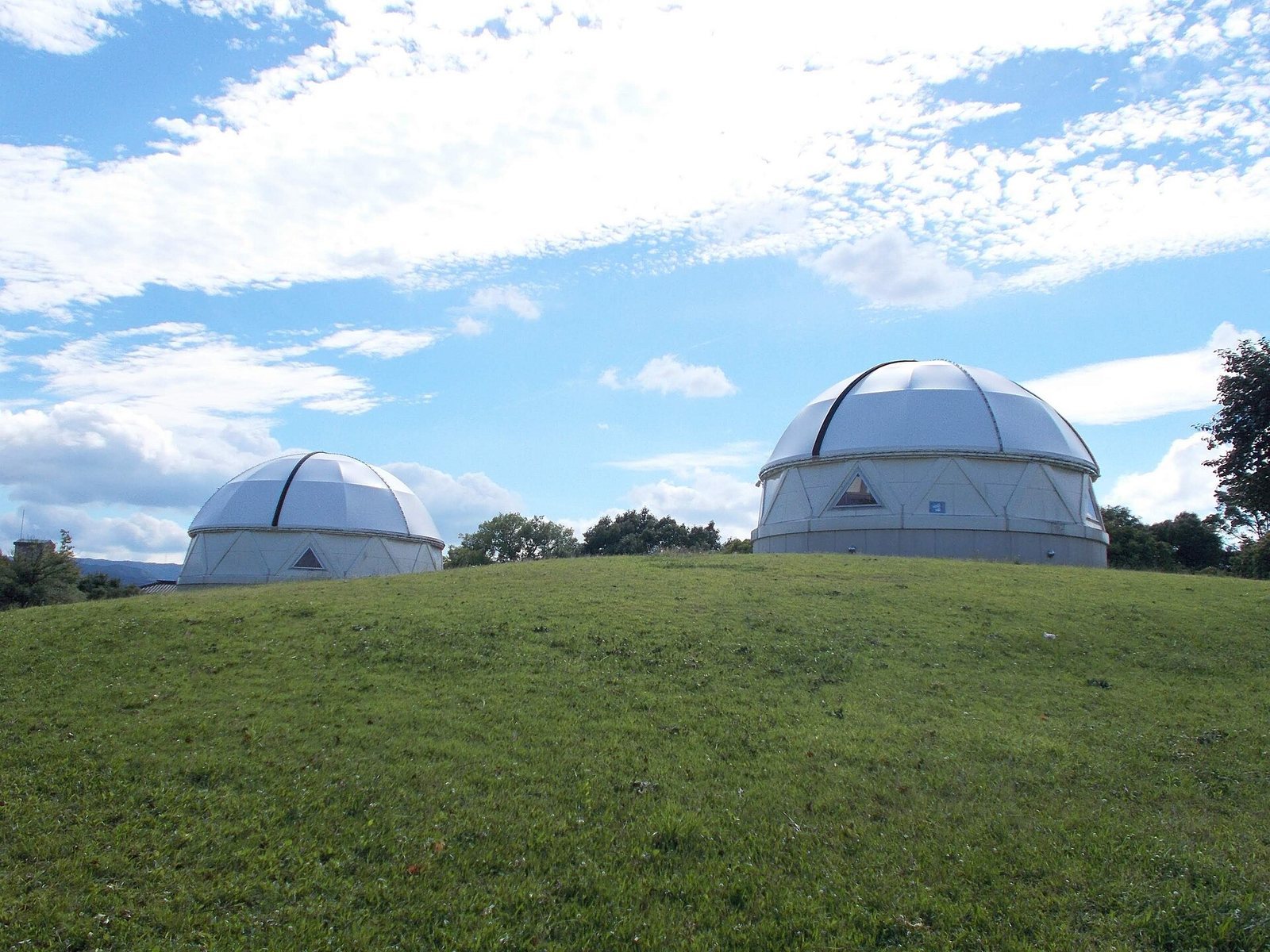
The site has been developed as Nakuni-no-oka Historical Park. Two domed exhibition halls display portions of coffin burials and ritual remains in the condition in which they were found during excavation.