Naka Hachiman Kofun: An Early Keyhole Burial Mound in Japan
Site at a Glance
- Rating
- 3.8
- Popularity
- Very Low
- Country
- Japan
- Primary era
- Classical
- Eras represented
- Iron Age, Classical
- Civilizations
- Yayoi
- Site type
- Burial
- Remains
- Burial Mound
On this page10 sections
History
Naka Hachiman Kofun is a keyhole-shaped burial mound in Japan, built during the formative phase of the Kofun period in the mid-third century AD. The Kofun period was an era of large elite burial mounds and growing political centralization. The tomb’s occupant is presumed to have been a regional chief who controlled the area between the Mikasa and Naka rivers and may have exercised authority across the Fukuoka Plain.
An early regional tomb
The monument is much smaller than contemporary formative keyhole tombs in the Yamato region, but its date is considered comparable. Its construction and the discovery of a triangular-rimmed deity-and-beast mirror have drawn attention to possible connections with the early Yamato polity, an emerging political authority based in central Japan. Such relationships are studied through shared burial forms and grave goods, including bronze mirrors.
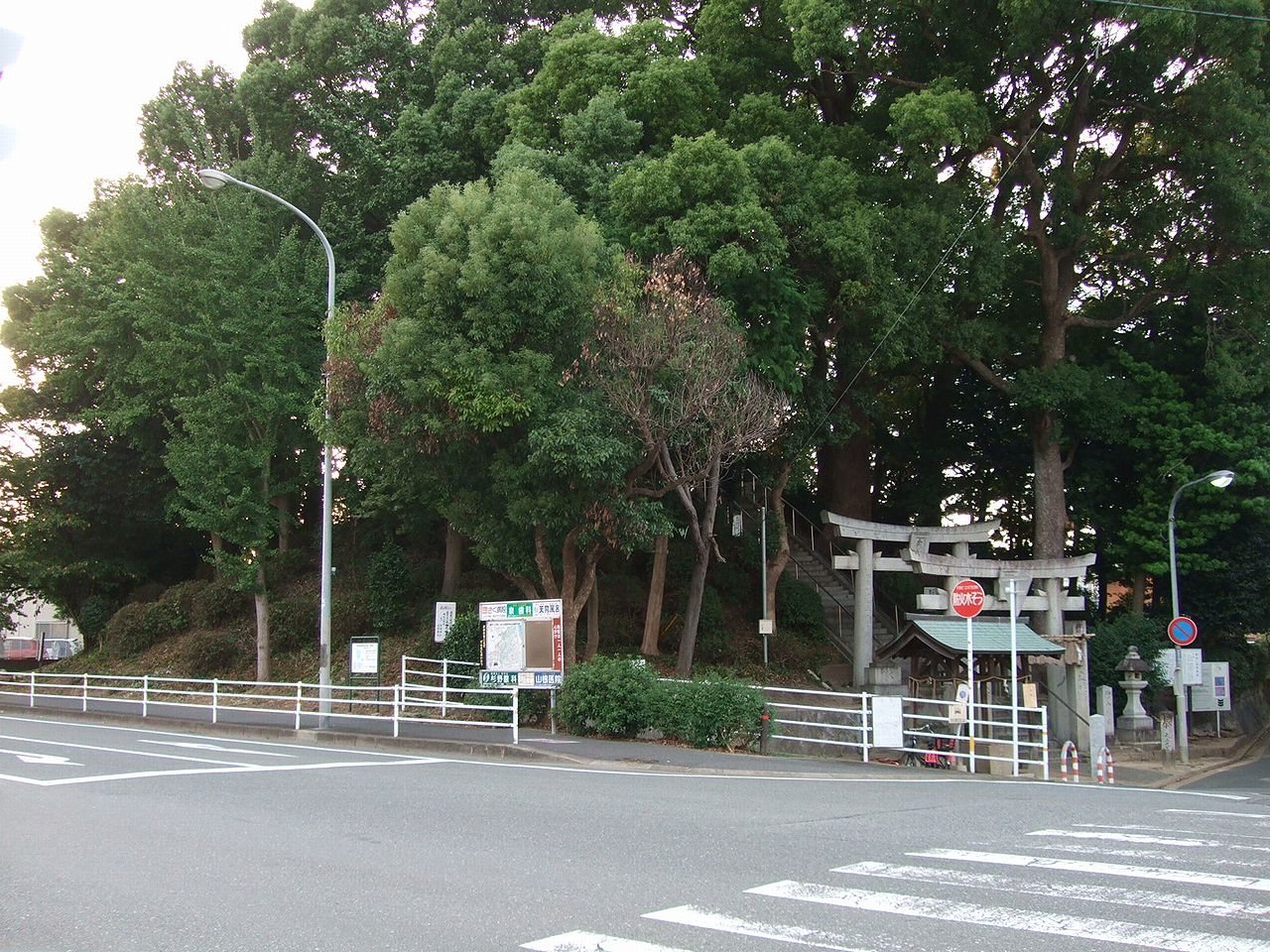
The tomb stood on a hill in the central Fukuoka Plain, between the Mikasa River to the east and the Naka River to the west. The rivers are thought to have formed broad inlets when the tomb was built, making the hill appear to project like a peninsula into an inlet. The site belongs to the Naka Archaeological Site Group and is designated a Fukuoka City Historic Site.
Investigation and later alteration
A Yayoi-period bronze halberd casting mold was found within the shrine precinct in 1948. In 1971, the Kyushu University archaeology laboratory investigated the Naka Archaeological Site Group for remains and artifacts contemporary with the mold. The independent hill occupied by the shrine was then identified as a scallop-shell-shaped tomb.
An excavation by the Fukuoka City Board of Education in 1985, connected with construction of the Naka-Takeshita Station Front municipal road, established that the monument was a keyhole-shaped tomb. The investigation also showed that its constricted section widened in a form characteristic of early keyhole tombs, despite extensive later modification.
Residential-land development beginning in the Kamakura period cut away much of the mound’s edges, while air-raid shelters constructed during the Pacific War caused further damage. The grounds of Naka Nursery School removed much of the front section. At the time of investigation, the site housed the Fukuoka City Board of Education’s Naka Buried Cultural Properties Sorting Office.
Remains
The mound and burial facilities
Naka Hachiman Kofun is approximately 75 meters long and 6.5 meters high. Its circular rear mound measures about 48 meters across, while the projecting front section has been substantially reduced. The rear mound survived relatively well because a shrine building occupied it. Excavation showed that the rear mound was not a precise circle and that its narrowed central section broadened in a form associated with early keyhole tombs. This arrangement has been compared with Hashihaka Kofun, a large early keyhole mound in the Nara Basin.
Burial Facility 1
Burial Facility 1 lies at the center of the rear mound’s summit. It is considered the original burial installed when the tomb was constructed. Much of the facility lies beneath the shrine building, leaving its dimensions and grave goods unknown.
Burial Facility 2
Burial Facility 2 lies north of Burial Facility 1 and was partly covered by the shrine building. It held a direct burial, meaning that the coffin was placed in the earth or mound without a separately built stone chamber. The coffin was a relatively short split-bamboo-shaped wooden coffin, made from timber shaped like lengthwise half of a bamboo stem, and measured about 2.3 meters long. Vermilion and other red pigments were found in the soil inside it.
The burial contained a triangular-rimmed deity-and-beast mirror, magatama, tubular beads, and small glass beads. The mirror is a Five-Deity, Four-Beast Mirror approximately 21.8 centimeters in diameter. Matching-cast examples are known from Tsubai Otsukayama Kofun in Kyoto Prefecture and Yusako Kurumazuka Kofun in Okayama City. Related examples are associated with finds from Tomio Maruyama Kofun in Nara City and with an object held by the Freer Gallery of Art.
Fibers remain on the mirror’s surface and around its central knob. The surface fibers are plain silk, while those around the knob are ramie. The mirror is therefore thought to have been placed in the burial wrapped in silk cloth. A red-coated Haji ware high-footed cup was also found in the coffin pit. Haji ware is unglazed earthenware produced in ancient Japan.
Earlier and later archaeological remains
Yayoi-period settlement remains
Under the mound and its moat, excavations revealed Yayoi-period post-built buildings, pit dwellings, and a well. These remains place earlier activity beneath the later burial monument. The 1948 discovery within the shrine precinct of a Yayoi-period bronze halberd casting mold adds another indication of activity at the site before construction of the kofun.
Moat and later activity
A moat is inferred from an Edo-period description of depressions on three sides of the mound and from records that the hollow surrounding the hill was used as a refuse dump until around the 1950s. The moat yielded Kamakura-period Haji ware, celadon, stone cooking vessels, and roof tiles. Celadon is a glazed ceramic with a jade-green or blue-green surface. South of the mound, a jar coffin burial probably dating from the late Kofun period to the Nara period was also found.