Suessula: An Ancient City in Campania
Site at a Glance
- Rating
- 3.7
- Popularity
- Low
- Country
- Italy
- Primary era
- Classical
- Eras represented
- Iron Age, Classical
- Civilizations
- Roman
- Site type
- Settlement
- Remains
- City
On this page9 sections
History
Suessula was an ancient city in Campania, Italy, near present-day Acerra. Founded in the ninth century BC, it was first controlled by the Oscans, an ancient people of southern Italy, and later by the Etruscans, who included it among the twelve cities of their Campanian league. Its position near the Samnium frontier made it a strategic site in conflicts between the Samnites and Rome.
Oscan foundation and Roman rule
During the First Samnite War, an early conflict between Rome and the Samnites, Roman forces under consul Marcus Valerius Corvus defeated the Samnites in a major battle at Suessula in the mid-fourth century BC. Rome also kept a substantial reserve force at the city. By the late fourth century BC, Suessula was under Roman rule as a civitas sine suffragio, a civic status that gave a community membership in Rome without the right to vote.
In the Roman Republic, Suessula became a municipium, a town within the Roman state that retained some local administration. After Capua’s defeat it became a prefecture administered by Roman officials, and later Sulla established a military settlement there. Veterans were settled in the town, which appears not to have received formal colonial rank. It continued as a municipal town under the Roman Empire.
Roads and wartime use
Suessula’s position on routes linking the region’s towns added to its strategic value. During the Second Punic War, Rome’s conflict with Carthage, the Roman general Marcus Claudius Marcellus occupied nearby hills in 216 BC to defend Nola and watch Hannibal’s operations against it. Roman troops maintained a camp in the area for several years; it became known as the Castra Claudiana.
Medieval decline
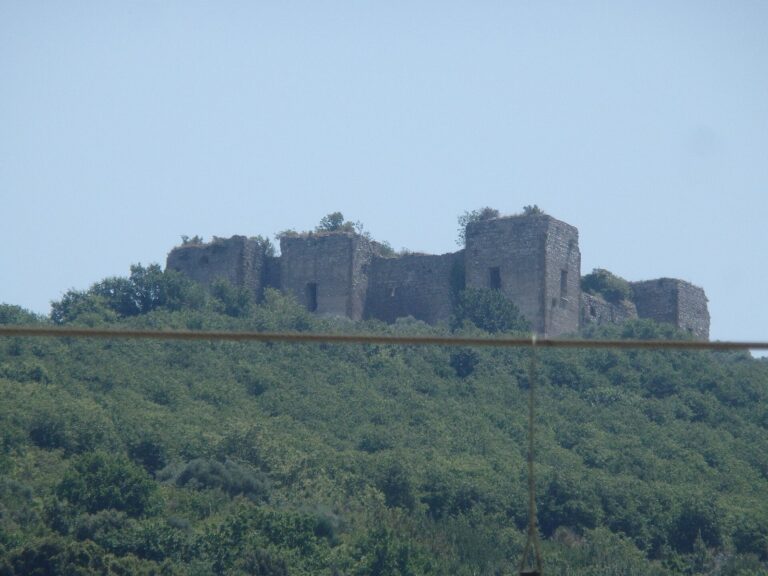
In the early Middle Ages, Suessula was an episcopal see, meaning the center of a bishop’s diocese, at least until the tenth century. It also served as the principal town of a small Lombard gastaldate, an administrative district governed by a local official called a gastald. Saracen forces, a medieval European term for Muslim raiders, destroyed the city in 880 and attacked it repeatedly. A document dated 1028 shows that people still lived in the settlement, but its inhabitants gradually left. Malaria and the spread of marshland and woodland contributed to the decline. Some people moved toward Acerra, Mount Sant’Angelo a Palombara, and Mount Argentario, where a fortified castle was built.
Rediscovery and the Casina Spinelli
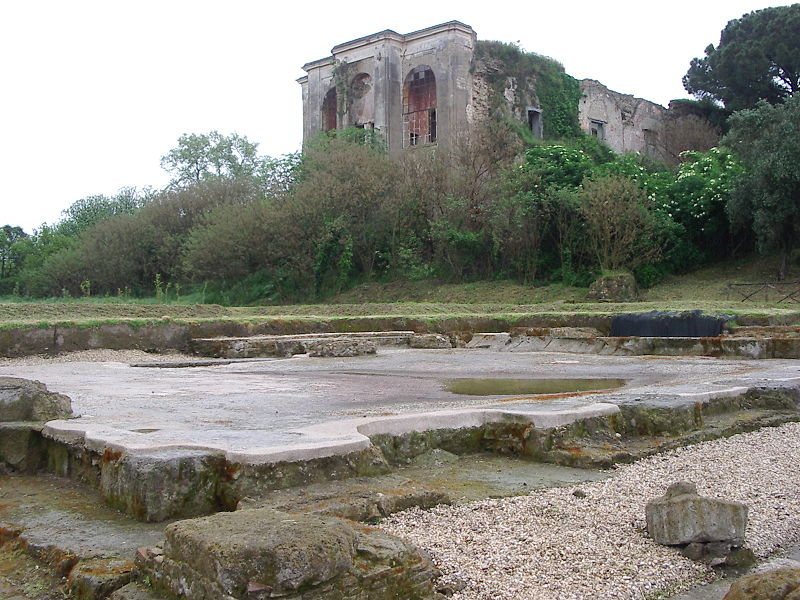
After Suessula faded from memory, the site was rediscovered in the second half of the nineteenth century. Its archaeological remains lie within the territory of Acerra. In 1778, Ferdinand IV of Naples, later Ferdinand I of the Two Sicilies, had the Casina Spinelli built in the wooded Calabricito area. He used the villa and its grounds as a hunting reserve until 1830. The building took its name from the Spinelli counts, who owned it and the surrounding land.
The Spinelli counts excavated the ancient city from 1872 to 1886, placing many finds in the villa and creating a rich private collection. During the German occupation of part of the building in 1943, officers stole rare archaic gold ornaments before leaving in October; the objects were never recovered. By 1945 the villa had also lost its eighteenth-century furnishings, used by Allied troops as firewood. Most of the archaeological collection remained intact, although some less valuable pottery was broken. The display cases survived because they held the most important finds. Spinelli’s widow later donated most of the collection to the National Archaeological Museum of Naples, where it is displayed in the prehistoric section. The Casina is protected as a property of historical and archaeological interest under legislation dating to 1939 and a 1977 decree.
Remains
City layout and surviving buildings
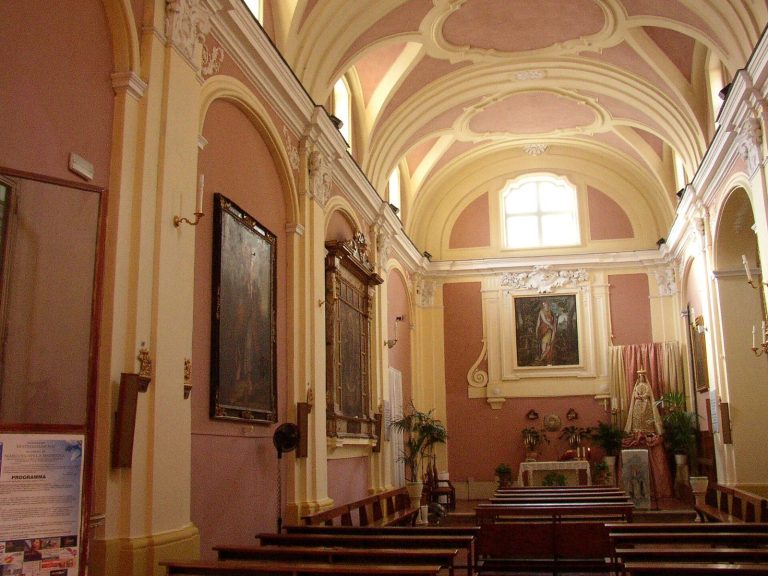
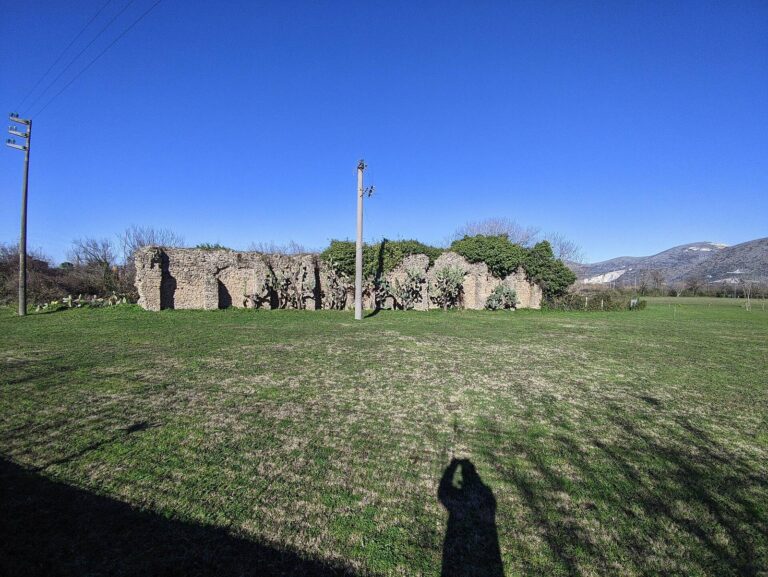
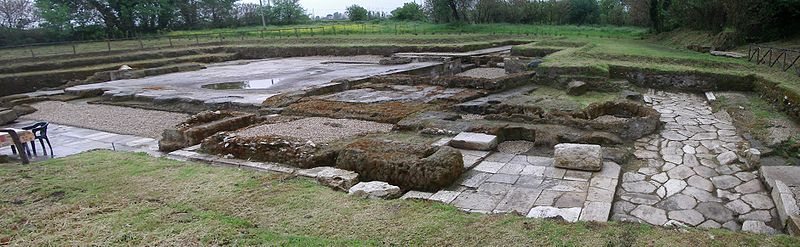
Suessula stood near the Riullo River and a line of hills rising above the Campanian plain. The Via Popilia, a major Roman road in southern Italy, crossed the city and met a route from Neapolis through Acerrae toward the Via Appia. The Tabula Peutingeriana, a surviving map of Roman roads, places Suessula on the road between Capua and Nola, about 14.5 kilometres from each. Traces of the city’s theatre and debris from other buildings remain visible. The ancient city also had numerous monuments and churches, and the remains of its cathedral could still be seen until the end of the eighteenth century. The ruins were more conspicuous in the nineteenth century than they are today.
Burials and excavated finds
Excavations of Oscan tombs between 1878 and 1886 revealed burials formed with tuff slabs arranged like sarcophagi. Finds from the site include vases, bronze objects, inscriptions, column tops, and other architectural fragments. They also include a bronze clothing fastener dated to the eighth century BC and a decorated amphora, or large storage jar, from the sixth or seventh century BC.
Historic buildings
The Casina Spinelli incorporates a tower dating to the Lombard period. An adjacent castle is known as Torre di Sessola.