Stupnicki House in Sanok: A Relocated Nineteenth-Century Manor House


Site at a Glance
- Rating
- 4.7
- Popularity
- High
- Country
- Poland
- Primary era
- Modern
- External website
- Open
- Eras represented
- Modern
- Civilizations
- Habsburg
- Site type
- Domestic
- Remains
- Manor House
On this page6 sections
History
The Stupnicki family and the nineteenth century
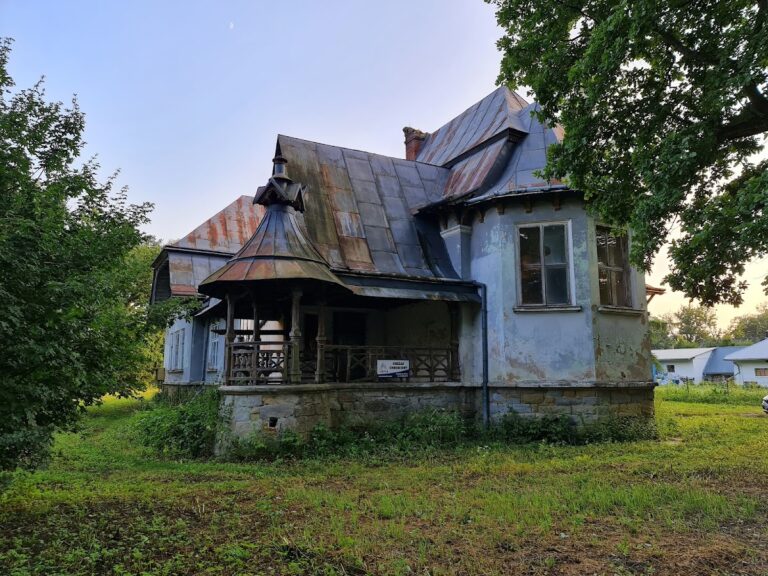
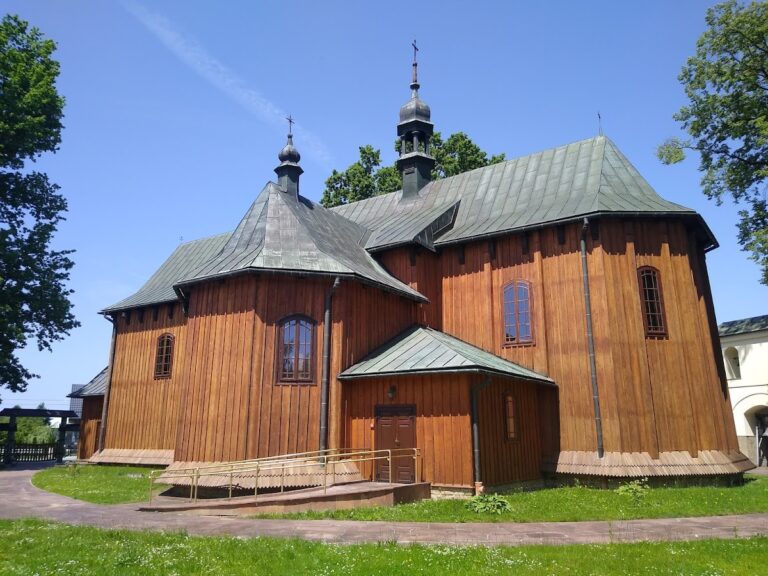
Stupnicki House is a nineteenth-century larch-wood manor house in Sanok, Poland, associated with the Stupnicki family. Its construction was dated to the beginning of the nineteenth century. In the mid-twentieth century, Stefan Stefański estimated that the building was approximately 150 years old.
At the turn of the nineteenth and twentieth centuries, the house carried registration number 74. It was inhabited by the landowners Emilia Stupnicka, née Ścibor-Rylska, who died in 1899, and Antoni Stupnicki, who died in 1908. Antoni had taken part in the January Uprising, the Polish insurrection against the Russian Empire fought in 1863 and 1864, and worked as a court official.
Family residence in the twentieth century
In 1931, the property was listed at 32 Tadeusz Kościuszko Street under registration number 76. Helena Stupnicka was then its owner. After 1945, members of the family, Michalina Helena Stupnicka (1883–1949) and Mieczysław Stupnicki, lived in the house.
The building became informally known as both “Stupnicki House” and “Cat Manor.” The latter name referred to the household’s dozen or so cats and several goats, which lived there alongside the Stupnicki siblings and a servant.
Protection and relocation
In 1961, the Cultural Department of the Regional National Council in Rzeszów designated the building a historic monument. A Regional National Council was a local administrative body in communist Poland.
At the beginning of 1962, the authorities approved the house’s dismantling and transfer without charge to the developing Folk Architecture Museum in Sanok, an open-air museum devoted to vernacular buildings and traditional rural architecture. The work began in early spring, while a residential block was being built beside the former site and preparations were under way for a monument to Tadeusz Kościuszko, a Polish military leader and national hero who also served in the American Revolutionary War. That monument was unveiled on 15 September 1962. Stupnicki House reached the museum in mid-1962 and is now owned by the institution.
Remains
The relocated manor house
Stupnicki House is a larch-wood manor house transferred from its former position at 32 Tadeusz Kościuszko Street, opposite the intersection with Henryk Sienkiewicz Street. The earlier property records identified the same house by registration numbers 74 and 76. After its arrival at the Folk Architecture Museum during the summer of 1962, the building awaited conservation.
Within the museum, the house serves as an entrance facility. Its present functions include the administration, reception, ticket office, and shop.
Nearby sites