Stoney Littleton Long Barrow: A Neolithic Chambered Tomb
Site at a Glance
- Popularity
- Medium
- Country
- United Kingdom
- Primary era
- Stone Age
- Eras represented
- Stone Age
- Civilizations
- Unclassified
- Site type
- Burial
- Remains
- Burial Mound
On this page4 sections
History
Neolithic construction and use
Stoney Littleton Long Barrow is a Neolithic chambered tomb near Wellow in the United Kingdom, probably built around 3500 BC by farming communities during the later Stone Age. A long barrow is an elongated burial mound. The tomb belongs to the Cotswold-Severn group, a regional tradition of prehistoric chambered tombs. Comparable monuments were used for ritual burial between 4000 and 2500 BC.
Excavation and protection
A local farmer opened the tomb around 1760 while taking stone for road construction. In 1816–17, John Skinner and Richard Hoare excavated it, assisted by the laborer Zebedee Weston, who entered through an opening made earlier. Thomas Joliffe restored the mound in 1858.
The barrow was scheduled for legal protection in 1882 under the Ancient Monuments Protection Act, a law safeguarding ancient monuments, and was among the first sites covered by the measure. It has been in state care since 1884 and is now managed by English Heritage. The Cotswold Archaeological Trust carried out a geophysical survey, which uses instruments to investigate features below ground, and further conservation work in 1999 and 2000.
Remains
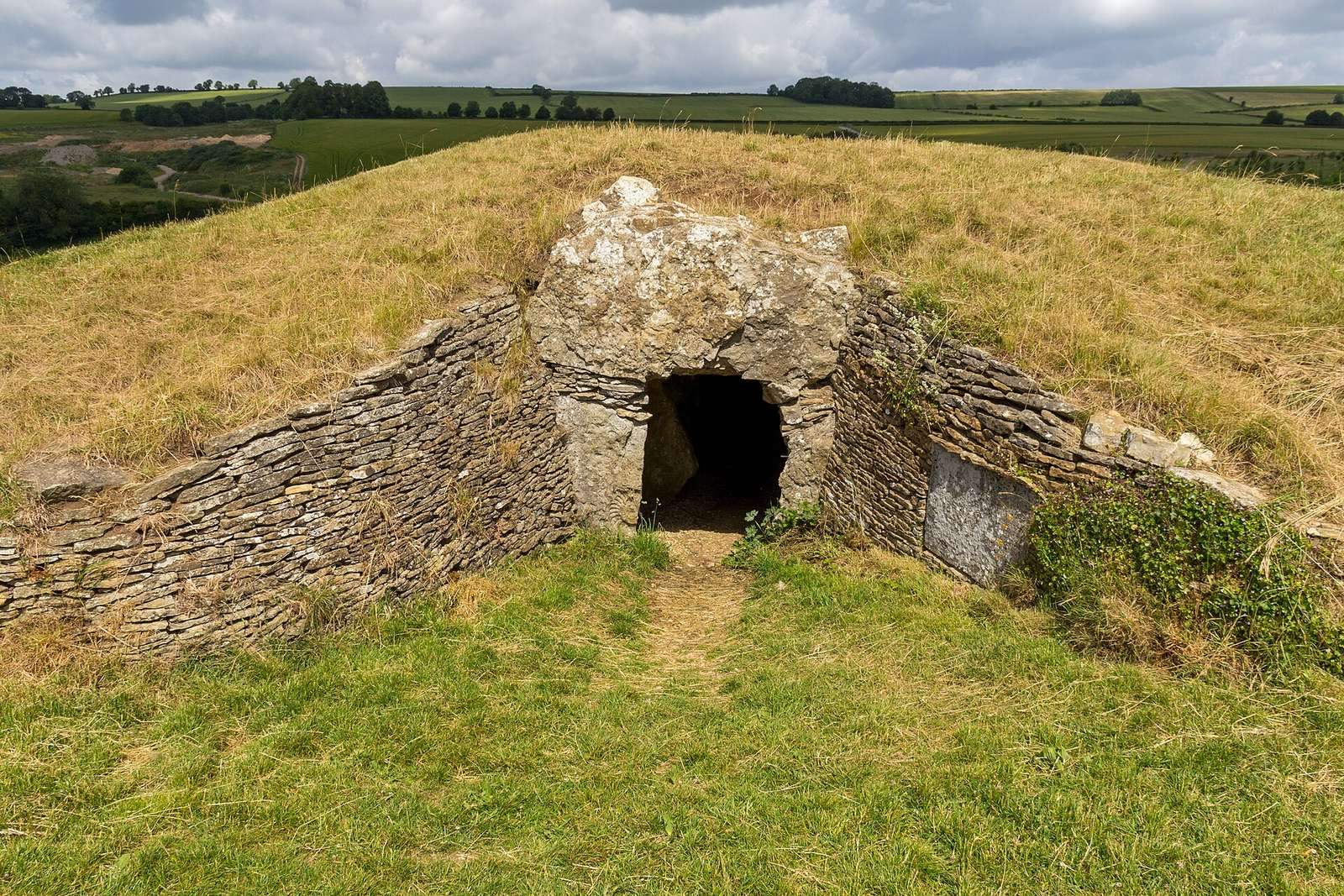
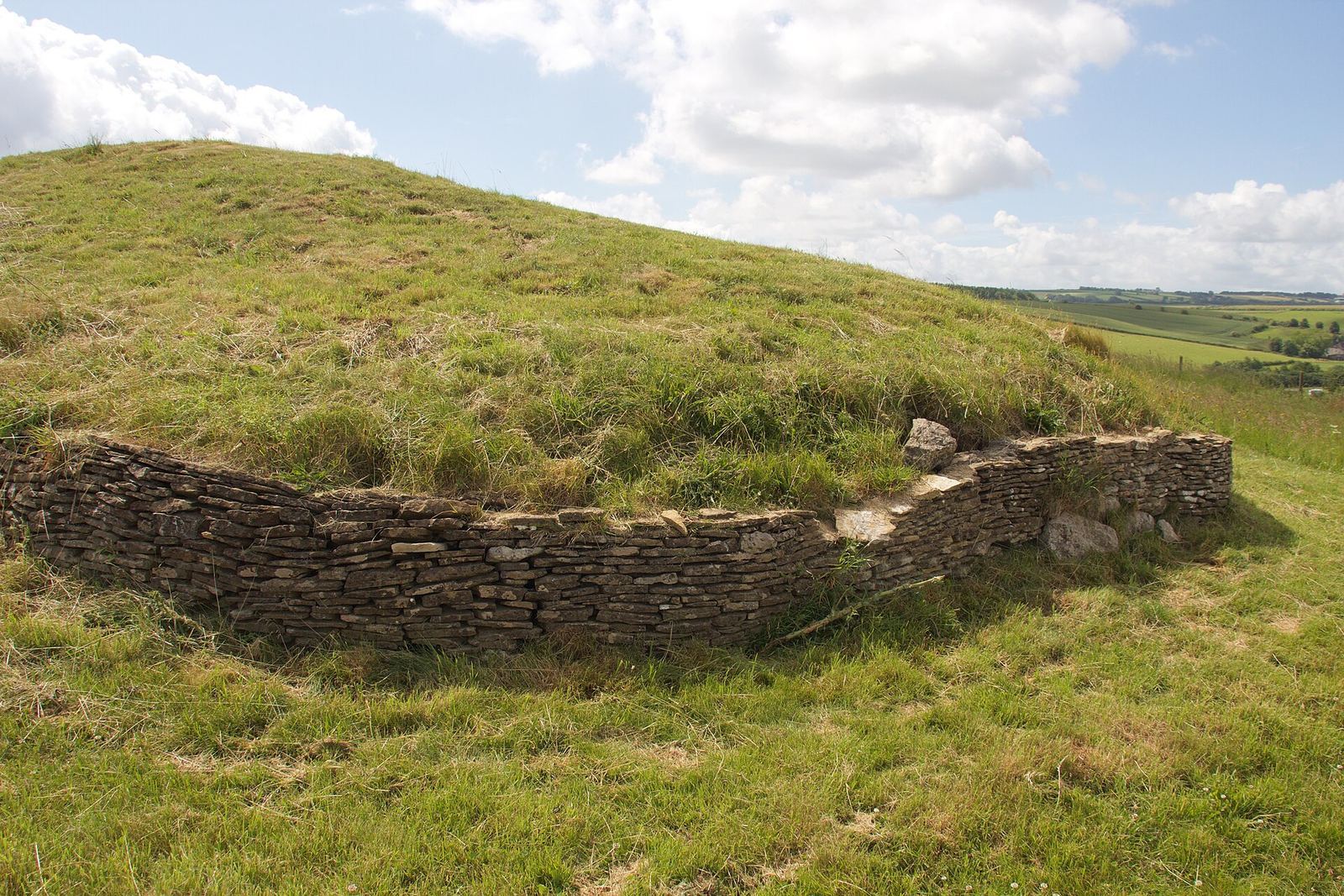
The monument is an intact, elongated earth mound with a trapezoidal outline. It measures about 30 metres long, is 15 metres wide at its south-eastern end, and rises to nearly 3 metres. Set on a limestone ridge rather than level ground, it appears to descend the slope. About 1.5 kilometres southwest of Wellow, it overlooks Wellow Brook and the village. Stone used in the mound includes Blue Lias, a limestone-and-mudstone formation, and Forest Marble limestone, quarried within an 8-kilometre radius.
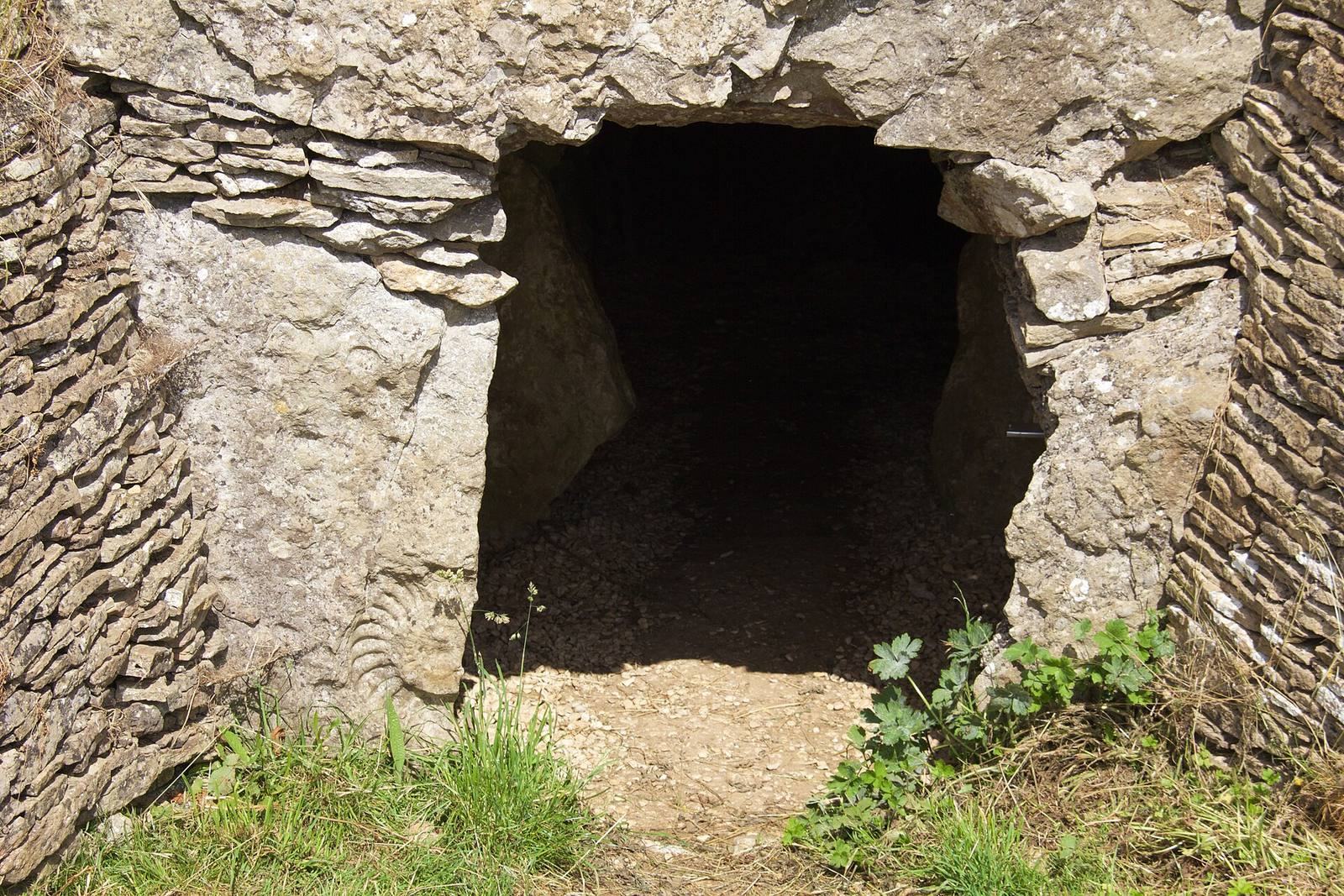
Inside, a 12.8-metre gallery connects three pairs of side chambers with a chamber at the far end. The entrance and passage are oriented roughly toward the midwinter sunrise, and overlapping stones form the roof. A fossil ammonite impression decorates the left-hand doorjamb.
Excavations recovered bones belonging to several people, including some that had been burned. Some objects found during the excavations are held at Bristol Museum & Art Gallery.