Stoke Park: A Historic Estate and Country Club in the United Kingdom
Site at a Glance
- Rating
- 4.6
- Popularity
- High
- Country
- United Kingdom
- Primary era
- Early Modern
- Eras represented
- Early Modern, Modern
- Civilizations
- Unclassified
- Site type
- Domestic
- Remains
- Park
On this page8 sections
History
Stoke Park is an estate in the United Kingdom whose history reaches back to the eleventh century; its central mansion is a Georgian building completed in 1788. The estate’s long history of inheritance, later development and use as a country club shaped its grounds and buildings.
Inheritance and Tudor rebuilding
The estate’s history reaches back to the period of the Domesday Book, William I’s survey of land and resources in England. From 1066, it passed by direct inheritance for 515 years. In 1555, Francis Hastings, commander-in-chief of Henry VIII’s army and father of Henry Hastings, rebuilt the Manor House. In 1581, Henry Hastings, 3rd Earl of Huntingdon, sold the estate to the Crown to pay his debts. Queen Elizabeth I also owned it.
Penn and Georgian development
John Penn was responsible for much of the estate’s later development. He used a large part of the £130,000 paid by the new United States government for his family’s 26-million-acre tract in Pennsylvania. James Wyatt, architect to King George III, designed the mansion, which was completed in 1788. From 1790 to 1813, Wyatt also worked on the estate’s development and its monuments. Lancelot “Capability” Brown and Humphry Repton designed the landscape in 1792.
Country club and restoration
Stoke Park remained a private residence until 1908, when Nick “Pa” Lane Jackson bought it and converted it into one of the United Kingdom’s first country clubs. Jackson had founded the Corinthian Sporting Club and Corinthian F.C. In 1908, he commissioned golf-course architect Harry Colt to design a course. The mansion conversion, golf course and tennis courts were completed within eight months, and the course opened in July 1909. Prince Albert of Schleswig-Holstein became the club’s first president, with the Earl Howe as vice-president; Lord Chesterfield, Lord Kinnoull and Lord Decies served on its committee.
The estate is Grade II listed on England’s Register of Historic Parks and Gardens, a category recognizing historic interest. Reliance Industries acquired it in April 2021, after which an extensive restoration programme was carried out.
Remains
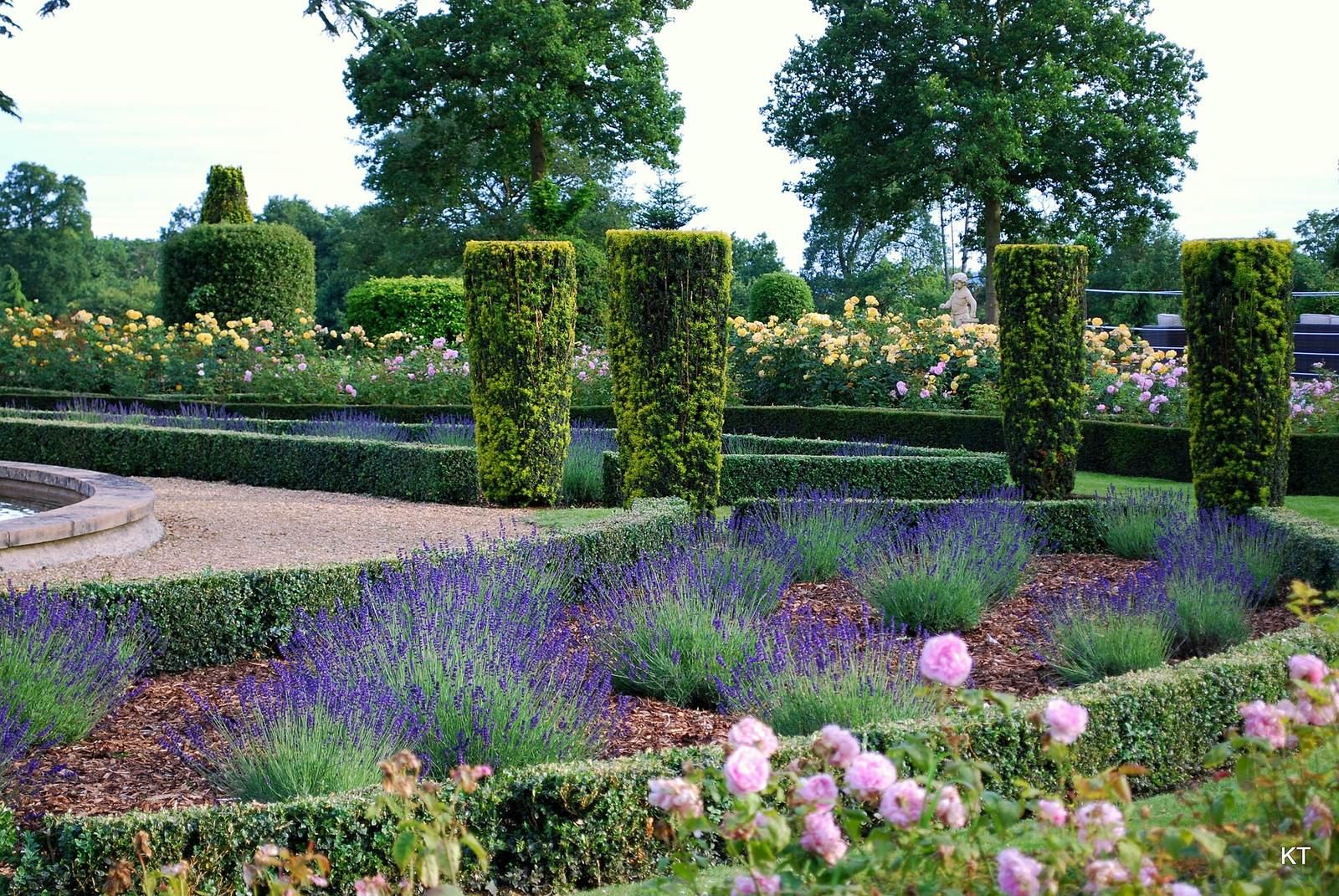
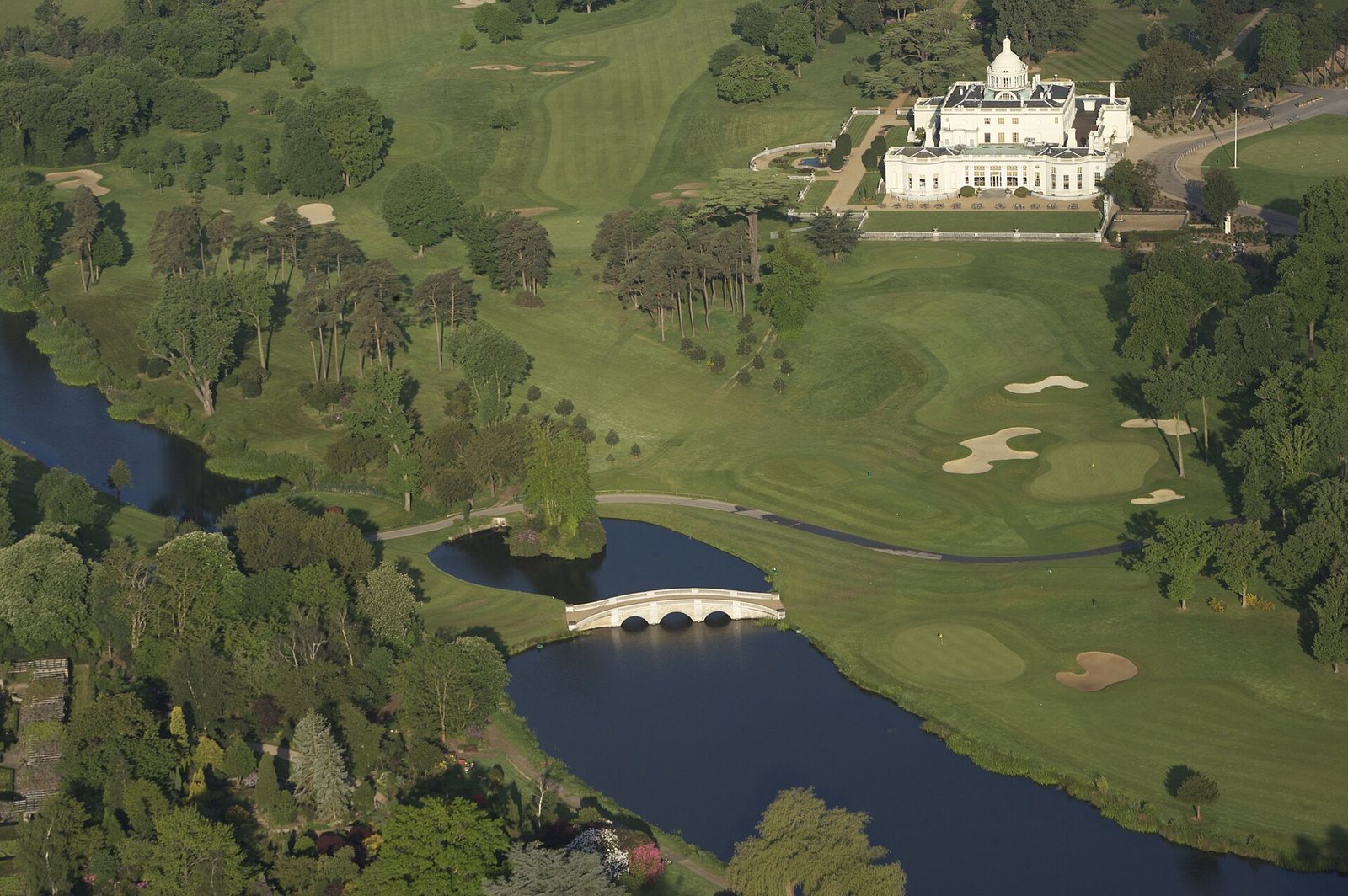
The 300-acre estate includes parkland, lakes, gardens and monuments, with the mansion near the centre of the grounds. Its surviving buildings and outdoor features combine the historic estate with facilities developed for its later sporting and country-club uses.
Mansion and Manor House
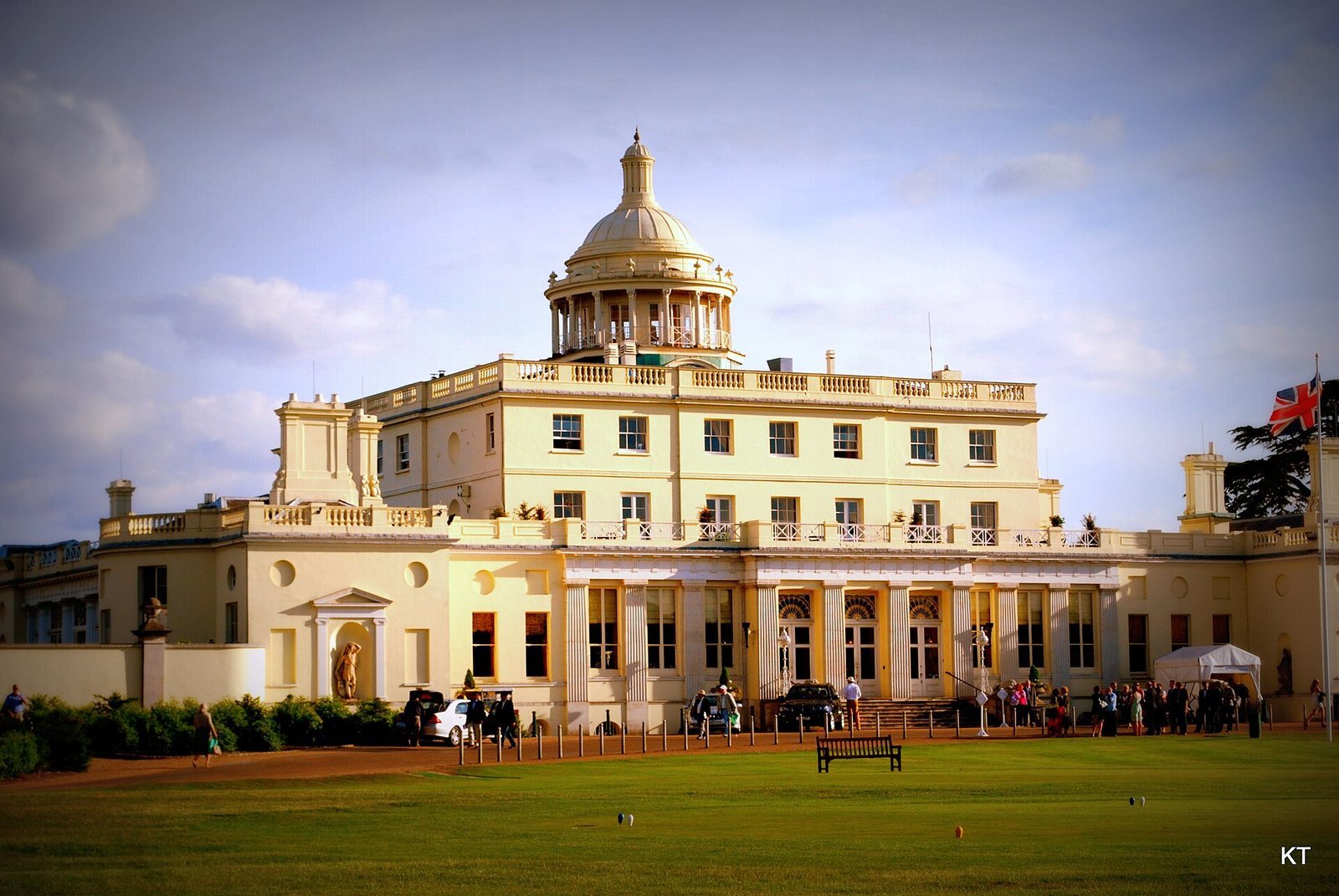
The central mansion is Georgian in style and has been described as American in appearance. It has been compared with the later-built United States Capitol in Washington, D.C. A portion of the earlier Manor House rebuilt by Francis Hastings also survives. In 1910, the clubhouse was described as having white stone, steps, terraces and cupolas, with a lake in front and trees around it.
Golf and tennis facilities
The championship golf course has 27 holes and a stated total distance of 7,345 metres. The grounds also contain grass tennis courts.
Pavilion
Opened in 2008, the pavilion contains a health and beauty spa, a swimming pool, a fitness studio and a gym. Bedrooms and suites occupy its first and second floors.