Stanway House: A Jacobean Manor in Gloucestershire
Site at a Glance
- Popularity
- Very High
- Country
- United Kingdom
- Primary era
- Early Modern
- Eras represented
- Medieval, Early Modern, Modern
- Civilizations
- British, English
- Site type
- Domestic
- Remains
- Manor House
On this page9 sections
History
Estate and monastic ownership
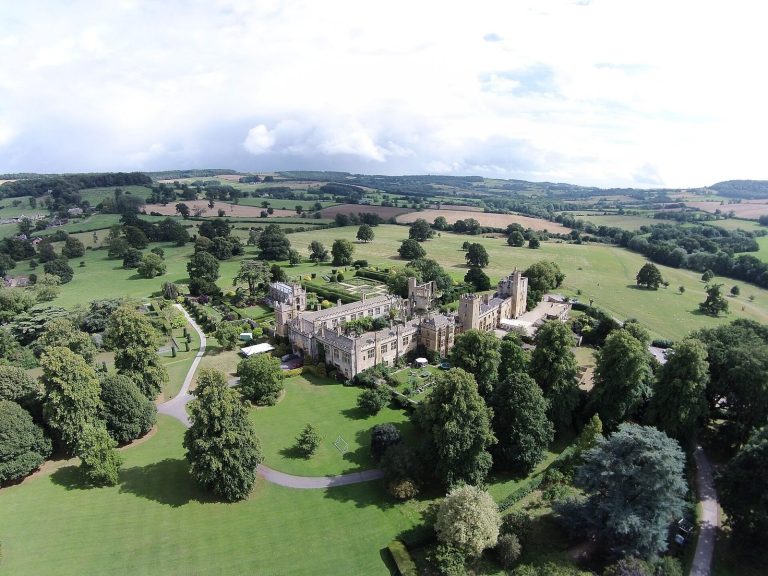
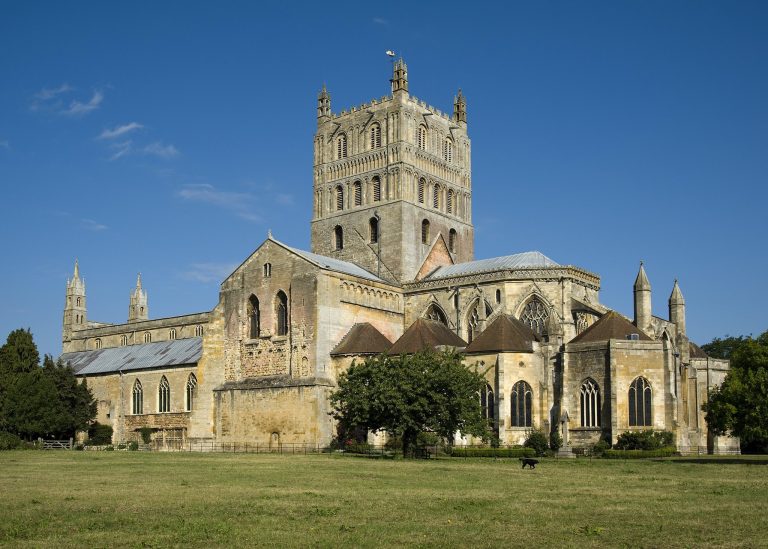
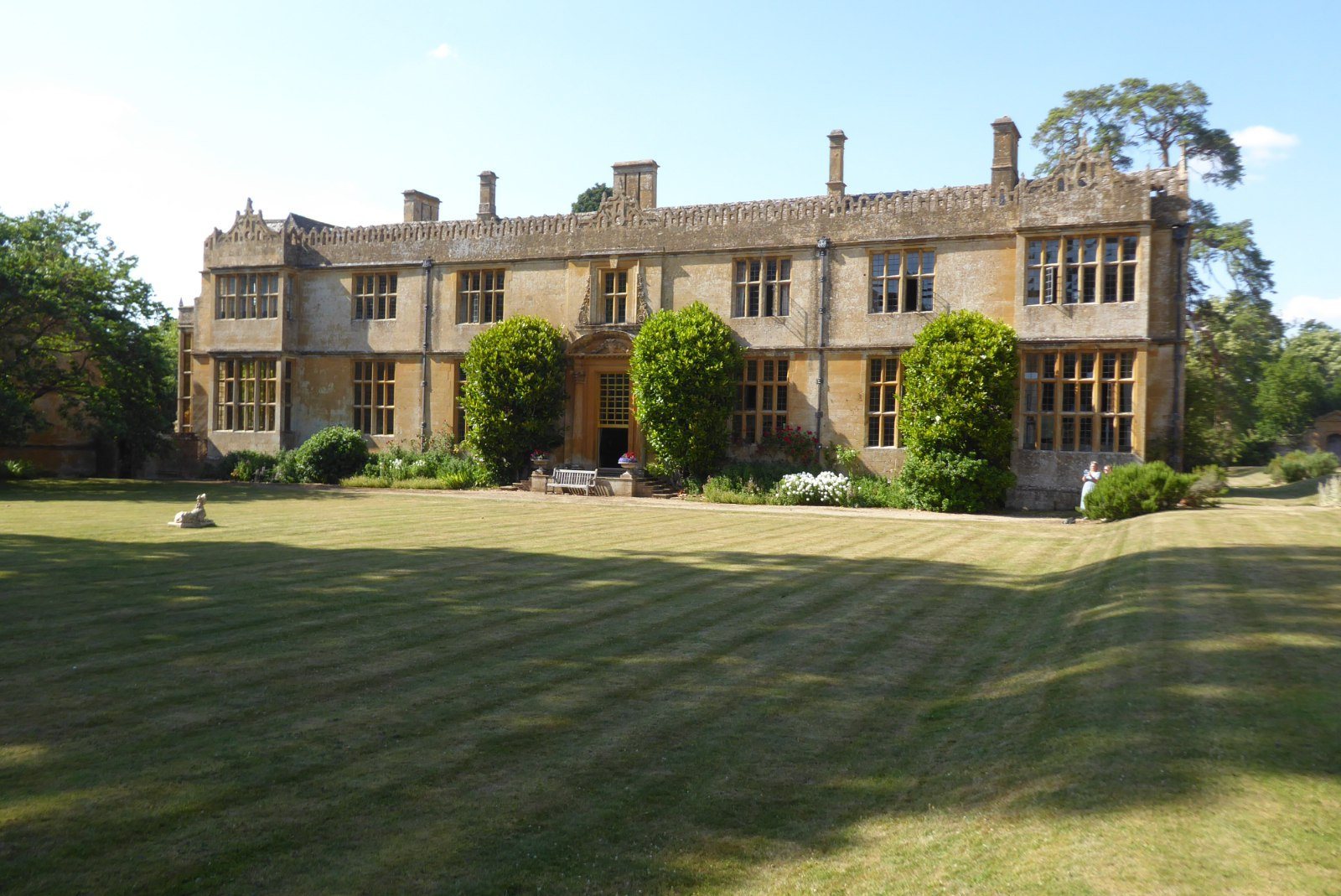
Stanway House is a Jacobean manor near the village of Stanway in Gloucestershire, United Kingdom. The estate is thought to date to around 715, when the Saxons Odo and Dodo, from the Winchcombe area, gave it to Tewkesbury Abbey, a medieval Benedictine monastery. The abbey held the manor for about 800 years. It later passed to the Tracy family and their descendants, the Earls of Wemyss and March, who held it for roughly 500 years.
A record from 1291 notes three corn mills and a fulling mill on the estate. The fulling mill processed woollen cloth from the abbey’s sheep by beating it to clean and thicken the fabric. Around 1370, the abbey also built the estate’s tithe barn, used to store agricultural produce owed to the institution.
The Tracy family and the Jacobean house
In 1533, Richard Tracy leased the estate from the abbey. His father had been declared a heretic after his death, and his body was exhumed and burned. Richard sought help from Thomas Cromwell, then a leading minister to Henry VIII who directed government action against monasteries. Cromwell proposed the lease to the abbey, which granted it within four days of his letter.
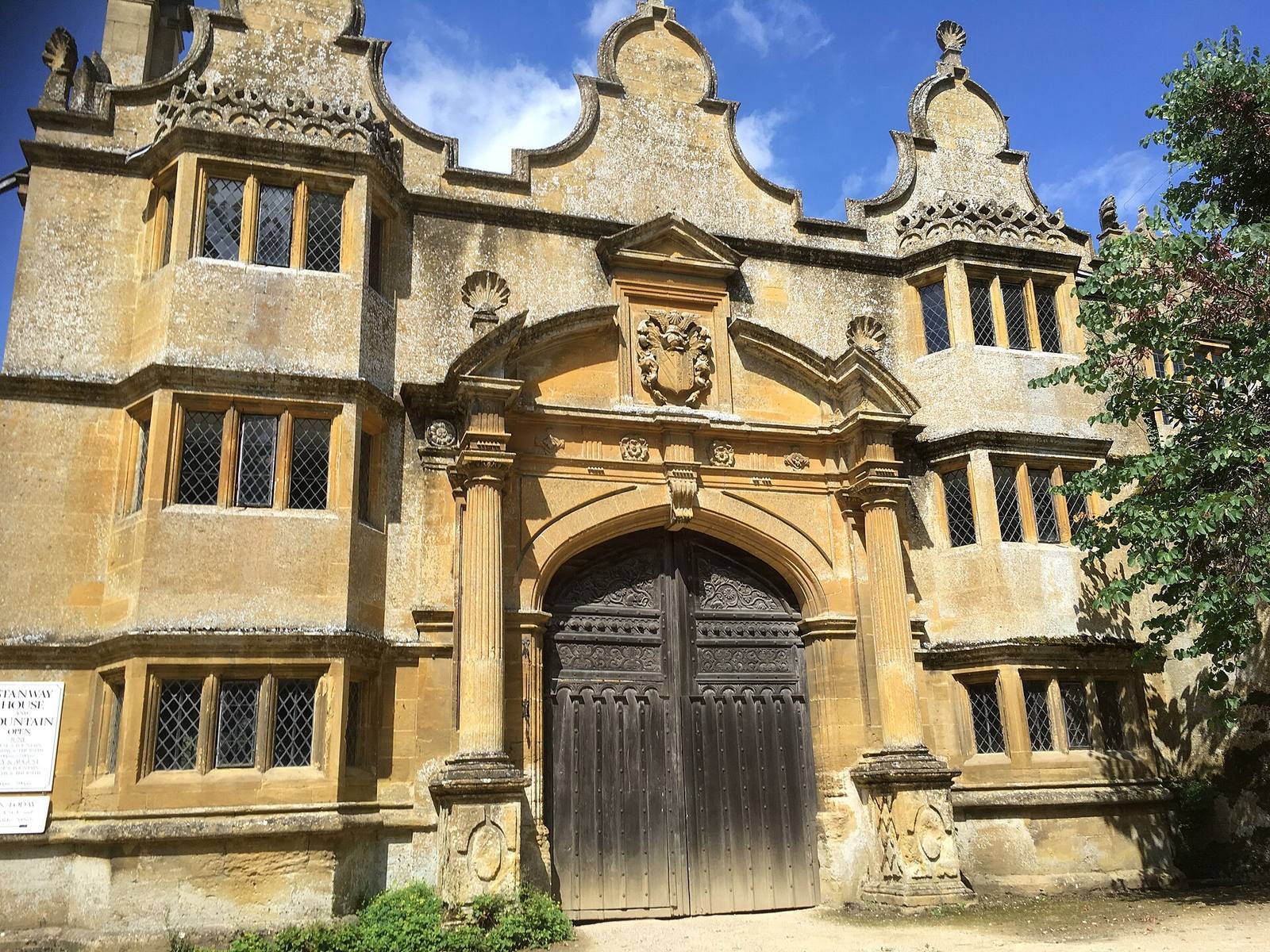
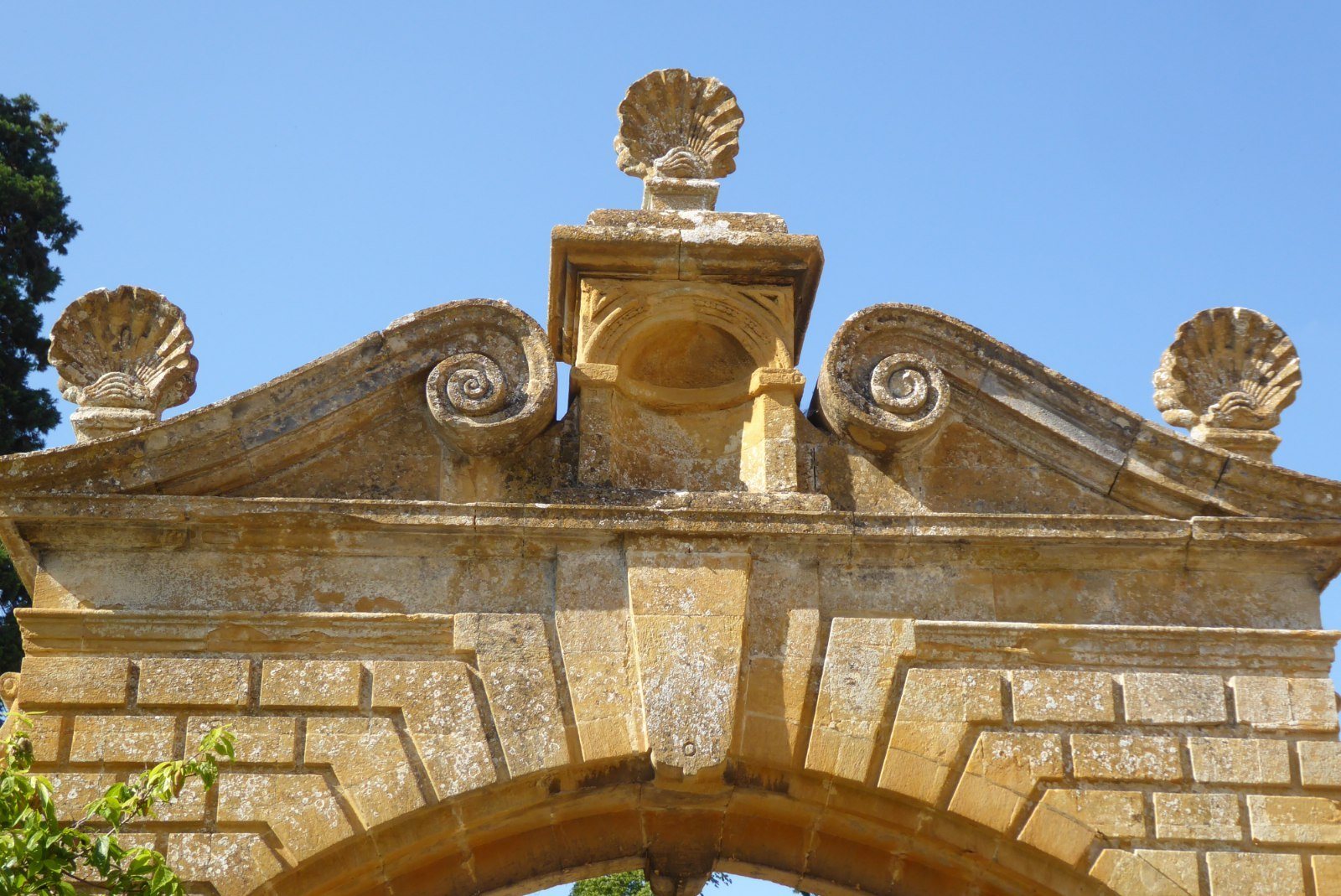
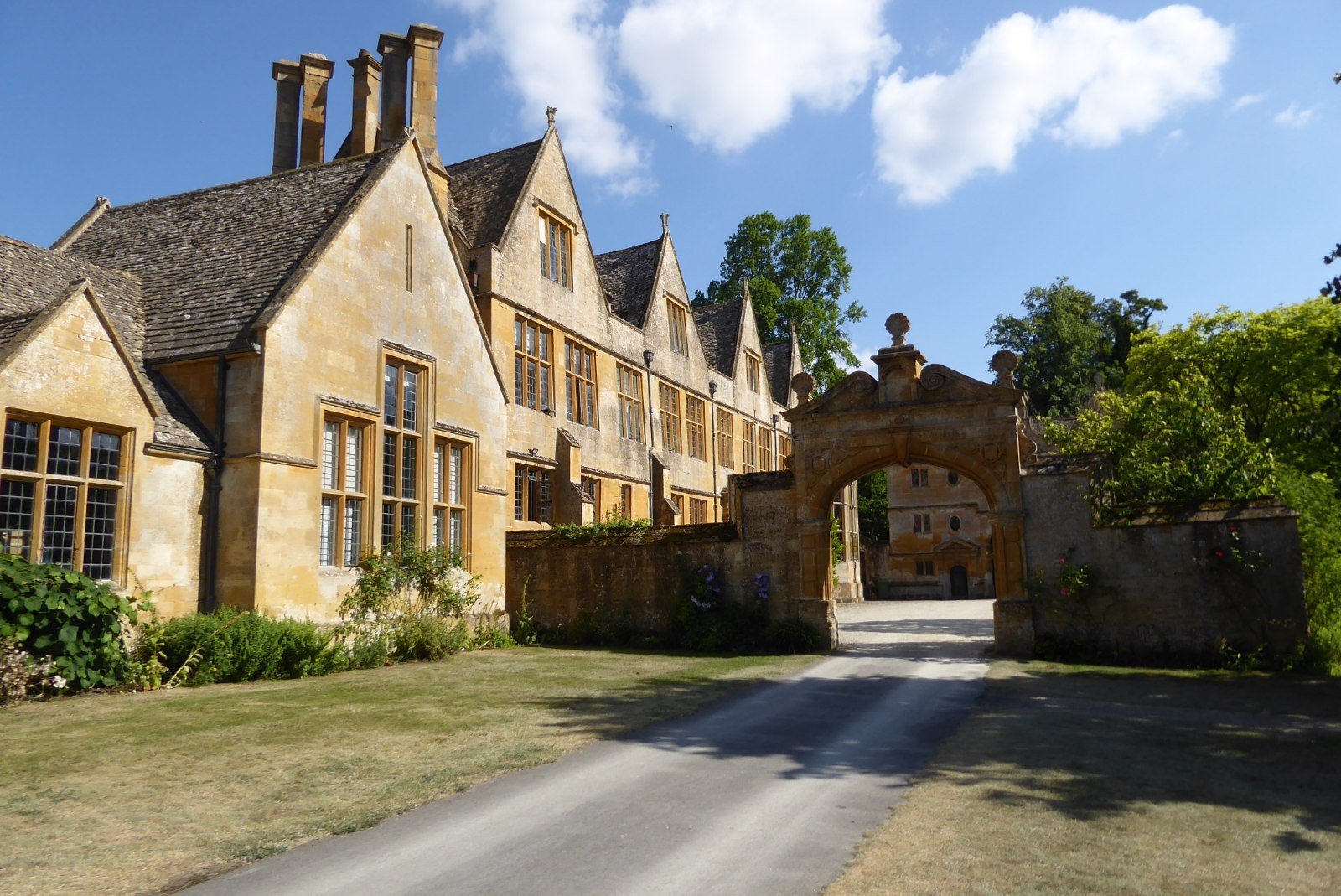
Around 1580, Paul Tracy commissioned a manor house on the ruins of an earlier Tudor house. The building took shape in the late sixteenth and early seventeenth centuries. Around 1630, Paul’s son Sir Richard Tracy created the triple-gabled Jacobean gateway. In the late seventeenth century, the fulling mill was converted to grind corn and became Stanway Watermill.
Later changes and restoration
John Tracy, lord of the manor from 1724 to 1735, probably added the estate’s water features. The Long Canal was filled in around 1850. In 1859, the architect William Burn designed the kitchen court. Detmar Blow remodelled the house’s north-east wing in 1913; it was demolished in 1948.
J. M. Barrie, the Scottish writer who created Peter Pan, spent summers at Stanway during the 1920s and continued visiting until 1932. The tithe barn was restored in 1927. In the early 2000s, the Long Canal was restored as part of work to create the present fountain, which was not an original estate feature. The mill pond was dredged, and the eight ponds and cascade were restored. The estate’s Elizabethan brewery was re-established with Lord Neidpath’s permission, and James Charteris, 13th Earl of Wemyss and March, has pursued further restoration at the house and grounds.
Stanway House, its gatehouse, the entrance courtyard gates and the tithe barn are Grade I listed, England’s highest listed-building category. The gardens also hold Grade I status on the Register of Historic Parks and Gardens.
Remains
House and gateway
The principal rooms occupy a long, south-facing range that meets the hall to form an L-shaped plan. This arrangement differs from the central-hall plan usual in Tudor houses. Guiting yellow stone, Jacobean gables and mullioned windows, with vertical bars dividing the panes, are features of the house. The estate’s gateway has three gables and stands with the entrance courtyard gates.
Barn and court
The tithe barn held agricultural produce paid to Tewkesbury Abbey. The estate also includes the kitchen court. These buildings form part of a wider group of historic structures associated with the manor.
Water gardens and fountain
The grounds contain the Long Canal, a mill pond, eight ponds and a cascade. Stanway Fountain stands in the canal. Its single jet rises more than 300 feet (91 m), making it Britain’s tallest fountain, ahead of the 121-foot (37 m) fountain at Witley Court. It is also the world’s tallest gravity-fed fountain, ahead of the 153-foot (47 m) Fountain of Fame at La Granja de San Ildefonso in Spain, and Europe’s second tallest, after Geneva’s 400-foot (120 m) turbine-driven Jet d’Eau.
A 2-inch (5.1 cm) bronze nozzle supplies the jet. Water reaches it through a 12-inch (30 cm) pipe about 2 kilometres (1.2 miles) long, fed by a reservoir with a capacity of 100,000 imperial gallons (450,000 litres; 120,000 US gallons). The reservoir lies 530 feet (160 m) above the canal, allowing gravity to drive the fountain.
Quarry and watermill
Cutsdean Quarry, within the grounds, is a nature reserve and a Key Wildlife Site in the Cotswolds. Stanway Watermill lies just outside the estate grounds and produces wholemeal and sifted flour.