Spoonley Wood Roman Villa: A Romano-British Estate near Winchcombe


Site at a Glance
- Rating
- 5
- Popularity
- Very Low
- Country
- United Kingdom
- Primary era
- Classical
- External website
- Open
- Eras represented
- Classical
- Civilizations
- Roman
- Site type
- Domestic
- Remains
- Villa
On this page9 sections
History
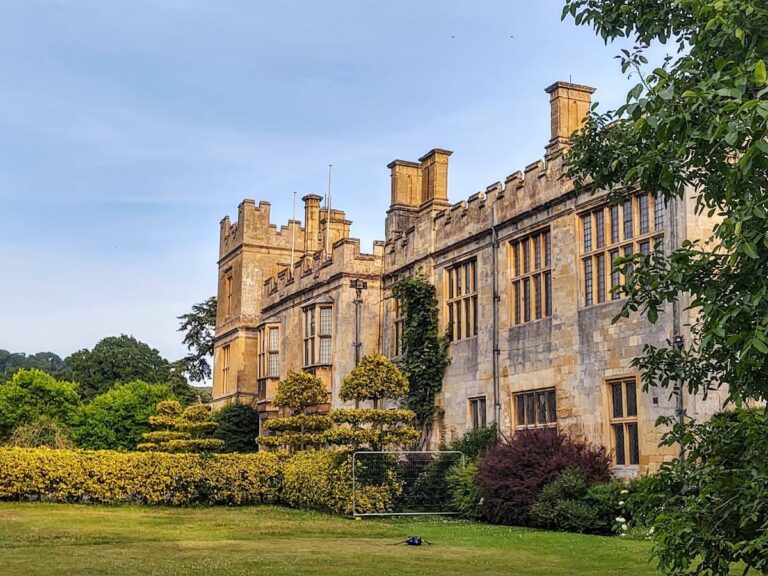
Spoonley Wood Roman Villa is a Romano-British rural estate complex in the United Kingdom, near Winchcombe in Gloucestershire. Built within the Roman period, it developed through three architectural phases, from an initial corridor or aisled-barn building to a winged villa and finally a courtyard villa. The villa lies approximately 2 kilometres south-east of Sudeley Castle.
Architectural development
A Roman villa was a rural estate complex that could combine residential, agricultural, and administrative functions. At Spoonley Wood, the earliest structure had rooms arranged along a covered passage, or was designed in the form of an aisled barn. Later additions created projecting side ranges, and a subsequent enclosing wall formed an internal courtyard.
The dates of these stages are uncertain because the villa has little precise dating evidence. The sequence may broadly parallel that identified at Folkestone, with the first building constructed in the late first or early second century, the wings added in the mid-third century, and the enclosure completed in the late third or early fourth century. The length of occupation has not been securely established.
Discovery and early preservation
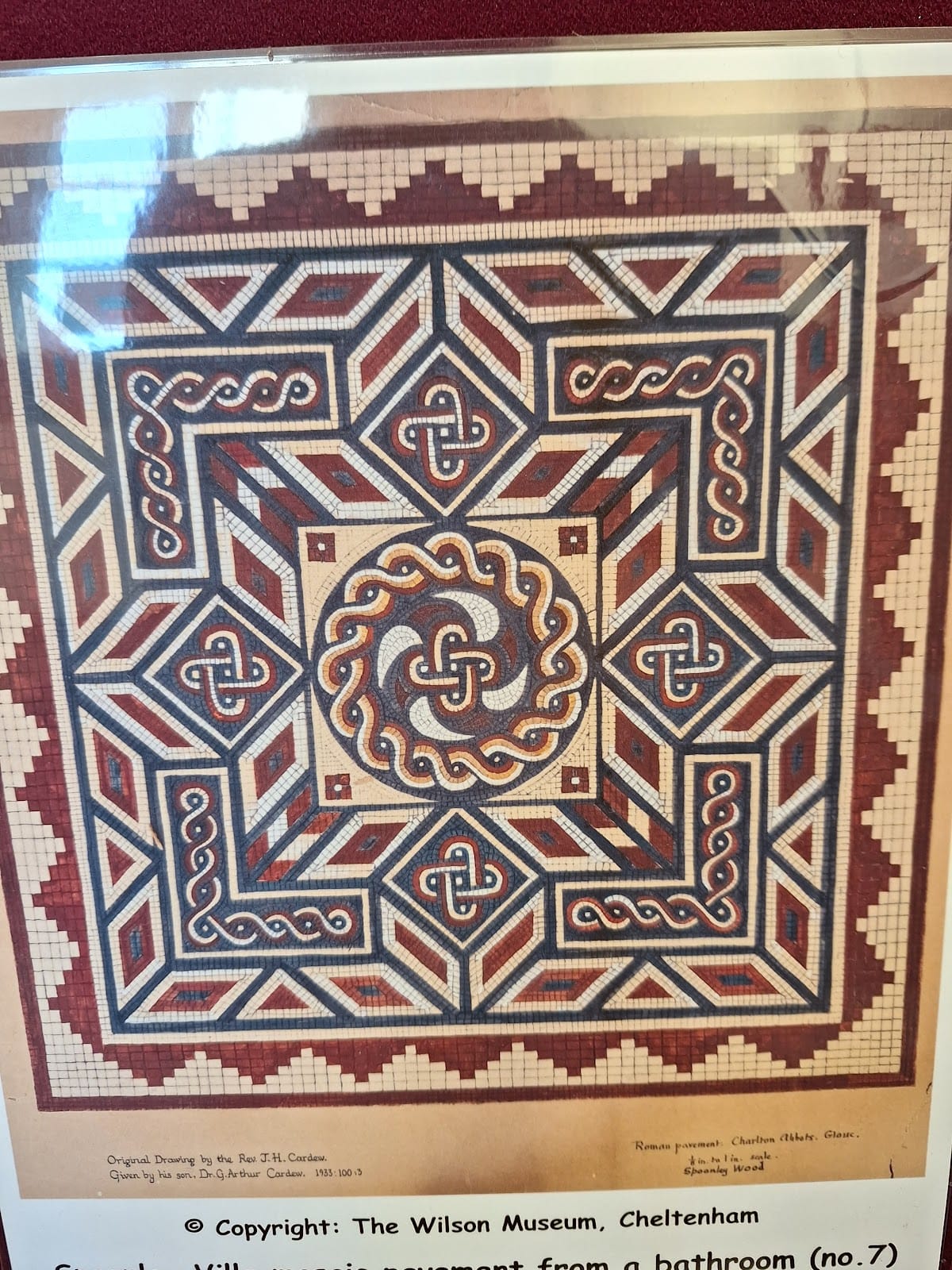
Structural remains had been noticed in Spoonley Wood before 1877. In 1882, workmen looking for stone uncovered a room, prompting excavation by the antiquarians John Henry Middleton and William Bazeley. The villa was then owned by Emma Dent, who also owned nearby Sudeley Castle. She had one mosaic lifted and transferred to the castle.
The excavated remains were left exposed for two years, during which frost, rabbits, and visitors damaged them. Dent responded by having parts of the walls rebuilt and two mosaics reconstructed and sheltered. These measures preserved portions of the site, although the wooden shelters had become ruinous by 1945. By 1976, they had collapsed, while weathering and the growth of the surrounding woodland continued to affect the remains.
Roads and regional connections
A probable Roman road led south from the villa towards Cirencester, the civitas capital of the Dobunni. The Dobunni were a Celtic people whose territory covered parts of western England during the Roman period. A civitas capital served as the principal administrative settlement of a Romanized tribal territory. The road may also have continued north-north-west towards the Dobunni salt-works at Droitwich, although Alcester is another possible northern terminus. A second Roman villa was discovered at Wadfield Farm, approximately 2 kilometres west of Spoonley Wood, in 1863.
Remains
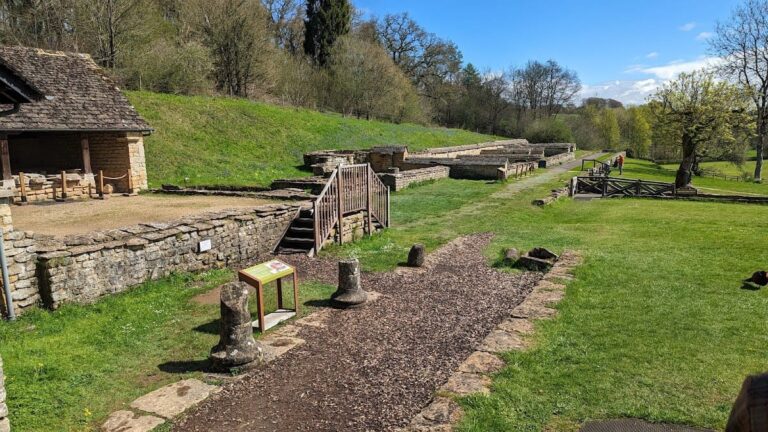
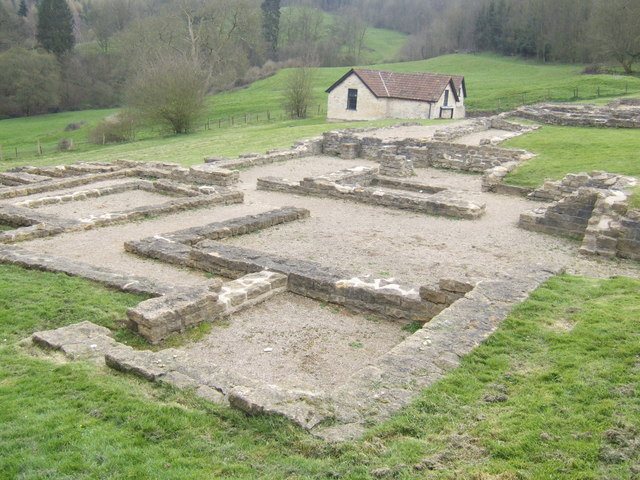
The villa occupied a north-west-facing slope between two streams and covered approximately 55 by 61 metres. Its buildings were constructed from small, roughly squared blocks of local Bath Oolitic Sandstone, a limestone formed from small rounded mineral grains. The surviving site consists of partly reconstructed walls and archaeological traces of the buildings that developed around the central court.
The villa complex
The earliest building was a corridor-type, or aisled-barn-type, villa with its long axis running from north-east to south-west. Two long wings were later attached to the north-west ends of the original structure, changing it into a winged villa. A north-west enclosing wall was then built between the wings, producing the courtyard form. Spoonley Wood is regarded as a classic example of this sequence because it was the first villa with this architectural development to be discovered, although its own dates remain poorly defined.
Associated building
Approximately 15 to 18 metres from the villa stood a basilican-type building. Its function is uncertain, but it has been interpreted as either a barn or a granary. This separate structure formed part of the wider group of buildings associated with the estate.
Walls and mosaics
Some reconstructed wall sections on the east and south sides reach 1.8 metres in height. By 2013, the trees of Spoonley Wood obscured much of the site, but the walls remained clearly visible. One reconstructed mosaic could be seen beneath a small corrugated-iron roof covered with plastic sheeting held down by stones.
Excavated finds
The excavation produced a silver-plated bronze bowl, numerous coins dating from the third and fourth centuries, samian ware pottery, iron knives, and iron tools. Samian ware was fine Roman tableware, often finished with a red slip. Most of these finds are held at Sudeley Castle. A column base is at Gloucester Museum, while three pottery lamps are at Cheltenham Museum.
A marble statue of Bacchus was recovered from a grave and is now in the British Museum. Bacchus was the Roman god associated with wine, festivity, and ecstatic celebration. The statue and the other excavated objects provide material evidence for the villa’s occupation and the activities carried out within its estate.