Stange Church: A Medieval Parish Church in Norway
Site at a Glance
- Popularity
- Medium
- Country
- Norway
- Primary era
- Medieval
- Eras represented
- Medieval, Early Modern, Modern
- Civilizations
- Danish, Norwegian
- Site type
- Religious
- Remains
- Church
On this page11 sections
History
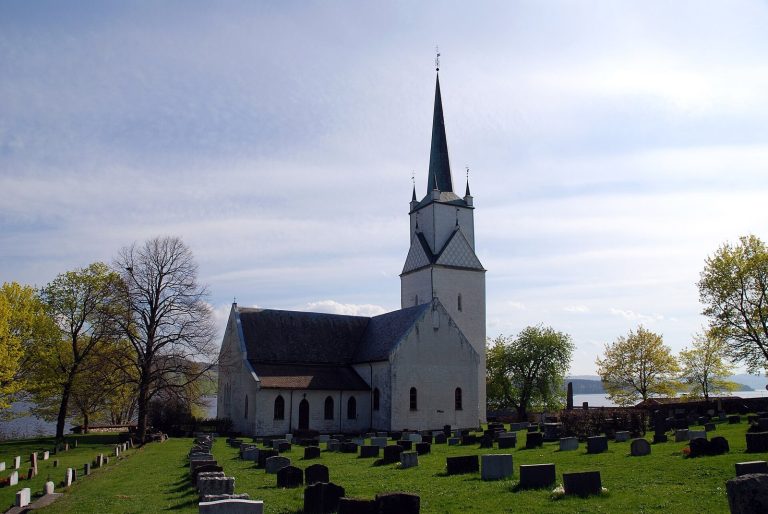
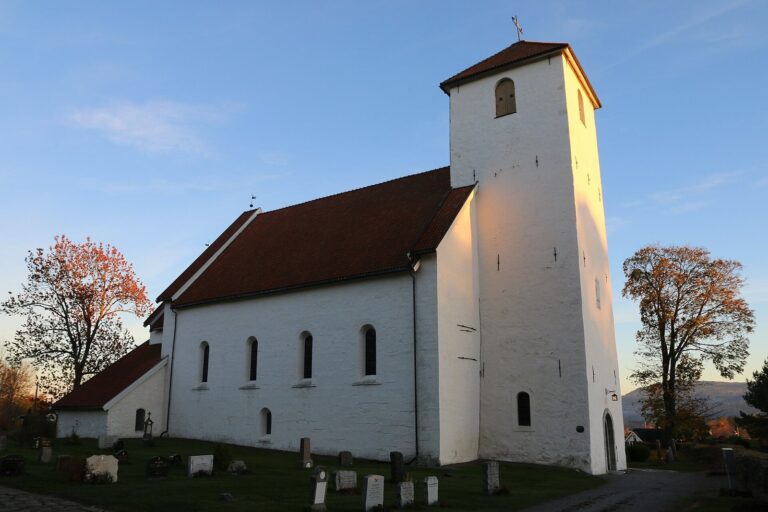
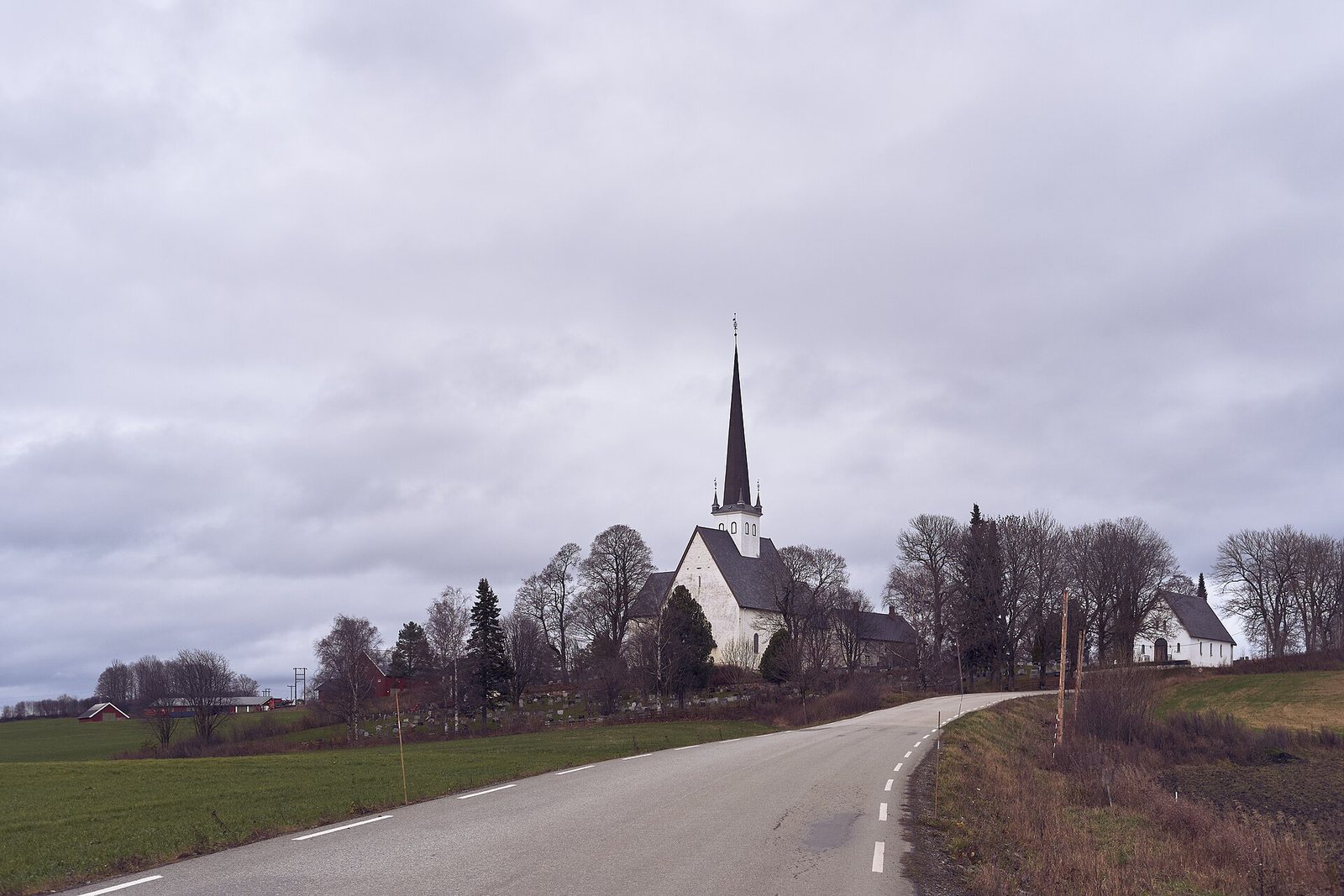
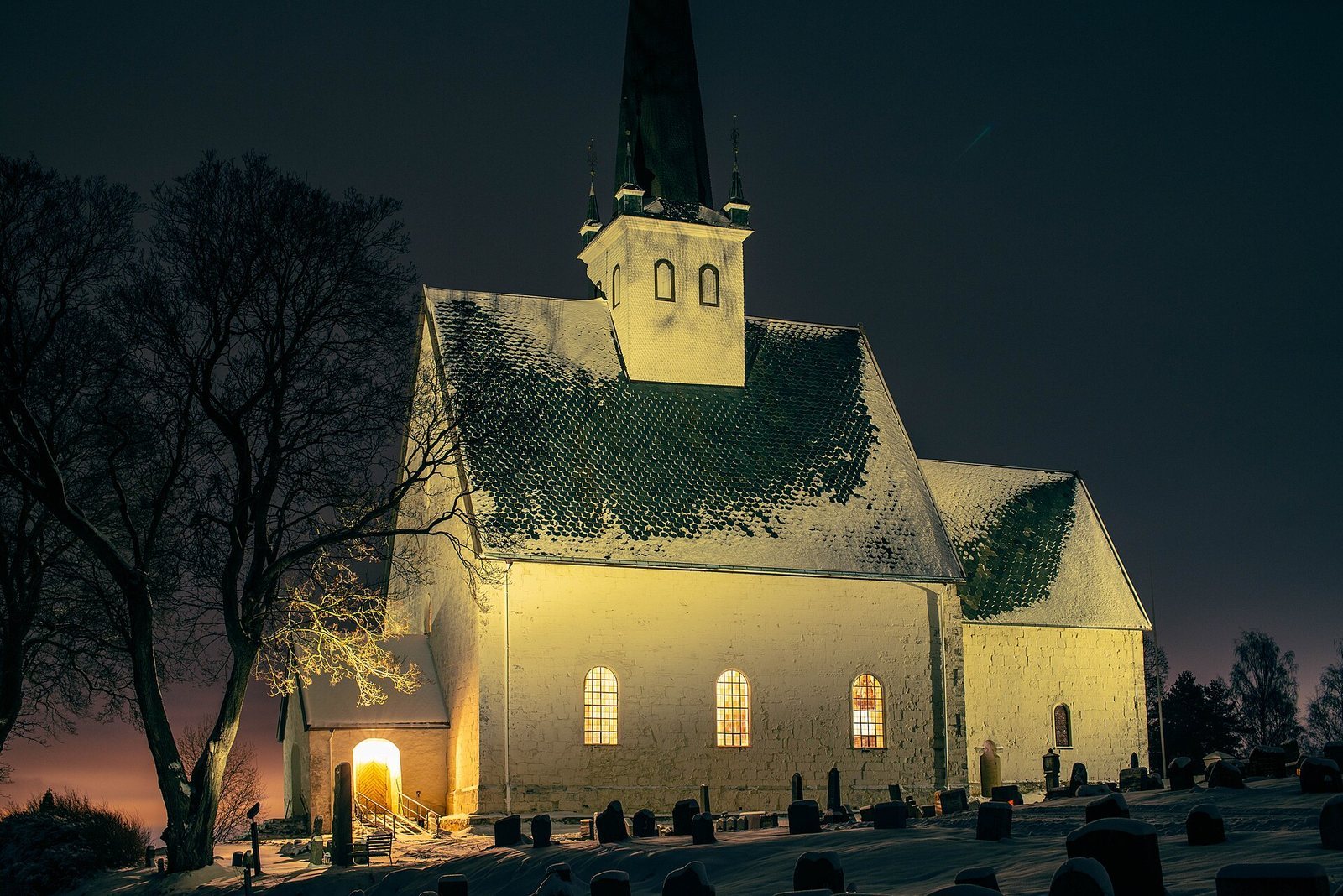
Stange Church is a medieval stone parish church in Stange, Norway, developed from a 12th-century church into a larger building begun around 1250. Its architecture combines Romanesque forms, associated with rounded arches and heavy masonry, and Gothic forms, associated with pointed arches and rib vaults. Regarded as one of Norway’s oldest medieval churches, it remains an active Evangelical Lutheran parish church.
Early churches and medieval rebuilding
Graves older than the 12th-century stone church suggest that the site had earlier use as a church, perhaps including an 11th-century wooden post-built church. In 1225, the Saga of Håkon Håkonsson, a medieval account of the life and reign of Norway’s king from 1217 to 1263, referred to the settlement as Skaun. It described a large community with many churches and substantial farms.
Around 1250, or shortly before, the stone church was considered too small for its parish. The replacement was built on the same site, apparently beginning with the choir, and constructed around the older church to limit disruption to worship. It was consecrated in the 13th century. Stange probably served pilgrims travelling by land and water. Together with nearby Ringsaker Church, it held a central position in relation to important routes and is counted among the most distinguished medieval churches in Hedmarken.
Fire and later changes
On 17 July 1620, lightning struck the church and started a fire that destroyed the roof and most of the interior furnishings, including medieval fittings. The church was rebuilt soon afterward, and a small tower was placed over the nave. Many of the furnishings now inside date from the 17th and early 18th centuries.
In 1703, a large extension known as the New Church was added on the north side of the nave. It gave the building its partial cross-shaped plan, and some of its stone came from the ruins of Hamar Cathedral. The tower was rebuilt in 1772, becoming much taller and larger. It may then have been Norway’s tallest wooden structure projecting outward while supported at one end.
Civic role and artistic reputation
In 1814, Stange Church served as a polling place in Norway’s first national elections. Parishes acted as constituencies and elected delegates, who then chose representatives for the Constituent Assembly that drafted the Norwegian Constitution.
Norwegian painter Harriet Backer created Communion in Stange Church and Baptism in Stange Church between 1899 and 1903, while staying at the parsonage with Kielland. The paintings helped build the church’s reputation. Its earlier Catholic affiliation gave way to its present Evangelical Lutheran churchmanship.
Remains
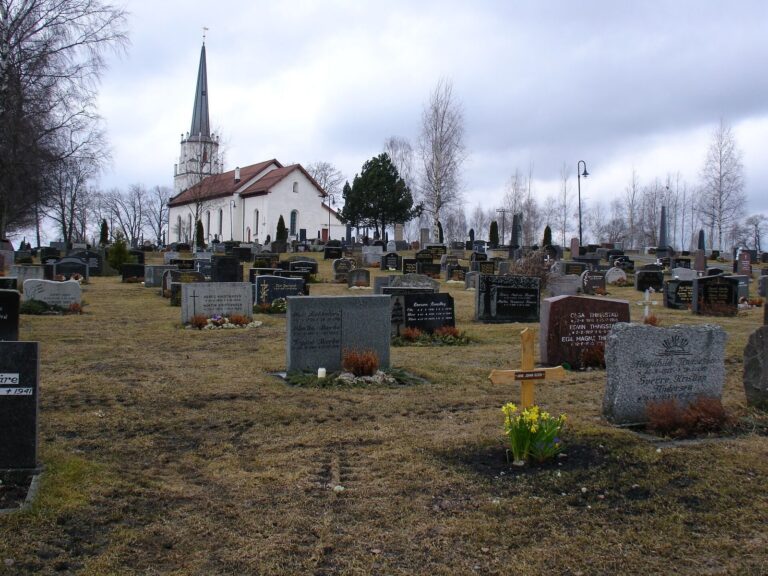
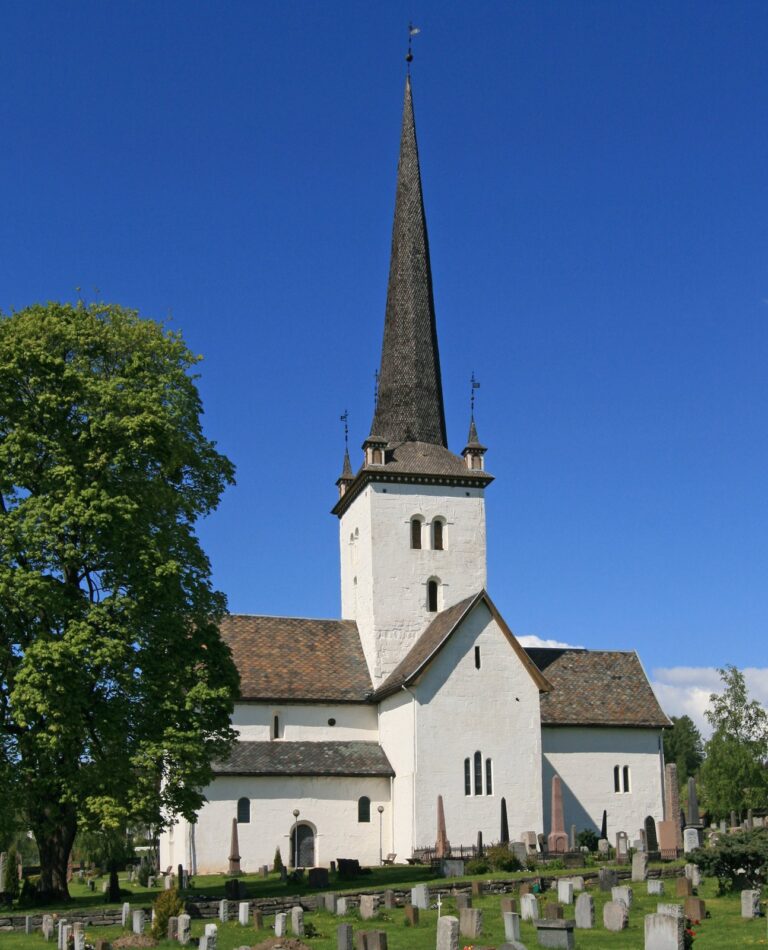
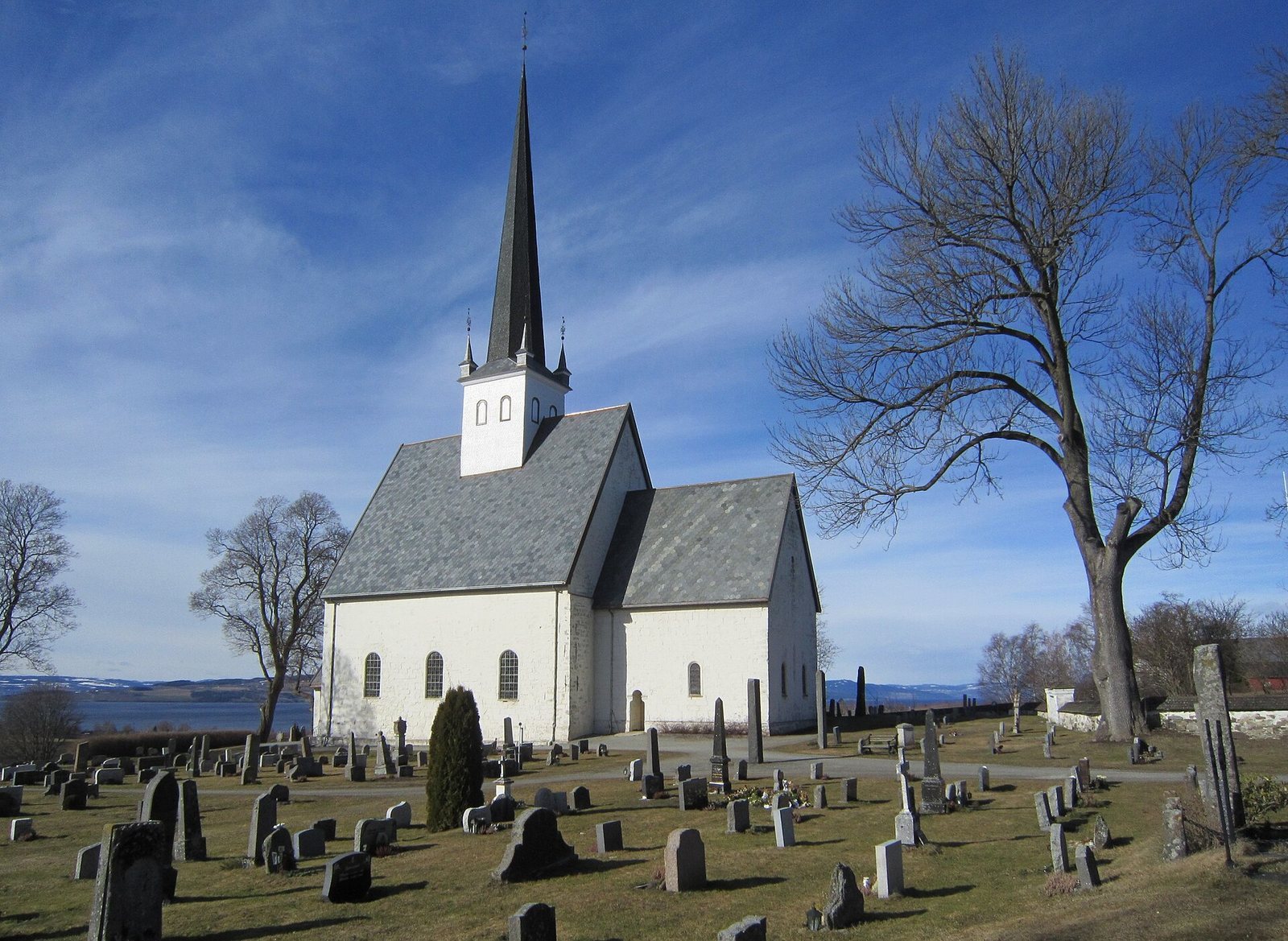
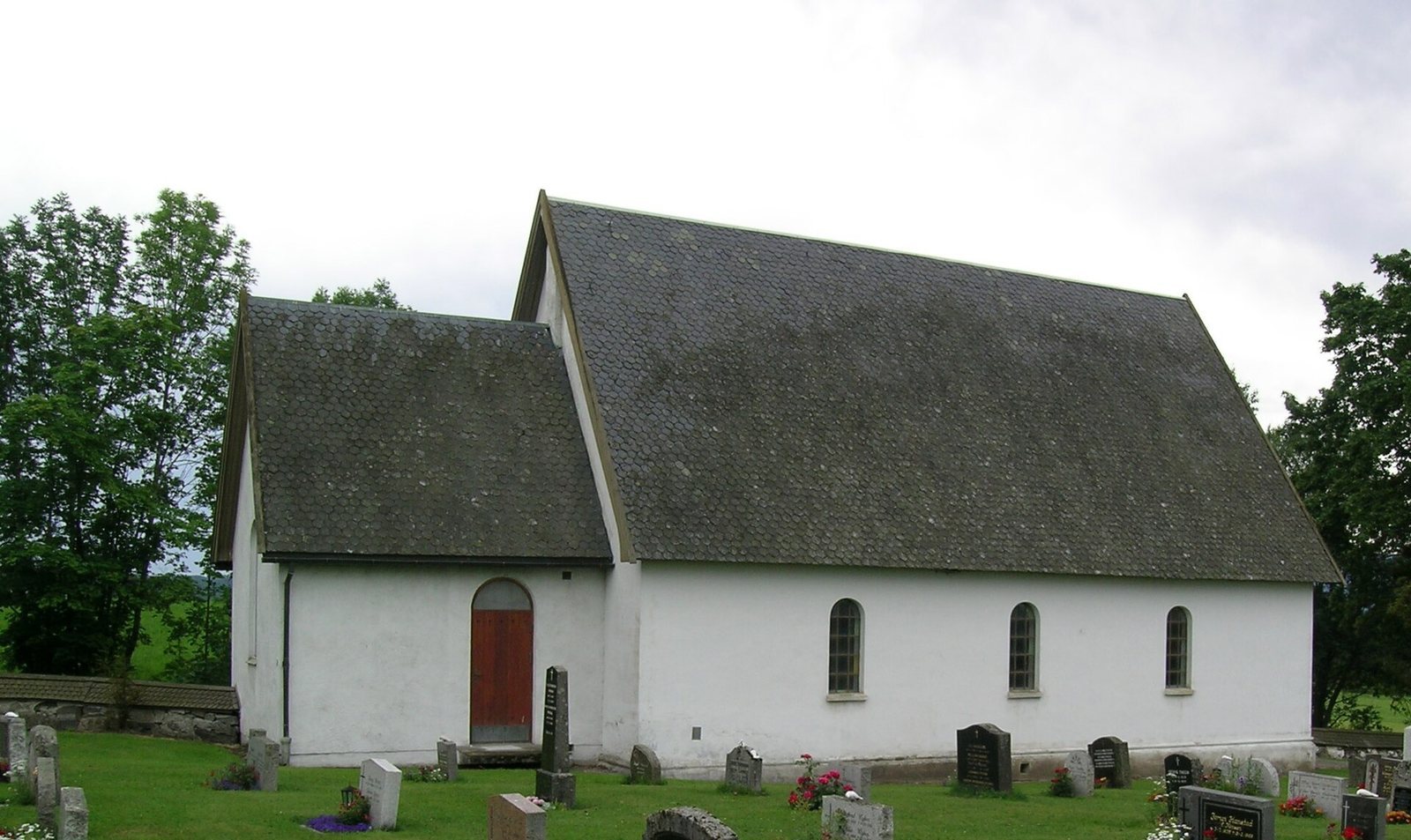
The white limestone building measures about 32 by 15 metres and has capacity for approximately 400 people. Its long-church plan places the main worship space and altar area along one axis. The nave, or main worship space, measures about 21 by 15 metres; the smaller choir, the area near the altar, is about 11 by 9 metres. A north-side extension forms the partial cross-shaped plan. Above the nave is the tower, while a west porch dating from the early 19th century encloses the soapstone west doorway. A sacristy, a room for worship items and vestments, stands north of the choir; its construction date is uncertain. A churchyard lies beside the building.
Archaeological remains
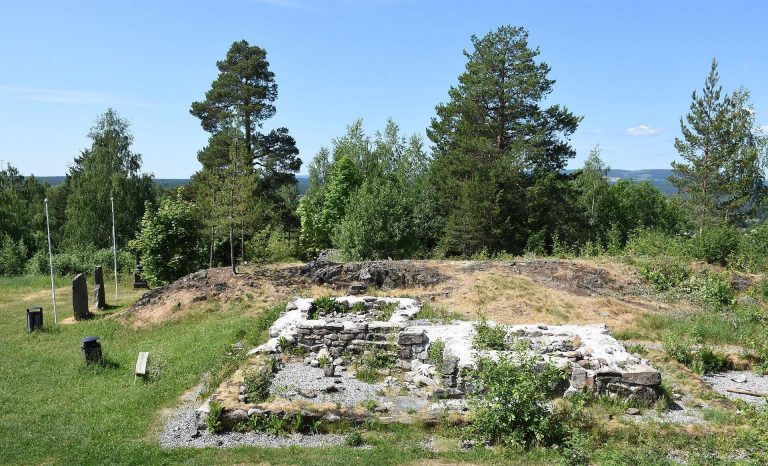
Excavations in 1986, led by archaeologist Dagfinn Skre, uncovered remains of an earlier stone church, graves predating the 12th-century building, and foundations of an even earlier structure beneath the nave. The excavators also found remains of an old altar and ceiling painting.
Interior and furnishings
Ceiling and vault
The nave has a painted wooden ceiling. Over the choir is a barrel vault, a continuous curved ceiling.
Pulpit, altarpiece, and chancel
The pulpit, in the ornate Baroque style, dates from 1630 and is attributed to Johan Reinholdt. The 1652 altarpiece depicts the Crucifixion. Above the arch between the nave and choir is a Calvary group, depicting the Crucifixion with associated figures, dated to 1685.
Baptismal furnishings
The baptismal font is attributed to Erik Pedersen Kolstrup and dates from 1719. Its canopy features a dove, and a small boy supports the baptismal basin. A baptismal enclosure is also attributed to Kolstrup.
Memorial, bells, and stained glass
An epitaph, a memorial monument, dated 1710 stands in the New Church and includes text, a portrait, and a coat of arms. The church’s two bells date from 1623 and 1751. Stained-glass windows by Gabriel Kielland were installed in the choir in 1928.