Stanecastle: A Medieval Castle and Barony in North Ayrshire
Site at a Glance
- Popularity
- Medium
- Country
- United Kingdom
- Primary era
- Early Modern
- Eras represented
- Medieval, Early Modern, Modern
- Civilizations
- British, Kingdom of Scotland
- Site type
- Military
- Remains
- Castle
On this page10 sections
History
Stanecastle is a medieval castle and former barony in North Ayrshire, Scotland, United Kingdom. The barony, a territorial lordship, existed by 1363; its original castle was built around 1417, while the present building is attributed to 1520. The estate is now part of the Irvine New Town project.
Origins and ownership
The barony was formerly called the Barony of Stane, with stane meaning “stone.” That element was once taken to suggest Roman structures, but stone building in Scotland and Ayrshire continued beyond Roman and Norman times, so the name alone does not establish a Roman origin. An earlier medieval nunnery or convent may have stood at the heart of the estate.
The Francis family built the original castle around 1417 and also held land at Sprouston near Kelso. The barony passed by marriage to the Montgomeries of Greenfield, a junior branch of the Montgomery family. In the fifteenth century, William Francis of Stane transferred his estate to the Earls of Eglinton as their lordship expanded. The present castle is attributed to a Montgomerie of Greenfield and dated to 1520.
A seventeenth-century reference names the twenty-shilling lands of old extent called Brydskirk. “Old extent” meant an older system for assessing land, and the shilling figure was a valuation category rather than a modern price.
Castle, estate, and later use
In 1750, Alexander Montgomerie, the tenth Earl of Eglinton, repaired the castle and converted it into a folly, a structure intended chiefly for ornament rather than defence. The Ayr Roads Act, an eighteenth-century law concerning roads in Ayrshire, described a route from a cockpit near Stone Castle by Armsheugh. A cockpit was a place for cockfighting.
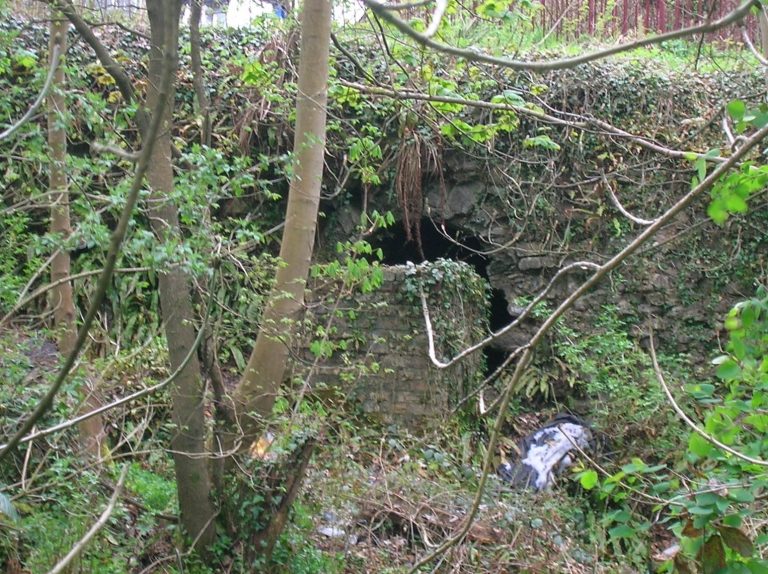
Local tradition held that underground tunnels connected Stanecastle with Eglinton Castle and Seagate in Irvine, and another was said to lead to Dundonald. In the nineteenth century, workmen found an underground passage at Stanecastle, though this does not establish that it formed part of the reputed tunnel routes.
In 1851, the Earls of Eglinton acquired Knadgerhill in exchange for part of their land at Bogside Flats. The exchange allowed a new entrance to the Stanecastle estate from Long Drive.
Literary associations and modern changes
Robert Burns lived in Irvine in 1781–82, and his favourite walk passed through Eglinton Woods. References to his passing Saint Bride’s Well suggest that he may have returned to Irvine through Stanecastle after taking the Old Toll Road and Drukken Steps at Red Burn and passing Millburn, Sourlie, and Girdle Gate. John Galt briefly mentions Stanecastle in his 1823 novel Ringan Gilhaize.
The gate’s orientation was altered in the twentieth century. It had marked the southern entrance to the Eglinton Castle estate, now Eglinton Country Park. Irvine Development Corporation stabilized and repaired the castle, and the remaining section of the estate has been fenced off and protected.
Remains
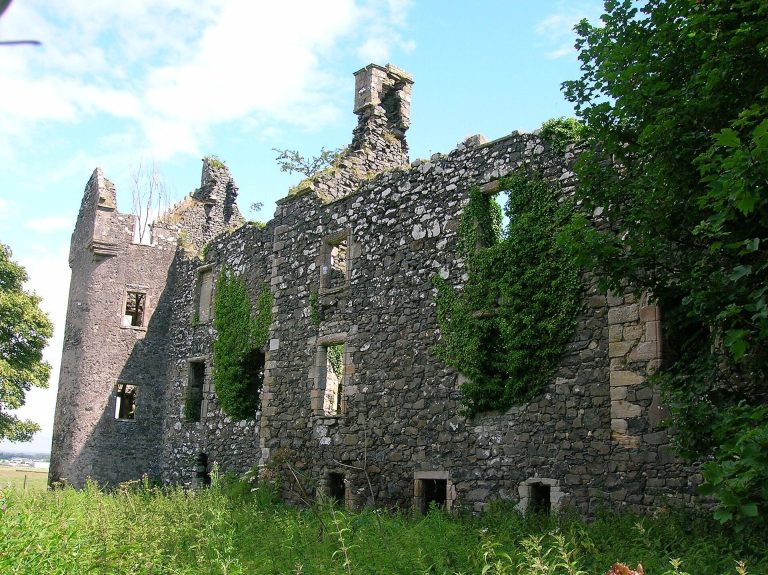
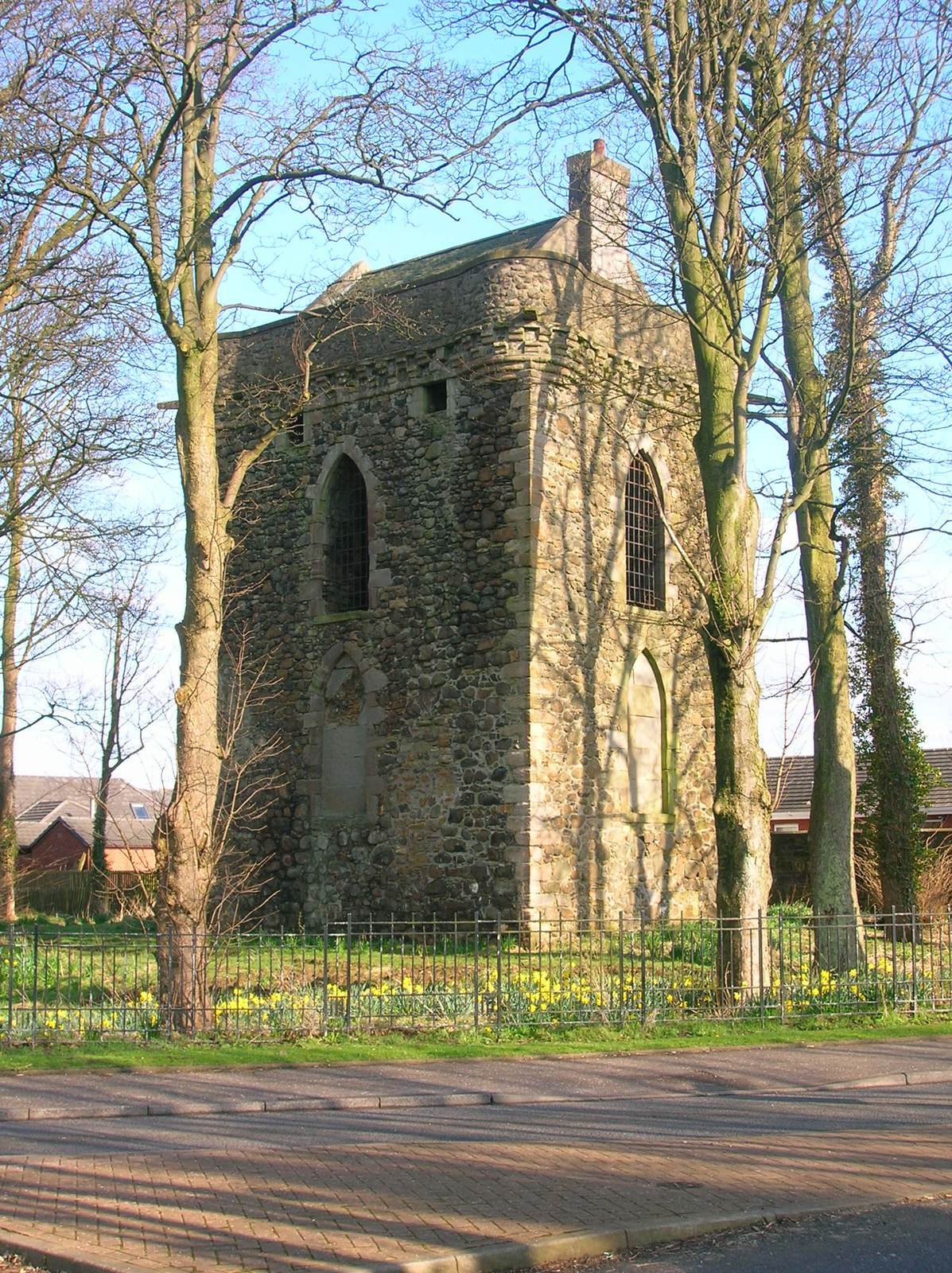
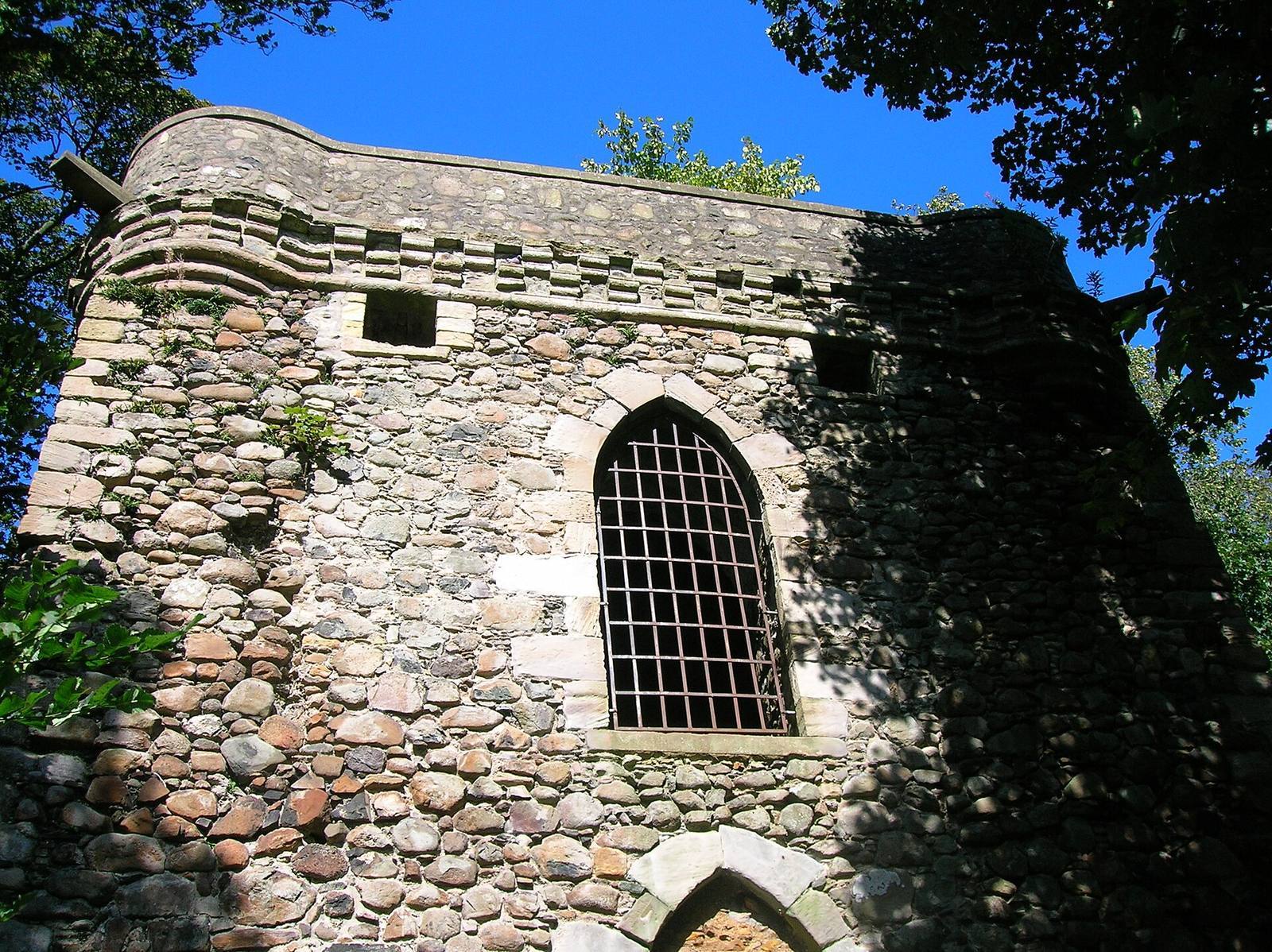
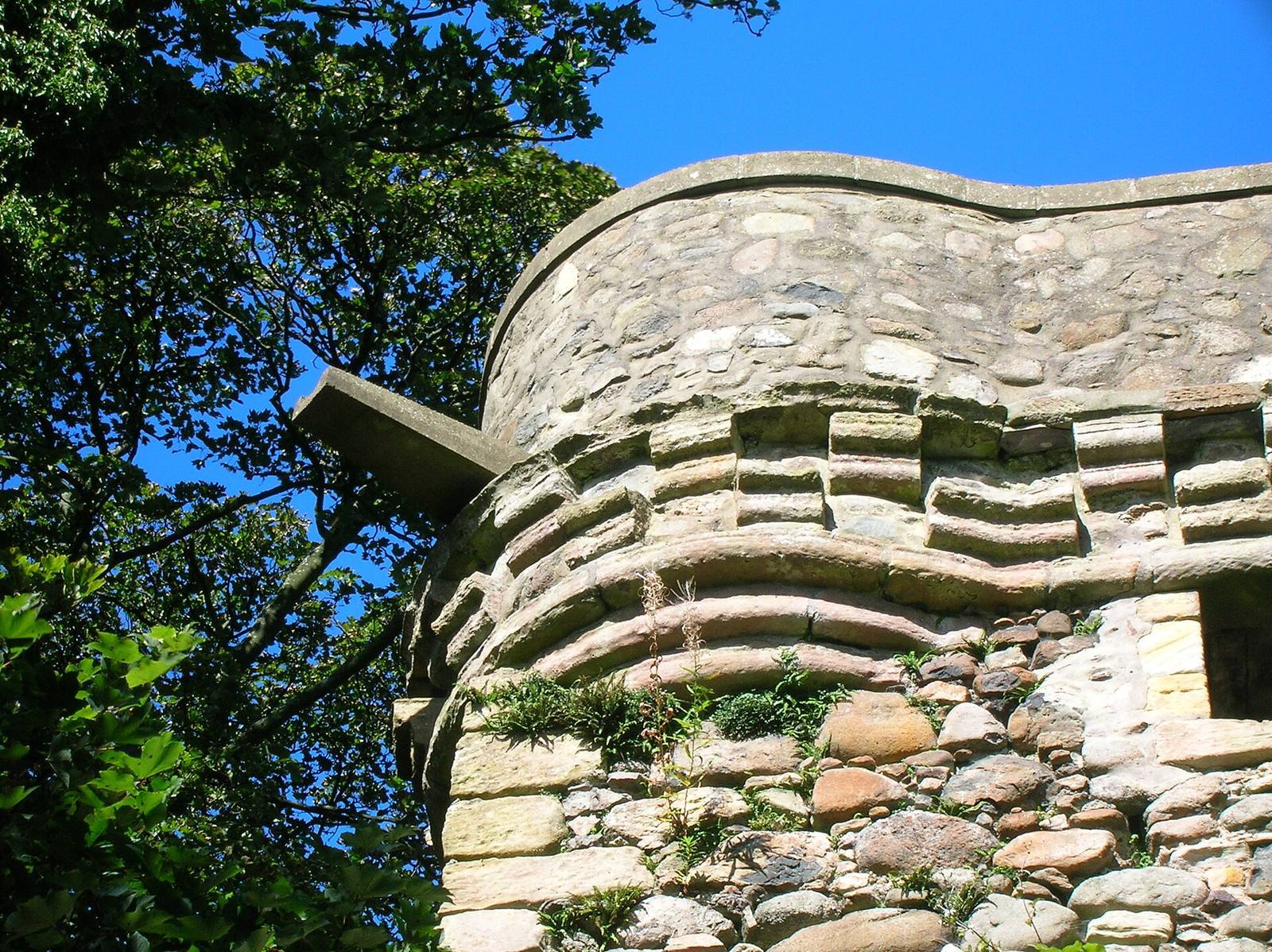
Stanecastle’s surviving built remains form a lowland castle of rubble stone, with a tower and a younger gate opposite it. The tower stands about 21 metres above sea level.
Castle and estate structures
Keep
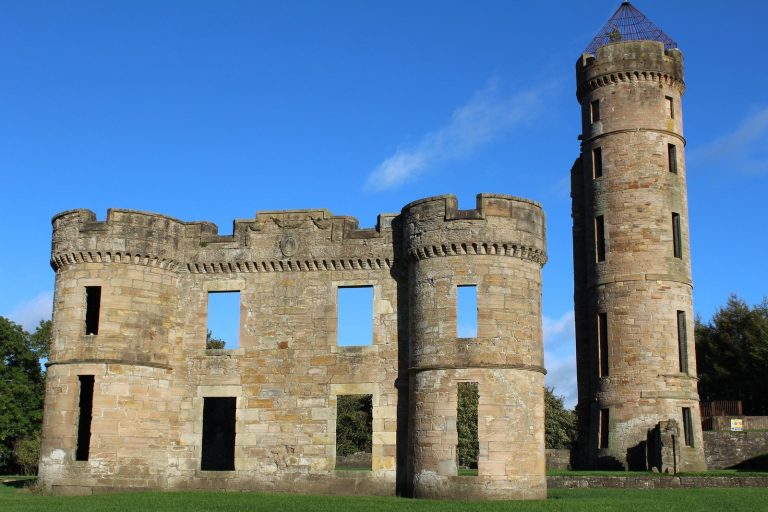
The tower is the visible remnant of the original estate and is its keep, the castle’s principal fortified tower. Eight pointed-arch windows in a mock-Gothic design were added in 1750 for appearance; four are open and four are closed. The keep also has a modern roof, chimney, and windows. An inscribed stone is set into its wall, and an original spiral stair occupies the northeast corner. Rusty-back fern grew on the castle walls in the early twentieth century.
Armorial panels
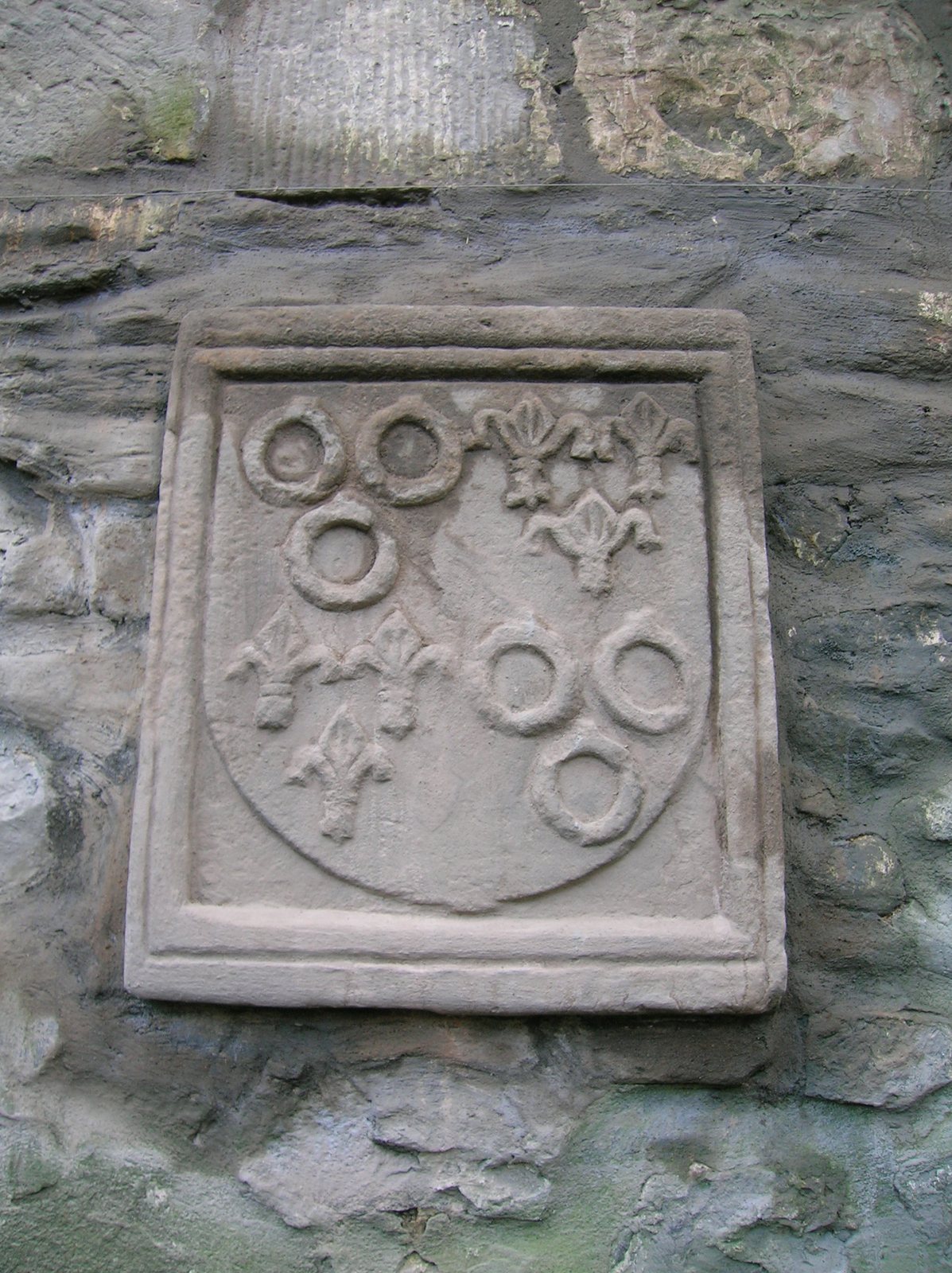
A panel bearing the Earl of Eglinton’s coat of arms is set on the keep’s west side. Its shield is upright, but the signet rings and lily emblems within it are inverted. A similar-sized panel now in the quadrangle of Eglinton Country Park has its symbols placed in the wrong sections of the shield.
Estate gate
Opposite the keep stands the substantially younger Stanecastle gate, designed to suit the character of the surrounding buildings.
Chapel and burial ground
A small medieval chapel stood on the moor near Stane, on the right bank of the Annick Water. It was probably dedicated to Saint Bridget, commonly identified with Brigid of Kildare, an early Irish abbess and Christian saint. The chapel and its probable graveyard have long been buried beneath a turnpike road.