Stadtkirche St. Bartholomäus: A Late Gothic Parish Church in Waldenburg
Site at a Glance
- Rating
- 4.5
- Popularity
- Very Low
- Country
- Germany
- Primary era
- Medieval
- External website
- Open
- Eras represented
- Medieval, Early Modern
- Civilizations
- Holy Roman Empire
- Site type
- Religious
- Remains
- Church
On this page15 sections
History
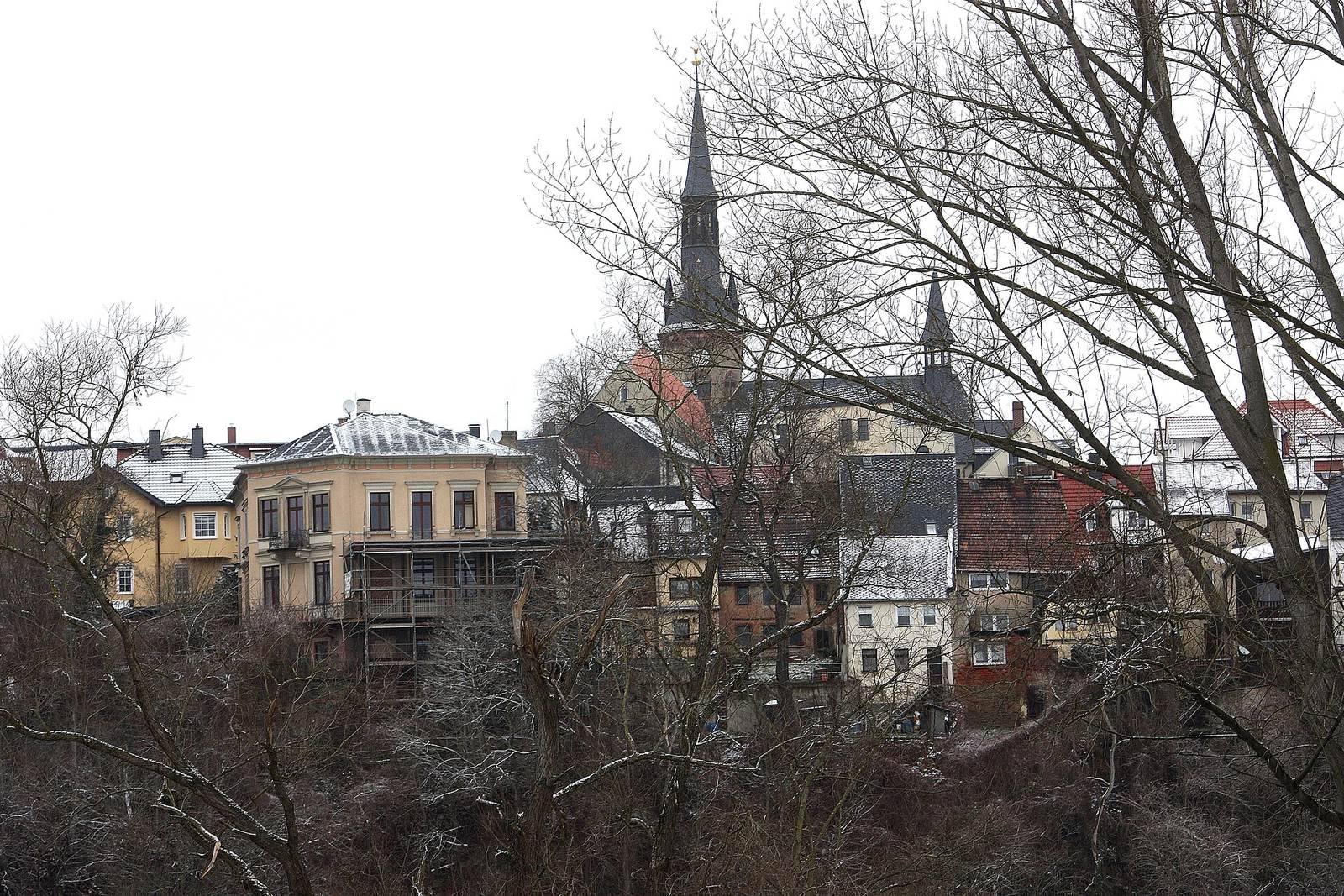
Stadtkirche St. Bartholomäus is an Evangelical Lutheran parish church in Waldenburg, Germany, built in several late Gothic phases during the fifteenth century. It belongs to the Waldenburg parish in the Glauchau church region, within the Zwickau church district of the Evangelical Lutheran Church of Saxony.
Late Gothic construction
The north nave and the choir, which ends in five sides of an imagined octagon, were completed after 1430. The south side aisle and the church’s vaulting followed in the second half of the fifteenth century. These phases produced a substantial two-aisled hall church, in which the main interior spaces form a broad, unified volume.
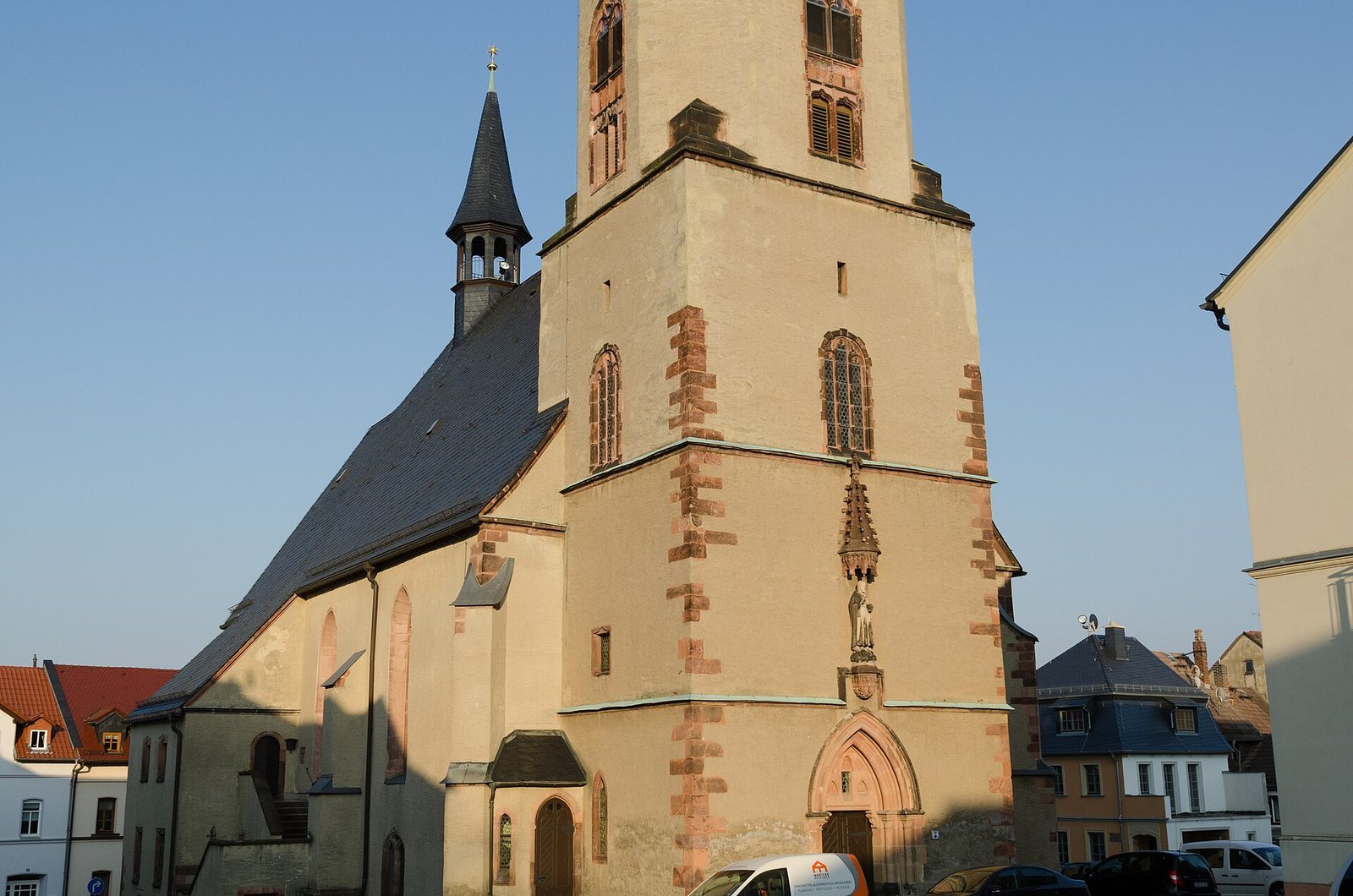
The square west tower, and probably its octagonal upper stage, also date from the second half of the fifteenth century. After a fire, the tower was rebuilt in 1580 and 1581 by the Strasbourg stonemason Nickel Helth and the master carpenter Krügel of Oberlungwitz. The work reorganized the tower interior and added a stair tower on its west side.
Sixteenth-century changes
The sacristy and the south portal were built during the second half of the sixteenth century. The portal reflects the period’s Renaissance architecture, which revived classical forms, and carries the Schönburg coat of arms together with the initials “MS.” A Renaissance epitaph for Count Hugo von Schönburg, who died in 1566, was transferred to the church in 1847 from the chapel of Waldenburg Castle.
Four church bells are documented from 1598 onward. The three larger bells were cast after the tower fire at the Hilliger foundry in Freiberg. The smallest bell dates from the thirteenth century, but its arrival at the church remains uncertain: it may have come after the fire or may have belonged to the earlier church and survived it.
Restoration and later use
Gotthilf Ludwig Möckel restored the church in 1874, renewing its portals and interior. Further campaigns followed in 1888 to 1894, 1936 to 1939, 1963 to 1964, and 1986 to 1990. The work of 1936 to 1939 moved the interior toward its Gothic appearance and shortened the organ gallery, while the later campaigns comprehensively restored the inside and outside of the building.
The organ was built by the Jehmlich firm in 1939, incorporating parts of the predecessor instrument made by Christian Gottlob Steinmüller between 1844 and 1846. The church’s four bronze bells hang in an oak bell frame fitted with oak yokes.
Remains
Stadtkirche St. Bartholomäus survives as a rubble-stone late Gothic hall church with two aisles. A hall church has a main nave and aisles of approximately equal height, creating a wide interior space. The north side carries the attached sacristy and an elevated princely box, a seating area historically reserved for a ruling household, reached by an exterior staircase. The south nave wall contains the richly decorated Renaissance portal.
Exterior architecture
South and west portals
The south portal is framed by Renaissance ornament. Its spandrels, the roughly triangular spaces between an arch and its surrounding frame, contain a clapper motif with the initials “AB.” Above the horizontal entablature is an aedicule, or miniature shrine-like architectural frame, bearing an inscription and a depiction of the Salvator mundi, the Christian image of Christ as Savior of the World, in its triangular pediment. The west portal also depicts the Salvator mundi and was completed in 1894.
Choir and tower
Pointed-arch windows with tracery light the choir. Tracery is the ornamental stone framework that divides Gothic windows. The square-plan west tower rises beside the church, with its probable octagonal upper stage and the west-attached stair tower added during the rebuilding of 1580 and 1581.
Vaults and interior arrangement
Nave, choir, and gallery
The broad main nave is covered by a net vault, a ribbed Gothic pattern whose ribs form a net-like design. The choir has star vaults, while the south side-aisle-like space is also covered by star vaults supported by octagonal piers. Beneath the wooden organ gallery, remains of an earlier Renaissance gallery survive.
Organ and bells
The organ stands on the wooden gallery and contains material from Steinmüller’s predecessor instrument of 1844 to 1846. The four bronze bells are suspended in the oak bell frame, where oak yokes support the bell fittings.
Memorials and furnishings
Count Hugo von Schönburg’s epitaph
The Renaissance epitaph for Count Hugo von Schönburg is an elaborate commemorative monument made by Christoph Walther II. Its architectural framework uses Corinthian columns, whose capitals are traditionally ornamented with acanthus leaves, along with finely worked decoration. The divided base contains an inscription panel above three relief medallions showing the Adoration of the Magi, the Creation of Adam, and Noah’s sacrifice.
In the central section, the deceased appears as a freestanding kneeling figure before the Crucified Christ. Low-reliefs behind him depict the Baptism of Christ and the Sacrifice of Isaac. Niches between the side columns hold small figures of a knight, the prophet Ezekiel, a king with a scepter and shield, and the prophet Hosea.
Above the strongly projecting entablature is a two-tiered upper structure with two coat-of-arms bearers beside an inscription panel. An elaborately worked arched panel above it shows God the Father and angels, flanked by Saint Peter and John the Evangelist. The monument is regarded as one of the most important Saxon works of its type from before Giovanni Maria Nosseni’s activity.
Baptismal font
An elaborately decorated octagonal baptismal font dates from around 1600. Its heraldic cartouches, ornamental frames containing coats of arms, accompany reliefs of the Nativity of Christ, the Baptism of Christ, and Christ in the Temple.
Choir funerary monuments
The choir contains two figurative funerary monuments from the sixteenth century. One commemorates Superintendent Nicolaus Seidel, a senior ecclesiastical official who died in 1503. The other is dedicated to Eva von Schönburg, born Schenk von Landsberg, who died in 1515.