Bangor Abbey: An Early Irish Monastic Centre
Site at a Glance
- Rating
- 4.7
- Popularity
- Very Low
- Country
- United Kingdom
- Primary era
- Medieval
- External website
- Open
- Eras represented
- Medieval
- Civilizations
- Unclassified
- Site type
- Religious
- Remains
- Monastery
On this page8 sections
History
Bangor Abbey is an early medieval monastic site in the United Kingdom, founded at Bangor on the southern shore of Belfast Lough in County Down by the early Irish Christian abbot Saint Comgall, probably in 558. The foundation belonged to the Celtic monastic tradition, which combined worship, strict religious discipline, manuscript learning, education, and missionary work. Early annals give a date between 552 and 559, while the Annals of Tighernach and the Annals of Innisfallen specify 558. Bangor became one of the most important monastic centres in early Ireland and was traditionally regarded as second only to Armagh.
Foundation and monastic learning
Saint Comgall was born in Antrim in 517 and studied at Clooneenagh and Clonmacnoise before withdrawing to a solitary island. He later established the monastery at Bangor, whose rule required continuous prayer, fasting, simple food, worship, music, penitential practices, vigils, and learning. The community was also known as Beannchor and was traditionally called the “Vale of Angels” or “White Choir.” The first name was linked to a legend that Saint Patrick, a fifth-century Christian missionary traditionally associated with the conversion of Ireland, rested at Bangor and saw the valley filled with angels.
Bangor’s school taught Scripture, theology, logic, geometry, arithmetic, music, and the classics within an extensive monastic enclosure. Mo Sinu moccu Min, the fifth abbot, is thought to have taught Columbanus, the Irish missionary monk who later founded monasteries on the European continent. Carthach of Lismore and Fintan of Doon also studied at Bangor, while Saint Mirin served as prior before leaving to found Paisley Abbey. In 590, Columbanus and Gall departed for continental Europe. Their later foundations included Luxeuil Abbey in France, the monastery associated with St Gallen in Switzerland, and Bobbio in Italy.
Attacks and decline
The monastery was burned in 616 and again in 755. Its access from the sea made it vulnerable to attack, and Norse raiders plundered Bangor in 822 to 824. They killed learned men and bishops and carried away the shrine containing Comgall’s relics. In 958, Tanaidhe MacUidhir, identified as Bangor’s coarb, meaning the successor and institutional heir of a major monastic founder, was killed. The monastery’s importance declined during the later tenth century.
Saint Malachy, a twelfth-century Irish bishop and church reformer, became abbot in 1121 and had to rebuild the monastery. After he was appointed to the See of Down three years later, Bangor declined again. The See of Down was the bishop’s jurisdiction over the Diocese of Down. The Statutes of Kilkenny, fourteenth-century English colonial laws enacted in Ireland, later excluded “mere Irishmen” from making profession at Bangor, a phrase referring to formally entering a religious order by taking its vows.
Later religious institutions and dissolution
Around 1123 to 1124, Bangor was reestablished as an Augustinian institution under Armagh Abbey. The Augustinian Canons Regular were communities of clerics who followed the Rule of Saint Augustine. The Franciscans, a mendicant order founded by Francis of Assisi, possessed Bangor from 1469, and the Augustinians took possession about a century later.
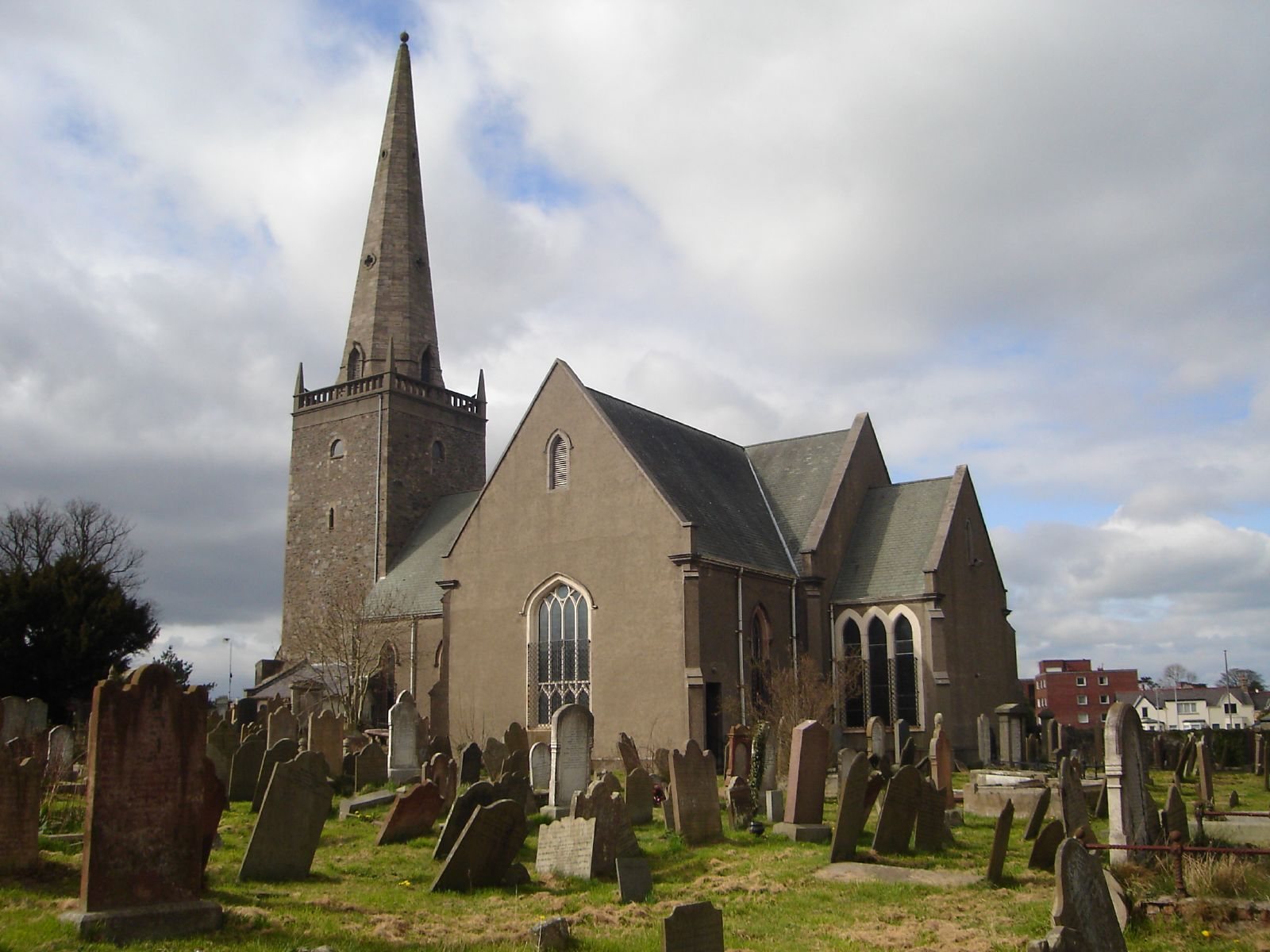
Bangor was disestablished in 1539 during the dissolution of the monasteries. King James I later granted it to Sir James Hamilton, an Anglo-Scottish landowner and courtier. Hamilton repaired the church in 1617 and was buried there after his death in 1644. The surviving church buildings are now incorporated into a Church of Ireland church. Bangor is associated with Celtic monasticism and the later Augustinian Canons Regular. Its religious affiliation was Catholic, and it belonged to the Diocese of Down, later identified as the Diocese of Down and Connor. The site is a Grade B+ listed building and is also identified as a scheduled monument.
Remains
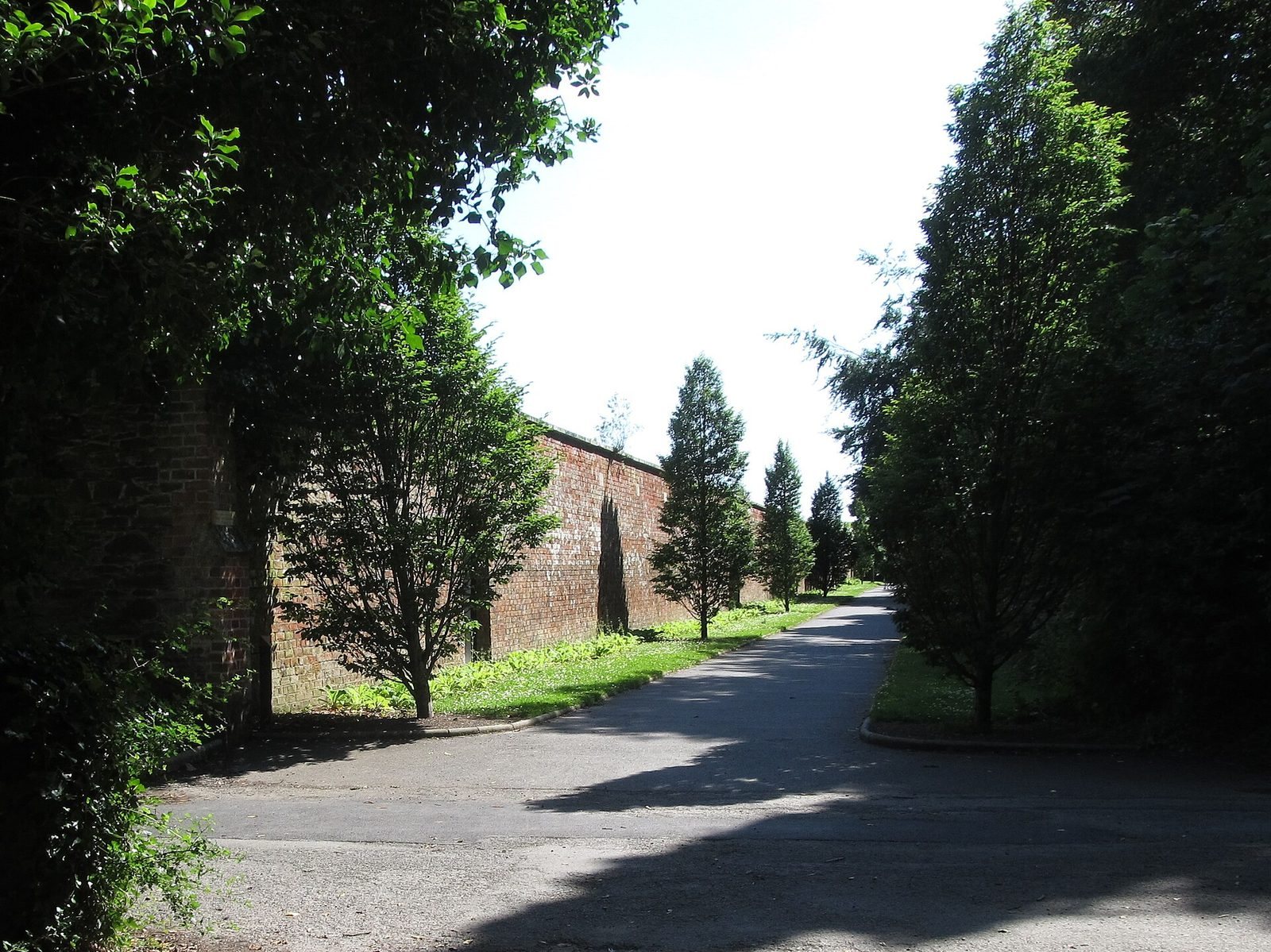
The surviving site combines elements of the former monastic enclosure with later church fabric and associated archaeological remains. An extensive rampart once surrounded the monastic buildings. The early structures were probably built of wood, a construction choice consistent with the repeated burning and rebuilding of the monastery. St Malachy’s Wall is identified as the surviving part of the abbey ruins that remains above ground.
Church and monastic enclosure
The present church tower dates from the fourteenth century, and stone from the former abbey was apparently reused in the construction of the new church. A mural inside the church shows Christ ascending to heaven, with Saints Comgall, Gall, and Columbanus at his feet. These features connect the later church buildings with the memory of Bangor’s early community and its missionary tradition.
Cross fragment and liturgical evidence
A fragment of a Celtic high cross, consisting of the shaft of a cross, was found within the abbey precincts. It is built into a wall in the Private Chapel at Clandeboye and probably dates from about the eighth century. The cross may originally have stood on Cross Hill near Bangor Castle, a location shown on a seventeenth-century map.
The Antiphonary of Bangor was probably written by Bangor’s monks between 602 and 691. An antiphonary is a liturgical manuscript containing chants or antiphons used in Christian worship. The manuscript contains Latin hymns, prayers, and antiphons, providing evidence of the monastery’s liturgical life, literary activity, and artistic standards. It was kept at Bobbio in Italy for more than 1,000 years, linking the surviving written evidence to the continental foundation established by Columbanus and Gall.
Sundial
A ruined Bangor sundial, dated to approximately 900, is displayed outside the town hall. It provides another surviving material connection with the medieval religious centre during the period when Bangor’s wider importance was declining.